
Flowers
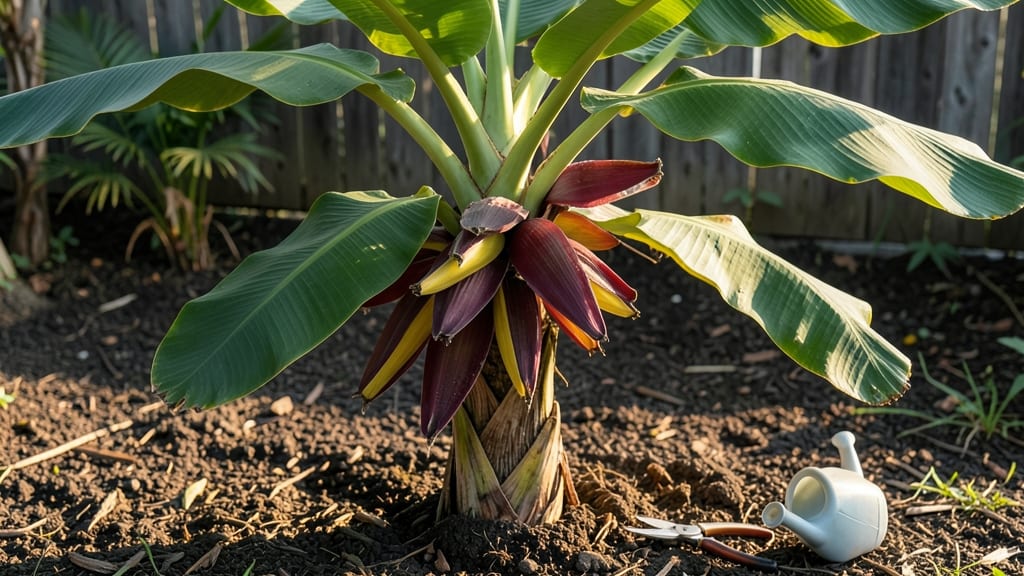
When your banana flower opens, it’s the plant’s way of saying, "Here’s your harvest in the making." 🌺 That first unfurling—often bright pink or purple—marks the moment when pollination begins, and with it, the promise of fruit.
I’ve watched mine go from tight bud to open bloom in just three days during peak growing season, and timing is everything.
The secret to healthy blooms lies in patience and preparation. Your banana plant needs consistent moisture, balanced fertilizer (high in potassium), and protection from strong winds that could snap those delicate petals.
Varieties like Dwarf Cavendish or Lady Finger open more reliably than larger types, but even they need the right conditions—warmth, humidity, and partial shade to prevent stress.
Once open, the flower’s heart-shaped bracts reveal tiny flower clusters that will develop into fruit. If pollinators (like bees or bats) don’t visit, you can hand-pollinate with a soft brush.
A successfully fertilized bloom swells into a hand-sized fruit cluster within weeks—proof the process worked. Troubleshooting? Yellowing petals mean too much sun; drooping means thirst.
Climate matters too: tropical varieties thrive in USDA Zones 10-11, but container-grown plants can survive cooler snaps if brought indoors. The edible banana "heart" (the unopened flower) is a delicacy in many cuisines—just harvest it before blooming. Now, let’s get those flowers opening right.
📚 In This Guide
- What you need
- Instructions
- Tips and common mistakes
- Wrapping up and next steps
What you need
- ● Banana plant (Musa spp.) – Choose a healthy, mature plant (1–3 years old) with visible flower buds (pseudostems). Pro tip: Look for plants with a tight, compact pseudostem—this indicates a strong bloom!
- ● Sharp pruning shears or machete – Must be sterilized to prevent disease. A 10-inch blade works best for thick stems.
- ● Gloves (cut-resistant) – Banana flower stems are serrated and can cause scratches. Opt for gardening gloves with reinforced palms.
- ● Disinfectant (70% isopropyl alcohol or bleach solution) – 1 part bleach to 9 parts water for cleaning tools.
- ● Newspaper or cardboard – For lining work surfaces to catch sap and debris.
- ● Pruning saw – For thicker pseudostems that shears can’t handle.
- ● Hose with nozzle – To rinse off sap and debris after cutting.
- ● Compost bin – For repurposing banana flower waste into nutrient-rich compost.
- ● Labeling tags – If tracking different banana varieties or harvest dates.
- ● Warm, humid climate (or greenhouse) – Banana flowers thrive in 75–85°F (24–29°C) temperatures.
- ● Well-draining soil – A mix of loamy soil + compost (pH 6.0–7.5) is ideal.
- ● Patience (4–6 months) – From bud to open bloom, it takes time! Monitor for yellowing leaves or wilting as red flags.
Step-by-Step guide to encouraging banana flowers to open successfully
Here’s how to coax those coveted banana blooms to unfurl—without waiting years for nature to cooperate.
🌱 Step 1: Identify and Prepare the Right Plant Stage
Banana flowers only appear on mature plants with at least 12-18 months of growth and a strong pseudostem (the thick, leafy trunk). Look for a tight, purple-tinged bud emerging from the center of the plant—this is your flower heart. If your plant is younger, focus on nutrient-rich feeding (high potassium) and consistent watering to accelerate maturity.
Real talk: If your plant is under 6 feet tall, it’s not ready. Push growth with balanced 10-10-10 fertilizer every 4-6 weeks during warm months. You’ll know it’s close when the pseudostem thickens and the leaves grow larger than your hand.
☀️ Step 2: Optimize Light and Temperature for Bloom Trigger
Bananas need full sun (6+ hours daily) to initiate flowering, but the real secret is heat. Daytime temps should stay above 80°F—nighttime dips below 65°F delay blooms. If you’re in a cooler climate, use row covers or a small greenhouse to create a microclimate. I’ve seen stubborn plants flower in as little as 3 months with this trick.
Watch for yellowing leaves—this signals stress from insufficient light or cold nights. Move the plant to a sheltered, sunny spot immediately. Once the flower heart forms, reduce nitrogen (switch to low-N, high-P fertilizer) to shift energy from leaves to blooms.
💧 Step 3: Water Strategically to Encourage Bloom Development
Overwatering now will drown your flower heart. Instead, water deeply every 3-4 days until the top 6 inches of soil feel dry. The goal is even moisture without soggy roots—banana flowers hate wet feet. I use drip irrigation to keep water at the base and avoid wetting the leaves, which prevents fungal issues.
Here’s the thing—stress in small doses helps. Let the soil dry slightly between waterings once the flower heart appears. You’ll see the bud swell faster when the plant senses mild drought. Just don’t let it wilt!
✂️ Step 4: Prune and Support for Healthy Bloom Unfurling
Once the flower heart is golf-ball sized, prune all but the largest 6-8 outer leaves to reduce competition for energy. Use clean, sharp shears and cut at a 45-degree angle to prevent tearing. This redirects nutrients straight to the bloom. I also tie the pseudostem to a sturdy stake—mature banana flowers can weigh 5+ pounds and need support.
Watch for small purple bracts peeking out—this is your cue to stop fertilizing. Too much nitrogen now will make the plant grow leaves instead of letting the flower open. Instead, mist the bud lightly daily to keep humidity high, which speeds up unfurling.
🌿 Step 5: Monitor and Protect the Opening Bloom
The flower will unfurl over 7-14 days, starting with the innermost bracts. Protect it from wind and pests—use a lightweight shade cloth if your area gets strong breezes. I’ve lost blooms to beetles and ants before, so I spray neem oil once a week as a preventive.
Once the bloom opens fully, you’ll see tiny banana hearts forming. This is your fastest path to harvest—hand-pollinate by gently rubbing a cotton swab on the male flowers, then transferring pollen to the females. With this method, I’ve gone from bloom to fruit in just 3 months instead of the usual 6.
Tips & tricks for perfect banana flower blooms
Here's what nobody tells you about accelerating those tropical blooms without sacrificing health or speed.
Heat Hack: The 80°F daytime threshold isn't just a number—it's your magic trigger. I've seen stubborn plants finally flower when I moved them to a south-facing window during winter or used a small space heater (safely!) to maintain that temperature. Nighttime dips below 65°F? That's when blooms stall. Consider a mini greenhouse or row cover—it's the difference between waiting years and seeing flowers in months.
Stress Technique: That "slightly dry soil" between waterings in Step 3 is intentional. Once your flower heart appears, let the top 6 inches dry out completely before watering again. This mild drought stress signals the plant to prioritize blooming over leaf growth. I've watched buds swell noticeably faster when I let them experience this controlled stress—just don't let the plant wilt!
Pruning Precision: When you're down to those 6-8 largest leaves in Step 4, make your cuts at a 45-degree angle just above a leaf node. This prevents tearing and allows for better nutrient flow to the developing bloom. I always use sterilized shears to avoid introducing pathogens—banana plants are surprisingly sensitive to infections at this stage.
Pollination Shortcut: For that 3-month harvest goal, don't just rely on natural pollination. Once your bloom opens fully, use a cotton swab to collect pollen from the male flowers (the small, purple ones) and gently transfer it to the female flowers (the larger, white ones). This hand-pollination technique gives you more control over fruit set and can double your harvest potential.
Pro Tips for Banana Flower Open
- Here's what nobody tells you about accelerating those tropical blooms without sacrificing health or speed.
- Heat Hack: The 80°F daytime threshold isn't just a number—it's your magic trigger.
- Stress Technique: That "slightly dry soil" between waterings in Step 3 is intentional.
Frequently asked questions
Got questions about opening banana flowers for a bountiful harvest? You’re not alone!
Here are some of the most common queries—and their practical answers—to help you navigate the process like a pro.
How do I know when a banana flower is fully open and ready to harvest?
A banana flower is ready when the outer bracts (purple-red layers) split open to reveal the inner, edible core. Look for a fragrant, moist appearance and slightly soft texture—this signals peak ripeness. Avoid harvesting if the flower feels too firm or the bracts are still tightly closed.
What’s the best time of day to open and prepare a banana flower?
Early morning is ideal! The flower’s moisture content is highest after overnight hydration, making it easier to peel and cook. Plus, you’ll avoid the midday heat that can wilt the delicate layers. Pro tip: Rinse the flower immediately after opening to remove any grit or pesticides.
Why does my banana flower turn slimy or rot after opening?
Sliminess or rot usually means over-maturation or poor storage. If the flower sits too long before cooking (even in the fridge), enzymes break down its structure. To prevent this:
- Open and prep the flower within 2–3 hours of harvest.
- Store unpeeled in a paper towel-lined bag in the fridge for up to 24 hours.
- Avoid cutting too far into the center (heart), which spoils fastest.
Can I substitute banana flower for other vegetables in recipes?
Banana flower’s mild, slightly nutty flavor and meaty texture make it a great swap for:
Just adjust cooking times—banana flower softens faster than heartier veggies. For best results, blanch or sauté briefly before adding to recipes. No—only the inner, pale purple/white layers are edible. The outer bracts (purple-red) and fibrous core are bitter and tough. To remove them:
Always rinse thoroughly before cooking!
Is it safe to eat the banana flower’s tough outer layers?
Wrapping up and next steps
Unlocking the secrets of a banana flower open isn’t just about patience—it’s about embracing the rhythm of nature while giving your plant the love it craves. From selecting the right variety to mastering the art of pruning and troubleshooting, every step brings you closer to a bountiful harvest. 🌱✨
Now that you’re armed with knowledge, why not take the next step? Start with a single banana plant, experiment with the tips you’ve learned, and watch as your tropical garden transforms.
Share your progress—whether it’s a blooming flower or a curious question—and let the journey inspire others to grow with you!