
Pests
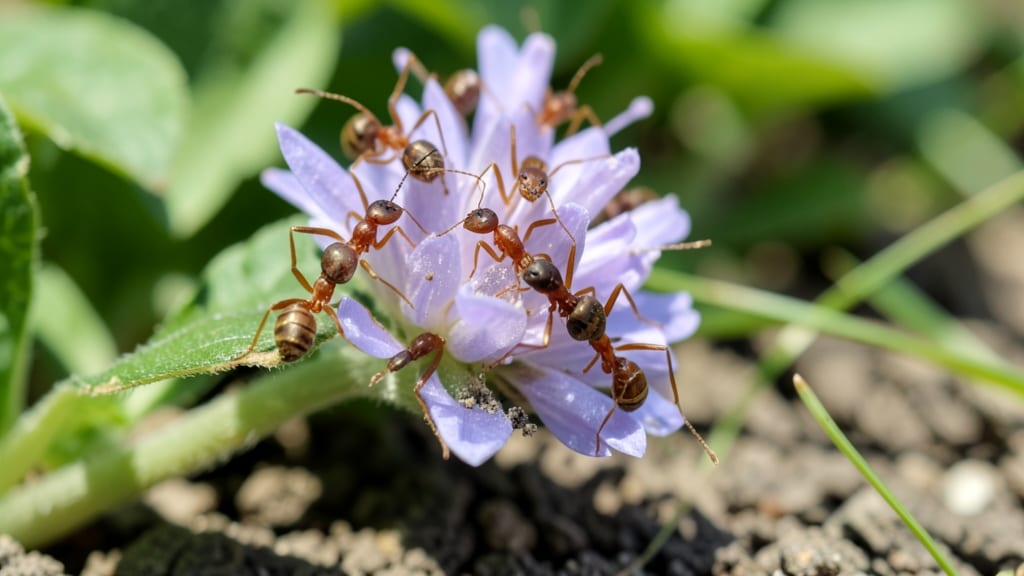
Ants on flowers aren’t just annoying—they’re a sign of a bigger pest problem. 🌿 I’ve seen them march across my roses and petunias, drawn by the sweet honeydew aphids leave behind, and it always means trouble for my plants.
The good news? You can stop them without chemicals by targeting their food source and disrupting their trails.
Most ants are just following the scent of aphid secretions or flower nectar, so the first step is breaking that cycle. A simple spray of soapy water on aphid hotspots or a barrier of diatomaceous earth around your plants can make all the difference.
These methods work fast and won’t harm your garden’s beneficial insects.
Within a few days, you’ll notice fewer ants scouting your blooms and healthier plants without sticky residue. The flowers stay vibrant, the aphids get starved out, and your garden keeps humming with pollinators. It’s a win-win that keeps your yard thriving without harsh interventions.
This approach works year-round, whether you’re dealing with spring bulbs or summer annuals. The key is consistency—check for aphids regularly and refresh barriers after rain. Soon, your flowers will be ant-free and full of life.
📚 In This Guide
- What you need
- Instructions
- Tips and common mistakes
- Wrapping up and next steps
What you need
- ● Fresh herbs: 1 bunch of mint (or 10-15 fresh sprigs)
- ● 1 bunch of lavender (or 10-15 sprigs)
- ● 1 bunch of rosemary (or 10-15 sprigs)
- ● 1 bunch of thyme (or 10-15 sprigs)
- ● Citrus peels: 2-3 orange, lemon, or grapefruit (peels only, fresh or dried)
- ● Cinnamon: 1-2 cinnamon sticks or 1 tbsp ground cinnamon
- ● Vinegar: 1 cup white vinegar (undiluted)
- ● Spray bottle: 8-16 oz glass or plastic (clean, with a fine mist nozzle)
- ● Water: 1 cup (for diluting solutions)
- ○ Optional but helpful: Gloves (to protect hands when handling herbs or vinegar)
- ● Small knife or peeler (for citrus peels)
- ● Tweezers (for placing herbs near ant trails)
- ● Mortar and pestle (for crushing dried herbs if needed)
- ● Prerequisites: Access to outdoor space (garden, balcony, or windowsill)
- ● Time to prep (5-10 minutes max!)
- ● Patience—ants may take 1-2 days to fully avoid treated areas
Quick solutions for ants on flowers
Here's how to keep ants away from your blooms without harming bees or butterflies.
🌿 Step 1: Identify the Ant Trail
First, watch the ants for 10-15 minutes to trace their path to your flowers. They're drawn to nectar, aphids, or honeydew, so follow their route back to the source. Look for tiny trails on stems or soil—ants leave scent trails that guide others. If you see aphids clustered on new growth, that's their buffet.
I like to mark the trail with a stick or note where it starts. This helps you target treatments precisely. Avoid spraying water or soap near the flowers yet—you might accidentally harm pollinators that visit them. Instead, focus on disrupting the ants' access points.
💧 Step 2: Create a Natural Barrier
Draw a line of diatomaceous earth (food-grade only) or crushed eggshells around the base of your plants. Ants won't cross these because they irritate their exoskeletons. Sprinkle a ½-inch wide strip around the stem or flower bed. For potted plants, place a ring of diatomaceous earth in the saucer.
If you don’t have diatomaceous earth, try a thin layer of wood ash from untreated wood. Ants avoid it, and it won’t harm your flowers. Reapply after rain or watering, as moisture washes it away. This method works instantly for most ant species—you’ll see them detour within hours.
✂️ Step 3: Remove the Food Source
Ants are drawn to flowers because of aphids or honeydew. Use a strong stream of water to blast aphids off stems and leaves. Repeat every 3-4 days until they’re gone. For stubborn clusters, dab them with a cotton swab dipped in soapy water (1 tsp mild soap per quart of water).
If aphids keep returning, introduce natural predators like ladybugs or lacewings. They’ll clean up the aphids and reduce the ants’ incentive to visit. Avoid chemical pesticides—they harm pollinators and can linger on flowers, making them toxic to bees.
☀️ Step 4: Use Strategic Plant Placement
Move flowering plants away from ant hotspots like sidewalks, patios, or tree trunks where ants travel. If possible, place them near mint, lavender, or citrus-scented herbs—ants dislike these strong aromas. A small pot of mint near your flowers can act as a natural repellent.
For container gardens, elevate pots on bricks or saucers filled with coarse sand—ants struggle to climb smooth, uneven surfaces. This keeps them from marching right up the stems. If ants are coming from the soil, add a layer of gravel (¼ inch thick) around the base to block their entry.
🪴 Step 5: Monitor and Adjust
Check your flowers daily for new ant activity. If trails reappear, reinforce barriers or adjust plant placement. Ants are persistent, so consistency is key. In 3-5 days, you should see a noticeable drop in visitors if the food source is eliminated.
If ants still persist, try a vinegar spray (1 part white vinegar to 3 parts water) on the soil around plants—but avoid spraying directly on blooms. The smell deters ants without harming your garden. With these steps, your flowers will stay ant-free while keeping pollinators happy.
Tips & tricks for natural ant deterrents on flowers
These simple but effective tricks will help you keep ants away from your garden while protecting your pollinator friends.
Timing is Everything: During that 10-15 minute observation period in Step 1, look for the ants' main entry points—these are often where the stems meet the soil. I've found that ants frequently use the same paths, so if you spot one trail, check nearby stems too. This focused approach saves time and makes your barriers more effective.
Barrier Placement Matters: When creating your ½-inch wide strip of diatomaceous earth or wood ash in Step 2, make sure it's continuous with no gaps. Ants are persistent and will find workarounds if they can. For container gardens, place the barrier right at the edge of the saucer—this prevents them from climbing up the pot sides. I've seen ants completely bypass a barrier that had even a tiny break in it.
Soapy Water Secret: For those stubborn aphid clusters in Step 3, I've found that adding a drop of dish soap (not laundry detergent) to your soapy water makes it even more effective. The soap breaks down the waxy coating on aphids, killing them faster. Just be gentle when applying—you don't want to damage delicate flower petals while you're working.
Herb Placement Strategy: When arranging your mint, lavender, or citrus-scented herbs in Step 4, place them slightly upwind from your flowers. The scent will carry toward your blooms, creating a natural deterrent zone. I've had great success with a small pot of peppermint placed just a few inches away from my roses—the ants stay far away while bees still visit the flowers.
Pro Tips for Ants On Flowers
- These simple but effective tricks will help you keep ants away from your garden while protecting your pollinator friends.
- Timing is Everything: During that 10-15 minute observation period in Step 1, look for the ants' main entry points—these are often where the stems meet the soil.
- Barrier Placement Matters: When creating your ½-inch wide strip of diatomaceous earth or wood ash in Step 2, make sure it's continuous with no gaps.
Frequently asked questions
Got questions about ants on your flowers? You're not alone!
Here are some of the most common concerns—and quick, practical solutions to keep those tiny intruders away for good.
Why are ants suddenly crawling all over my flowers?
Ants often visit flowers to harvest honeydew, a sweet liquid produced by aphids, mealybugs, or scale insects. If you notice ants marching in straight lines, they’re likely "farming" these pests for food. Without the aphids, ants lose their buffet—and your flowers get a break!
How long does it take for natural deterrents to work?
Most natural remedies (like diatomaceous earth or neem oil) start working within 24–48 hours, but full results may take 3–7 days for severe infestations. Consistency is key—reapply after rain or watering. For instant repellents (like vinegar sprays), effects last 1–3 days.
What’s the best store-bought solution if DIY isn’t working?
Look for insecticidal soaps or pyrethrin-based sprays (derived from chrysanthemums). For targeted control, borax bait stations (placed away from flowers) lure ants away. Always follow label instructions—safety first!
Will deterrents harm my plants or beneficial insects?
Most natural options (neem oil, garlic spray, or citrus peels) are plant-safe when used correctly. However, avoid borax or strong chemicals near bees/pollinators. Test sprays on a small leaf first, and apply in the evening to protect daytime visitors.
What if ants keep coming back after I treat them?
Persistent ants mean you’ve got a hidden nest or a secondary food source (like overripe fruit or pet food). Track their trails to the entry point—digging near the base of plants or under mulch often reveals the colony. Eliminate the nest (with soapy water or bait) and remove attractants.
Pro tip: Prevent future visits by keeping your garden tidy, pruning aphid-prone plants, and using ant-proof barriers (like copper tape) around pots.
Wrapping up and next steps
Discovering ants on your flowers can be frustrating, but with the right natural deterrents—like diatomaceous earth, vinegar sprays, or citrus peels—you can reclaim your garden without harsh chemicals. These solutions are quick, eco-friendly, and effective, proving that nature’s best pest control is often right under our feet. 🌿
Ready to take action? Start by testing one method today and observe the difference within days. Your flowers—and your conscience—will thank you!
- Next step: Pick your favorite deterrent and apply it consistently.
- Pro tip: Combine methods (e.g., citrus barriers + vinegar spray) for extra protection.