Companion Plants
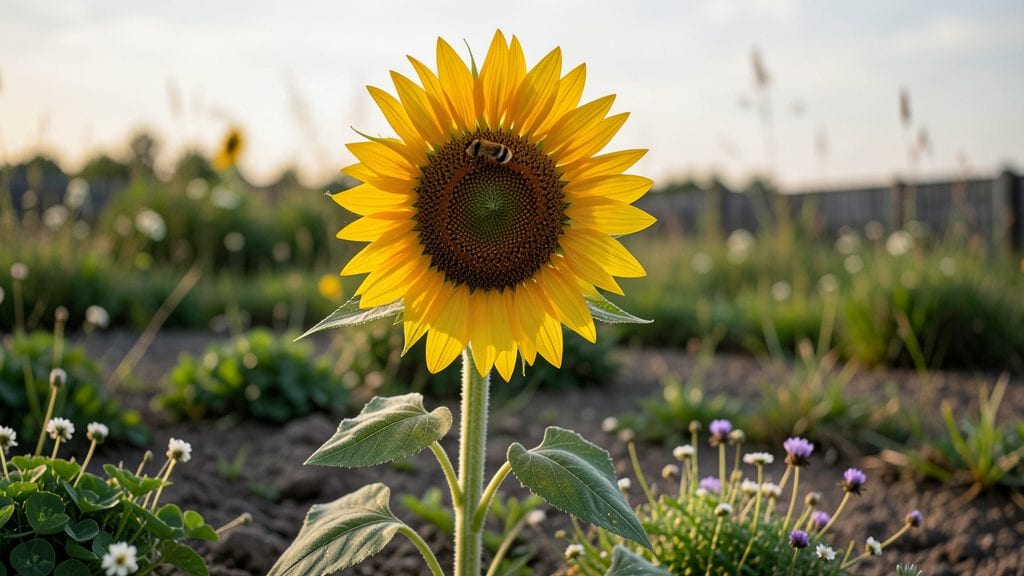
Planting busy bee sunflowers in your Pacific Northwest garden turns summer into a buzzing, golden celebration. These towering pollinator magnets thrive in our cool, damp climate—blooming early, surviving light frosts, and keeping bees happy from June to October.
I’ve watched my yard transform from a quiet corner to a humming hub of activity, all because of these sunflowers’ cheerful faces and nectar-rich petals.
The secret lies in their placement: position them where bees can find them easily, like near lavender or borage, and watch the pollinator parade begin. They’re not just pretty—they’re frost-resistant workhorses that keep giving long after other flowers fade.
My first year, I planted them along the fence line, and by July, I couldn’t walk outside without hearing the constant whirr of wings.
You’ll end up with a garden that’s alive with color and movement, where every bloom feels like an invitation. The sunflowers’ height makes them perfect for cutting too—bring those golden stems indoors for arrangements that last weeks.
Plus, they’re low-maintenance, so even if you forget to water, they’ll still stand tall and proud.
Works beautifully in borders, containers, or as a standalone statement plant. Pair them with native grasses or coneflowers for a Pacific Northwest pollinator paradise that thrives year after year. Let’s get those seeds in the ground!
📚 In This Guide
- What you need
- Instructions
- Tips and common mistakes
- Wrapping up and next steps
What you need
- ● Seeds or Seedlings: Busy Bee Sunflower (Helianthus annuus 'Busy Bee') seeds (10–20 seeds for a small garden patch) or 2–3 healthy seedlings (check local nurseries for PNW-adapted varieties).
- ● Soil: Well-draining, loamy soil (amend with compost if your soil is heavy clay, common in the PNW). Aim for a pH of 6.0–7.5.
- ● Compost or organic matter (1–2 gallons per planting hole to enrich nutrients).
- ● Sunlight: A full-sun spot (6+ hours of direct light daily)—critical for frost-resistant blooms!
- ● Watering Tools: Watering can or hose with a gentle spray nozzle (to avoid disturbing seedlings).
- ○ Drip irrigation kit (optional) for consistent moisture in dry spells.
- ● Garden Tools: Trowel or small hand shovel (for digging holes).
- ● Garden gloves (to protect hands from prickly stems!).
- ○ Stakes or cages (optional, for taller varieties in windy PNW areas).
- ● Frost Protection (PNW-Specific!):strong> Row covers or frost cloth (if planting early spring or late fall).
- ● Mulch (straw or wood chips) to insulate roots during cold snaps.
- ○ Pollinator Perks (Optional but Encouraged!): Nearby companion plants like borage, lavender, or native PNW wildflowers (e.g., yarrow or lupine) to attract bees year-round.
- ● Bird feeder or bath (to support pollinator allies like hummingbirds).
Step-by-Step guide to growing Pacific Northwest pollinator sunflowers
Here's how to cultivate these hardy, bee-magnet sunflowers that thrive even in cool climates.
🌱 Step 1: Select the Right Sunflower Variety and Planting Time
Choose a dwarf or semi-dwarf variety like 'Teddy Bear' or 'Moulin Rouge' for the Pacific Northwest's shorter growing season. These varieties reach 3-5 feet tall and handle cooler temperatures better than giant varieties. Plant seeds 2-3 weeks after your last frost date—typically mid-April to early May in most PNW regions.
Sunflowers are frost-tolerant, but they germinate best when soil temperatures reach at least 50°F. If planting early, use a black plastic mulch to warm the soil faster. I like to test soil temperature with a simple thermometer placed 1 inch deep—it's the most reliable way to avoid waiting too long.
🪴 Step 2: Prepare the Planting Site for Optimal Growth
Choose a location with full sun (6+ hours daily) and well-draining soil. Sunflowers hate soggy roots, so amend heavy clay soil with 2-3 inches of compost mixed into the top 6 inches of soil. The Pacific Northwest's acidic soils often need a balanced fertilizer (10-10-10) applied at planting time to encourage strong root development.
Space seeds 12-18 inches apart in rows 2-3 feet apart to allow airflow and prevent mildew. I plant in blocks rather than rows—this creates a more natural pollinator-friendly environment and makes harvesting easier. Dig holes 1 inch deep and place 2-3 seeds per hole (you'll thin later).
☀️ Step 3: Water and Maintain Through the Growing Season
Water deeply once a week (about 1 inch total) rather than frequent shallow waterings. This encourages deep root growth and drought tolerance. The first 2-3 weeks after germination are critical—keep soil evenly moist but not soggy. You'll know you're watering correctly when the soil feels damp 2 inches down but not wet.
Once plants reach 12 inches tall, reduce watering to every 10-14 days unless you experience extended dry spells. Sunflowers are surprisingly drought-resistant once established. I always check the underside of leaves for powdery mildew—if you see white spots, space plants further apart immediately to improve airflow.
✂️ Step 4: Support Pollinators and Harvest Properly
Leave at least 3-4 plants to flower fully for pollinators. The Pacific Northwest's bees adore sunflowers, and these varieties produce abundant nectar even in cool weather. Watch for bumblebees and native bees—they're the primary pollinators and will visit from early morning until late afternoon.
Harvest seeds when the back of the flower head turns yellow and the petals drop. Cut the entire head and hang it upside down in a dry, well-ventilated area for 2 weeks to fully dry. Rub the dried head between your hands to release seeds. Store in a cool, dark place for up to 2 years—these seeds keep remarkably well.
⏰ Step 5: Prepare for Next Year's Planting
After the first frost blackens the foliage, cut stems down to 2 inches above ground level. This prevents disease overwintering and makes next year's planting easier. Sunflowers are annuals, but they self-seed readily—you'll often find volunteers popping up the following spring.
If you want to save seeds for next year, select the largest, healthiest heads from your best-performing plants. Store them separately from store-bought seeds to maintain genetic purity. I always label my saved seeds with the variety and year—it's easy to forget which one produced the biggest blooms!
Tips & tricks for perfect Pacific Northwest sunflower cultivation
Growing sunflowers in the Pacific Northwest's unique climate takes a few strategic adjustments—but these tricks will help you cultivate thriving pollinator magnets that outperform standard varieties.
Soil Temperature Secret: That 50°F soil temperature threshold from Step 1 is non-negotiable for reliable germination. I've found that using a simple soil thermometer placed 1 inch deep gives the most accurate reading. If your soil runs cooler, consider planting in raised beds—these warm up faster in spring and provide better drainage for sunflowers' sensitive roots.
Spacing Strategy: The 12-18 inch spacing between plants in Step 2 isn't just about aesthetics—it's a disease prevention tactic. Tighter spacing creates humid microclimates that encourage powdery mildew, especially in our damp Pacific Northwest summers. I've had the best success with 18-inch spacing in areas with high humidity, which gives leaves room to dry between waterings.
Watering Wisdom: The deep once-weekly watering in Step 3 works beautifully, but timing matters just as much as quantity. Water in the early morning so leaves have all day to dry, which dramatically reduces mildew risk. I've also noticed that watering at the base rather than overhead keeps foliage cleaner and healthier throughout the season.
Pollinator Boost: To maximize bee activity, I recommend leaving at least 5-6 plants to flower fully rather than the minimum 3-4 mentioned. This creates a more attractive "beefield" for pollinators and increases cross-pollination, which often results in larger, healthier seeds. The extra plants also provide backup if some get damaged by late-season pests.
Pro Tips for Busy Bee Sunflower
- Growing sunflowers in the Pacific Northwest's unique climate takes a few strategic adjustments—but these tricks will help you cultivate thriving pollinator magnets that outperform standard varieties.
- Soil Temperature Secret: That 50°F soil temperature threshold from Step 1 is non-negotiable for reliable germination.
- Spacing Strategy: The 12-18 inch spacing between plants in Step 2 isn't just about aesthetics—it's a disease prevention tactic.
Frequently asked questions
Got questions about growing Busy Bee Sunflower in the Pacific Northwest? You’re not alone!
Here are some of the most common queries—and their answers—to help you cultivate this pollinator-friendly powerhouse with confidence.
Can Busy Bee Sunflowers handle late spring frosts like other PNW varieties?
The Busy Bee is a frost-resistant champion! Unlike tender sunflowers, its sturdy stems and deep roots can withstand light frosts down to 20°F (-7°C). For extra protection, mulch the base with straw or leaves—especially if temperatures dip unexpectedly. Pro tip: Plant after your last frost date for optimal blooms, but don’t stress if a late chill hits!
How long does it take for Busy Bee Sunflowers to bloom after planting?
From seed to showstopper, expect 60–70 days in ideal PNW conditions (cool nights, warm days). Start seeds indoors 4–6 weeks before your last frost for a head start, or direct-sow after soil warms to 50°F (10°C)—just be patient! Early blooms attract bees immediately, but full vigor peaks in mid-to-late summer.
Why aren’t bees visiting my Busy Bee Sunflowers?
Bees love these sunflowers—but if they’re MIA, check these fixes:
- Timing: Plant in early spring (March–April) for the first pollinator wave.
- Location: Place near other pollinator plants (e.g., lavender, borage) for a "bee buffet."
- Pesticides: Avoid neonicotinoids—opt for organic sprays or companion plants like garlic to deter pests without harming bees.
- Water stress: Drought? Give them 1 inch of water weekly (more in clay soil).
Still no bees? Try hand-pollinating with a paintbrush—it’s a fun backup!
Can I grow Busy Bee Sunflowers in containers?
These sunflowers thrive in 5-gallon+ containers with drainage holes. Use a lightweight potting mix (add perlite for aeration) and a 10–12" diameter pot to support their height. Place in full sun (6+ hours/day) and fertilize lightly with compost tea every 4 weeks. Container hack: Train them along a trellis or fence for vertical drama!
What companion plants pair best with Busy Bee Sunflowers?
This sunflower is a team player! Pair it with:
- Pollinator magnets: Echinacea (coneflower), bee balm, or catmint.
- Pest deterrents: Basil (repels thrips) or marigolds (ward off nematodes).
- Edible allies: Cucumbers or beans—sunflowers improve soil nitrogen.
Avoid planting near walnut trees (juglone toxicity) or other sunflowers (crowding). Design tip: Mix heights for a textured, bee-friendly border!
Wrapping up and next steps
There you have it—the Busy Bee Sunflower is more than just a pretty face! 🌻 With its frost-resistant blooms and pollinator magnet appeal, it’s a standout companion plant for Pacific Northwest gardens.
Whether you’re boosting biodiversity, adding color to your landscape, or simply enjoying nature’s hardworking bees, this sunflower delivers big rewards with minimal fuss.
Ready to plant your own pollinator paradise? Start by sourcing seeds or young plants from a trusted nursery, then pick a sunny spot in your garden. Watch as your Busy Bee Sunflower transforms your space into a buzzing hub of life—one bloom at a time! 🐝✨