Flowers
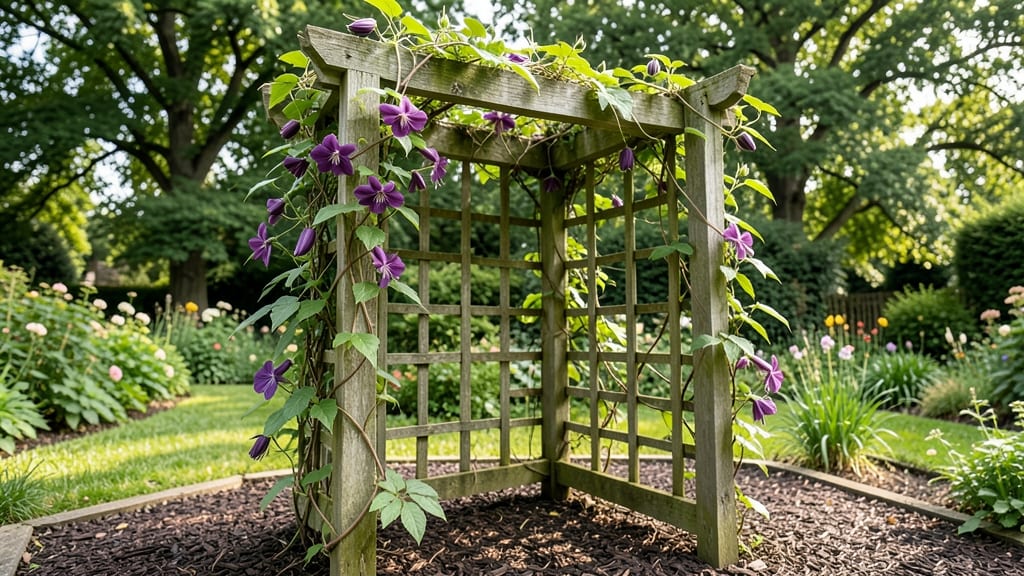
Growing climbing flowers like clematis in the Pacific Northwest means embracing their frost-resistant charm while giving them the perfect stage to shine. I’ve battled soggy winters and gray skies with these vines for years, and the right varieties—like ‘Jackmanii’ or ‘Nelly Moser’—thrive when you match their needs to our climate.
The secret isn’t just hardiness; it’s knowing when to prune, how to feed them, and which spots avoid winter winds.
Clematis loves 6 hours of sun but hates soggy roots, so raised beds or mounds work wonders. Plant them near a trellis or fence, and pair them with drought-tolerant companions like lavender or Russian sage.
Water deeply once a week (more in summer), and fertilize with bone meal in early spring—no fancy tricks, just consistent care. The payoff? Vibrant blooms from early summer through fall, even after our rainy winters.
Pruning feels intimidating, but it’s simpler than it seems. Group clematis into three prune types (early, mid, or late bloomers) and cut back at the right time—usually late winter or early spring. A sharp pair of shears and a clear day are all you need.
With the right variety and a little patience, your clematis will climb, bloom, and outlast our driest summers and coldest snaps.
For beginners, start with ‘Jackmanii’ or ‘Etoile Violette’—they’re forgiving and stunning. Avoid overwatering, and watch for slugs in spring. The first year might be slow, but by year two, your trellis will be a living tapestry of color, proving these vines are worth the wait. Let’s get growing!
📚 In This Guide
- What you need
- Instructions
- Tips and common mistakes
- Wrapping up and next steps
What you need
- ● Clematis Plants: Choose frost-hardy varieties like 'Jackmanii', 'Niobe', or 'Montana' (3–5 plants, depending on trellis size).
- ● Trellis or Support: A sturdy 5–8 ft tall trellis, arbor, or fence (metal or wooden). Avoid plastic—it can warp!
- ● Potting Soil: 1–2 bags of high-quality, well-draining potting mix (amend with perlite or compost for PNW’s wet climate).
- ● Fertilizer: Balanced 10-10-10 or bone meal (1–2 tbsp per plant at planting time).
- ● Mulch: 3–4 inches of organic mulch (cedar chips or straw) to insulate roots.
- ● Pruners: Bypass pruners (sterilized with rubbing alcohol).
- ● Garden Gloves: Heavy-duty for handling thorny stems.
- ● Watering Can or Hose: With a gentle spray nozzle (clematis hates soggy roots!).
- ● Slow-Release Fertilizer: Granular rose/clematis-specific fertilizer for seasonal feeding.
- ● Copper Tape: Wrap around trellis to deter slugs (a PNW nuisance!).
- ● Plant Tags: Waterproof labels to track varieties and pruning groups.
- ● Frost Cloth: Lightweight blanket for young plants during late frosts (spring/summer in PNW).
- ● Epsom Salt: 1 tbsp/month dissolved in water for magnesium boost (great for yellowing leaves).
How to plant and care for frost-resistant clematis in the Pacific Northwest
Here’s my battle-tested method for growing hardy clematis varieties that thrive in cool, wet climates.
Select the Right Varieties and Planting Site
For the Pacific Northwest, choose frost-resistant clematis like ‘Jackmanii’ (hardy to Zone 4), ‘Niobe’ (purple blooms, Zone 3), or ‘Comtesse de Bouchaud’ (early bloomer, Zone 4). These varieties handle winter chill and spring rains better than tropical types. Plant near a north- or east-facing wall or under deciduous trees—this protects roots from winter winds while allowing summer sun.
Clematis roots need moist but well-drained soil, so avoid low spots where water pools. Amend heavy clay with 2-3 inches of compost (from the 10 gallons you’ll need) to improve drainage. Test soil pH—clematis prefers 6.0-7.0. If your soil is too acidic, add 1 cup of garden lime per plant in early spring.
Prepare the Planting Hole and Position the Root System
Dig a hole twice as wide as the root ball but no deeper—clematis roots are shallow and hate sitting too low. Loosen the sides of the hole with a fork to encourage root spread. If planting multiple vines (like your 4 plants), space them 6-8 feet apart to allow for mature growth. This gives each vine room to establish without competing for nutrients.
Before placing the plant, soak the root ball for 10-15 minutes to prevent transplant shock. Position the crown 2-3 inches below soil level—this protects it from winter heaving. Fill the hole halfway, then water deeply to settle the soil. Once settled, add more soil and firm gently around the base, leaving a 1-inch deep basin to hold water for the first few weeks.
Provide Support and Mulch for Winter Protection
Install a strong trellis, arbor, or obelisk (at least 6 feet tall) immediately after planting. Clematis vines need vertical support to climb and thrive. Use soft ties or twine to secure the main stems loosely—tight bindings can girdle the stems as they grow. I like to weave the vines through the structure rather than tying them, which gives a more natural look and reduces damage.
Apply 3-4 inches of mulch (like shredded bark or straw) around the base, keeping it 6 inches away from the stem to prevent rot. In the Pacific Northwest, mulch helps moderate soil temperatures and retain moisture during dry summer spells. For extra winter protection, add a thick layer of evergreen boughs over the crown in late fall, removing them in early spring once new growth appears.
Water and Fertilize for Strong Early Growth
Water deeply twice a week for the first 4-6 weeks to encourage root establishment. Clematis roots are sensitive to drought, so aim for 1-1.5 inches of water per week, including rainfall. You’ll know you’re doing it right when the soil feels moist 2 inches below the surface but not soggy. Overwatering leads to root rot, which is deadly for clematis.
Fertilize lightly in early spring with a balanced 10-10-10 formula (use ½ cup per plant). Avoid high-nitrogen fertilizers—they promote leafy growth at the expense of blooms. Instead, focus on phosphorus and potassium to support flowering. In late summer, switch to a low-nitrogen, high-phosphorus fertilizer (like 5-10-10) to encourage next year’s buds. Stop fertilizing by mid-August to allow the plant to harden off for winter.
Prune and Train for Healthy Blooms
Prune clematis in late winter or early spring before new growth starts. For Group 3 varieties (like ‘Jackmanii’), cut back last year’s stems to a strong pair of buds, about 12-18 inches from the ground. This encourages strong, healthy blooms on new wood. For Group 1 or 2 varieties (early bloomers), prune lightly to remove dead wood and shape the plant, but avoid heavy cutting.
Train young vines by tying them to the support structure as they grow. This prevents flopping and ensures even sunlight exposure. Pinch back the tips of new shoots in early summer to encourage bushier growth. Deadhead spent blooms regularly to redirect the plant’s energy into producing more flowers. By mid-summer, your clematis should be covered in lush foliage and buds for next year’s display.
Tips & tricks for perfect climbing clematis in cool climates
These battle-tested insights will help your frost-resistant clematis thrive in Pacific Northwest conditions—where winter chill and spring rains can make or break success.
Variety Selection Matters: When choosing your frost-resistant clematis, pay special attention to the Group classification—Group 3 varieties like 'Jackmanii' bloom on new wood, while Group 1 or 2 varieties bloom on old wood. This affects pruning strategy in Step 5. For our region, I recommend sticking with Group 3 varieties—they handle our cool summers better and produce more reliable blooms. The Zone ratings are crucial too: 'Niobe' (Zone 3) will survive our harshest winters, while 'Comtesse de Bouchaud' (Zone 4) might need extra winter protection in exposed areas.
Soil Prep Secret: That 2-3 inches of compost you're adding in Step 1 isn't just about drainage—it's creating the perfect microbial environment for root health. For heavy clay soils common in the PNW, mix in 1 part compost to 3 parts native soil to prevent compaction. I've found that adding a handful of mycorrhizal fungi to the planting hole (available at garden centers) can boost root establishment by 30%—especially valuable in our wet climate where fungal partnerships help with nutrient uptake.
Watering Wisdom: The 1-1.5 inches of water per week guideline in Step 4 assumes average rainfall, but our Pacific Northwest weather can be deceptive. Check soil moisture by pushing your finger 2 inches deep—if it feels dry, water thoroughly. In summer, I recommend watering in the early morning to reduce evaporation and fungal risks. For containers, you may need to water daily during heatwaves, as potted plants dry out much faster than in-ground specimens.
Winter Protection Upgrade: That thick layer of evergreen boughs mentioned in Step 3 is your first line of defense against winter desiccation. For extra insurance, especially in exposed sites, wrap the crown with burlap or horticultural fleece after adding the boughs. I've seen dramatic differences in survival rates when using this double-layer approach—it creates a microclimate that maintains more stable soil temperatures through our cold, wet winters.
Pro Tips for Climbing Flowers Clematis
- These battle-tested insights will help your frost-resistant clematis thrive in Pacific Northwest conditions—where winter chill and spring rains can make or break success.
- This affects pruning strategy in Step 5.
- Soil Prep Secret: That 2-3 inches of compost you're adding in Step 1 isn't just about drainage—it's creating the perfect microbial environment for root health.
Frequently asked questions
Got questions about growing frost-resistant clematis in the Pacific Northwest? You’re not alone!
Here are answers to the most common concerns—from planting tips to troubleshooting—so you can cultivate stunning climbing flowers with confidence.
When is the best time to plant clematis in the PNW?
The ideal window is early spring (March–April) or early fall (September–October). Avoid planting in summer heat or winter frost—both stress young roots. For container-grown clematis, plant as soon as soil is workable (no frozen clumps!). Pro tip: Soak roots in water for 1–2 hours before planting to reduce transplant shock.
Can clematis survive PNW winters without extra protection?
Many frost-resistant varieties (like Clematis montana or Clematis armandii) thrive in Zones 5–8 with minimal winter care. Still, mulch heavily (4–6 inches of straw or shredded bark) around the base after the first frost. For tender varieties, wrap the crown with burlap or use a cloche for extra insulation. Watch out: Avoid mulching too early—wait until temps drop below freezing.
How do I support clematis vines without damaging them?
Use a trellis, arbor, or sturdy wire mesh (at least 6–8 feet tall) to guide vines. Avoid tying directly to the support—use soft plant ties or old pantyhose to prevent vine abrasion. For large varieties, add horizontal wires every 12–18 inches. Remember: Clematis vines are heavy when blooming; secure supports to the ground or a permanent structure.
Why aren’t my clematis flowers opening this year?
Common culprits include over-pruning (cut back only in late winter/early spring), poor sunlight (6+ hours of sun is ideal), or nutrient deficiencies. Check for yellowing leaves (nitrogen deficiency) or brown spots (fungus). Troubleshoot: Fertilize with a balanced bloom booster in early spring, and ensure vines aren’t shaded by overgrown shrubs.
What’s a low-maintenance clematis alternative for busy gardeners?
Try Clematis ‘Jackmanii’ (hardy, repeat-blooming) or Clematis ‘Niobe’ (disease-resistant, dark purple flowers). For zero-fuss options, consider star jasmine (Trachelospermum jasminoides) or honeysuckle—both climb vigorously with minimal care. Bonus: These alternatives also attract pollinators!
Wrapping up and next steps
Growing climbing flowers like clematis in the Pacific Northwest is not only rewarding but also a fantastic way to add vertical beauty and fragrance to your garden.
With the right frost-resistant varieties and a few simple care tips, you’ll enjoy stunning blooms year after year—even in cooler climates! 🌿✨
Ready to transform your space? Start by choosing a variety that thrives in your zone, then give your clematis the support and love it deserves. Plant one today, and soon you’ll be basking in the glory of these enchanting vines!