
Blooming
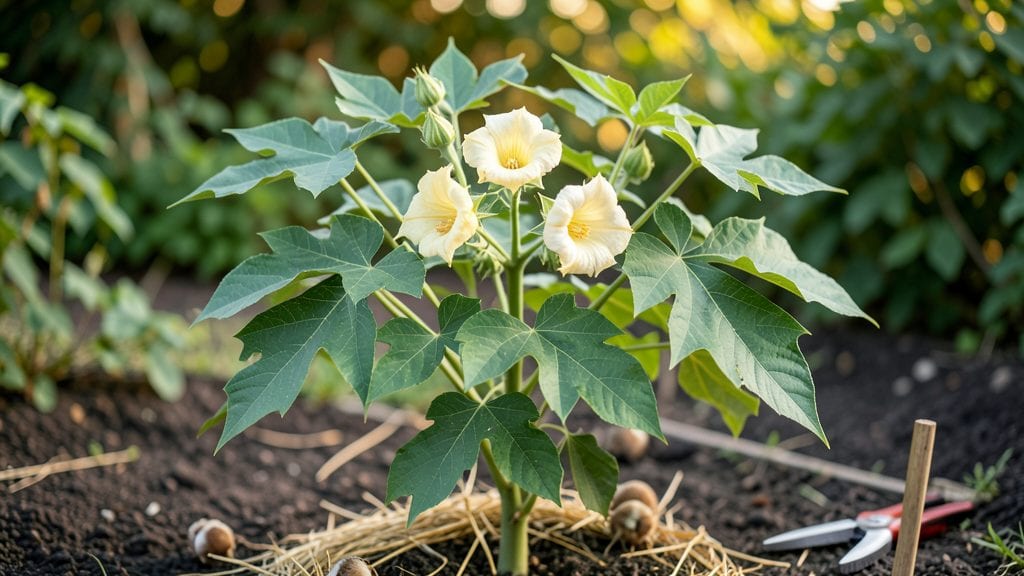
Growing cotton flowers in the Pacific Northwest means chasing blooms through cooler summers—but with the right pruning, you can coax those delicate white blossoms even when frost lingers in the forecast. 🌿 I’ve learned that cotton plants (Gossypium spp.) here need a gentler touch: aggressive pruning back home kills them, but strategic cuts keep them blooming longer and tougher against our damp springs.
The key is pruning after frost risk passes but before summer heat sets in—usually mid-May in most PNW zones. You’ll focus on removing only the leggy, unproductive stems while leaving the strong, leafy ones to fuel blooms.
It’s not about shearing like roses; it’s about shaping the plant to direct energy where it counts. Think of it as giving your cotton a haircut that makes it look healthier while actually making it perform better.
What you’ll end up with are plants that burst into bloom by early July, their white flowers standing out against the green like snowflakes in a summer storm. The blooms last longer, the fiber develops more evenly, and you avoid the heartbreak of late frosts wiping out your progress.
Even the leaves stay lush and disease-resistant—no more sad, yellowing plants by August.
This method works for both ornamental cotton (like Gossypium hirsutum) and fiber varieties, though you’ll need to adjust timing slightly based on your microclimate.
The PNW’s shorter growing season means you’ve got to move fast once you start pruning—so mark your calendar and get ready for a harvest that’ll make your neighbors do a double-take.
📚 In This Guide
- What you need
- Instructions
- Tips and common mistakes
- Wrapping up and next steps
What you need
- ● Cotton flower seeds or seedlings: Choose frost-resistant varieties like Gossypium hirsutum (upland cotton) or Gossypium barbadense (Pima cotton). Start with 3–5 plants for a small garden.
- ● Well-draining soil: Mix 1 part garden soil with 1 part compost and 1 part perlite/sand to prevent waterlogging (critical in PNW’s damp climate!).
- ● Organic fertilizer: A balanced 10-10-10 or low-nitrogen (5-10-10) blend to avoid leggy growth. Use 1–2 tbsp per plant every 4–6 weeks.
- ● Mulch: 2–3 inches of straw or wood chips to insulate roots from late frosts (PNW’s last frost often hits May!).
- ● Drip irrigation or soaker hose: Cotton flowers need 1–2 inches of water weekly, but avoid overhead watering to prevent fungal diseases.
- ● Pruning shears: Sharp, bypass-style shears (size 6–8 inches) for clean cuts.
- ● Frost cloth: A lightweight (30–40g/m²) frost blanket for young plants (PNW’s 28°F nights can be risky!).
- ● Garden gloves: Heavy-duty nitrile-coated gloves to protect from thorns and soil.
- ● Stakes or cages: 5–6 ft tall bamboo stakes or tomato cages to support tall varieties (cotton can grow 4–5 ft!).
- ● pH test kit: Aim for soil pH 6.0–7.0; amend with lime or sulfur if needed.
- ● Compost tea or mycorrhizal fungi: Boosts root health in PNW’s acidic soils.
- ● Pest control: Neem oil or pyrethrin spray for aphids/whiteflies (common in PNW gardens).
- ● Journal/notebook: Track blooms, pruning dates, and frost events to refine your technique!
Step-by-step guide to pruning frost-resistant cotton flowers
Here’s how to keep your Pacific Northwest cotton flowers thriving through winter—with pruning that strengthens stems and encourages lush spring blooms.
✂️ Step 1: Time Your Pruning for Winter Hardiness
Prune cotton flowers in early spring (March) before new growth begins, or in late fall (October) after the first frost. This timing prevents tender new shoots from forming before winter sets in. In the PNW’s cooler climate, wait until temperatures stay above 40°F for at least 3 days—cold snaps can stress newly cut plants.
Use clean, sharp pruners to make cuts at a 45-degree angle just above a leaf node. This encourages outward growth and prevents water from pooling on the stem. I always sanitize my tools with rubbing alcohol first—diseases like powdery mildew love damp cuts.
🌿 Step 2: Remove Dead or Damaged Growth
Scan the plant for brown, brittle stems or leaves with black spots—these are winter casualties. Snip them back to the nearest healthy growth point. Healthy growth looks firm, green, and slightly flexible. If a branch is hollow or mushy inside, it’s beyond saving and should be removed entirely.
Don’t over-prune! Leave at least half the plant’s structure intact. Cotton flowers regenerate quickly, but severe cuts can weaken the root system. I like to leave a few old stems—sometimes they surprise you with late blooms in spring.
☀️ Step 3: Shape for Airflow and Sun Exposure
Thin out crowded branches to improve airflow, which reduces fungal risks in the damp PNW climate. Aim for an open, vase-like shape—this lets sunlight reach the center where buds form. Look for branches growing inward and prune them back to the main stem.
Step back and visualize the plant’s natural form. You’ll see where light might get blocked by dense foliage. A well-pruned cotton flower should have sunlight hitting all sides by midday. If your plant is near a wall or fence, prune the side closest to it to prevent shading.
💧 Step 4: Fertilize and Water After Pruning
Apply a balanced, slow-release fertilizer (10-10-10) around the base of the plant within 24 hours of pruning. This gives roots the nutrients they need to recover and support new growth. Water deeply until the soil is 6 inches moist—this helps roots re-establish after the shock of pruning.
For the first week after pruning, keep the soil consistently moist but not soggy. You’ll notice new growth in 7-10 days—small, bright green leaves emerging from the nodes. If you see yellowing leaves, it’s a sign of overwatering or nutrient stress, not pruning damage.
⏰ Step 5: Monitor for Spring Regrowth
In April or May, check for new shoots at the base of the plant. These are your signal to stop pruning for the season. If you see pale, leggy growth, your plant needs more light—move it to a sunnier spot or supplement with a grow light for 12-14 hours daily.
Resist the urge to prune again until after the last frost date in your area. New growth is frost-sensitive, and a late prune can set you back weeks. Instead, focus on mulching (2-3 inches of organic mulch) to protect roots and retain moisture through spring.
Tips & tricks for perfect Pacific Northwest cotton flower pruning
These simple strategies will help you prune with confidence—and keep your frost-resistant cotton flowers thriving through PNW winters.
Timing is Everything: The 40°F minimum temperature rule is non-negotiable for PNW cotton flowers. I've learned the hard way that pruning too early in cold snaps can shock plants—wait for those three consecutive days above 40°F before you start. For late fall pruning in October, check your local frost dates and prune within a week after the first frost hits. This gives plants time to harden off before winter sets in completely.
Tool Prep Makes All the Difference: Sanitizing your pruners with rubbing alcohol isn't just about hygiene—it's about preventing fungal infections that thrive in the damp PNW climate. I keep a small bottle of 70% isopropyl alcohol in my gardening toolkit and wipe down blades before AND after each use. For the 45-degree angle cuts, practice on scrap wood first—it takes about 10 minutes to get comfortable making clean cuts that heal properly.
Visual Cues for Healthy Growth: When identifying healthy growth points in Step 2, look for these three visual clues: firm texture (press gently—it should spring back), vibrant green color (no yellowing or brown spots), and slightly waxy surface (healthy leaves have a subtle sheen). I've found that cotton flowers often produce late blooms from old stems, so don't be too hasty removing those brown branches—sometimes they're just dormant buds waiting for spring.
Airflow Strategy for Damp Climates: In the PNW's humid conditions, proper airflow is your best defense against fungal diseases. After shaping your plant in Step 3, I recommend adding a small fan on low setting near the plant for the first 24 hours post-pruning. This helps dry any moisture from cuts and prevents bacterial growth. Place the fan about 2 feet away—close enough to create airflow without damaging tender new growth.
Pro Tips for Cotton Flower Bloom
- These simple strategies will help you prune with confidence—and keep your frost-resistant cotton flowers thriving through PNW winters.
- Timing is Everything: The 40°F minimum temperature rule is non-negotiable for PNW cotton flowers.
- Tool Prep Makes All the Difference: Sanitizing your pruners with rubbing alcohol isn't just about hygiene—it's about preventing fungal infections that thrive in the damp PNW climate.
Frequently asked questions
Got questions about nurturing your cotton flower bloom in the Pacific Northwest’s frosty climate? You’re not alone! Here are answers to the most common queries—from timing tips to troubleshooting tricks.
When is the best time to prune cotton flowers for a frost-resistant bloom?
Prune after the first hard frost (typically late fall) but before new growth starts in early spring. This removes weak stems and encourages stronger, frost-hardier blooms. Avoid pruning in winter—cold stress can harm the plant. Pro tip: Wait until temps consistently stay above 40°F (4°C) for a few days.
How do I protect cotton flowers from late spring frosts?
Use frost cloth or row covers when nighttime temps drop below 32°F (0°C). For young plants, wrap them loosely in burlap or place a bucket of water nearby—it releases heat slowly. Mulch the base with straw or pine needles to insulate roots. Bonus: Plant near a south-facing wall for extra warmth!
Can I grow cotton flowers from seed in the PNW, or should I buy starts?
Seeds are cheaper but slower—start them indoors 8–10 weeks before your last frost. Buying frost-hardy starts (like Gossypium varieties) saves time and ensures better survival. If seeding outdoors, wait until soil is at least 60°F (15°C)—cold soil stunts germination.
What’s the right way to prune dead or diseased stems without harming the plant?
Use sterilized shears to cut just above a healthy leaf node (about ¼ inch above). Remove only brown, mushy, or blackened stems—never more than ⅓ of the plant at once. Dispose of clippings in the trash (not compost) to prevent spreading disease. Reminder: Wear gloves—cotton plant sap can irritate skin!
Why aren’t my cotton flowers blooming, even after pruning?
Check these top 3 culprits:
- Light: Cotton flowers need 6+ hours of sun daily—move to a sunnier spot if needed.
- Water: Overwatering causes root rot; underwatering stresses the plant. Aim for 1–1.5 inches per week.
- Nutrients: Feed with a low-nitrogen, high-phosphorus fertilizer (like 5-10-10) when buds form.
If the issue persists, your plant may be too young—cotton flowers often bloom in their second year.
Wrapping up and next steps
The cotton flower bloom in the Pacific Northwest’s chilly climate is a true testament to nature’s resilience—and now, you’re equipped with the knowledge to nurture it! 🌸 From frost-resistant pruning techniques to seasonal care, every step ensures your plants thrive year after year. Your garden isn’t just surviving the cold; it’s flourishing with vibrant blooms.
Ready to put your new skills to work? Grab your pruners and head back to the step-by-step guide to refresh your approach. Happy gardening—your cotton flowers are waiting for you! 🌿✨