
Trees
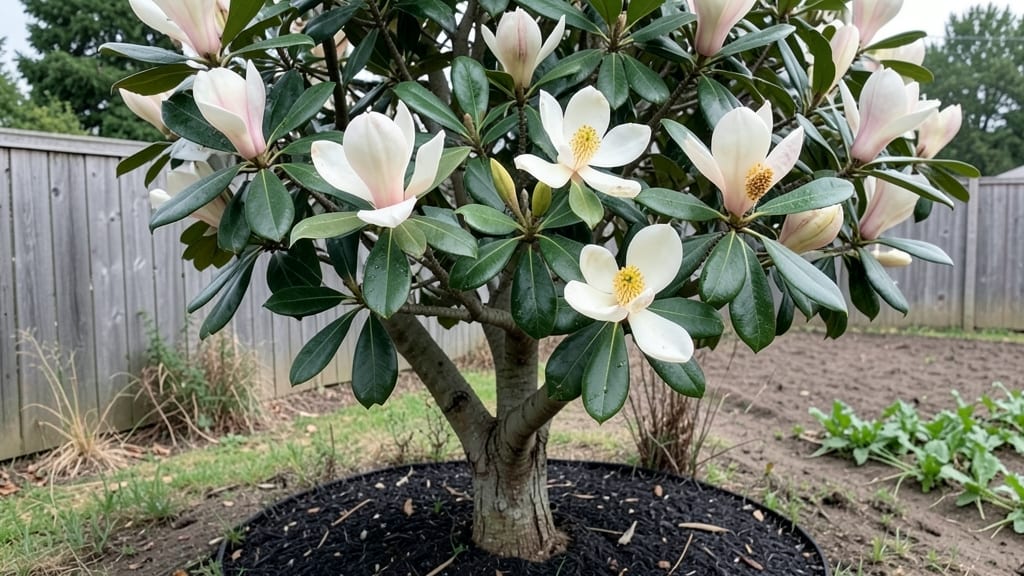
Planting a flowering magnolia tree in the Pacific Northwest means embracing its dramatic blooms and frost-hardy resilience—though pruning it wrong can turn those showstopper flowers into a tangled mess. 🌸 I’ve learned the hard way that magnolias reward patience with 10-foot-tall bursts of color by midsummer, but they demand specific care to thrive in our damp, chilly climate.
The secret to success starts with the right spot: partial shade for younger trees (they hate scorching afternoon sun), well-draining soil (no soggy roots!), and plenty of space—these trees grow slow but wide.
Water deeply once a week after planting, then let nature take over; magnolias hate overwatering more than they hate drought. The real magic happens in late winter, when frost-resistant pruning opens up the canopy for bigger, healthier blooms next season.
By summer’s end, you’ll be rewarded with glossy leaves and clusters of cup-shaped flowers that perfume the air—some varieties even bloom before the leaves appear. The key is balancing pruning with patience; these trees live for decades, and their slow-and-steady growth makes every bloom feel like a celebration.
Here’s how to keep yours thriving through our wet winters and mild summers.
Whether you’re a beginner or a seasoned gardener, magnolias adapt well to our region’s climate—just avoid pruning after early summer (you’ll cut off next year’s flowers). With the right approach, your tree will become the standout star of your landscape, year after year.
📚 In This Guide
- What you need
- Instructions
- Tips and common mistakes
- Wrapping up and next steps
What you need
- ● Flowering magnolia tree: Choose a frost-resistant variety like Magnolia × soulangeana (Saucer Magnolia) or Magnolia stellata (Star Magnolia). Purchase a 1- to 3-gallon container-grown specimen from a reputable nursery.
- ● Well-draining soil: 2–3 cubic yards of a mix of topsoil (60%), compost (30%), and sand or perlite (10%) for optimal drainage.
- ● Organic mulch: 3–4 inches of wood chips, pine bark, or shredded leaves to retain moisture and protect roots.
- ● Slow-release fertilizer: 10–20 lbs of balanced granular fertilizer (10-10-10 or 20-20-20) for initial planting.
- ● Watering can or hose: With a gentle spray nozzle to avoid damaging delicate roots.
- ● Pruning tools: 1 pair of bypass pruners (for small branches).
- ● 1 pair of loppers (for thicker branches up to 1.5 inches).
- ● 1 pruning saw (for branches over 2 inches).
- ● Garden gloves: Heavy-duty, cut-resistant gloves for protection.
- ● Soil pH test kit: To ensure your soil is slightly acidic (pH 5.0–6.5)—magnolias love it!
- ● Tree stake & ties: 1–2 biodegradable stakes and soft fabric ties to support young trees in windy areas.
- ● Anti-desiccant spray: (e.g., Wilt-Pruf) to protect new growth from winter drying.
- ○ Frost cloth: Lightweight breathable fabric for young trees during late frosts (optional for established plants).
- ● Post-hole digger or auger: For digging a proper planting hole (2–3 times wider than the root ball).
- ● Wheelbarrow: For hauling soil, mulch, and tools.
- ● Knee pads: Because planting a tree is a labor of love—and your knees will thank you!
Step-by-Step guide to planting and pruning flowering magnolias in the Pacific Northwest
Here’s how to establish a thriving magnolia that survives our region’s wet winters and blooms reliably year after year.
🌱 Step 1: Select and Plant Your Magnolia at the Right Time
Choose a dwarf or semi-dwarf variety like 'Ann' or 'Jane' for smaller yards—they handle our Pacific Northwest’s 10-30°F winters better than giant species. Plant in late fall or early spring when soil is workable but not frozen. Dig a hole twice as wide as the root ball but no deeper—magnolias hate sitting low in soggy soil.
Amend the native soil with compost and a handful of bone meal (the phosphorus boosts root growth). Place the tree so the top of the root ball sits 1-2 inches above ground level—this prevents waterlogging during our rainy winters. Backfill with native soil (no amendments needed) and water deeply to settle everything.
☀️ Step 2: Position for Sunlight and Wind Protection
Magnolias need full sun to partial shade—at least 6 hours of direct light daily for best blooms. In the PNW, a south- or west-facing spot works best, but avoid areas where cold winter winds scour branches. If your yard is exposed, plant near a fence or building for windbreak.
Here’s the thing—magnolias planted in too much shade produce fewer flowers. You’ll see leggy growth and sparse blooms if they’re tucked under tall evergreens. Test your spot by observing sunlight patterns for a week before planting.
✂️ Step 3: Prune for Frost Resistance and Bloom Health
Wait until late winter or early spring (after the worst frosts) to prune. Remove dead, crossing, or rubbing branches first—these invite disease. Cut back to the outer bud (the one facing outward) to encourage an open, airy canopy that sheds snow better.
Never prune in fall—new growth won’t harden off before winter, and you’ll lose next year’s flowers. If you must shape lightly, do it after blooming season (late spring) but avoid heavy cuts. Magnolias bloom on old wood, so aggressive pruning reduces future flowers.
💧 Step 4: Water and Mulch for Winter Survival
Water deeply once a week during the first growing season to establish roots—1-2 inches of water per week is ideal. After establishment, magnolias are drought-tolerant but still need consistent moisture during dry PNW summers. You’ll know it’s right when the top 6 inches of soil stay damp but not soggy.
Apply 3-4 inches of mulch (wood chips or bark) around the base, keeping it 6 inches away from the trunk. This insulates roots from freeze-thaw cycles and retains moisture. Refresh mulch annually—it breaks down fast in our wet climate.
⏰ Step 5: Monitor for Frost Damage and Adjust Care
After winter, check for brown, mushy buds or split bark—signs of frost damage. Prune out damaged areas in early spring before new growth starts. If your magnolia blooms poorly, it may need more sunlight or less shade from nearby trees.
Real talk: Magnolias in the PNW sometimes struggle with late spring frosts that blacken buds. If this happens, prune off damaged flowers immediately—the plant will redirect energy to next year’s blooms. With patience, your tree will develop resilience over time.
Tips & tricks for perfect flowering magnolia tree care in the Pacific Northwest
These pro tips will help you navigate our region's unique climate challenges and ensure your magnolia thrives for decades.
Soil Preparation Secret: In Step 1, don't skip the bone meal amendment—it's the phosphorus boost that encourages strong root development during our wet winters. I've seen magnolias planted without it struggle with weak growth in the PNW's acidic soils. For even better results, mix in a handful of mycorrhizal fungi with the compost to enhance root absorption of nutrients.
Sunlight Observation Technique: When testing your planting spot in Step 2, use a simple method: place a white bowl in the potential location for a week. Mark the sunlit areas with a pencil—you'll get a clear visual of exactly how many hours of direct light you have. This is especially important in the PNW where cloud cover can be deceiving about actual sunlight exposure.
Pruning Timing Strategy: For Step 3, mark your calendar for late winter (February) as the absolute latest you should prune. I've learned this the hard way—pruning too late in spring can leave new growth vulnerable to our unpredictable late frosts. If you miss the late winter window, wait until after blooming season but avoid any heavy cuts that could reduce next year's flowers.
Mulch Application Hack: When applying the 3-4 inches of mulch in Step 4, create a slight depression around the trunk where water can pool. This helps direct moisture to the roots during our dry summer months while preventing water from pooling against the bark. Refresh the mulch every spring—it breaks down surprisingly fast in our damp climate, leaving roots exposed to winter temperature swings.
Pro Tips for Flowering Magnolia Tree
- These pro tips will help you navigate our region's unique climate challenges and ensure your magnolia thrives for decades.
- Soil Preparation Secret: In Step 1, don't skip the bone meal amendment—it's the phosphorus boost that encourages strong root development during our wet winters.
- Sunlight Observation Technique: When testing your planting spot in Step 2, use a simple method: place a white bowl in the potential location for a week.
Frequently asked questions
Got questions about your flowering magnolia tree? You’re not alone! Whether you're a newbie or a seasoned gardener, these answers will help you nurture a stunning, healthy tree in the Pacific Northwest’s climate.
When is the best time to plant a flowering magnolia tree in the PNW?
The ideal time to plant is in early spring or fall—when temperatures are mild and the ground isn’t frozen. This gives roots time to establish before summer heat or winter frost. Avoid planting in late fall, as young trees may struggle with cold snaps. Pro tip: Water deeply after planting and mulch to retain moisture!
How cold-hardy are flowering magnolias, and how do I prepare for PNW winters?
Most flowering magnolias (like Magnolia × soulangeana) tolerate temps down to -10°F to -20°F, making them great for the PNW. Still, young trees or tender varieties need extra care:
- Apply a 3–4 inch layer of mulch around the base (but not touching the trunk).
- Wrap the trunk with burlap or tree guards if your area dips below -15°F.
- Avoid pruning in late fall/winter—wait until late winter or early spring.
Can I prune a flowering magnolia tree in winter, or will it kill the blooms?
Prune after flowering (late spring to early summer) to avoid cutting off next year’s buds. Winter pruning is risky—magnolias set flower buds the previous summer, so trimming too late can reduce (or even eliminate) spring blooms. Exception: Remove dead/diseased branches anytime, but do it carefully!
Why aren’t my magnolia flowers opening, even though the buds look healthy?
Bud blast (buds dropping before opening) is common in magnolias due to late frosts, humidity, or fungal issues. To prevent it:
- Plant in a sunny, sheltered spot (away from drafts).
- Ensure good air circulation to reduce fungal spores.
- Apply a copper fungicide if you notice blackened buds.
What’s a good frost-resistant alternative to flowering magnolias for the PNW?
If you love magnolias but want extra cold resilience, try:
- Yulan magnolia (Magnolia denudata): Thrives in zones 4–9, blooms late spring.
- Saucer magnolia (Magnolia × soulangeana ‘Black Tulip’): Hardier than star magnolias, deep purple blooms.
- Star magnolia (Magnolia stellata): Blooms in late winter, tolerates -20°F.
Wrapping up and next steps
Growing a flowering magnolia tree in the Pacific Northwest is a rewarding journey—one that brings bold beauty and resilience to your landscape. With the right frost-resistant pruning techniques and care, you’ll enjoy stunning blooms for decades.
Whether you’re a seasoned gardener or just starting, every trim and nurturing step brings you closer to that dreamy magnolia grove!
Ready to take the next step? Start small:
- 🌱 Pick your variety—choose a frost-hardy cultivar like ‘Jane’ or ‘Elizabeth’ for PNW success.
- 📝 Sketch a plan—map out your tree’s future shape and pruning schedule.
- ✂️ Grab your tools and begin with this guide to prune like a pro!