
Companion Plants
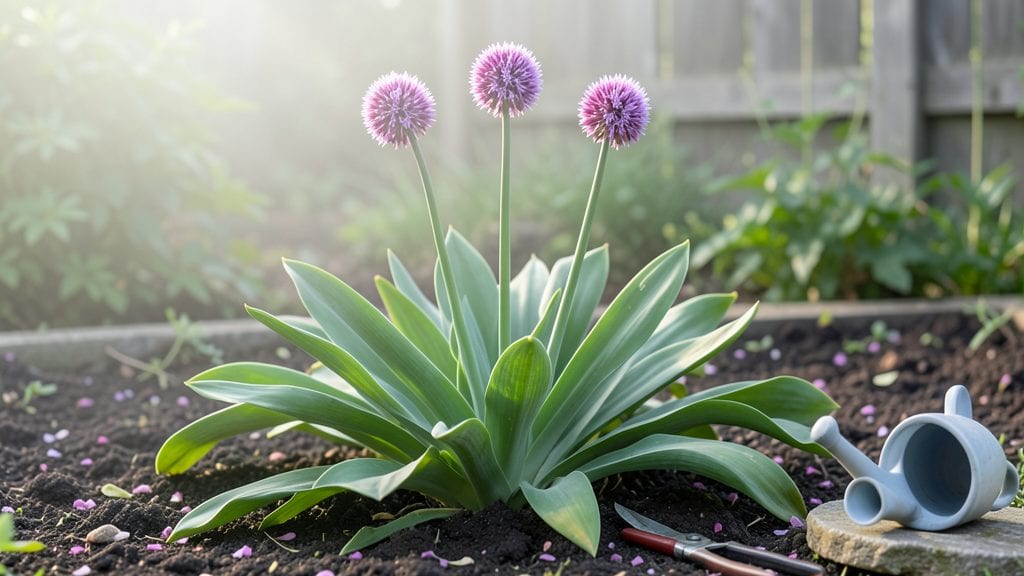
Garlic plants with purple flowers aren’t just edible—they’re the showstoppers of your garden. 🌿 These ornamental alliums bring bold vertical drama, with globe-shaped blooms that dance between lavender and deep violet, while attracting bees and butterflies like no other.
My first batch transformed a dull spring border into a pollinator paradise overnight.
The secret to their magic lies in placement: nestle them among perennials like catmint or salvia, where their 2- to 3-foot stems create striking contrast against lower foliage. Purple alliums thrive in full sun to partial shade, and their late-spring to early-summer blooms bridge the gap between tulips and dahlias.
Pair them with silver-leafed plants for extra visual pop.
You’ll end up with a garden that hums with activity while looking like a curated masterpiece. The blooms last weeks, drying beautifully for winter arrangements, and their onion-family roots deter pests naturally. Even the leaves add texture—long, strap-like, and architectural. Let’s make your garden the envy of the neighborhood.
Works equally well in cottage gardens, modern borders, or pollinator patches. The key is balancing their bold color with complementary tones—think soft pinks, creamy whites, or deep greens. Start with just a few clumps, and watch how they elevate every space they enter.
📚 In This Guide
- What you need
- Instructions
- Tips and common mistakes
- Wrapping up and next steps
What you need
- ● Garlic cloves (purple-flowered varieties): 10–20 cloves (or 1–2 whole bulbs)
- ● Look for Allium sativum cultivars like ‘Purple Streak’ or ‘Gladiator’ for ornamental blooms.
- ● Well-draining potting soil: 1–2 gallons (for containers) or a 4’x8’ garden bed (for in-ground planting)
- ● Mix in perlite or compost (20–30%) for aeration.
- ● Container or garden bed: Containers: 6–8” deep pots with drainage holes (1–2 cloves per pot).
- ● Garden beds: Full sun (6+ hours/day) and loose, fertile soil.
- ● Basic gardening tools: Hand trowel
- ● Pruners (for trimming foliage)
- ● Watering can or hose with a gentle spray nozzle
- ● Slow-release fertilizer (balanced 10-10-10 or organic options like fish emulsion)
- ● Mulch (straw or shredded leaves) to retain moisture
- ● Epsom salt (1 tbsp per gallon of water) for magnesium boosts
- ● Pollinator-friendly companions (e.g., lavender, marigolds, or thyme)
- ● Garden stakes or trellis (if stems grow tall and need support)
How to grow garlic with stunning purple flowers
Here's how to cultivate this eye-catching variety that thrives as both edible and ornamental.
🌱 Step 1: Select and Prepare Your Garlic Cloves
Choose purple-stemmed garlic (like 'Purple Stripe' or 'Red Toch') from a reputable supplier. Break apart the bulb into individual cloves, ensuring each has a small root base attached. You'll need about 4 cloves for a small pollinator garden display. Soak the cloves in lukewarm water for 30 minutes to soften the papery skin—this speeds up root development.
Let them dry briefly on a paper towel until the base feels slightly tacky but not wet. This prevents rot while allowing roots to form. I always plant the largest cloves—they produce the most robust plants and biggest flower stalks. The smaller ones can go in your kitchen for cooking, but they won't flower as dramatically.
☀️ Step 2: Plant in Well-Draining Soil With Full Sun
Choose a location with at least 6 hours of direct sunlight daily—purple-flowering garlic needs this to develop its vibrant blooms. Work 2-3 inches of compost into the top 6 inches of soil to improve drainage and fertility. Garlic hates soggy conditions, so if your soil stays wet, amend with sand or perlite until it feels like a well-wrung sponge.
Plant cloves 2 inches deep, 4 inches apart in rows 12 inches apart. Point the root base downward and cover lightly with soil. The tips should peek just above the surface. Water gently but thoroughly right after planting—this settles the soil and encourages root contact. You'll see green shoots in 2-3 weeks, but don't be tempted to water again until the soil feels dry 1 inch below the surface.
💧 Step 3: Maintain Moisture and Fertility Through Spring
Water once a week during dry spells, aiming for 1 inch of water per week. Purple garlic is drought-tolerant once established, but consistent moisture in early growth produces stronger flower stalks. You'll notice purple streaks on the stems in early spring—that's your first sign the plant is ready to flower.
Apply a balanced organic fertilizer (like 5-5-5) when shoots reach 6 inches tall. I use about 1 tablespoon per plant, worked into the soil around the base. Avoid high-nitrogen fertilizers—they encourage leafy growth at the expense of flowers. The goal is to feed the plant just enough to support those dramatic blooms without overpowering it.
✂️ Step 4: Support Flowering and Prevent Bolting
When flower stalks appear in late spring, they'll reach 3-4 feet tall—taller than most garlic varieties. Stake them with bamboo stakes or a small trellis to prevent flopping, especially in windy areas. The purple flowers will attract bees, butterflies, and hummingbirds, making this a fantastic pollinator plant even when not in harvest season.
Here's the thing—if you want to harvest garlic later, you'll need to remove the flower stalks as soon as they appear. Snap them off at the base with your fingers. This redirects the plant's energy into bulb development instead of seed production. If you're growing this purely for flowers, leave them—just enjoy the show!
🌿 Step 5: Harvest and Prepare for Next Season
If you kept the flower stalks, allow them to go to seed and collect the purple-black seed pods for next year's planting. If you removed them for bulbs, wait until late summer when the lower leaves turn brown. Gently dig up the bulbs, being careful not to pierce them. Cure them in a dry, shaded area for 2-3 weeks before storing.
Save the largest, healthiest bulbs for replanting next fall. Purple garlic is a perennial in mild climates, but most gardeners treat it as an annual for consistent flowering. Plant new cloves in October or November for spring blooms. The key is timing—plant when soil temps drop below 60°F but before hard frost sets in.
Tips & tricks for growing garlic plants with purple flowers
These simple tricks will help you grow vibrant purple-flowering garlic that thrives as both a kitchen staple and a stunning garden centerpiece.
Clove Selection Matters: In Step 1, when choosing your cloves, look for the largest ones—they'll produce the most dramatic flower stalks. I've found that planting the biggest cloves from the bulb gives you plants that reach 3-4 feet tall with the richest purple hues. The smaller cloves are perfect for cooking but won't give you that showstopping floral display.
Soaking Secret: That 30-minute lukewarm water soak in Step 1 isn't just about softening the skin—it kickstarts root development. I've noticed plants soaked this way sprout 2-3 weeks faster than uns soaked cloves. Just make sure the water isn't hot (above 100°F) or you'll damage the cloves.
Sunlight Strategy: The 6 hours of direct sunlight mentioned in Step 2 is non-negotiable for those vibrant purple blooms. If your garden gets less, consider using reflective surfaces like white walls or mirrors to bounce extra light onto the plants. I've seen dramatic color differences between plants in full sun versus partial shade.
Fertilizer Timing: When applying that 1 tablespoon of balanced fertilizer in Step 3, wait until shoots reach 6 inches tall—this prevents over-fertilizing young plants. I've made the mistake of fertilizing too early, which led to lush leaves but weak flower stalks. The key is to feed just enough to support those dramatic blooms without overpowering the plant.
Pro Tips for Garlic Plants With Purple Flowers
- These simple tricks will help you grow vibrant purple-flowering garlic that thrives as both a kitchen staple and a stunning garden centerpiece.
- Clove Selection Matters: In Step 1, when choosing your cloves, look for the largest ones—they'll produce the most dramatic flower stalks.
- Soaking Secret: That 30-minute lukewarm water soak in Step 1 isn't just about softening the skin—it kickstarts root development.
Frequently asked questions
What are garlic plants with purple flowers, and how are they different from regular garlic?
These aren’t true garlic plants but Allium schubertii or Allium cristophii, ornamental alliums with globe-shaped purple blooms. Unlike edible garlic, they’re grown for their showy flowers, which attract pollinators like bees and butterflies. They’re hardy perennials, thriving in similar conditions but without the pungent flavor!
When is the best time to plant purple-flowering garlic plants?
Plant them in early spring or fall for optimal growth. In warmer climates, fall planting (6–8 weeks before frost) gives roots time to establish. Avoid planting in extreme heat—they prefer cooler temperatures (50–70°F). If starting from seeds, sow indoors 8–10 weeks before the last frost for a head start!
Do these plants really attract pollinators, and how can I maximize their benefits for my garden?
Their umbel-shaped blooms are a magnet for bees, butterflies, and hoverflies. To boost pollinator activity:
- Plant in sunny spots (6+ hours of light).
- Group with other pollinator-friendly plants like lavender or coneflowers.
- Avoid pesticides—let nature do the work!
Why aren’t my purple garlic plants flowering this year?
No flowers? Don’t worry—it’s often due to immature plants, poor light, or overcrowding. Here’s how to troubleshoot:
If your climate or conditions aren’t ideal, try these pollinator-friendly alliums with similar charm:
Patience and proper care will reward you with stunning purple globes next season!
What are some great alternatives if I can’t grow purple-flowering garlic plants?
Plant Name
Flower Color
Key Feature
Allium giganteum
Purple
Tall (up to 5 ft!), dramatic blooms.
Allium sphaerocephalon
Purple-pink
Round, pom-pom flowers; drought-tolerant.
Allium moly
Yellow
Early bloomer; great for borders.
Wrapping up and next steps
Growing garlic plants with purple flowers isn’t just about adding a pop of color to your garden—it’s a game-changer for pollinators and companion planting! These striking blooms attract bees, butterflies, and beneficial insects while boosting your garden’s health naturally.
Whether you’re a seasoned gardener or just starting, their low-maintenance charm makes them a must-have.
Ready to level up your garden? 🌱 Start by planting a few cloves this fall or spring, and watch your space transform into a vibrant, buzzing ecosystem. Next step: Share your progress or tag us in your garden pics—we’d love to see your purple-flowered garlic thriving!