Propagation
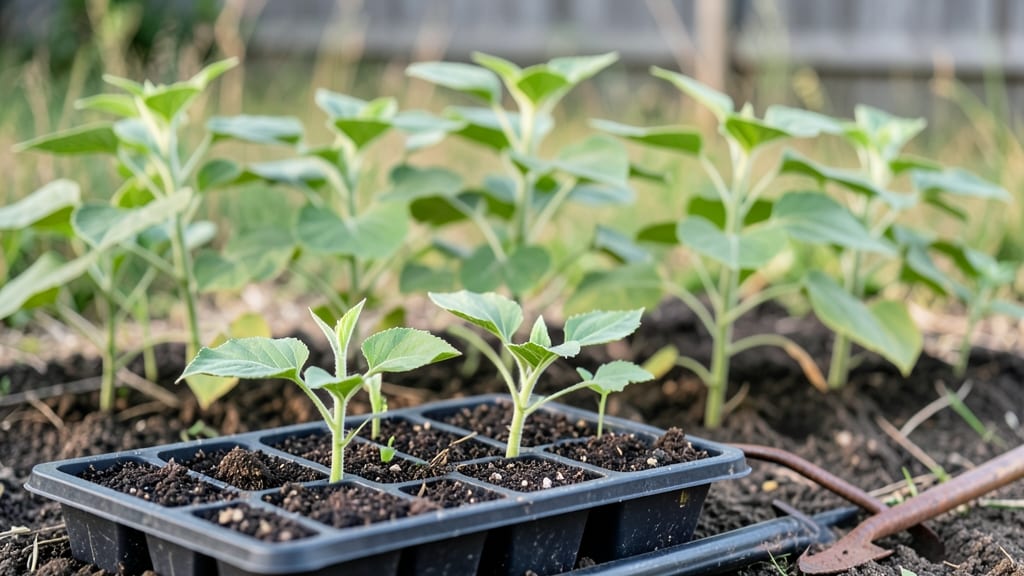
Starting sunflower seeds indoors guarantees those towering blooms by summer—fast germination in just 3-5 days is the secret to beating slow starts. I’ve watched them crack open like tiny green rockets, and the key is simple: warm soil, shallow planting, and patience that pays off in weeks.
The first green shoots are the most exciting part of gardening—nothing beats seeing that happen in days instead of weeks.
You only need a few supplies: sunflower seeds (heirloom varieties sprout fastest), a seed-starting tray, potting mix, and a spray bottle. No fancy equipment—just a warm spot near a sunny window or under grow lights.
The trick is keeping the soil consistently moist but never soggy; sunflower seeds hate sitting in water. Once planted about ½-inch deep, they’ll push through the soil like they’re racing the season.
Within 10-14 days, you’ll have sturdy seedlings ready for transplanting, their first true leaves unfurling toward the light. The real magic happens when you move them outside—those stems will thicken and grow so fast you’ll need to stake them early.
By summer, you’ll have sunflowers that make your neighbors do a double-take, all because you gave them the perfect start.
This method works for any sunflower variety, from giant Mammoths to cheerful Teddy Bears. Even if you’ve never grown from seed before, sunflowers are the most forgiving plants to begin with—just don’t overwater, and they’ll reward you with bold, cheerful blooms before you know it.
📚 In This Guide
- What you need
- Instructions
- Tips and common mistakes
- Wrapping up and next steps
What you need
- ● Sunflower seeds: Choose heirloom or hybrid varieties (e.g., Mammoth, Russian Giant). Buy 10–20 seeds for a small batch or 50+ for a full garden.
- ● Seed-starting mix: Use a lightweight, sterile potting soil (avoid garden soil—it’s too dense!). A 5–10 lb bag covers ~100 seeds.
- ● Containers: Small pots (3–4 inch diameter) for individual seeds, or
- ● A seed tray with cell packs (2–3 inch deep) for batch planting.
- ● Watering can or spray bottle: A gentle mist keeps seeds moist without drowning them.
- ● Grow lights or sunny windowsill: Sunflowers need 6–8 hours of light daily to germinate fast.
- ● Plant labels: Mark seeds with variety names and dates (e.g., “Russian Giant – Planted 4/15”).
- ○ Heating mat: Speeds germination by 5–7°F—ideal for cool climates (optional but game-changing!).
- ● Humidity dome: Retains moisture for faster sprouting (use a plastic bag with holes or a store-bought dome).
- ● Fertilizer: A balanced, water-soluble fertilizer (5-5-5 or 10-10-10) at half-strength after true leaves appear.
- ● Gloves: Protects hands from soil (and sunflower seed shells—they’re stubborn!).
Step-by-step instructions for starting sunflower seeds indoors
Here’s the method I’ve used for years to get sunflowers sprouting in just 3-5 days—no waiting weeks.
Soak Seeds Overnight for Faster Germination
Place your sunflower seeds in a bowl and cover them with lukewarm water for 12 hours. The outer shell softens, which speeds up germination dramatically. I like to use a mesh bag or small container so seeds don’t scatter. After soaking, drain them well—you want them damp but not soggy.
This step is non-negotiable if you want that 3-5 day sprout time. Skipping it means waiting 7-10 days instead. The seeds will plump up noticeably, signaling they’re ready for planting.
Prepare Containers and Planting Medium
Use 4-inch deep pots with drainage holes—sunflower roots need room to grow. Fill them with a lightweight seed-starting mix, not garden soil. Press the mix down gently so it’s firm but not compacted. You’ll want the surface level about 1 inch below the pot’s rim.
Sunflower seeds are large, so plant them 1 inch deep and 2 inches apart in each pot. Drop them in gently—don’t force them down. The depth ensures they don’t dry out before sprouting, while spacing prevents overcrowding later.
Water and Provide Warmth for Rapid Sprouting
Water the soil until it’s evenly moist but not waterlogged. The top inch should feel damp to the touch. Place the pots in a warm spot—75-85°F is ideal. A seedling heat mat works wonders here, but even a sunny windowsill or warm kitchen counter will do.
Cover the pots loosely with plastic wrap or a humidity dome to trap warmth and moisture. Check daily for condensation—if the wrap fogs up, remove it briefly to prevent mold. You’ll see tiny sprouts in just 3-5 days, often within 48 hours if conditions are perfect.
Move to Bright Light Immediately After Sprouting
The moment the first true leaves appear (not the initial seed leaves), remove the plastic and place the seedlings under bright, direct light. Sunflowers need 12-14 hours of light daily, so a south-facing window or grow light is essential. Without enough light, they’ll stretch tall and weak.
Keep the soil consistently moist but never soggy. Water at the base to avoid disturbing the delicate stems. You’ll notice the seedlings thickening and developing stronger stems within a week—this means they’re thriving.
Transplant Outdoors After True Leaves Form
Once seedlings have 4-6 true leaves and are 6-8 inches tall, they’re ready for the garden. Harden them off by placing them outside in partial shade for 1-2 hours daily over 5-7 days. This gradual adjustment prevents shock.
Plant them in full sun, spacing them 6 inches apart in rows 2 feet apart. Water deeply after transplanting to help roots establish. Within weeks, you’ll have towering sunflowers—all thanks to that fast start.
Tips & tricks for perfect sunflower seed germination
These game-changing strategies will help you achieve those fast 3-5 day sprouts every time—no waiting weeks required.
Soaking Secret: The 12-hour soak in lukewarm water is your germination turbocharger, but here's the pro move: use a mesh bag or small container to prevent seeds from scattering during the process. After draining, pat them dry with a paper towel—this prevents mold from developing during the warm incubation period. I've seen seeds that weren't dried properly develop fuzzy mold within 24 hours, completely ruining the batch.
Container Intelligence: While 4-inch deep pots work beautifully, consider using biodegradable peat pots instead. They eliminate transplant shock later and can go straight into the garden. If you're using regular pots, make sure the drainage holes are large enough—sunflower roots need excellent drainage to prevent rot. The 1-inch depth planting ensures seeds don't dry out while still allowing room for root development.
Heat Hack: That 75-85°F range is ideal, but here's how to achieve it without fancy equipment. Place your pots on top of your refrigerator (the warmest spot in most kitchens) or use a simple incandescent light bulb (75W) placed 6 inches above the pots. Just monitor closely—these methods can get too hot if left unattended. The goal is consistent warmth without overheating, which can cook the seeds before they sprout.
Light Transition: When you move seedlings to bright light after sprouting, position them within 6 inches of the light source for the first week. Sunflowers grow incredibly fast once they get proper light, and this close proximity prevents that weak, leggy growth. I've seen seedlings go from 1 inch to 6 inches in just 5 days with optimal light conditions—it's truly amazing to watch.
Pro Tips for Start Sunflower Seeds
- These game-changing strategies will help you achieve those fast 3-5 day sprouts every time—no waiting weeks required.
- Soaking Secret: The 12-hour soak in lukewarm water is your germination turbocharger, but here's the pro move: use a mesh bag or small container to prevent seeds from scattering during the process.
- Container Intelligence: While 4-inch deep pots work beautifully, consider using biodegradable peat pots instead.
Frequently asked questions
Got questions?
Starting sunflower seeds is easy, but here are answers to the most common ones to help you grow confidently!
How deep should I plant sunflower seeds?
Plant sunflower seeds 1–1.5 inches deep in well-draining soil. They need light to germinate, so avoid burying them too deep—just press them gently into the soil for best results. If you’re using containers, a depth of 1 inch works well too!
Why aren’t my sunflower seeds sprouting?
Sunflower seeds need warmth (70–90°F) and moisture to germinate. If they’re not sprouting in 5–7 days, check:
- Soil temperature (use a heat mat if too cold)
- Moisture (keep soil damp, not soggy)
- Seed viability (test with a warm water soak)
Can I grow sunflowers indoors?
Yes! Start seeds indoors 4–6 weeks before the last frost using grow lights (sunflowers need 12+ hours of light daily). Transplant seedlings outdoors when they’re 3–4 inches tall and soil is warm. Choose dwarf varieties (like ‘Teddy Bear’) for smaller spaces!
Do sunflower seeds need direct sunlight to germinate?
Nope! Seeds don’t need light to sprout—just warm, moist soil. Once they germinate, move them to a sunny spot (6+ hours/day). If starting indoors, use a heat mat and keep them in a warm, dark place until sprouts appear (then add light).
What’s the fastest way to germinate sunflower seeds?
For 3–5 day germination, try this:
- Soak seeds in warm water for 4–6 hours before planting.
- Use a heat mat (75–85°F) or place pots near a warm radiator.
- Keep soil consistently moist (not waterlogged).
- Cover with plastic wrap to retain humidity (remove once sprouts appear).
Wrapping up and next steps
Starting sunflower seeds is a rewarding journey that yields fast, vibrant growth—and you’ve got all the tools to succeed! 🌱 With just a little patience and the right conditions, you’ll soon be watching those cheerful blooms reach for the sky.
Now that you’re armed with pro tips and answers to common questions, why not plant a few extra seeds? Share your progress with fellow gardeners or experiment with different varieties—every seed is a chance to grow something beautiful. Happy planting!