Flowers
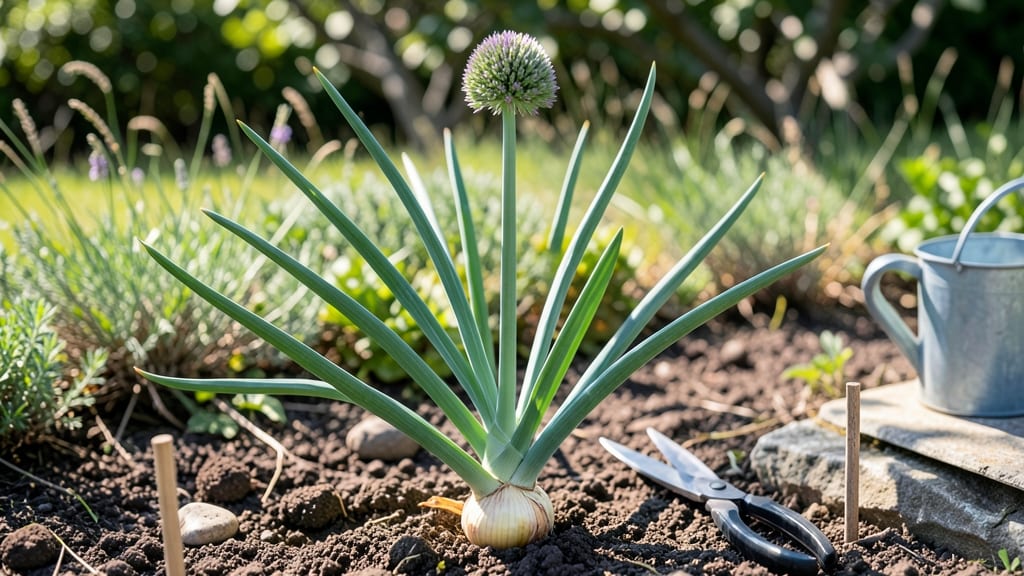
That delicate onion flower bud signals the plant’s secret life—transforming your kitchen staples into edible blooms and potential seeds. 🌱 I’ve watched onions go from humble green tops to striking starbursts of purple, white, or pink, and the timing is everything.
The moment you spot that first flower stalk, you’re at a crossroads: let it go for seeds or snip it to save your bulbs.
Flowering happens when onions sense daylight lengthening, typically in late spring for most varieties. If you’re growing for bulbs, remove the bud early to redirect energy downward. For seeds, let those buds mature—they’ll develop into papery seed pods that look like tiny onions.
My first attempt at saving seeds taught me patience: it takes 60-90 days from flowering to harvest, but the results are worth it.
You’ll end up with either plump bulbs or a stash of seeds for next season’s garden. The blooms themselves are edible—sweet, mild, and perfect for garnishes—while the seed pods dry into intricate decorations.
The trade-off? Flowering onions often produce smaller bulbs, but the flavor stays true to the variety. It’s a choice between harvest now or legacy later.
This works for gardeners in zones 3-10, though cooler climates may need row covers to protect blooms. Whether you’re growing from sets, transplants, or saved seeds, the same rules apply: watch for that first bud, decide your goal, and act quickly.
The garden’s secrets are in those delicate stalks—let’s uncover them together.
📚 In This Guide
- What you need
- Instructions
- Tips and common mistakes
- Wrapping up and next steps
What you need
- ● Onion bulbs or scraps: 1–2 yellow, red, or white onion bulbs (firm, no sprouts yet, or with early green shoots).
- ● OR 2–3 onion tops (with 2–3 inches of green growth).
- ● Well-draining potting mix: 1–2 gallons of light, airy soil (e.g., cactus/succulent mix or 50% potting soil + 50% perlite).
- ● Containers: 1–2 6–8 inch pots (with drainage holes) OR
- ● A shallow tray (for sprouting scraps before transplanting).
- ● Watering can or spray bottle: For gentle hydration.
- ● Sunlight access: A south-facing window or grow light (12+ hours/day).
- ● Fertilizer: A balanced liquid fertilizer (5-5-5 or 10-10-10) diluted to half-strength, used every 4–6 weeks.
- ● Peat pellets or coir: For seed-starting if using onion tops.
- ● Trellis or stakes: To support tall flower stems (if growing to bloom).
- ● Food-safe spray: For pest control (e.g., neem oil or insecticidal soap).
- ● Decorative elements: Small pebbles, moss, or chalk paint for garden-style pots!
Step-by-step instructions for growing edible onion flower buds
Turn those humble kitchen onions into stunning, edible blooms with this simple method.
🌱 Step 1: Select and Prepare Onion Sets
Choose large, firm onion sets (the small, whole bulbs you'd normally plant in fall). Soak them overnight in lukewarm water to soften the outer skin—this jumpstarts growth. I like to use a shallow dish and let them sit until the water looks slightly cloudy, usually about 8-12 hours. This step is crucial because it breaks dormancy and encourages faster sprouting.
After soaking, drain the onions well and let them air-dry for 30 minutes on a paper towel. You'll notice the outer skin starts to wrinkle slightly—that's perfect. Plant them pointy end up in well-draining soil (regular potting mix works) about 1 inch deep. Space them 4 inches apart so the blooms have room to spread. Water lightly right after planting to settle the soil around the base.
☀️ Step 2: Provide Bright Light and Consistent Care
Onion flower buds need full sun—at least 6-8 hours daily—to develop properly. Place your container in the sunniest spot you have, like a south-facing window or under grow lights if indoors. You'll see green shoots emerge in 1-2 weeks—that's your first sign of success. Keep the soil evenly moist but never soggy; water when the top inch feels dry to the touch.
Once the shoots reach 3-4 inches tall, you can fertilize lightly with a balanced, water-soluble fertilizer (like 10-10-10) diluted to half strength. This encourages stronger stems and bigger blooms. I like to fertilize every 2-3 weeks during active growth, but stop once flower buds form—too much nitrogen now will make the plants focus on leaves instead of blooms.
🌿 Step 3: Encourage Blooming and Support Flower Stems
When the stems grow 12-18 inches tall, you'll notice small buds forming at the top. This is the moment that matters: stop fertilizing and focus on watering consistently. The buds need steady moisture but not excess—too much water can cause them to split or rot. You'll see the buds swell and turn pink, purple, or white over 4-6 weeks, depending on your climate.
If your onions are growing tall and leggy, they might need support. Gently tie the stems to small stakes or a trellis as they grow to prevent them from flopping over. Once the buds open into full blooms, you'll have edible, ornamental flowers that look like tiny lilies. The flowers are mild, onion-flavored, and perfect for garnishes—just snip them carefully with clean scissors.
⏰ Step 4: Harvest and Preserve the Blooms
Harvest the flower buds when they're fully opened but still firm—usually in late spring to early summer, depending on when you planted. Use sharp scissors to cut the stems just above a leaf node. You'll get 4-6 blooms per onion set, and each one lasts 3-5 days in a vase with fresh water. For longer storage, dry the blooms by hanging them upside down in a paper bag for 1-2 weeks until crisp.
Here's the thing—these blooms are edible and beautiful, but they won't rebloom. After harvesting, you can compost the onion tops or let them die back naturally. Save the seeds if you want to grow more next year, but they won't be true to the parent plant. I always plant a few extra sets just in case—some years, the blooms are more prolific than others!
Tips & tricks for perfect onion flower bud growth
Here's what I've learned from growing these delicate edible blooms—tricks that'll help you avoid common pitfalls and get the best results.
Soaking Secret: That 8-12 hour overnight soak is your secret weapon. I've found using a glass container makes it easy to see when the water becomes slightly cloudy—this tells me the onions are ready. Pro tip: If you forget to soak overnight, a 6-hour soak in warm water still works, but you might see slightly slower sprouting. The key is breaking that dormancy, not just the time.
Light Strategy: Those 6-8 hours of full sun are non-negotiable for vibrant blooms. If you're growing indoors, position your plants within 12 inches of a south-facing window or use LED grow lights on a timer. I've had success with a simple clip-on grow light set to 12 hours daily—just rotate the plants every few days for even growth. Watch for stems leaning toward the light; this tells you they need repositioning.
Fertilizer Timing: The 2-3 week fertilization schedule is perfect, but here's what nobody tells you: once you see those tiny buds forming at 12-18 inches, STOP fertilizing immediately. I've ruined several batches by adding just one more feeding when the buds were already showing—it makes the plants focus on leaves instead of blooms. The buds need all that plant energy to develop properly.
Harvesting Hack: For the longest vase life, harvest your blooms in the morning when they're fully open but still firm. I like to give them a quick rinse under cool water to remove any soil or pests, then pat them completely dry with a paper towel. Store them in the fridge overnight before arranging—they'll last almost a week this way, and the stems stay crisp for cutting.
Pro Tips for Onion Flower Bud
- Here's what I've learned from growing these delicate edible blooms—tricks that'll help you avoid common pitfalls and get the best results.
- Soaking Secret: That 8-12 hour overnight soak is your secret weapon.
- Light Strategy: Those 6-8 hours of full sun are non-negotiable for vibrant blooms.
Frequently asked questions
Got questions about growing and using onion flower buds? You’re not alone! Here are some of the most common queries—and their answers—to help you navigate this edible adventure like a pro.
Can I eat onion flower buds straight from the plant?
Onion flower buds are fully edible and pack a mild, sweet-onion flavor. Just ensure they’re pesticide-free (organic is best) and rinse gently. Start with small amounts to test your tolerance—some people find them slightly stronger than regular onions.
How long does it take for onion flower buds to form?
Timing depends on your climate and onion variety. In cooler regions, buds typically appear 6–8 weeks after flowering (usually late spring to early summer). In warmer zones, they may form faster—keep an eye out for tight, green, golf-ball-sized clusters at the top of the stalk.
What if my onion plants bolt before forming buds?
Bolting (sending up a flower stalk) can happen if onions sense warm weather or are stressed. While you won’t get buds, you can still harvest scallions or greens from the base. To prevent bolting next time, choose short-day onion varieties (like ‘Red Baron’) or plant in fall for spring harvests.
How should I store harvested onion flower buds?
Store buds in a paper towel-lined container in the fridge for up to 2 weeks. For longer storage, blanch them (dip in boiling water for 30 seconds, then ice bath) and freeze. They’re great in pickles, stir-fries, or as a gourmet garnish—just like capers!
Are onion flower buds spicy like onions?
Not usually! They’re milder than bulbs, with a delicate, slightly sweet onion flavor. Some varieties (like shallots) may have a hint of peppery kick, but they’re far gentler than raw onions. Perfect for heat-sensitive dishes or adding a subtle crunch to salads.
Wrapping up and next steps
Growing onion flower buds is a rewarding journey that transforms a simple kitchen staple into stunning, edible garden gems! 🌱 Whether you’re drawn to their delicate beauty or culinary versatility, these blooms prove that great things truly grow from humble beginnings.
Start small—even a single pot can yield vibrant results—and soon, you’ll be harvesting flavorful buds and fragrant flowers to brighten dishes and gardens alike.
Ready to dive in? Pick your favorite onion variety (like shallots or garlic chives) and let your green thumb shine! 🌟 Plant your first seeds today—your garden (and taste buds) will thank you.