Flowers
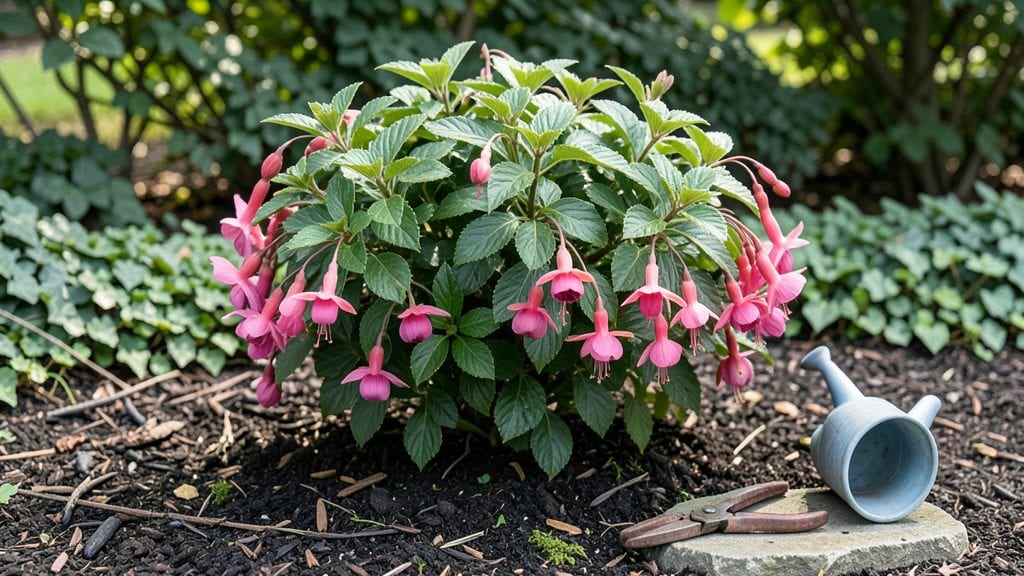
The pink fuchsia flower transforms any Pacific Northwest garden into a hummingbird haven, its cascading blooms creating a vibrant focal point that lasts from early summer through frost. 🌸 I fell in love with them after watching ruby-throated hummingbirds dart between the petals all afternoon—it’s like having a tiny, living waterfall in your yard.
Their trailing habit makes them perfect for hanging baskets, window boxes, or spilling over container edges, instantly softening hard landscapes with their delicate yet bold color.
Pair them with salvias for a pollinator powerhouse combo, or tuck them alongside ferns and heucheras for a lush, woodland-inspired border. In containers, they thrive with coleus or sweet potato vine for contrasting textures and colors. The key to their success?
Partial shade and consistent moisture—they’ll reward you with nonstop blooms if you keep the soil evenly damp but never soggy. Even in cooler PNW summers, they keep flowering until the first hard frost.
Imagine your patio overflowing with pink fuchsias in early June, their scent drawing hummingbirds while you sip morning coffee. They’re the ultimate low-maintenance star, requiring only occasional deadheading to encourage more blooms.
Their versatility means they work in everything from cottage-style gardens to modern minimalist designs—just pair them with the right companions, and they’ll steal the show all season long.
For best results, start with healthy nursery plants in spring and give them room to trail. If you love their look but lack space, try dwarf varieties in window boxes—they’ll still attract pollinators while adding charm to small balconies.
The secret to keeping them thriving? A little shade in the afternoon and a consistent watering routine. Once established, they’re nearly indestructible and will come back year after year with even more vigor.
📚 In This Guide
- What you need
- Instructions
- Tips and common mistakes
- Wrapping up and next steps
What you need
- ● Pink Fuchsia Seeds or Plants: Seeds: 10–20 seeds (for sowing indoors or outdoors)
- ● Young plants: 2–3 nursery-grown plants (for quicker results)
- ● Well-Draining Potting Mix: 1–2 bags (10–15 quarts each) of peat-based or cactus/succulent mix (amend with perlite or sand for aeration)
- ● Containers or Garden Space: Containers: 6–8-inch pots (1–2 per plant) with drainage holes
- ● Garden beds: Partial shade, moist but well-drained soil (pH 5.5–6.5)
- ● Fertilizer: Balanced 10-10-10 or 20-20-20 liquid fertilizer (diluted to half-strength)
- ○ Slow-release osmocote granules (optional for potted plants)
- ● Gloves & Hand Trowel (for handling soil and delicate roots)
- ● Spray Bottle (for misting seeds or seedlings)
- ● Pruning Shears (for trimming dead blooms or leggy stems)
- ○ Hummingbird-Friendly Accessories (Optional): Red feeder or nectar solution (1 part sugar : 4 parts water)
- ● Decorative stakes or trellises (for trailing varieties)
How to grow stunning pink fuchsias in the Pacific Northwest
These vibrant blooms thrive in our cool, damp climate—here’s how to coax their bold beauty into your garden.
🌱 Step 1: Choose the Right Variety for Your Climate
Pink fuchsias flourish in the Pacific Northwest’s mild summers and cool winters, but not all varieties adapt equally. Look for hardy hybrids like 'Giant Marble' or 'Lady Boothby'—they withstand our 50-70°F temperature swings better than tropical types. Avoid heat-loving varieties that wilt in our cooler summers.
Start with 4-6 plants to create a striking hummingbird magnet. These pollinators adore fuchsias, and a cluster of pink blooms will draw them in for weeks. I always plant mine near seating areas so I can watch the show while sipping morning coffee.
☀️ Step 2: Select the Perfect Spot with Partial Shade
Fuchsias crave morning sun and afternoon shade—critical for our region’s intense summer sun. A location with 3-4 hours of direct sun (before 10 AM) prevents leaf scorch while maintaining vibrant blooms. East-facing windows or dappled shade under deciduous trees work beautifully.
In the PNW’s damp climate, ensure your spot has well-draining soil—fuchsias rot in soggy conditions. Amend heavy native soil with 2-3 inches of compost to improve aeration. I test drainage by pressing a trowel into the soil; if water pools, I add more organic matter.
💧 Step 3: Plant and Water for Thriving Growth
Dig holes twice as wide as the root ball but no deeper. Gently remove plants from their pots and loosen tangled roots with your fingers. Place each fuchsia so the top of the root ball sits 1 inch below soil level—this prevents stem rot from splashing water.
Water deeply immediately after planting, then maintain 1 inch of water per week during dry spells. In our rainy climate, you’ll often need to supplement only in summer. I check moisture by sticking my finger 2 inches deep—if it’s dry, it’s time to water. Avoid overhead sprinkling; fuchsias prefer water at the base.
✂️ Step 4: Prune and Feed for Continuous Blooms
Pinch back new growth in early spring to encourage bushier plants. Remove spent blooms regularly—this trick forces fuchsias to produce nonstop flowers from spring through fall. I deadhead with clean pruners, cutting just above a set of healthy leaves to redirect energy into new blooms.
Feed every 4-6 weeks with a balanced 10-10-10 fertilizer diluted to half strength. In late summer, switch to a low-phosphorus formula to promote root growth before winter. I always water the soil first to prevent root burn from concentrated fertilizer.
⏰ Step 5: Protect Through Winter for Repeat Performance
In our mild winters, fuchsias often survive outdoors, but young plants benefit from light mulching with 2-3 inches of straw to insulate roots. If temperatures dip below 20°F, move potted plants to a garage or unheated shed—they’ll go dormant but return stronger in spring.
Prune back one-third of the plant in early spring before new growth starts. This rejuvenates the plant and prevents overcrowding. I always sterilize my pruners with rubbing alcohol to avoid spreading disease—fuchsias are sensitive to fungal issues in our damp climate.
Tips & tricks for perfect pink Fuchsia blooms in the Pacific Northwest
Here's what nobody tells you about growing fuchsias that will have hummingbirds flocking to your garden all season long.
Variety Selection Tip: When choosing your 4-6 plants, look for hybrids with double blooms—they create the most dramatic visual impact. 'Giant Marble' and 'Lady Boothby' aren't just hardy—their oversized flowers pack extra punch in our 50-70°F climate. I've found that plants labeled "trailing" varieties actually perform better in containers than upright types do in the ground here.
Soil Preparation Secret: For that well-draining soil requirement, mix your 2-3 inches of compost with 1 part perlite to 3 parts native soil. This creates perfect drainage while retaining moisture—critical in our damp climate. I test my amended soil by filling a cup halfway with water and timing how long it takes to drain. If it takes more than 10 minutes, I add more perlite.
Pruning Technique: When deadheading those spent blooms in Step 4, cut at a 45-degree angle just above a leaf node. This encourages new growth from that exact spot. I always sterilize my pruners between cuts with rubbing alcohol—fuchsias are particularly susceptible to fungal infections in our wet climate. The 4-6 week feeding schedule works perfectly, but I've found that adding a seaweed-based fertilizer every other feeding boosts disease resistance.
Winter Protection Strategy: For that 2-3 inches of straw mulch, I use straw from wheat or oats—it breaks down slowly and adds nutrients. If you're using containers, wrap them in burlap sacks filled with dry leaves for extra insulation. I've successfully overwintered plants at 20°F using this method for three seasons running.
Pro Tips for Pink Fuchsia Flower
- Here's what nobody tells you about growing fuchsias that will have hummingbirds flocking to your garden all season long.
- Variety Selection Tip: When choosing your 4-6 plants, look for hybrids with double blooms—they create the most dramatic visual impact.
- Soil Preparation Secret: For that well-draining soil requirement, mix your 2-3 inches of compost with 1 part perlite to 3 parts native soil.
Frequently asked questions
Got questions about the stunning pink fuchsia flower? You’re not alone! Here are answers to the most common queries about this vibrant Pacific Northwest favorite—from planting tips to troubleshooting tricks.
Can pink fuchsias thrive in cold climates like the Pacific Northwest?
While they prefer warmth, many Fuchsia magellanica varieties (native to the PNW) are hardy to USDA Zone 6 (or lower with protection). For extra cold snaps, mulch heavily or grow them in containers and move indoors. Pro tip: Choose Fuchsia ‘Giant Lady’—it’s a cold-tolerant standout!
When is the best time to plant pink fuchsias in the Pacific Northwest?
Wait until after the last frost (typically late May in most PNW regions) to plant outdoors. For container growing, you can start seeds indoors in early spring (March) or buy established plants from nurseries in April–May. Warning: Avoid planting too early—frost will kill tender new growth!
Why aren’t hummingbirds visiting my pink fuchsias?
Hummingbirds adore fuchsias, but a few factors might deter them: pesticides (use neonicotinoid-free sprays), lack of nectar (deadhead spent blooms regularly), or poor placement (plant near feeders or sunny spots). Bonus: Add a shallow dish of sugar water (1:4 ratio) nearby to lure them in!
Are pink fuchsias annuals or perennials in the Pacific Northwest?
It depends! Native PNW fuchsias (like Fuchsia magellanica) are perennial and will return yearly. However, many ornamental varieties (e.g., Fuchsia ‘Swing Time’) are treated as tender perennials—they may die back in winter but regrow from roots. Hack: Dig up containers and overwinter indoors for guaranteed regrowth!
What’s a great alternative if pink fuchsias don’t grow well in my garden?
If your soil or climate is tricky, try these hummingbird-friendly PNW alternatives:
- Penstemon (e.g., Penstemon ‘Husker Red’) – Drought-tolerant and vibrant.
- Salvia (e.g., Salvia ‘May Night’) – Loves heat and attracts pollinators.
- Lobelia (e.g., Lobelia ‘Crystal Palace’) – Thrives in partial shade.
Pro move: Mix these with fuchsias for a non-stop hummingbird buffet!
Wrapping up and next steps
The pink fuchsia flower isn’t just a stunning addition to your Pacific Northwest garden—it’s a lifeline for hummingbirds and a burst of vibrant color that brightens any space. 🌸 With its easy care and irresistible charm, it’s the perfect choice for both novice and seasoned gardeners alike.
Ready to transform your outdoor space? Start by planting a few fuchsias this season and watch as your garden becomes a buzzing hub of activity. Happy gardening! 🌿