Pruning
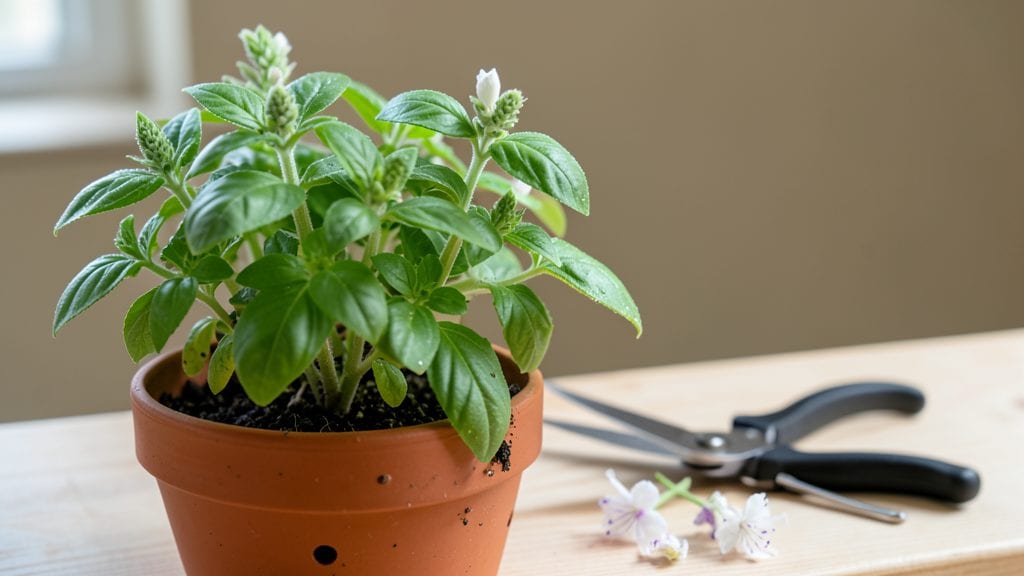
Pruning basil flowers isn't just about keeping your plant looking neat—it's the secret to year-round harvests that taste fresher than anything from the grocery store. 🌿 I learned this the hard way when my basil bolted in July, turning bitter and woody before I could use it.
The key is those three strategic cuts that redirect energy from flowers back into leaf production, giving you tender, aromatic leaves for months longer.
You only need basic tools: a pair of sharp scissors or pruning shears (cleaned with rubbing alcohol between plants), and about 10 minutes of focused attention.
The right timing matters too—prune flowers as soon as they appear, and pinch back the top sets of leaves when the plant reaches 6 inches tall. This forces the plant to branch out, creating a bushier shape that produces more leaves and stays productive longer.
What you get is a basil plant that keeps growing lush, dark green leaves instead of flowering and going to seed. The flavor stays bright and sweet, and you'll harvest 30-50% more leaves per plant than if you let it flower naturally.
Plus, the plant stays compact and easy to manage, even in small pots or window gardens.
This method works for both potted basil and in-ground plants, from containers on your kitchen windowsill to raised beds in the garden. The same principles apply whether you're growing Genovese, Thai basil, or purple basil—just adjust your pruning frequency based on how fast your specific variety grows.
Ready to keep your basil thriving all season?
📚 In This Guide
- What you need
- Instructions
- Tips and common mistakes
- Wrapping up and next steps
What you need
- ● Sharp pruning shears – A pair with bypass blades (for clean cuts) or sterilized scissors (if shears aren’t available). Size: 5–7 inches for precision.
- ○ Clean gloves – Nitrile or cotton (optional but recommended to avoid sap irritation or bacteria transfer).
- ● Healthy basil plant(s) – Genovese, Thai, or Purple basil (avoid flowering plants if reviving growth is the goal).
- ○ Water spray bottle – For misting leaves post-pruning (optional but helpful for recovery).
- ● Disinfectant solution – Rubbing alcohol (70%+) or diluted bleach (1:9 ratio) to sterilize tools between cuts.
- ● Garden twine or labels – To mark pruned stems if tracking growth stages.
- ● Compost bin – For disposing of flower buds (nutrient-rich for your garden!).
- ● Horticultural oil – Neem oil or copper fungicide (if plants show signs of stress post-pruning).
Instructions for pruning basil to keep it flower-free and flavorful
Here's how I keep my basil lush, productive, and full of flavor—no flowers in sight.
🌱 Step 1: Identify and Remove Flower Buds Early
Start by inspecting your basil plants daily once they reach 6-8 inches tall. Look for tiny, round flower buds forming at the leaf joints—these look like miniature green balls. The moment you spot them, pinch them off with your fingers or use clean pruning shears. I always do this in the morning so the plant has the whole day to recover.
Don't wait until flowers open—once they bloom, the plant shifts energy from leaves to seeds, and flavor drops dramatically. You'll know you're doing it right when you see fresh, bright green growth sprout from the leaf axils where you removed buds. This is your basil telling you it's happy and ready for more.
✂️ Step 2: Prune Back Leggy Stems for Bushier Growth
When stems grow longer than 12 inches and look leggy (thin and stretched), it's time for a harder prune. Using clean pruning shears, cut just above a leaf node—where leaves meet the stem—at a 45-degree angle. This encourages branching and keeps the plant compact. I usually make 2-3 cuts per plant during each pruning session.
After pruning, give your basil a light drink of water to help it recover. Within 5-7 days, you'll see new side shoots emerging from the leaf axils. These are your future harvest stems, so don't be tempted to prune them off—they're the plant's way of replacing what you've cut away.
🌿 Step 3: Harvest Regularly to Stimulate New Growth
To keep basil flowering at bay, harvest leaves regularly—about ⅓ of the plant every 2-3 weeks. Use your fingers or shears to snip just above a leaf node, always cutting from the outer edges inward. This prevents the center from getting woody and encourages outward growth. I like to harvest just before the plant flowers again, usually in late summer when growth slows.
Here's the trick: harvest young leaves first. Older leaves at the bottom of the stem are tougher and less flavorful, while the newer growth at the tips is where the best flavor lives. After harvesting, give the plant a light watering to help it bounce back quickly. You'll notice fresh, tender leaves appearing within 3-5 days—that's your basil rewarding you for the care.
☀️ Step 4: Adjust Light and Fertilizer for Continuous Growth
Basil needs 6-8 hours of sunlight daily to stay productive, but too much heat can stress it. If your basil is flowering despite your pruning, it might be getting too much sun—move it to a spot with morning sun and afternoon shade. I also fertilize lightly every 4-6 weeks with a balanced liquid fertilizer (like 10-10-10) to keep it energized for new growth.
Watch for signs of stress: yellowing leaves mean it's getting too much water or not enough light, while crispy edges signal underwatering. Adjust your care based on what you see—basil is forgiving if you respond quickly. With consistent pruning, you'll have a bushy, flowering-free plant that keeps producing fresh leaves all season.
Tips & tricks for pruning basil to keep it flower-free and flavorful
A few simple strategies will help you keep your basil thriving and full of flavor all season long.
Timing Matters: In Step 1, I always check for flower buds in the morning because basil recovers best during daylight hours. Early removal gives your plant the full day to redirect energy into leaf production instead of seed development. If you spot buds in the afternoon, remove them and give your basil a light watering to help it bounce back overnight.
Pruning Technique: When you're making those 45-degree cuts in Step 2, think of it like creating a little roof over the leaf node. This angle prevents water from pooling on the cut and encourages new growth to sprout from the same spot. I like to make my cuts just above a leaf node where the stem is slightly thicker—this is where the plant naturally produces new branches.
Harvesting Strategy: In Step 3, harvesting about ⅓ of the plant every 2-3 weeks might seem drastic, but it's actually what keeps basil productive. The key is to always cut from the outer edges inward—this prevents the center from becoming woody and encourages outward growth. I've found that harvesting young leaves first gives me the best flavor while still letting the plant recover quickly.
Light and Fertilizer Balance: The 6-8 hours of sunlight in Step 4 is crucial, but don't forget that afternoon shade can be just as important in hot climates. I've had basil bolt to flower when getting too much midday sun, even with regular pruning. For fertilizer, I stick to the 4-6 week schedule because basil doesn't need much—too much nitrogen can actually make the leaves bigger but less flavorful.
Pro Tips for Prune Basil Flowers
- A few simple strategies will help you keep your basil thriving and full of flavor all season long.
- Timing Matters: In Step 1, I always check for flower buds in the morning because basil recovers best during daylight hours.
- Pruning Technique: When you're making those 45-degree cuts in Step 2, think of it like creating a little roof over the leaf node.
Frequently asked questions
Got questions about pruning basil flowers? You’re not alone—here are some of the most common concerns, answered in a pinch! Whether you’re a first-time gardener or a seasoned green thumb, these FAQs will help you keep your basil lush and productive.
Why do basil flowers even appear?
Basil flowers are a natural part of its life cycle, but they signal the plant’s shift from leaf production to seed-making. If left unchecked, flowering can make leaves bitter and reduce growth. Pruning them redirects energy back to your prized leaves—so think of it as a trade-off for better flavor and yield!
When is the best time to prune basil flowers?
Prune flowers as soon as you spot them—ideally in the morning when the plant is hydrated. For continuous harvests, check your basil weekly during peak growing seasons (spring to fall). If you’re growing basil indoors or in cooler months, monitor closely since light changes can trigger early blooming.
What if I accidentally prune too much?
Don’t panic! Basil is resilient. If you snip more than ⅓ of the plant, it may take a week or two to bounce back, but it’ll recover. Just keep the soil moist and place it in bright, indirect light. Over-pruning is rare, but if it happens, your basil will thank you for patience with new growth in no time.
Can I use pruned basil flowers in cooking?
While basil flowers add a mild, floral note to dishes, they’re best used sparingly. Toss a few into salads, pestos, or garnishes for a delicate touch. Just avoid overdoing it—they can dominate the flavor. Pro tip: Freeze flowers in olive oil for a quick infusion later!
What if my basil keeps flowering despite pruning?
Persistent flowering often means your basil isn’t getting enough light or nutrients. Move it to a sunnier spot (6+ hours of direct light daily) and fertilize lightly with a balanced, water-soluble fertilizer every 2–3 weeks. If growing indoors, supplement with a grow light to mimic outdoor conditions.
Wrapping up and next steps
Pruning basil flowers isn’t just about aesthetics—it’s the secret to vibrant, flavorful leaves and a thriving plant all year long! By mastering those three strategic cuts (🌱🌿🍃), you’ll redirect energy where it matters most: your kitchen.
Whether you’re a seasoned gardener or just starting, this simple habit will transform your basil into a lush, productive powerhouse.
Ready to see the difference? Grab your shears and get pruning! Next, try experimenting with harvesting techniques or sharing your newfound skills with a fellow plant lover. Your garden—and taste buds—will thank you! 🌟