Flowers
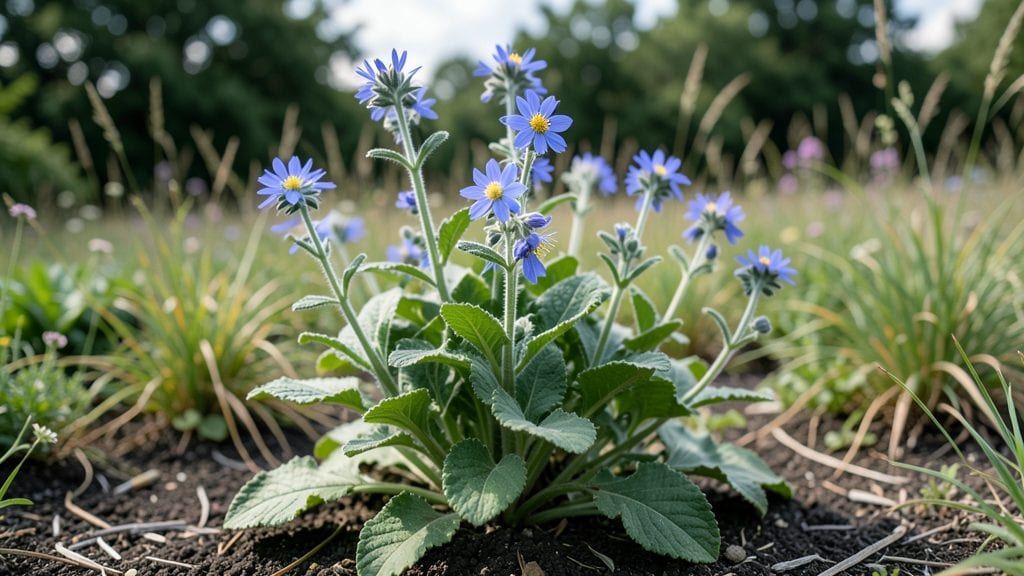
Growing starflower borage in your garden means frost-proof blooms that hummingbirds can't resist all season. 🌿 I planted my first batch last spring and was amazed how the bright blue star-shaped flowers thrived through summer heat and even a light frost.
The plant practically grows itself, making it perfect for busy gardeners who still want beauty and pollinator support.
This hardy annual thrives in poor soil and full sun, though it tolerates partial shade. You'll need a spot with good drainage since soggy roots invite rot. Borage spreads quickly—expect plants to reach 2-3 feet tall with a similar spread.
The key is patience: seeds germinate in 7-14 days, but flowers appear in just 4-6 weeks, rewarding you with months of cheerful blooms.
Harvest those edible flowers for salads or garnishes, and watch bees and hummingbirds flock to your garden. The cucumber-flavored leaves make a great tea too. Once established, borage self-seeds prolifically, so you'll have new volunteers popping up each year.
The only real challenge is keeping it contained if you don't want it taking over.
Perfect for cottage gardens, pollinator patches, or even container growing in small spaces. The more you grow, the more you'll discover its many uses—from medicine to meals. Let's get those seeds planted!
📚 In This Guide
- What you need
- Instructions
- Tips and common mistakes
- Wrapping up and next steps
What you need
- ● Star flower borage seeds – Opt for organic, non-GMO seeds (1–2 oz per 100 sq ft). Look for varieties like Borago officinalis.
- ● Well-draining soil – A mix of garden soil + compost (60% soil, 40% compost) or potting soil for containers.
- ● Sunlight access – Full sun (6+ hours/day) or partial shade in hot climates.
- ● Watering can or hose – With a gentle spray nozzle for seedlings.
- ○ Fertilizer (optional but helpful) – Balanced 10-10-10 or organic compost tea (1 tbsp per plant every 4–6 weeks).
- ● Garden gloves – To protect hands from prickly stems.
- ● Trowel or transplanting spade – For digging holes (3–4" deep, 12–18" apart).
- ● Mulch (straw or shredded leaves) – 1–2 inches thick to retain moisture.
- ○ Container (optional) – 12–18" deep pots with drainage holes if growing in pots.
- ● Patience! 🐦 – Star flower borage thrives with minimal fuss but loves consistent care.
How to grow star flower borage for long-lasting hummingbird-friendly blooms
This hardy annual thrives with minimal fuss—here’s how to cultivate it for months of vibrant star-shaped flowers.
🌱 Step 1: Choose the Perfect Planting Location
Borage loves full sun but tolerates partial shade, making it versatile for gardens or containers. I plant mine in a spot with at least 6 hours of direct sunlight daily, though they’ll still bloom in 4-5 hours if given extra care. The key is well-draining soil—borage hates soggy roots, so raised beds or slightly sandy soil work best.
If your soil feels heavy when squeezed, mix in 2 inches of compost or 1 inch of perlite to improve drainage. Borage’s deep taproot means it won’t compete well with aggressive weeds, so clear the area thoroughly before planting. You’ll know the spot is right when you see those striking star-shaped flowers popping up within weeks.
🌿 Step 2: Direct Sow Seeds for Fastest Results
Borage seeds germinate best when sown directly in the garden after the last frost, around mid-spring. Scatter seeds ¼ inch deep and 12 inches apart—they’re large enough to handle easily, so no need for thinning later. Press them lightly into the soil and water gently to settle them without washing them away.
Here’s the thing—I’ve tried transplanting borage seedlings, but they handle it poorly. Direct sowing ensures strong roots from the start. Keep the soil consistently moist until germination, which usually happens in 7-14 days. Once sprouts appear, reduce watering slightly—they’re drought-tolerant once established.
☀️ Step 3: Provide Minimal Care for Maximum Blooms
Borage thrives on neglect, but a little attention keeps it flowering all season. Water 1-2 times per week once established, focusing on the base to avoid wetting the leaves (this prevents fungal issues). The plants will reach 2-3 feet tall, so they may need staking if grown in windy areas or for easier harvesting.
Deadhead spent blooms by pinching them off at the base—this encourages more flowers and prevents the plant from going to seed too early. I like to harvest the bright blue flowers for salads or teas, but leaving some on the plant ensures continuous blooms. Borage’s self-seeding habit means you’ll often find new volunteers popping up next year.
⏰ Step 4: Enjoy Year-Round Interest and Wildlife Benefits
One of borage’s best traits is its frost resistance—it often blooms until the first hard freeze and sometimes returns the following spring. The flowers attract hummingbirds, bees, and butterflies, making it a must-have for pollinator gardens. I’ve seen them bloom in late fall if temperatures stay mild.
For a second flush of blooms, give established plants a light trim back in early summer. This removes leggy growth and stimulates fresh, bushier growth. Borage’s edible leaves and flowers add a cucumber-like flavor to dishes, but even if you don’t cook with it, the striking blooms and hardy nature make it a garden standout.
Tips & tricks for perfect star flower borage
These simple strategies will help you coax the most vibrant blooms from your borage plants all season long.
Soil Prep Secret: Before planting in Step 1, I like to add a handful of garden lime to the planting hole if my soil tests acidic. Borage prefers a slightly alkaline soil (pH 6.0-7.5), and this small adjustment gives it a boost. You can test your soil's pH with a simple kit from your local garden center—it's worth the few dollars to prevent potential nutrient deficiencies that could limit flowering.
Germination Hack: In Step 2, when you're waiting for those 7-14 days of germination, place a clear plastic dome or even a plastic bag over the freshly planted seeds to create a mini greenhouse effect. This traps moisture and warmth, often speeding up germination to just 5-7 days instead of the full two weeks. Just remember to remove the cover once sprouts appear to prevent fungal issues from excess moisture.
Careless Care: The 1-2 times per week watering in Step 3 works beautifully, but here's the thing—I've found that watering in the early morning gives the plants time to dry completely before evening, which dramatically reduces the risk of powdery mildew. This fungal disease can appear as a white dusting on leaves and stems, but proper watering habits usually prevent it entirely.
Second Flush Strategy: For that second flush of blooms mentioned in Step 4, I time my light trim back to early summer when the plants are about 2-3 feet tall. Cut back about one-third of the plant's height, focusing on removing any leggy or woody stems. This shock treatment forces the plant to put all its energy into producing fresh, bushy growth—and more of those stunning star-shaped flowers.
Pro Tips for Star Flower Borage
- These simple strategies will help you coax the most vibrant blooms from your borage plants all season long.
- Soil Prep Secret: Before planting in Step 1, I like to add a handful of garden lime to the planting hole if my soil tests acidic.
- Germination Hack: In Step 2, when you're waiting for those 7-14 days of germination, place a clear plastic dome or even a plastic bag over the freshly planted seeds to create a mini greenhouse effect.
Frequently asked questions
about growing star flower borage (also called starflower) can help you troubleshoot and thrive! Here are answers to the most common queries:How cold-hardy is starflower borage?
Starflower borage is one of the most frost-resistant annuals—it thrives in USDA zones 3-11! Young seedlings can handle light frosts down to 25°F (-4°C), while mature plants often survive 20°F (-7°C) without damage. Plant early in spring or late summer for year-round blooms in mild climates. Pro tip: Mulch around the base in winter to protect roots in colder regions.
How long does it take for starflower borage to bloom?
From seed to first bloom, starflower borage typically takes 60-75 days under ideal conditions (full sun, well-draining soil, and consistent moisture). If planted in late summer, expect blooms as early as 8-10 weeks in warm climates. Pro tip: Pinch back leggy seedlings to encourage bushier growth and earlier flowers.
Why aren’t hummingbirds visiting my starflower borage?
Hummingbirds love starflower borage, but a few factors might deter them: pesticides (use neonicotinoid-free sprays), lack of water (hummingbirds need accessible water sources nearby), or overcrowding (thin plants for better airflow and visibility). Ensure blooms are fully open—hummingbirds prefer accessible nectar! Pro tip: Plant near other nectar-rich flowers like bee balm or salvia for a hummingbird buffet.
Can I grow starflower borage in containers?
Starflower borage adapts well to containers 12+ inches deep with drainage holes. Use a lightweight potting mix and plant 3-4 seeds per 6-inch pot (thin to the strongest seedling). Place in full sun and water consistently—containers dry out faster than garden beds. Pro tip: Move pots to a sheltered spot if nighttime temps drop below 30°F (-1°C).
What can I plant alongside starflower borage?
Starflower borage is a fantastic companion plant! Pair it with:
- Vegetables: Tomatoes, squash, and strawberries (repels pests like cabbage worms).
- Flowers: Marigolds (deters aphids), cosmos (attracts pollinators), or lavender (calming scent).
- Avoid: Fennel or dill—these can stunt its growth.
What do I do if my starflower borage leaves turn yellow?
Yellowing leaves usually signal overwatering or nutrient deficiency. Check soil moisture—starflower borage prefers moderately moist but well-draining soil. If roots are soggy, reduce watering and improve drainage. For yellowing between veins, add a balanced fertilizer (10-10-10) or compost. Pro tip: Yellowing can also mean nitrogen excess—cut back on high-nitrogen feeds if leaves are lush but pale.
Wrapping up and next steps
Growing star flower borage is a rewarding journey that brings vibrant blooms, pollinator magic, and low-maintenance joy to your garden! 🌸 Whether you’re a seasoned gardener or just starting out, this frost-resistant beauty thrives with minimal effort while offering endless charm.
Now that you’re armed with the know-how, take the next step—plant a few seeds or seedlings this season and watch your garden transform into a hummingbird haven!
Pro tip: Share your progress with fellow gardeners or tag us in your photos—we’d love to see your star flower borage blooms! 📸✨