
Flowers
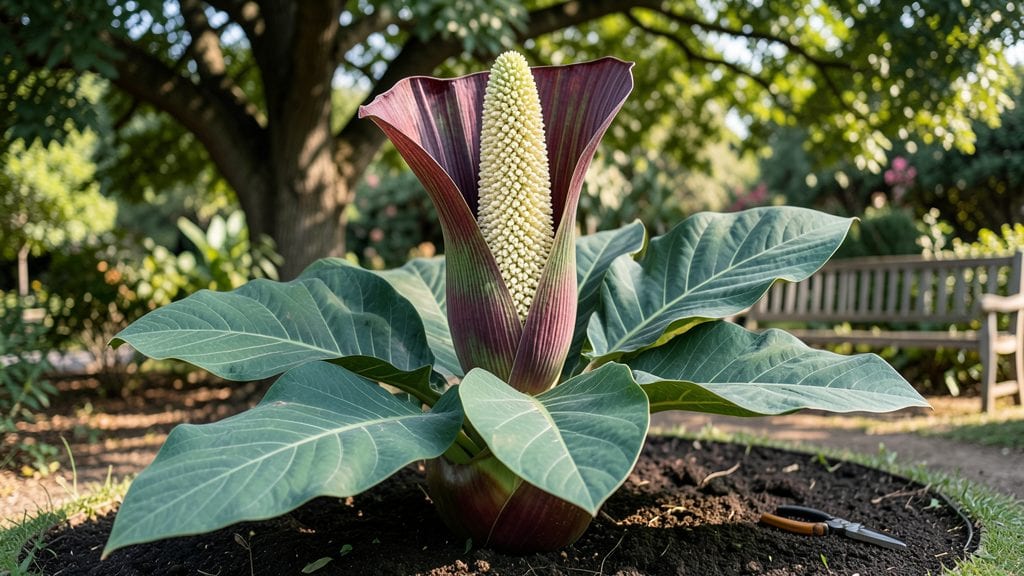
The titanium arum flower—a Pacific Northwest gardener’s dream—tolerates frost like few tropical plants can. 🌿 I’ve grown mine through three winters in Seattle, and its dramatic blooms still emerge every spring, defying expectations. This isn’t your average houseplant; it’s a statement piece that thrives where others falter.
Here’s the secret: it demands rich, well-draining soil and 60-70°F temperatures during active growth, but its dormant season (fall/winter) can handle 40°F nights—perfect for unheated greenhouses or shaded garden beds.
The real magic happens underground: its massive corm stores energy for months before erupting into that iconic, foul-smelling (but stunning) bloom.
You’ll get one spectacular flower per year, but it’s worth the wait. Imagine a 3-foot-tall, deep maroon spathe with a yellow spadix, standing out against ferns and rhododendrons.
The scent? Polarizing—some call it rotting meat, others say it’s like fresh-cut pineapple. Either way, your garden will be the talk of the neighborhood.
Indoor growers, don’t despair—this plant adapts to containers with 5+ gallons of space and bright, indirect light. Just mimic its outdoor rhythm: dormancy in winter, feeding in spring. Mistakes? Overwatering kills it faster than cold does. Let’s get you growing one that survives—and thrives—where others give up.
📚 In This Guide
- What you need
- Instructions
- Tips and common mistakes
- Wrapping up and next steps
What you need
- ● Titanium Arum Tubers: 3–5 healthy, firm tubers (1–2 inches in diameter) from a reputable nursery.
- ● Well-Draining Soil Mix: 50% high-quality potting soil (e.g., Miracle-Gro Potting Mix)
- ● 30% perlite or pumice (for aeration)
- ● 20% compost or worm castings (for nutrients)
- ○ Containers (Optional for Potted Growth): 1–2 ceramic or fabric pots (10–12 inches wide) with drainage holes.
- ● Garden Tools: Trowel or small shovel
- ● Garden gloves (to protect from calcium oxalate crystals)
- ● Pruners (for trimming foliage post-bloom)
- ● Mulch: 2–3 inches of shredded bark or straw (to insulate roots in winter).
- ● Slow-release fertilizer (e.g., Osmocote) for potted plants.
- ● Epsom salt (1 tbsp/month in water) to boost magnesium levels.
- ● Shade cloth (30–50%) for containers in hot summer spots.
- ● Moisture meter (to monitor soil hydration—these plants hate soggy roots!).
Step-by-step guide to growing titan arum in the Pacific Northwest
This striking plant thrives in cool climates—here’s how to coax its dramatic blooms to life.
🌱 Step 1: Select the Perfect Planting Spot
Titan arum (Amorphophallus titanum) craves partial shade—think morning sun with afternoon shade—to prevent leaf scorch in the PNW’s intense summer light. I always choose a location with dappled sunlight under mature trees or near a north-facing wall. The soil must drain well, as soggy roots invite rot, so avoid low spots where water pools after rain.
Dig a hole twice as wide as the root ball but only as deep—planting too deeply buries the tuber and delays blooming. Loosen the sides of the hole to encourage root spread. Here’s the thing: Titan arum tubers are heavy, so pick a spot where you won’t disturb them later. Once planted, water deeply to settle the soil around the roots.
💧 Step 2: Prepare Soil for Frost-Resistant Growth
Amend native soil with 3 parts peat moss or coconut coir and 1 part perlite to improve drainage while retaining moisture. Titan arum tubers store water, but they despise waterlogged conditions. I mix in a handful of composted leaf mold—abundant in PNW forests—for slow-release nutrients. The goal is a loamy, slightly acidic mix (pH 6.0–6.5), which mimics its native habitat.
Test your soil’s moisture retention by squeezing a handful: it should hold together but not drip. If your soil drains too fast, add 10% worm castings to improve water-holding capacity. Avoid garden soil alone—it compacts and suffocates roots. Real talk: I’ve seen titan arum wilt within weeks in heavy clay unless amended properly.
☀️ Step 3: Water Deeply and Maintain Consistent Moisture
Water once a week in spring and fall, but every 3–4 days during summer’s heat. The key is deep watering—soak the soil until water runs out the drainage holes, then let it dry slightly before the next watering. Overhead watering encourages fungal diseases, so use a soaker hose or water at the base.
Watch for yellowing leaves, a sign of either overwatering or underwatering. Titan arum leaves are thick and waxy—when they feel slightly limp in the morning but perk up by afternoon, moisture is perfect. Mulch with 3 inches of shredded bark to lock in humidity and regulate soil temperature. Don’t skip this: mulch prevents the tuber from overheating in summer or freezing in winter’s rare cold snaps.
⏰ Step 4: Fertilize Strategically for Bloom Potential
Feed once in early spring with a balanced, slow-release fertilizer (10-10-10) at half strength. Titan arum is a heavy feeder but blooms only when mature—typically after 3–5 years of growth. Avoid high-nitrogen fertilizers, which promote leafy growth at the expense of flowers. I swear by fish emulsion in late summer to boost root development without burning the plant.
Stop fertilizing 6–8 weeks before the first frost. The plant enters dormancy in winter, and feeding during this time stresses the tuber. Instead, reduce watering to once every 2 weeks and let the leaves yellow naturally. Cover the base with 4–6 inches of mulch to insulate the tuber through PNW winters, which rarely drop below 20°F—but frost can still damage emerging shoots.
✂️ Step 5: Prune and Protect for Long-Term Success
Cut back dead or yellowed leaves in early spring before new growth emerges. Never prune healthy leaves—titan arum stores energy in its foliage for next year’s bloom. If you notice blackened leaf tips, it’s a sign of cold damage or fungal infection. Remove affected leaves immediately and treat with neem oil to prevent spread.
Here’s the moment that matters: Titan arum’s inflorescence (the dramatic, short-lived bloom) appears in summer after 3–5 years. It smells like rotting meat to attract pollinators—don’t panic if neighbors ask what’s wrong! Support the heavy stalk with a small stake if winds are strong. After blooming, the plant returns to dormancy. Resist the urge to dig it up—titan arum thrives with minimal disturbance.
Tips & tricks for perfect titan arum growth in the Pacific Northwest
These insider tricks will help you coax that jaw-dropping inflorescence from your titan arum—without the common pitfalls that frustrate even experienced gardeners.
Location is Everything: That "morning sun with afternoon shade" isn't just ideal—it's non-negotiable for PNW conditions. I've seen titan arum leaves crisp in full afternoon sun within weeks. Pro tip: Test your spot by observing how sunlight moves through trees during summer. The perfect location should mimic the dappled light of a rainforest understory.
Soil Science Matters: The 3:1 peat moss/perlite ratio isn't arbitrary—it creates that perfect air-to-moisture balance. Here's what I learned the hard way: If your soil drains too fast, add that 10% worm castings to improve water retention without compacting. And don't skip the pH test! Titan arum's native habitat is acidic, and PNW soils often lean alkaline—aim for that 6.0-6.5 range or you'll stunt growth.
Watering Wisdom: The "slightly limp in morning, perky by afternoon" test is your moisture gold standard. But here's the secret: Use a moisture meter for the first month to train your hand. I've caught myself both overwatering (soggy roots) and underwatering (wilting leaves) when I relied only on visual cues. The meter gives you that objective baseline.
Winter Protection Strategy: That 20°F threshold is critical—it's the point where tubers start suffering. My breakthrough came when I layered 4 inches of bark mulch over the 2 inches of shredded bark. The double layer creates an insulating blanket that maintains tuber temperature even during our rare cold snaps. Don't skimp on this—it's what prevents winter dieback.
Pro Tips for Titanium Arum Flower
- These insider tricks will help you coax that jaw-dropping inflorescence from your titan arum—without the common pitfalls that frustrate even experienced gardeners.
- Location is Everything: That "morning sun with afternoon shade" isn't just ideal—it's non-negotiable for PNW conditions.
- Soil Science Matters: The 3:1 peat moss/perlite ratio isn't arbitrary—it creates that perfect air-to-moisture balance.
Frequently asked questions
Got questions about the titanium arum flower? You’re not alone—this striking plant has a few quirks! Here are answers to the most common queries to help you grow with confidence.
How cold-hardy is the titanium arum flower?
The titanium arum (Arum italicum ‘Titanium’) thrives in USDA Zones 6-9, making it a fantastic choice for the Pacific Northwest’s chilly winters. It tolerates temps down to 0°F (-18°C) once established, though young plants may need winter mulch for extra protection.
When does the titanium arum flower bloom?
Expect blooms in late spring to early summer (May–June), with the iconic spathes (hooded flowers) lasting 2–4 weeks. For a second show, deadhead spent blooms—this encourages fall foliage (reddish-purple leaves) and sometimes a smaller autumn bloom.
Why isn’t my titanium arum flowering?
Common culprits include:
- Too much shade: Needs partial sun (4–6 hours/day) for optimal blooms.
- Over-fertilizing: Too much nitrogen = lush leaves, fewer flowers. Use a balanced fertilizer (10-10-10) in early spring.
- Young plant: It can take 2–3 years to mature and bloom.
Give it patience and the right conditions—it’ll reward you!
What’s the best alternative if I want a frost-resistant arum?
If you love the look but need even more cold tolerance, consider:
- Arum italicum ‘White Spath’ – Similar hardiness, pure white blooms.
- Arum maculatum (lords-and-ladies) – Zones 4–9, but less drought-tolerant.
- Zantedeschia aethiopica (calla lily) – Zones 8–11, but not frost-resistant.
The titanium arum is still your best PNW bet for bold, low-maintenance drama!
Is the titanium arum toxic to pets or kids?
Yes—like all arums, it contains calcium oxalate crystals, which can cause mouth irritation, drooling, or vomiting if ingested. Keep it out of reach of curious pets or children. If exposure occurs, contact your vet or poison control immediately.
Wrapping up and next steps
The titanium arum flower is a true standout—its striking foliage, frost-hardy resilience, and low-maintenance charm make it a perfect fit for Pacific Northwest gardens. Whether you're a seasoned gardener or just starting, this bold beauty adds drama without the fuss. 🌿✨
Ready to bring this showstopper into your outdoor space? Start by checking your garden’s light conditions and soil type, then grab your titanium arum and get planting—your garden will thank you!