
Shrubs
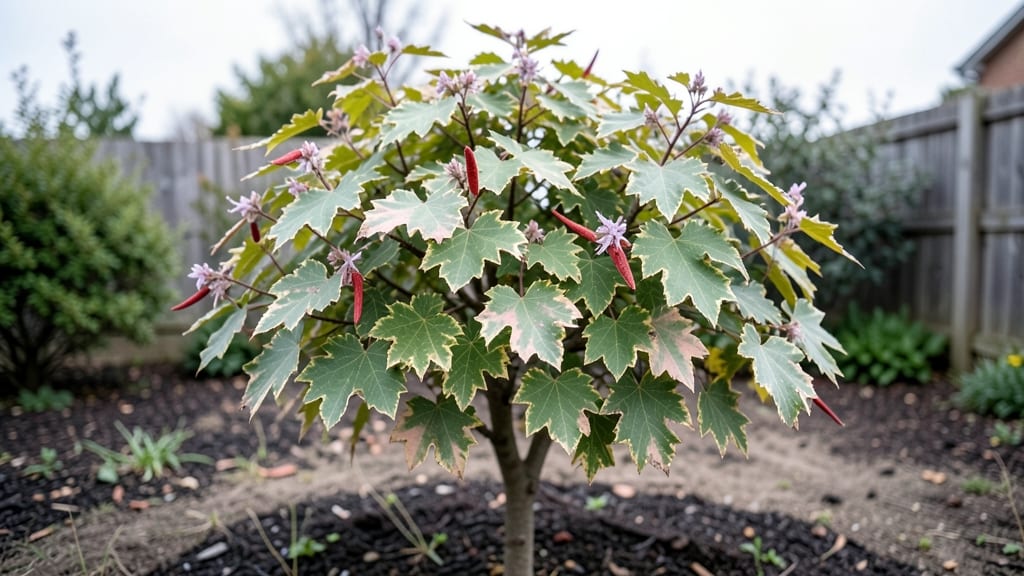
Variegated flowering maples bring that shockingly lush contrast of creamy edges and deep green leaves to Pacific Northwest gardens—if you prune them right.
I’ve wrestled with these plants through three winters in Seattle, and the key to keeping them vibrant? Frost-hardy pruning that balances shape and health without sacrificing next year’s blooms. The secret isn’t just timing—it’s knowing which stems to encourage and which to cut back before the first hard freeze.
These maples thrive in zones 5-8, where cool summers and wet winters actually help their variegation pop. You’ll need well-draining soil (amend with compost if yours is heavy clay) and morning sun with afternoon shade to prevent leaf scorch.
Water deeply once a week, but let the top inch dry between soakings—overwatering is the fastest way to dull those stunning variegated patterns. The payoff? Plants that burst into vibrant pink or white flowers from late spring through fall, even after winter’s chill.
Pruning in late winter—right after the last frost but before buds swell—is your best bet. Cut back one-third of the oldest stems to encourage new growth, and shape the plant by removing crossing branches.
For extra variegation, pinch back new shoots in spring to focus energy on the most striking foliage. With this approach, your maple will reward you with bold, two-tone leaves and a bushier form year after year.
Bonus: These shrubs handle coastal winds and urban pollution better than most, making them perfect for city gardens or rain garden spots. Just avoid planting where they’ll get blasted by salt spray—those creamy edges need protection too.
Ready to transform a shady corner into a standout feature? Let’s get those pruners sharp.
📚 In This Guide
- What you need
- Instructions
- Tips and common mistakes
- Wrapping up and next steps
What you need
- ● Variegated flowering maple sapling or bare-root plant – Choose a healthy 1–3 gallon container or 1–2 year old bare-root specimen from a reputable nursery.
- ● Well-draining soil mix – 60% native soil, 30% compost, and 10% perlite or sand (pH 5.5–6.5).
- ● Organic mulch – 2–3 inches of cedar chips, pine bark, or shredded leaves to retain moisture and insulate roots.
- ● Slow-release fertilizer – 10-10-10 or organic options like fish emulsion (apply in early spring).
- ● Pruning tools – Sharp bypass pruners (for branches <0.5"), loppers (0.5–2"), and a pruning saw (for thicker stems).
- ● Watering can or hose with a gentle spray nozzle – Deep watering is key!
- ● Garden gloves – Protect your hands from thorns and rough bark.
- ● Soil moisture meter – Ensures you’re watering just enough (not too soggy!).
- ○ Epsom salt (magnesium sulfate) – Optional boost for yellowing leaves (1 tbsp per gallon of water, monthly).
- ● Winter protection – Burlap wraps or frost cloth for young plants in harsh PNW winters.
- ● Staking system – 3–4 stakes + tree ties if planting in windy areas.
Step-by-Step instructions for planting and pruning variegated flowering maple
Here's how to establish your variegated flowering maple for years of stunning foliage and hardy growth in the Pacific Northwest's climate.
Choose the Right Planting Site and Prepare the Soil
Select a location with full sun to partial shade—at least 6 hours of sunlight daily—while protecting young trees from harsh afternoon sun. The Pacific Northwest's mild summers and wet winters make this species ideal, but avoid low spots where water pools after heavy rain. Dig a hole twice as wide as the root ball but no deeper, loosening the surrounding soil with a shovel or garden fork.
Amend the native soil with 2-3 inches of compost mixed into the bottom and sides of the hole. Variegated flowering maples thrive in well-draining, slightly acidic soil (pH 5.5-6.5). If your soil is heavy clay, blend in 10% perlite or coarse sand to improve drainage. The goal is loose, airy soil that won't suffocate roots during the wet season.
Plant the Tree Properly for Stability and Growth
Place the tree in the hole so the top of the root ball sits 1-2 inches above ground level. This prevents water from pooling around the trunk and causing rot. Spread the roots gently outward, ensuring they aren't circling or bent. Fill the hole halfway with native soil, then water deeply to settle the roots and remove air pockets. Once settled, add more soil until the hole is full, pressing lightly to eliminate gaps.
Mulch the area with 2-3 inches of wood chips or shredded bark, keeping the mulch 6 inches away from the trunk to prevent moisture buildup. Water the tree again to encourage root contact with the amended soil. The first year is critical—young maples need consistent moisture but hate soggy roots, so water 1-2 times per week during dry spells, adjusting for Pacific Northwest rainfall.
Prune for Structure and Frost Hardiness
Prune your variegated flowering maple in late winter or early spring, just before new growth begins. Remove any dead, diseased, or crossing branches first, cutting back to the branch collar. Thin the canopy by 20-30% to improve air circulation and reduce frost damage. Look for branches growing toward the center of the tree—these compete for sunlight and weaken the structure.
Make clean cuts at a 45-degree angle, just outside the branch collar, using sharp pruning shears. Avoid leaving stubs, which invite disease. For larger branches, use a saw and seal the cut with pruning sealant if the branch diameter exceeds 1 inch. After pruning, water deeply to help the tree recover. The Pacific Northwest's frost can be harsh, so pruning now encourages sturdy growth that withstands winter temperatures.
Maintain Through the Growing Season
Fertilize in early spring with a balanced, slow-release fertilizer (10-10-10 or similar) to support new growth. Apply it 6 inches away from the trunk and water immediately to prevent root burn. Variegated flowering maples are low-maintenance but benefit from an annual top-dressing of compost in early fall to prepare for winter.
Monitor for pests like aphids or scale, which can stress young trees. A strong spray of water usually dislodges them, but severe infestations may require horticultural oil. In the Pacific Northwest, watch for fungal issues like powdery mildew—prune for airflow and avoid overhead watering to keep foliage dry. By late fall, reduce watering but keep the soil slightly moist until the ground freezes to help roots establish for winter.
Tips & tricks for perfect variegated flowering maple care
Establishing a thriving variegated flowering maple in the Pacific Northwest takes a few key strategies that make all the difference between a struggling sapling and a stunning landscape centerpiece.
Site Selection Wisdom: That 6 hours of sunlight requirement in Step 1 is non-negotiable for vibrant variegation. The Pacific Northwest's afternoon sun can be intense—consider planting on the east side of structures or using light dappled shade from other trees to protect young leaves while still getting enough light for that beautiful color contrast.
Soil Preparation Secret: The 2-3 inches of compost recommendation is perfect, but don't stop there. For heavy clay soils common in the region, mix in that 10% perlite or coarse sand right into the backfill soil, not just at the bottom. This creates better drainage throughout the entire root zone, preventing waterlogging that can occur during our wet winters.
Pruning Precision: When thinning the canopy by 20-30% in Step 3, focus on removing branches that cross or grow inward. These competing branches create weak points where frost can damage the tree. Cut just outside the branch collar at a 45-degree angle—this promotes faster healing and reduces disease risk in our damp climate.
Watering Strategy: The 1-2 times per week recommendation works well, but adjust based on your specific microclimate. Check soil moisture by sticking your finger 2 inches down—if it's dry, water deeply. In summer, you might need to increase to twice weekly, while winter watering should be minimal except for newly planted trees.
Pro Tips for Variegated Flowering Maple
- Establishing a thriving variegated flowering maple in the Pacific Northwest takes a few key strategies that make all the difference between a struggling sapling and a stunning landscape centerpiece.
- Site Selection Wisdom: That 6 hours of sunlight requirement in Step 1 is non-negotiable for vibrant variegation.
- Soil Preparation Secret: The 2-3 inches of compost recommendation is perfect, but don't stop there.
Frequently asked questions
Got questions about growing variegated flowering maples in your Pacific Northwest garden? You’re not alone! Here are some of the most common concerns—and their answers—to help you cultivate a stunning, frost-resilient shrub with ease.
How cold-hardy is the variegated flowering maple?
The variegated flowering maple (Abutilon hybridum) thrives in USDA zones 7-10, making it a great fit for the mild winters of the PNW. While it can tolerate light frosts (down to 20°F/-7°C), protect young plants with a breathable frost cloth during unexpected freezes. Established shrubs often bounce back with minimal damage!
When is the best time to prune for maximum blooms?
Prune your variegated flowering maple right after flowering (late summer to early fall) to encourage dense, vibrant blooms next season. Avoid heavy pruning in winter—this shrub is semi-evergreen, and late cuts can expose it to cold damage. Pro tip: Use clean, sharp shears and remove 1/3 of the oldest growth to promote airflow and variegation.
Can I grow variegated flowering maple in containers?
This shrub adapts well to large containers (15+ gallons) with well-draining soil. Choose a pot with drainage holes and place it in partial shade (especially in hot PNW summers). Container-grown plants may need winter protection—wrap the pot in burlap or move it to a sheltered spot. Fertilize lightly in spring to support compact growth.
What pests or diseases should I watch for?
Variegated flowering maples are generally low-maintenance, but keep an eye out for aphids, spider mites, or powdery mildew in humid PNW summers. Preventive care:
- Spray leaves with neem oil if pests appear.
- Improve airflow by pruning crowded branches.
- Avoid overhead watering to deter mildew.
Are there dwarf varieties for smaller gardens?
While the classic variegated flowering maple grows 3-5 feet tall, you can find compact cultivars like ‘Tiny Bellies’ or ‘Little Bellies’, which max out at 2-3 feet. These are perfect for patio gardens, raised beds, or as accent plants. Just ensure they get bright, indirect light to maintain their stunning variegation!
Wrapping up and next steps
The variegated flowering maple is a stunning, low-maintenance addition to Pacific Northwest gardens, thriving even in frost-prone climates. With the right pruning techniques and care, you’ll enjoy its vibrant foliage and delicate blooms for years to come—and you’ve got all the tools to make it happen! 🌿✨
Ready to transform your outdoor space? Start by assessing your plant’s needs this season—whether it’s a light trim or a more strategic pruning session. Happy gardening!