
Flowers
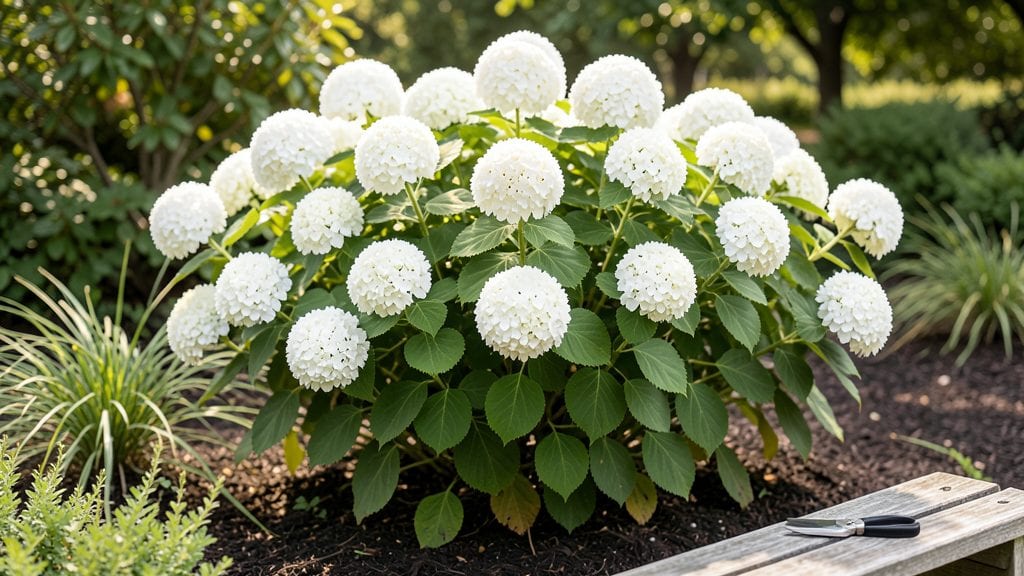
White hydrangea flowers turn Pacific Northwest gardens into dreamy, pollinator-friendly canvases where every bloom feels like a fresh snowfall. 🌸 I’ve watched them transform my yard from ordinary to showstopping—especially when paired with deep greens and soft purples.
The secret isn’t just their color; it’s how they attract bees, butterflies, and hummingbirds while creating that signature soft, romantic vibe.
These hydrangeas thrive in partial shade, making them perfect for under trees or along north-facing walls where other plants struggle. They love rich, moist soil, so a little compost at planting time goes a long way.
In my garden, they’ve become the backbone of borders, mixed beds, and even container displays—always the star without stealing the show.
Imagine cutting stems for arrangements that last weeks in vases, or letting them spill over trellises in a cottage-style garden. Their large, rounded blooms soften sharp edges and create a calming, ethereal atmosphere that’s hard to resist.
The best part? They bloom reliably from midsummer through fall, giving you months of that snow-white magic.
For maximum impact, pair them with purple clematis, deep burgundy heuchera, or silver foliage plants like lamb’s ear. In containers, they mix beautifully with blue lobelia or coral bells for a pop of contrast. The possibilities are endless—let’s make your garden their perfect stage.
📚 In This Guide
- What you need
- Instructions
- Tips and common mistakes
- Wrapping up and next steps
What you need
- ● White hydrangea plants: 1–3 Hydrangea macrophylla (bigleaf hydrangea) or Hydrangea arborescens (smooth hydrangea) varieties, preferably white-blooming (e.g., 'Annabelle,' 'Vanille Fraise,' or 'Limelight' for contrast).
- ● Choose bare-root (dormant season) or container-grown plants from local nurseries.
- ● Planting location: Partially shaded area (3–6 hours of morning sun is ideal; PNW’s mild climate thrives here!).
- ● Well-draining soil (amend with compost if needed—hydrangeas love richness!).
- ○ Soil amendments (optional but recommended): 5–10 lbs of peat moss or coconut coir (for acidity, if growing blue-flowered varieties).
- ● 2–3 lbs of compost or well-rotted manure per planting hole.
- ● Mulch: 3–4 inches of pine bark or wood chips to retain moisture and regulate soil temp.
- ● Watering tools: Garden hose with soaker hose or drip irrigation (hydrangeas need consistent moisture!).
- ● Watering can (for container gardening).
- ● Pruning tools: 1 pair of bypass pruners (sharp and clean!).
- ● 1 loppers (for larger branches).
- ● Fertilizer: Slow-release hydrangea-specific fertilizer or balanced 10-10-10 (apply in early spring).
- ● pH testing kit: To monitor soil acidity (aim for 5.2–5.5 for blue flowers; neutral for white/pink).
- ● Support stakes: 3–4 ft bamboo stakes or tomato cages for heavy blooms.
- ● Container gardening: 1–2 15–20 gallon pots with drainage holes (if not planting in-ground).
- ● Pollinator-friendly companions: Plant bee balm, lavender, or salvia nearby to attract pollinators!
How to grow stunning white hydrangeas in the Pacific Northwest
Transform your garden into a pollinator haven with these elegant blooms—here’s how to cultivate them like a pro.
🌱 Step 1: Choose the Right Variety for Your Climate
The Pacific Northwest’s mild summers and cool, wet winters make it ideal for white hydrangeas, but not all varieties thrive equally. For snow-white blooms, opt for Hydrangea macrophylla (bigleaf hydrangea) varieties like 'Annabelle' or 'Endless Summer,' which are bred for resilience in zones 5-9. These cultivars produce large, long-lasting blooms and can rebloom if pruned correctly.
If you’re planting in partial shade, 'Nikko Blue' (despite its name) produces stunning white flowers when grown in acidic soil. Avoid oakleaf hydrangeas (Hydrangea quercifolia) for pure white blooms—their flowers often start greenish-white and fade. Instead, focus on macrophylla types, which hold their color consistently.
☀️ Step 2: Select the Perfect Planting Spot
White hydrangeas crave morning sun and afternoon shade, especially in hotter inland PNW areas like Portland or Vancouver. A spot with 4-6 hours of direct sunlight prevents leaf scorch while ensuring strong bloom production. If your garden is fully shaded, choose a location with at least dappled light—hydrangeas need some sunlight to develop buds.
Shelter from harsh afternoon winds, which can stress the plants. A north- or east-facing wall provides natural shade while protecting blooms from rain damage. Test your spot in late summer: if leaves stay crisp and vibrant, it’s ideal. If they wilt by midday, move to a shadier location.
🪴 Step 3: Plant in Well-Draining, Acidic Soil
The PNW’s naturally acidic soil is a hydrangea’s best friend, but urban gardens often have amended soil. Test your soil’s pH—hydrangeas thrive in pH 5.2-6.2 for vibrant white blooms (lower pH enhances color retention). If your soil is alkaline, amend with sulfur or peat moss before planting.
Dig a hole twice as wide as the root ball but only as deep. Hydrangeas hate having their crowns buried—plant so the top of the root ball sits 1 inch above soil level. Mix the removed soil with compost (not fresh manure) to improve drainage and fertility. Water deeply to settle the roots before backfilling.
💧 Step 4: Water and Mulch for Consistent Moisture
Hydrangeas detest dry spells, so water deeply 2-3 times per week during the first growing season, aiming for 1-2 inches of moisture per week. Let the top 2 inches of soil dry out between waterings to prevent root rot. In the PNW’s rainy climate, focus on even moisture—hydrangeas bloom best when consistently hydrated.
Apply 3 inches of organic mulch (like cedar chips or pine bark) around the base, keeping it 6 inches away from the stem. Mulch locks in moisture and regulates soil temperature. Replenish mulch annually in early spring—this is when hydrangeas send out new growth, and consistent moisture is critical for bud formation.
✂️ Step 5: Prune for Long-Stemmed Blooms and Reblooming
Timing is everything with hydrangeas. For spring bloomers, prune immediately after flowers fade in late summer (August-September). Cut back one-third of the oldest stems to encourage new growth and larger blooms next year. For reblooming varieties like 'Endless Summer,' prune in late winter or early spring (February-March) to shape the plant and remove dead wood.
Never prune into old wood—hydrangeas bloom on new growth, so avoid cutting back more than one-third of the plant at a time. After pruning, fertilize lightly with balanced 10-10-10 to support regrowth. Watch for new shoots emerging from the base—this is your cue that the plant is recovering well.
Tips & tricks for growing stunning white hydrangeas
These game-changing tips will help you transform your Pacific Northwest garden into a breathtaking white hydrangea paradise—with fewer headaches and maximum blooms!
Variety Selection Wisdom: When choosing between 'Annabelle' and 'Endless Summer' in Step 1, consider your garden's microclimate. 'Annabelle' thrives in full sun and produces massive, long-lasting blooms, while 'Endless Summer' offers the bonus of reblooming if you follow the precise late-winter pruning in Step 5. For the whitest blooms, avoid oakleaf varieties—their flowers often fade to pale greenish-white, unlike the crisp snow-white of macrophylla types.
Sunlight Strategy: The 4-6 hours of morning sun in Step 2 is non-negotiable for vibrant blooms, but here's the pro move: position your hydrangeas near a north-facing wall. This creates a natural buffer against harsh afternoon sun while providing that essential morning light. Test your spot by observing how leaves respond in late summer—if they crisp up by midday, it's too hot; if they wilt, it's too shaded.
Soil Science: That pH 5.2-6.2 range in Step 3 isn't just arbitrary—it's where hydrangeas unlock their full color potential. For existing alkaline soil, mix in 1 part sulfur to 20 parts soil by volume before planting. I've seen dramatic color transformations after this adjustment! Also, avoid fresh manure—it can burn roots. Compost is your best friend for fertility without the risk of over-acidification.
Pruning Precision: When you're cutting back one-third of the oldest stems in Step 5, look for stems that are at least pencil-thick with visible buds along their length. These are your future bloomers! For reblooming varieties, make your late-winter cuts just above a pair of healthy buds. The new growth from these buds will produce your summer flowers—don't cut too close or you'll sacrifice potential blooms.
Pro Tips for White Hydrangea Flower
- These game-changing tips will help you transform your Pacific Northwest garden into a breathtaking white hydrangea paradise—with fewer headaches and maximum blooms!
- Variety Selection Wisdom: When choosing between 'Annabelle' and 'Endless Summer' in Step 1, consider your garden's microclimate.
- Sunlight Strategy: The 4-6 hours of morning sun in Step 2 is non-negotiable for vibrant blooms, but here's the pro move: position your hydrangeas near a north-facing wall.
Frequently asked questions
Got questions about white hydrangeas?
You’re not alone! Here are answers to the most common queries about these stunning blooms—from care tips to troubleshooting.
How do I keep my white hydrangeas blooming all season?
White hydrangeas thrive with consistent moisture (especially in the PNW’s dry summers) and partial shade. Prune spent blooms in early spring (before new growth) and fertilize lightly with acid-loving plant food. Mulch helps retain moisture and cool roots—just avoid piling it against the stem!
When is the best time to plant white hydrangeas in the Pacific Northwest?
Plant in early spring (March–April) or fall (September–October) for best results. The PNW’s mild winters mean they can handle cooler soil, but avoid planting when the ground is frozen. Give them time to establish roots before summer heat arrives!
Why are my white hydrangea flowers turning brown or crispy?
Brown edges or crispy blooms usually signal underwatering or heat stress. Hydrangeas love moisture—water deeply 1–2 times per week (more in summer). Check soil 2 inches down; if dry, it’s time to water. Brown centers? That’s normal as flowers age, but wilted leaves mean overwatering or poor drainage.
Are there white hydrangea varieties that do well in shade?
Try ‘Annabelle’ (hardy, dome-shaped blooms) or ‘Vanille Fraise’ (fragrant, lacecap flowers). Both thrive in partial to full shade and are perfect for PNW gardens. Just ensure they get at least 4–6 hours of morning sun for optimal blooming.
Do white hydrangeas attract pollinators like bees and butterflies?
Yes! While they’re not as nectar-rich as some flowers, their abundant blooms and late-season flowers (July–September) provide valuable pollen for bees and butterflies. Pair them with native PNW pollinator favorites like salmonberry or bee balm for a buzzing garden!
Wrapping up and next steps
White hydrangea flowers aren’t just a stunning addition to your Pacific Northwest garden—they’re a lifeline for pollinators and a symbol of timeless elegance. Whether you’re drawn to their snow-white blooms, their low-maintenance charm, or their role in supporting local ecosystems, these beauties bring joy and purpose to any space.
Ready to transform your garden? Start small—plant one this season and watch your outdoor paradise bloom with life and color! 🌸✨