
Container Gardens
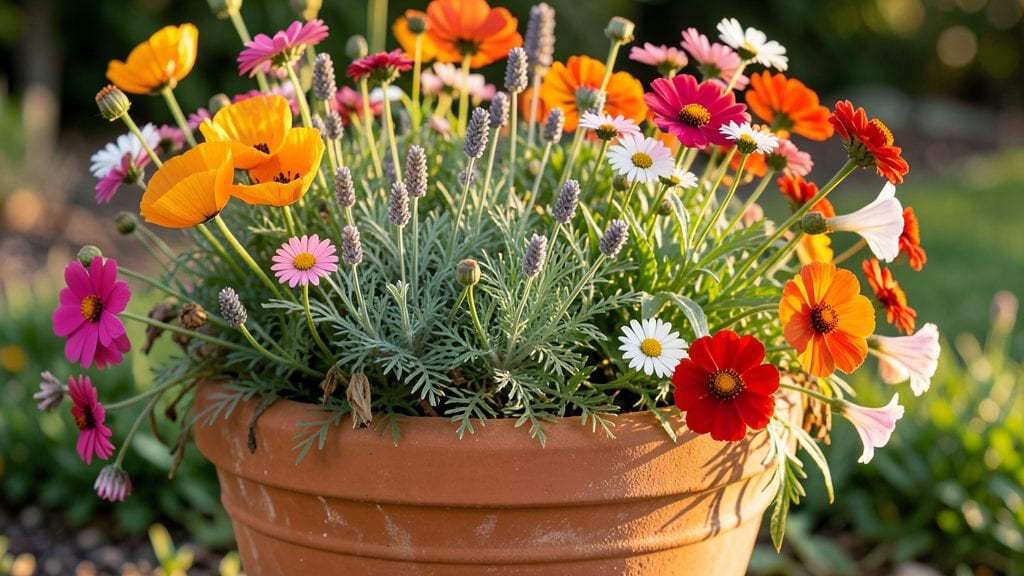
Your wildflower mix in pots can transform any patio into a buzzing meadow without the upkeep of a full garden. 🌿 I’ve filled containers with vibrant blooms that last from spring through fall—some even survive light frosts—using nothing but the right soil, a sunny spot, and occasional watering.
The secret lies in choosing short-statured annuals mixed with hardy perennials that thrive in confined spaces.
Start with a 10-12 inch deep pot (shallower for tiny wildflowers like sweet alyssum, deeper for black-eyed Susans) and fill it with a well-draining mix—equal parts potting soil, perlite, and compost. Skip the heavy garden soil; wildflowers hate soggy roots.
Plant seeds ¼ inch deep, lightly press them in, and water gently but thoroughly. Most mixes need 3-6 hours of sunlight daily, though shade-tolerant varieties like lobelia can handle partial sun.
Once established, these pots need water only when the top inch of soil feels dry—overwatering is the fastest way to kill them. Deadhead spent blooms in late summer to encourage a second flush of color, but otherwise, maintenance is minimal.
You’ll end up with a low-maintenance display that attracts pollinators and fills your space with color without the weeding or pruning of a traditional garden.
This method works for balconies, windowsills, or rooftop gardens, and you can even overwinter pots in mild climates. Swap out annuals each spring for fresh color, or let perennials return year after year.
The key is selecting a pre-mixed wildflower seed blend designed for containers—avoid meadow mixes meant for large garden beds.
📚 In This Guide
- What you need
- Instructions
- Tips and common mistakes
- Wrapping up and next steps
What you need
- ● Wildflower seed mix: Choose a pre-mixed wildflower blend (1–2 lbs per 12-inch pot or 2–3 lbs for larger containers). Opt for native varieties if possible!
- ● Pots: Containers with drainage holes (12–18 inches in diameter for best results). Terracotta, ceramic, or fabric grow bags work great.
- ● Potting soil: A lightweight, well-draining container mix (avoid garden soil—it compacts!). A 50/50 blend of potting soil and perlite/sand is ideal.
- ● Drainage layer: Small pebbles, gravel, or broken pottery pieces (1–2 inches deep) to prevent root rot.
- ● Gloves & trowel – For handling soil and seeds comfortably.
- ● Watering can or spray bottle – Gentle watering is key for seeds!
- ○ Mulch (optional) – A thin layer of straw or coconut coir to retain moisture.
- ○ Fertilizer (optional) – A slow-release, low-nitrogen granular fertilizer (follow package rates).
- ○ Sunlight tracker (optional) – To monitor light exposure if your space varies.
How to grow a thriving wildflower mix in pots
Here’s how I create vibrant, low-maintenance wildflower pots that bloom from spring through fall with almost no pruning.
🪴 Step 1: Choose the Right Containers and Drainage
Select pots with drainage holes—wildflowers despise soggy roots. I prefer 12-14 inch diameter containers for four plants each, as they provide enough space for roots to spread without overcrowding. If your pots lack drainage, drill holes in the bottom and add a layer of ½-inch gravel to prevent soil compaction.
For a natural look, use unglazed terra cotta or fabric grow bags—they allow excess moisture to evaporate while keeping roots cool. Group pots together to create a cohesive display, and place them where they’ll receive at least 6 hours of sunlight daily. Wildflowers thrive in full sun but tolerate partial shade in hotter climates.
🌱 Step 2: Layer Soil for Optimal Drainage and Nutrition
Fill each pot with a 3-inch layer of coarse perlite or pumice at the bottom to ensure rapid drainage. This prevents waterlogging, which is the #1 killer of wildflower roots. Next, add 3 inches of high-quality potting mix—avoid garden soil, as it compacts easily and suffocates roots.
Top with 1 inch of compost to provide nutrients without overwhelming the mix. Wildflowers are hardy but benefit from a slow-release fertilizer. Mix in ½ cup of 10-10-10 slow-release granules per pot to support steady growth. Gently fluff the soil with your fingers to aerate it before planting.
🌿 Step 3: Plant Seeds or Transplants Strategically
If using seeds, scatter them evenly across the soil surface—wildflower mixes contain a variety of species, so aim for 10-15 seeds per square foot. Lightly press them into the soil (no deeper than ¼ inch) to ensure good contact. For transplants, space them 6-8 inches apart to allow room for growth.
Water gently after planting to settle the soil. If using seeds, keep the soil consistently moist (not soggy) until germination, which typically occurs in 7-14 days. Once seedlings emerge, reduce watering slightly—wildflowers prefer dry conditions once established. This step is critical: Overwatering at this stage can lead to damping-off, a fungal disease that kills seedlings overnight.
☀️ Step 4: Maintain with Minimal Water and No Pruning
After the first month, water only when the top inch of soil feels dry—wildflowers are drought-tolerant once rooted. I usually water every 5-7 days in summer, but adjust based on rainfall. Avoid wetting the foliage to prevent fungal issues, and always water at the base.
Pruning is truly optional here. Deadhead spent blooms in late summer to encourage a second flush of flowers, but even if you skip this, your pots will still look stunning. The key is letting the plants go dormant naturally in fall—simply reduce watering, and they’ll rebound beautifully in spring.
⏰ Step 5: Overwinter and Renew for Next Season
In fall, stop fertilizing and reduce watering to once every 2-3 weeks. Wildflowers go dormant but survive easily in pots. In early spring, remove any dead foliage and add a ½-inch layer of fresh compost to replenish nutrients. Water lightly to encourage new growth.
This is where the magic happens: With minimal effort, your pots will burst back to life. I’ve had the same wildflower pots thriving for three seasons with no replanting—just occasional deadheading and compost top-ups. The secret? Letting nature take its course while providing the right conditions upfront.
Tips & tricks for perfect wildflower mix in pots
Here's what nobody tells you about creating pots that burst with color year after year with almost no effort.
Container Material Matters: Unglazed terra cotta pots are my top choice because they breathe—literally. Their porous nature helps regulate moisture levels, which is crucial since wildflowers hate soggy roots. Fabric grow bags are another excellent option as they allow excess moisture to evaporate while keeping roots cool. Avoid plastic containers that trap moisture and can lead to root rot, especially in hot climates.
Soil Layering Secret: The 3-inch layer of coarse perlite or pumice at the bottom isn't just about drainage—it's about creating an air pocket that prevents compaction. I've seen wildflower roots actually grow through the drainage layer if it's too fine. Use only coarse materials that won't clog the drainage holes over time. This single layer can make the difference between thriving plants and ones that struggle.
Seed Germination Watch: Those 7-14 days until germination are critical. I've learned the hard way that keeping soil consistently moist (but not soggy) is essential—overwatering at this stage can actually kill seedlings through damping-off. Use a spray bottle to water gently and check soil moisture daily. If the top inch feels dry, it's time to water again, but never let water pool in the saucer.
Sunlight Strategy: The "at least 6 hours of sunlight" guideline is non-negotiable for vibrant blooms. In hotter climates, I actually move pots to receive morning sun and afternoon shade to prevent wilting. Wildflowers are tough, but they'll still perform best with proper light exposure. If your space only gets partial sun, choose shade-tolerant varieties like black-eyed Susans or asters for your mix.
Pro Tips for Wildflower Mix In Pots
- Here's what nobody tells you about creating pots that burst with color year after year with almost no effort.
- Container Material Matters: Unglazed terra cotta pots are my top choice because they breathe—literally.
- Soil Layering Secret: The 3-inch layer of coarse perlite or pumice at the bottom isn't just about drainage—it's about creating an air pocket that prevents compaction.
Frequently asked questions
Got questions about growing wildflower mixes in pots? You’re not alone! Here are answers to the most common concerns—so you can dive in with confidence and keep your container garden blooming beautifully.
What’s the best time of year to plant wildflower mixes in pots?
For most regions, spring (after the last frost) or early fall are ideal—when soil is warm but not scorching. Avoid planting in extreme heat or cold, as seedlings need consistent moisture and gentle temperatures to establish roots. Pro tip: If you’re in a mild climate, late winter (February–March) can also work!
How often should I water potted wildflowers?
Water deeply 2–3 times per week in the first month to encourage root growth, then taper to once a week (or when the top inch of soil feels dry). Pots dry out faster than ground soil, so check moisture daily in hot weather. Overwatering is worse than underwatering—ensure pots have drainage holes to prevent soggy roots.
Can I reuse the same pot for wildflowers year after year?
Wildflowers are perennial-friendly (if your mix includes perennials), so you can replant the same pot annually. Just refresh the soil with compost, remove weeds, and add a slow-release fertilizer. For a low-maintenance twist, let some plants self-seed—it’ll save you time and money!
Will wildflowers in pots attract bees and butterflies?
Yes! Potted wildflowers are pollinator magnets—just ensure your mix includes bee-friendly varieties like lupine, coneflower, or black-eyed Susan. Place pots near windows or seating areas for up-close wildlife viewing. Avoid pesticides, and opt for native species to maximize local pollinator benefits.
What if my wildflowers don’t bloom as expected?
Blooms may lag due to shady spots, poor drainage, or overcrowding. Try moving pots to 6+ hours of sunlight, thinning dense seedlings, or fertilizing lightly with a balanced 10-10-10 mix. Deadhead spent blooms to encourage reblooming, but avoid cutting back until late fall—wildflowers store energy in their stems for next year!
Wrapping up and next steps
Transforming your space into a vibrant, low-maintenance wildflower paradise is easier than ever with a wildflower mix in pots! These cheerful blooms bring color, life, and pollinator-friendly beauty to patios, balconies, or windowsills—all while saving you time on pruning.
Whether you're a seasoned gardener or a beginner, this fuss-free approach proves that stunning results don’t require endless effort.
Ready to dive in? Start small—pick a sunny spot, grab your supplies, and let nature do the rest! 🌸 Your future self (and local bees) will thank you.