
Flowers
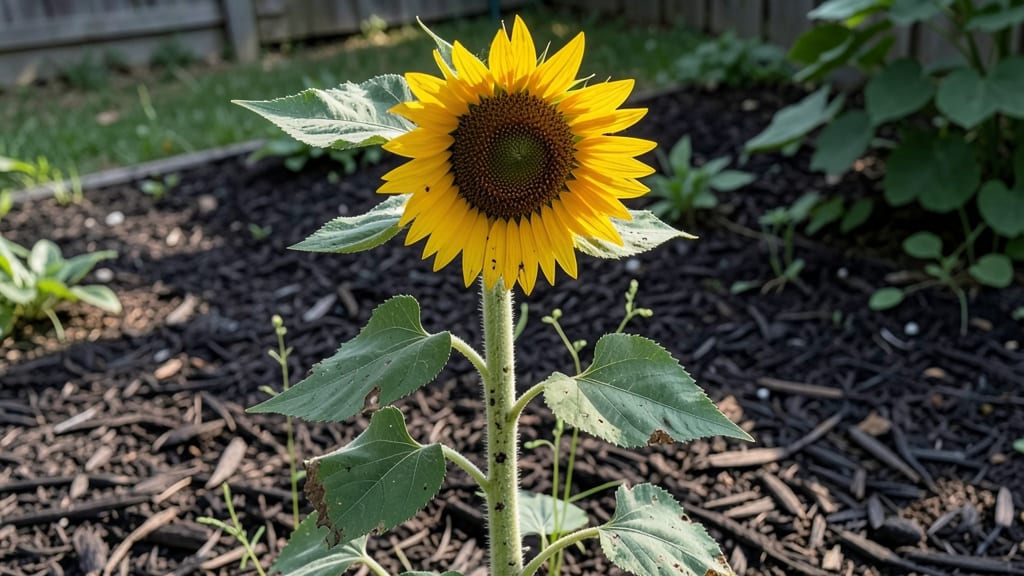
A beautiful sunflower field of 10-foot-wide golden blooms framed our backyard patio—towering faces turning toward the sun, swaying like a living sculpture. 🌻 There’s something magical about how sunflowers transform an ordinary space. into a sunlit masterpiece with just a few simple choices.
You don’t need acres to create this drama—even a single row of sunflowers adds height and movement. Pair Moulin Rouge (deep red) with Russian Giant (classic yellow) for bold contrast, or mix heights for a cascading effect.
The key is spacing: 12-18 inches apart for small gardens, 24 inches for full fields, so stems don’t compete for sunlight.
What you’ll get is a garden that feels like a postcard—velvety petals, rustling leaves, and that golden glow at dusk. Birds adore the seeds, pollinators love the nectar, and your neighbors will ask how you did it.
The best part? These plants thrive with minimal fuss, turning even a modest yard into a showstopper.
Works for city balconies (dwarf varieties), suburban borders, or sprawling fields—just adjust the scale. Let’s make your space unforgettable, one sunflower at a time.
📚 In This Guide
- What you need
- Instructions
- Tips and common mistakes
- Wrapping up and next steps
What you need
- ● Sunflower seeds: 100-200 lbs (varies by field size; choose tall varieties like 'Moulin Rouge' or 'Russian Giant' for drama 🌻).
- ● Vertical accents: 10-20 wooden stakes (6-8 ft tall, treated for durability 🪵).
- ● Or 5-10 metal trellises (customizable height, rust-resistant 🔨).
- ● Soil amendments: Compost (1-2 bags per 10 sq ft) and slow-release fertilizer (10-15-10 NPK ratio, 1 lb per 50 sq ft).
- ● Mulch: Straw or wood chips (2-3 cubic feet per 10 sq ft to retain moisture 💧).
- ● Garden trowel or transplanting tool (for precision planting 🌿).
- ● Wheelbarrow (for hauling soil/amendments).
- ● Measuring tape + stakes (to mark rows and vertical placements 📏).
- ● Watering can or hose with sprinkler attachment (for consistent hydration 💦).
- ○ Optional: String line (to create straight rows) or a laser level (for large-scale layouts 🎯).
- ● Full-sun location (6+ hours of direct sunlight daily ☀️).
- ● Well-draining soil (pH 6.0-7.5; test kit recommended 🧪).
- ● Spacious area (minimum 10x10 ft for a small display, scalable for larger fields 🌍).
- ● Pro tip: Check local frost dates—sunflowers thrive in warm weather! 🌡️
How to design a striking sunflower field with vertical drama
Here’s how to create a sunflower display that feels like a grand, sun-drenched meadow—without the acreage.
🌱 Step 1: Plan Your Layout for Maximum Impact
Sunflowers thrive in groups, so arrange them in odd-numbered clusters (3, 5, or 7 plants) for natural balance. Space clusters 6-8 feet apart to allow airflow and prevent overcrowding. I like to use a grid pattern—mark your layout with stakes or spray paint for precision. Tall varieties like ‘Mammoth’ or ‘Russian Giant’ should anchor the back, while shorter ‘Teddy Bear’ types add texture in front.
Consider height variation: mix 4-5 foot giants with 2-3 foot dwarfs to create depth. This layered approach mimics a wild field’s organic flow. Sketch your design first—sunflowers grow fast, and once planted, rearranging is impossible. Real talk: I once planted a single row of giants in a straight line, and it looked like a poorly placed fence. Lesson learned.
☀️ Step 2: Choose the Right Location for Sun and Soil
Sunflowers demand full sun (6+ hours daily)—no compromises. A south-facing spot gets the most blooms, but even west-facing areas work if the soil drains well. Test your site by digging a 6-inch hole—if water pools after 30 minutes, amend the soil with 2-3 inches of compost or plant in raised beds. I avoid low-lying areas where winter water collects; sunflowers hate soggy roots.
Sunflowers tolerate poor soil better than most plants, but they reward rich conditions. Work in 1-2 inches of aged compost or a balanced 10-10-10 fertilizer at planting time. Avoid fresh manure—it burns delicate roots. Here’s the thing: if your soil is rocky or clay-heavy, just plant them anyway. Sunflowers grow through challenges, and their resilience is half the charm.
🪴 Step 3: Plant for Height and Color Contrast
Dig holes twice as wide as the root ball and 1 inch deeper than the container. Gently tease apart roots if they’re circling—this encourages outward growth. Place the plant so the top of the root ball sits ½ inch below soil level; settling will bury it further. Fill the hole with soil, firm lightly, and water deeply to eliminate air pockets.
For drama, alternate colors in your clusters: pair golden ‘Lemon Queen’ with deep red ‘Autumn Beauty’ or bicolor ‘Presto’. I plant one dark variety per cluster to anchor the look—it’s like painting with sun. Space plants 18-24 inches apart in clusters; this ensures stems don’t compete for sunlight. Mulch with 2-3 inches of straw to suppress weeds and retain moisture, but keep mulch 3 inches away from stems to prevent rot.
💧 Step 4: Water Strategically for Strong Stems
Water deeply once a week (or daily in extreme heat) until the top 6 inches of soil feel dry. Shallow watering produces weak stems that flop in storms. I use a soaker hose to deliver moisture slowly—it mimics natural rain and discourages fungal diseases. Avoid wetting leaves, especially in humid climates; damp foliage invites powdery mildew.
Once stems reach 3 feet tall, reduce watering slightly. Sunflowers are drought-tolerant once established, and overwatering at this stage can cause them to split. You’ll know you’re doing it right when stems are thick as your wrist—thin stems mean they’re struggling. Here’s the secret: let the soil dry between waterings. Sunflowers are survivors, not divas.
✂️ Step 5: Maintain and Extend the Seasonal Display
Deadhead spent blooms by snipping stems 6 inches below the flower head—this redirects energy to new growth and prolongs the season. Save seeds from your favorite varieties by leaving 1-2 heads per plant to mature. Harvest seeds when the back of the head turns yellow and the petals drop; dry them in a well-ventilated area for 2 weeks before storing in a cool, dark place.
For winter interest, leave 3-5 mature heads standing. Their seed pods add texture to snow-covered gardens, and birds will adore them. I often tie 2-3 stems together with twine and lean them against a fence for a rustic touch. If stems weaken in wind or rain, stake tall varieties with 3-foot bamboo stakes inserted at planting. Don’t skip this—nothing ruins a sunflower field faster than a toppled giant.
Tips & tricks for perfect sunflower field design
Creating a sunflower field that pops with vertical drama requires a few strategic moves—here’s how to elevate your design from pretty to showstopping.
Cluster Composition: In Step 1, when arranging your odd-numbered clusters, consider adding one extra plant to each group as a "filler" for gaps that might appear as the plants mature. I’ve found that sunflowers naturally lean toward sunlight, so positioning your tallest varieties slightly toward the north side of each cluster prevents them from shading their neighbors. This subtle adjustment ensures every plant gets its moment in the sun—literally.
Soil Prep Secret: Before amending your soil in Step 2, test its pH with a simple kit (ideal range is 6.0-7.0). If your soil is too acidic, sprinkle 1 pound of lime per 100 square feet and work it into the top 6 inches two weeks before planting. Sunflowers are forgiving, but slightly alkaline soil (pH 7.0) boosts their vibrant yellow pigment—think of it as their natural highlighter.
Planting Depth Trick: When placing your sunflower root balls in Step 3, press the soil around them firmly but gently—think "firm handshake," not "bone-crushing." This creates micro-channels for water and air to reach the roots without compacting the soil too much. For extra insurance, add a handful of perlite or coarse sand to the bottom of each hole to improve drainage, especially if your soil is heavy clay.
Watering Hack: In Step 4, instead of relying solely on your finger to check soil moisture, use a wooden skewer inserted 6 inches deep. If it comes out clean, your soil is dry enough. This method is foolproof—no guesswork about how "dry" your finger actually feels. And here’s the bonus: the skewer method also helps you avoid overwatering, which can lead to those dreaded split stems.
Pro Tips for Beautiful Sunflower Field
- Creating a sunflower field that pops with vertical drama requires a few strategic moves—here’s how to elevate your design from pretty to showstopping.
- Cluster Composition: In Step 1, when arranging your odd-numbered clusters, consider adding one extra plant to each group as a "filler" for gaps that might appear as the plants mature.
- Soil Prep Secret: Before amending your soil in Step 2, test its pH with a simple kit (ideal range is 6.0-7.0).
Frequently asked questions
Got questions about creating a stunning sunflower field with vertical drama? Here are answers to the most common ones—so you can dive in with confidence!
When is the best time to plant sunflowers for a dramatic vertical display?
For maximum height and impact, plant sunflower seeds 4–6 weeks before your last frost date in spring. Most varieties reach 6–10 feet tall in 80–120 days, so time it right for peak summer drama. If you’re in a warm climate, fall planting can also work—just adjust for shorter daylight hours.
How far apart should I space sunflowers for a bold vertical look?
For a dramatic, field-like effect, space sunflowers 12–18 inches apart in rows 2–3 feet apart. This gives them room to grow tall and lean without overcrowding. If you’re using dwarf varieties (under 4 feet), you can plant them closer—6–12 inches apart—for a denser look.
What if my sunflowers aren’t growing tall enough?
Sunflowers need full sun (6+ hours daily) and well-draining soil. If they’re stunted, check for:
- Poor soil: Amend with compost or a balanced fertilizer (10-10-10).
- Overcrowding: Thin seedlings to the recommended spacing.
- Pests: Watch for aphids or beetles—spray with neem oil if needed.
- Water stress: Keep soil consistently moist (not soggy) during growth.
Can I mix sunflower varieties for a more dynamic field?
Combine tall varieties (8–12 ft) like ‘Russian Giant’ or ‘Mammoth’ with mid-height (4–6 ft) types like ‘Autumn Beauty’ or ‘Teddy Bear’ for layers. For contrast, add dwarf sunflowers (1–3 ft) like ‘Sunspot’ or ‘Moulin Rouge’ near the front. Just ensure they all thrive in the same conditions!
What’s a low-maintenance alternative if sunflowers are tricky to grow?
If sunflowers feel too high-maintenance, try these dramatic vertical alternatives:
- Cockscomb (Celosia): Bold, spiky blooms in fiery reds/pinks (3–4 ft tall).
- Globe Thistle (Echinops): Silvery-blue, globe-shaped flowers (3–5 ft).
- Milkweed (Asclepias): Tall, architectural stems with fluffy pink/purple blooms (3–5 ft).
- Hollyhocks: Classic vertical drama with tall, rustic charm (4–6 ft).
Wrapping up and next steps
A beautiful sunflower field isn’t just a dream—it’s a statement of bold beauty and effortless drama. By layering sunflowers vertically, you’ve unlocked a design that’s as striking as it is low-maintenance, perfect for adding height, color, and personality to any space.
Whether you’re a seasoned gardener or a curious beginner, this approach proves that big impact doesn’t require big effort.
Now that you’re inspired, why not take the next step? Sketch your design, gather your materials, and start small—even a single sunflower can spark joy! 🌻 And if you’re feeling bold, share your progress with the gardening community for extra motivation. Happy planting!