
Companion Plants
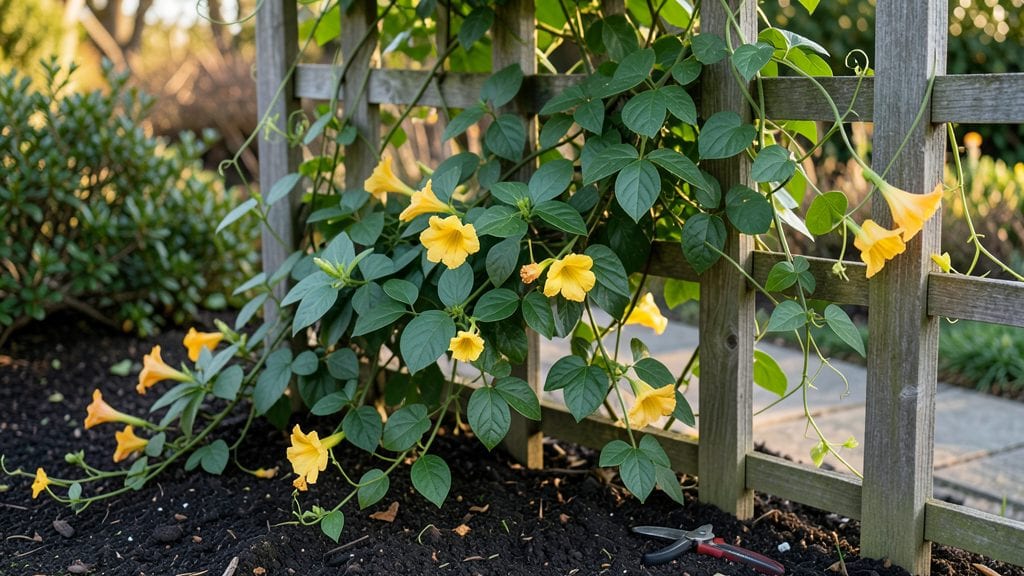
Sun-loving vines with climber plants featuring yellow flowers instantly transform a garden into a buzzing pollinator paradise. 🌻 I’ve watched my own backyard go from ordinary to extraordinary just by weaving these bright bloomers through trellises and fences—bees, butterflies, and hummingbirds now treat it like their own personal buffet.
The key isn’t just choosing the right varieties (like clematis or passionflower) but placing them where they’ll shine brightest and thrive easiest.
These vines aren’t picky—they’ll climb anything from rustic wooden arbors to sleek metal trellises, and they reward you with bold yellow blooms that last from early summer through fall. The best part? They’re low-maintenance once established, needing only occasional pruning to keep them tidy and blooming.
My go-to varieties include honeysuckle for its fragrant tubular flowers and passionflower for its exotic, velvety leaves and striking blooms.
Imagine your garden in late summer: warm golden flowers swaying in the breeze, their scent drawing in pollinators while you sip iced tea on the patio.
The secret to making this vision a reality is sunny placement—at least six hours of direct light—and pairing them with complementary plants like lavender or salvia. These climbers will also help soften fences or hide unsightly structures while adding vertical interest.
Whether you’re working with a small balcony or a sprawling backyard, these sun-loving vines bring effortless beauty and functionality. Start with a single trellis this season, and you’ll wonder why you didn’t fill your space with them years ago. Let’s get those vines climbing!
📚 In This Guide
- What you need
- Instructions
- Tips and common mistakes
- Wrapping up and next steps
What you need
- ● Climber plant with yellow flowers: 1–3 plants (e.g., Passiflora caerulea "Blue Passionflower" with yellow blooms, Ipomoea quamoclit "Cypress Vine," or Campsis radicans "Trumpet Vine")
- ● Size: 1-gallon pots or bare-root seedlings (check local nurseries for seasonal availability)
- ● Support structure: 1 trellis (4–6 ft tall), arbor, or pergola (wood, metal, or PVC)
- ○ Optional: String or twine for lightweight vines (e.g., morning glories)
- ● Potting soil or garden bed: 5–10 gallons of well-draining potting mix (or amend garden soil with compost)
- ● For containers: Add perlite or sand for aeration (10–20% mix)
- ● Basic gardening tools: 1 trowel or hand shovel
- ● 1 pair of pruning shears (sterilized)
- ● 1 watering can or hose with nozzle
- ○ Optional (but helpful!): Garden gloves (to protect from thorns or sap)
- ● Mulch (2–3 inches of shredded bark or straw)
- ● Fertilizer: Balanced 10-10-10 or slow-release granules (follow package rates)
- ● pH test kit (ideal range: 6.0–7.0 for most climbers)
- ● Prerequisites: Full sun location (6+ hours of direct sunlight daily)
- ● Space for vines to spread (3–10 ft wide, depending on species)
- ● Access to water (drip irrigation or regular hand-watering)
Step-by-step guide to selecting and planting sun-loving climber plants with yellow flowers
Here’s how to transform your space into a buzzing pollinator haven using vibrant, sun-loving vines.
🌱 Step 1: Choose the Right Climber for Your Space
Start with honeysuckle (Lonicera spp.) or black-eyed Susan vine (Thunbergia alata)—both thrive in full sun and produce cheerful yellow blooms that attract bees and butterflies. Honeysuckle’s tubular flowers are especially irresistible to hummingbirds, while black-eyed Susan vine offers bold, daisy-like blooms perfect for trellises or fences.
Check your USDA hardiness zone—honeysuckle grows well in zones 3-9, while black-eyed Susan vine is ideal for zones 10-11 (or grown as an annual elsewhere). If your space has partial shade, consider coral honeysuckle (Lonicera sempervirens), which tolerates dappled light but still produces vibrant yellow-green flowers.
☀️ Step 2: Prepare the Planting Site for Optimal Growth
Climbers need well-draining soil—amend heavy clay with 2-3 inches of compost to improve aeration. Test your soil’s pH: most yellow-flowering climbers prefer slightly acidic to neutral (6.0-7.0). If your soil is alkaline, mix in peat moss to lower the pH before planting.
Install a support structure—trellises, arbors, or wire cages—before planting. For honeysuckle, space supports 6-8 feet apart to allow vines to sprawl. Black-eyed Susan vine grows more compactly, so 4-5 feet apart works well. Avoid planting near large trees that compete for sunlight; climbers need at least 6 hours of direct sun daily.
🪴 Step 3: Plant with Proper Spacing and Staking
Dig holes twice as wide as the root ball but no deeper. Place the plant so the top of the root ball sits level with the soil surface—burying too deep can suffocate roots. Gently loosen the roots if they’re circling and spread them outward in the hole.
Fill the hole with soil, pressing lightly to remove air pockets. Water deeply to settle the soil, then stake the vine to its support. Use soft ties (like fabric strips) to secure the main stem without crushing it. Mulch with 2-3 inches of organic mulch (like shredded bark) to retain moisture and suppress weeds—just keep it 6 inches away from the stem to prevent rot.
💧 Step 4: Water and Fertilize for Vibrant Blooms
Water deeply once a week for the first month, ensuring the soil dries 1-2 inches below the surface between waterings. Climbers with yellow flowers often struggle in soggy soil—yellowing leaves signal overwatering, while drooping vines mean it’s time to hydrate. After establishment, most climbers tolerate drought once rooted.
Fertilize in early spring with a balanced, slow-release fertilizer (10-10-10). For honeysuckle, a light feeding in late summer encourages next year’s blooms. Avoid high-nitrogen fertilizers—these promote leafy growth at the expense of flowers. Instead, opt for a phosphorus-rich formula to boost blooming.
✂️ Step 5: Prune and Train for Healthy Growth
Prune honeysuckle in late winter or early spring before new growth begins. Cut back one-third of the oldest stems to the ground to encourage fresh, vigorous growth. For black-eyed Susan vine, trim spent blooms regularly to prolong flowering—this plant is a prolific rebloomer if deadheaded consistently.
Train young vines by tying them to the support every 4-6 inches as they grow. This prevents flopping and ensures even sunlight exposure. Avoid heavy pruning in fall—it removes next year’s flower buds. If your vine becomes too leggy, shorten the longest stems by one-third to promote bushier growth.
Tips & tricks for perfect sun-loving climber plants
Transforming your space into a vibrant pollinator paradise starts with these essential gardening insights that'll ensure your climbers thrive and flourish.
Plant Selection Wisdom: When choosing between honeysuckle and black-eyed Susan vine, consider your local wildlife. Honeysuckle's tubular flowers are a hummingbird magnet, while black-eyed Susan vine's bold blooms attract a wider variety of bees. For partial shade areas, coral honeysuckle offers a stunning compromise with its yellow-green flowers that still support pollinators.
Soil Preparation Strategy: The 2-3 inches of compost recommendation isn't just about drainage—it's about creating a nutrient-rich environment that mimics the climber's natural habitat. For alkaline soils, peat moss is your best friend, but be mindful of its long-term sustainability. Consider coir as an eco-friendly alternative that achieves the same pH adjustment while being more renewable.
Support Structure Insight: When installing your support structures, think vertically AND horizontally. For honeysuckle's sprawling growth habit, consider adding cross-bracing to your 6-8 foot trellis system. This creates additional climbing surfaces and prevents the vine from becoming top-heavy. For black-eyed Susan vine, a compact wire cage with multiple entry points encourages bushier growth patterns.
Watering Technique: The "dries 1-2 inches below the surface" guideline is your moisture benchmark, but don't rely solely on finger tests. Invest in a soil moisture meter for precise readings—it's especially helpful in containers where water evaporates more quickly. I've found that morning watering (before 10am) minimizes evaporation and fungal risks compared to evening watering.
Pro Tips for Climber Plant With Yellow Flowers
- Transforming your space into a vibrant pollinator paradise starts with these essential gardening insights that'll ensure your climbers thrive and flourish.
- Plant Selection Wisdom: When choosing between honeysuckle and black-eyed Susan vine, consider your local wildlife.
- Soil Preparation Strategy: The 2-3 inches of compost recommendation isn't just about drainage—it's about creating a nutrient-rich environment that mimics the climber's natural habitat.
Frequently asked questions
Got questions about adding sun-loving climber plants with yellow flowers to your garden? You’re in the right place! Here are answers to the most common queries—from planting tips to troubleshooting—so you can create a buzzing pollinator paradise with confidence.
What’s the best climber plant with yellow flowers for full sun exposure?
Top picks for sun-loving climbers include Lonicera sempervirens (Coral Honeysuckle), Passiflora caerulea (Blue Passionflower, which also has yellow blooms), and Campsis radicans (Trumpet Vine). These thrive in 6+ hours of direct sunlight and attract bees, butterflies, and hummingbirds. For a fragrant option, try Jasminum officinale (Yellow Jasmine).
When is the ideal time to plant these climbers?
Plant in early spring (after the last frost) or fall (4-6 weeks before the first frost) for best root establishment. Avoid extreme heat or cold—young plants need time to adapt. If planting in containers, you can also try late spring as long as you keep the soil consistently moist. Pro tip: Mulch around the base to retain moisture and regulate soil temperature.
How do I support a climbing plant with weak or sparse growth?
Weak growth often stems from inadequate sunlight, poor soil, or lack of support. Ensure your climber gets full sun and use a trellis, arbor, or sturdy fence for guidance. If the soil is nutrient-poor, amend it with compost or a balanced fertilizer (like 10-10-10). Prune leggy vines in early spring to encourage bushier growth. Troubleshoot: Check for pests (like aphids) and treat with neem oil if needed.
Are there non-invasive alternatives to aggressive climbers like Trumpet Vine?
Yes! If you’re wary of invasive spread, opt for Bignonia capreolata (Crossvine) or Clematis vitalba (Old Man’s Beard), both of which produce cheerful yellow blooms and stay well-behaved with pruning. Ipomoea quamoclit (Cypress Vine) is another annual option that’s easy to control and blooms prolifically in summer. Always research your local climate and native plant databases for region-specific advice.
How do I keep these plants blooming all season?
To extend the blooming season, deadhead spent flowers regularly (remove faded blooms) and fertilize lightly every 4-6 weeks with a phosphorus-rich formula (like 5-10-5) to encourage flowering. Water deeply but avoid soggy soil—most climbers prefer moderate moisture. For container-grown plants, ensure they’re in well-draining pots and move them to a sheltered spot if frost is forecasted. Bonus tip: Plant near pollinator-friendly companions like Salvia or Echinacea to attract more visitors!
Wrapping up and next steps
Transforming your garden into a vibrant pollinator paradise with climber plants like Passiflora caerulea or Clematis is easier—and more rewarding—than you think! 🌿 These sun-loving vines not only add stunning yellow blooms but also support bees, butterflies, and hummingbirds while requiring minimal effort once established.
Whether you’re a seasoned gardener or just starting, every sunny corner can become a thriving vertical garden.
Ready to take the next step? Pick one plant from this list, grab your gardening gloves, and start planting—your garden (and the pollinators!) will thank you. 🐝✨ Happy gardening!