
Size
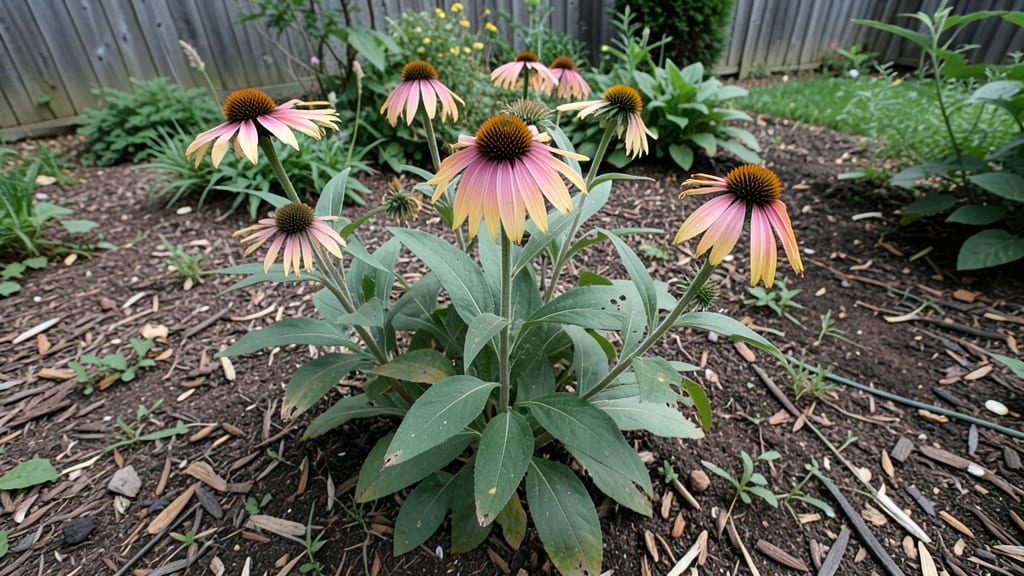
When you want a coneflower that defies ordinary pink and purple, Echinacea 'Sunseekers Rainbow' delivers sunlit drama with its fiery orange, yellow, and red blooms that shift as they age. 🌻 I planted mine last spring near the patio, and now it’s the star of summer—towering over other perennials while drawing hummingbirds like a magnet.
The color isn’t just pretty; it’s a showstopper that keeps evolving from bud to spent bloom.
This variety thrives in full sun to partial shade, making it perfect for borders, pollinator gardens, or even as a standalone specimen. Pair it with silver foliage plants like lamb’s ear or dusty miller to make the colors pop even more.
Unlike some coneflowers that fade after one season, 'Sunseekers Rainbow' keeps blooming from mid-summer through fall, giving you months of vibrant color with almost no effort.
You’ll love how it holds its structure even after rain, with petals that stay crisp and upright—no flopping or wilting.
The deep green foliage provides a perfect backdrop for the bold blooms, and the plant’s 3-4 foot height makes it ideal for cutting or adding vertical interest to any garden bed. Once established, it’s drought-tolerant and low-maintenance, so you can enjoy the show without the fuss.
For maximum impact, plant it in odd-numbered groupings of three or five—it looks stunning in drifts along pathways or as a focal point in a pollinator-friendly meadow.
The more you see it, the more you’ll want it in every sunny corner. Ready to transform your garden into a rainbow of summer color?
📚 In This Guide
- What you need
- Instructions
- Tips and common mistakes
- Wrapping up and next steps
What you need
- ● Coneflower seeds (Echinacea spp.) – Choose Sunseekers Rainbow mix (available online or at garden centers). Aim for 10-20 seeds per plant or 1 lb per 100 sq ft for bulk planting.
- ● Well-draining potting mix – 10-15 gallons (or enough to fill seedling trays/containers). Opt for a blend with 30-40% perlite or sand for aeration.
- ○ Seed-starting trays or small pots – 72-cell trays (for seeds) or 4-inch pots (for transplants). Optional: Biodegradable peat pots for easy transplanting.
- ● Garden soil (if direct-sowing) – Loamy, slightly acidic (pH 6.0-7.0). Amend with 2-3 inches of compost per sq ft.
- ● Organic fertilizer – 5-10-5 NPK ratio (e.g., fish emulsion or bone meal). 1 tbsp per plant at planting time.
- ● Gloves – Heavy-duty gardening gloves to protect hands from thorns.
- ● Trowel or transplant spade – For digging holes (6-12 inches deep and 12-18 inches wide per plant).
- ● Watering can or hose with gentle spray nozzle – Keep soil consistently moist (not soggy).
- ○ Mulch (optional but recommended) – 2-3 inches of straw or shredded leaves to retain moisture and deter weeds.
- ○ Stakes or plant supports (optional) – Tall varieties may need 6-foot stakes for windy areas.
- ● Sunlight access – Full sun (6+ hours daily). Coneflowers thrive in bright, open spaces.
- ● Climate suitability – Hardy in USDA Zones 3-9. Start indoors 8-10 weeks before last frost if in cooler zones.
- ● Drainage check – Avoid waterlogged areas; coneflowers hate soggy roots.
Step-by-step guide to planting and maintaining Coneflower Sunseekers Rainbow
Let’s bring this stunning perennial to life with a few simple steps that ensure vibrant blooms season after season.
🌱 Step 1: Choose the Perfect Planting Location
Coneflower thrives in full sun—at least 6-8 hours daily. I always pick a spot that gets morning sun and afternoon shade if your summers are scorching. The Sunseekers Rainbow variety loves well-draining soil, so avoid low-lying areas where water pools.
Dig a hole twice as wide as the root ball but only as deep. Loosen the sides of the hole to encourage root spread. If your soil is heavy clay, mix in a handful of compost to improve drainage. The key is giving those roots room to stretch out—they’ll reward you with stronger stems and bigger blooms.
💧 Step 2: Plant and Water Deeply for Strong Roots
Gently remove the plant from its container and tease apart any circling roots. Place it in the hole so the top of the root ball sits even with the soil surface—burying too deep can suffocate the plant. Fill the hole with soil, pressing lightly to eliminate air pockets.
Water immediately after planting, giving it a deep soak that reaches 6-8 inches down. You’ll know it’s right when water drains out the bottom of the hole. Mulch around the base with 2-3 inches of organic mulch to retain moisture and suppress weeds. Avoid piling mulch against the stem—keep it 2 inches away to prevent rot.
☀️ Step 3: Provide Consistent Care for Year-Round Blooms
Water once a week during the first growing season, then taper to every 10-14 days once established. Coneflower is drought-tolerant, but the Sunseekers Rainbow variety benefits from regular moisture for its vibrant, multi-colored blooms. Check soil moisture by sticking your finger 2 inches down—if it’s dry, it’s time to water.
Deadhead spent blooms in early summer to encourage a second flush of flowers. I snip off the faded flower heads with clean pruners, cutting just above the first set of healthy leaves. This redirects energy from seed production back into new growth. Fertilize lightly in spring with a balanced 10-10-10 fertilizer to support strong stems and abundant blooms.
✂️ Step 4: Prune and Prepare for Winter
After the first hard frost, cut back the stems to 4-6 inches above the ground. This tidies up the plant and protects it from winter winds. Coneflower is hardy and will regrow from the base in spring, but a clean cut helps prevent disease.
In early spring, remove any dead or damaged stems before new growth appears. Avoid heavy pruning at this stage—just a light trim to shape the plant. The Sunseekers Rainbow variety is low-maintenance, but a little attention goes a long way in keeping it looking its best. With the right care, it’ll bloom for years with minimal effort.
Tips & tricks for perfect Coneflower Sunseekers Rainbow
Here's what I've learned over the years to help your Coneflower Sunseekers Rainbow thrive with minimal fuss.
Sunlight Strategy: That 6-8 hours of full sun is non-negotiable for vibrant blooms. If your garden gets afternoon shade, place your coneflowers where they'll catch morning sun—this gives them the energy boost they need. I've seen plants in partial shade still bloom, but the colors are far less intense. Trust me, the difference is worth finding that perfect spot!
Root Ball Technique: When planting, gently tease apart those circling roots—this encourages them to spread outward instead of growing in a tight circle. I've made the mistake of planting with roots intact, and those plants always struggle to establish properly. The wider the hole (twice as wide as the root ball), the better the root spread and stronger the plant will be.
Watering Wisdom: That deep soak reaching 6-8 inches down is crucial for establishing strong roots. I use a long trowel to check how deep the water penetrates—if it doesn't reach that depth, I water again. This initial deep watering prevents shallow root systems that can't support those towering blooms.
Deadheading Timing: Don't wait until the flowers are completely brown to deadhead. Aim for early summer when you see the first signs of fading. I cut just above the first set of healthy leaves, and this redirects energy to produce more blooms. This simple step can nearly double your flowering season!
Pro Tips for Coneflower Sunseekers Rainbow
- Here's what I've learned over the years to help your Coneflower Sunseekers Rainbow thrive with minimal fuss.
- Sunlight Strategy: That 6-8 hours of full sun is non-negotiable for vibrant blooms.
- Root Ball Technique: When planting, gently tease apart those circling roots—this encourages them to spread outward instead of growing in a tight circle.
Frequently asked questions
Got questions about growing and caring for Coneflower Sunseekers Rainbow? You’re not alone!
Here are some of the most common queries—plus quick, practical answers to keep your towering blooms thriving all year.
How tall do Coneflower Sunseekers Rainbow actually grow?
These beauties typically reach 3–5 feet tall with a 2–3 foot spread, making them perfect for borders, cut flower gardens, or as a striking focal point. For smaller spaces, deadhead spent blooms to encourage bushier growth.
When is the best time to plant Coneflower Sunseekers Rainbow?
Plant in early spring or fall for optimal root establishment. If planting in summer, water deeply and mulch to reduce stress. They’re hardy in USDA Zones 3–9, so they’ll bounce back even in harsh winters!
How often should I water these coneflowers?
Once established (after the first year), they’re drought-tolerant! Water deeply 1–2 times per week during dry spells, but avoid soggy soil. Overwatering can lead to root rot—soak, then let the soil dry slightly between waterings.
Why aren’t my Coneflower Sunseekers Rainbow blooming as much as expected?
Fewer blooms often mean over-fertilizing (they thrive in lean soil) or crowded roots. Try these fixes:
- Trim back 1/3 of the plant in early spring to encourage new growth.
- Deadhead spent blooms to prompt more flowers.
- Check soil—amend with compost or sand if it’s too dense.
Can I grow Coneflower Sunseekers Rainbow in containers?
Yes! Use a large pot (at least 12–15 inches deep) with drainage holes and a well-draining potting mix. Place in full sun and water consistently until established. Containers dry out faster, so monitor soil moisture closely.
Are these coneflowers deer- or rabbit-resistant?
While they’re deer-resistant (thanks to their milky sap!), rabbits might nibble young plants. Protect seedlings with chicken wire or repellent until established. Once mature, they’re usually left alone—nature’s built-in pest deterrent!
Wrapping up and next steps
Transforming your garden into a vibrant Coneflower Sunseekers Rainbow isn’t just about aesthetics—it’s a celebration of resilience and beauty that keeps giving year-round! 🌈 These towering blooms bring joy, attract pollinators, and prove that even the boldest colors can thrive with minimal fuss.
Whether you’re a seasoned gardener or just starting out, your effort will pay off in stunning, sun-loving splendor.
Ready to take the next step? Grab your gloves, pick a sunny spot, and plant your first Coneflower Sunseekers Rainbow today! Watch as your garden becomes a living rainbow—one that grows, blooms, and inspires for seasons to come. 🌱✨