Flowers
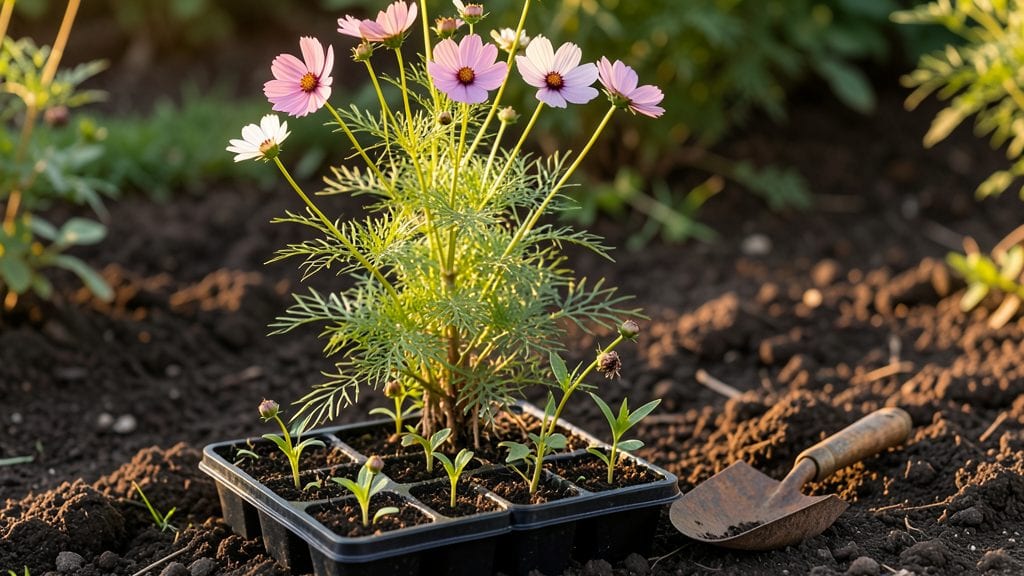
Growing cosmos flowers from seeds gives you nonstop blooms in bold pinks, whites, and yellows that keep coming until frost. 🌻 I remember my first time—those delicate, feathery seedlings popping up in just days, then exploding into towering stems covered in cheerful faces by summer.
The secret isn't complicated: these sun-loving annuals thrive with minimal fuss once you get them started right.
You'll need cosmos seeds (any variety works), a sunny spot with at least 6 hours of light daily, and well-draining soil—no fancy amendments required. Plant them directly outdoors after your last frost date, or start indoors 4-6 weeks earlier if your spring is cool.
The seeds are tiny but tough; sprinkle them lightly on top of soil and press them in gently. No need to bury them deep—they germinate best in bright light.
Within 2-3 weeks, you'll see those first spiky seedlings with their distinctive fern-like leaves. Keep the soil lightly moist but never soggy, and thin them to 12-18 inches apart when they're a few inches tall.
The real magic happens when they start blooming—pink, red, or white flowers that attract bees and butterflies while cutting back on weeds. They're so low-maintenance, you'll wonder why you didn't try them sooner.
Here's the best part: cosmos keep producing flowers all season long, and they self-seed like crazy. That means next year's garden might have volunteer cosmos popping up everywhere—free blooms with zero effort. Ready to add some effortless color to your garden? Let's get those seeds in the ground.
📚 In This Guide
- What you need
- Instructions
- Tips and common mistakes
- Wrapping up and next steps
What you need
- ● Cosmos seeds: Choose from varieties like Cosmos bipinnatus (classic pink/white) or Cosmos sulphureus (bright yellow/orange). Buy 1–2 packets (50–100 seeds per packet) for a full bloom.
- ● Seed-starting soil: A 10–20 lb bag of lightweight, well-draining potting mix (e.g., Miracle-Gro Seed Starting Potting Mix).
- ● Containers or garden bed: For starting indoors: 2–4 biodegradable pots (3–4 inches deep) or a seed tray with cells.
- ● For direct sowing: A sunny garden spot with loose, well-draining soil (amend with compost if needed).
- ● Watering can or spray bottle: A 1-gallon can with a gentle spray nozzle for seedlings.
- ● Garden gloves: A pair to protect your hands from soil and thorns (some cosmos varieties have prickly stems!).
- ○ Plant labels: 10–20 labels to track varieties (optional but helpful!).
- ● Grow lights: A LED clip-on light if starting seeds indoors before the last frost.
- ● Fertilizer: A balanced, slow-release fertilizer (e.g., 10-10-10) to boost blooms.
- ● Mulch: Straw or shredded leaves to retain moisture and suppress weeds.
- ● Trellis or stakes: For tall varieties (e.g., Cosmos bipinnatus), use 4–6 ft bamboo stakes or a lightweight trellis.
- ● Deadheading shears: Small pruners to snip spent blooms and encourage more flowers.
How to grow cosmos flowers from seeds for continuous blooms
Here's the straightforward method I've used for years to get cosmos blooming nonstop from early summer until frost.
🌱 Step 1: Start Seeds Indoors or Direct-Sow After Frost
Cosmos seeds germinate best when soil temperatures reach 70°F or warmer. For a head start, sow indoors 6-8 weeks before your last frost date using 2-3 inch deep biodegradable pots filled with seed-starting mix. Press seeds just below the surface—about ¼ inch deep—since cosmos seeds need light to germinate properly.
Keep the soil consistently moist but never soggy. Place pots in a warm spot (a seedling heat mat helps) and cover with plastic wrap to retain humidity. Germination typically occurs in 7-14 days, though cooler conditions may delay sprouting. Once seedlings emerge, remove the plastic immediately to prevent damping-off.
I always direct-sow cosmos in my garden after the last frost date, too. The seeds are hardy and handle transplanting well, so you can skip the indoor phase entirely if you prefer. Simply scatter seeds ½ inch deep in well-drained soil and water gently. Thin seedlings to 12-18 inches apart once they reach 3-4 inches tall.
☀️ Step 2: Provide Full Sun and Well-Drained Soil
Cosmos thrive in full sun (at least 6-8 hours daily) and tolerate poor soil conditions better than most flowers. Amend your garden bed with compost if your soil is heavy clay, but avoid rich, nitrogen-heavy fertilizer—this encourages leafy growth at the expense of blooms.
Water deeply but infrequently once established. Cosmos have deep taproots that seek moisture, so let the soil dry out between waterings. You'll know they're thirsty when the leaves start to wilt slightly in the afternoon heat. A good soaking at the base every 5-7 days keeps them happy without inviting fungal diseases.
Here's the thing—cosmos self-seed prolifically. If you let a few plants go to seed at the end of the season, you'll have a fresh crop of volunteers popping up next spring. I always leave a few stems standing for this reason, though you can deadhead spent blooms if you prefer a tidier look.
✂️ Step 3: Deadhead and Prune for Longer Blooming
Deadheading isn't just for looks—it's the secret to nonstop cosmos blooms. Pinch off spent flowers just above the next set of leaves (or where the bloom stem meets the main stem) using clean pruners. This encourages the plant to produce new side shoots and more blooms.
I also prune cosmos back by one-third in early summer if they get leggy. Cut just above a set of healthy leaves, and the plant will bush out beautifully. This is especially helpful in hot climates where cosmos can get floppy from too much heat. Avoid heavy pruning late in the season, as it may reduce winter hardiness in colder zones.
Watch for aphids on new growth—they love tender cosmos shoots. A strong spray of water usually knocks them off, but severe infestations may require neem oil. Healthy cosmos plants are tough enough to handle a few pests, so don't stress over minor issues.
🌿 Step 4: Enjoy Continuous Blooms and Prepare for Winter
Once cosmos are established, they'll bloom nonstop from midsummer until frost. The key to their longevity is consistent deadheading and avoiding over-fertilization. If you notice blooms slowing down in late summer, give the plants a light feeding with low-nitrogen fertilizer (like 5-10-10) to encourage one last flush of flowers.
In fall, you can cut back the plants to 6 inches tall and mulch around the base. Cosmos are often winter-hardy in zones 3-9, though they may resprout from the roots in spring. In colder areas, dig up tubers if you want to overwinter them indoors. Most gardeners simply let them die back naturally and enjoy the self-seeding show the following year.
Real talk: Cosmos are one of the easiest perennials to grow, and their cheerful faces brighten any garden. The more you deadhead, the more they reward you with blooms. I've had cosmos plants in my garden for over a decade, and they're still going strong—proof that sometimes the simplest flowers are the best.
Tips & tricks for perfect cosmos blooms
These simple strategies will help you maximize your cosmos' vibrant colors and endless flowering season.
Soil Temperature Secret: The 70°F soil temperature mentioned in Step 1 is non-negotiable for germination. If your spring soil runs cooler, consider using a seedling heat mat or even a black plastic mulch to warm the soil. I've seen germination rates double when soil stays consistently warm—just don't let it get above 85°F, or seeds may fail to sprout.
Light Requirements: Cosmos absolutely thrive on those 6-8 hours of daily sun, but here's what nobody tells you—they can handle even more! In my zone 7 garden, plants in full sun (8+ hours) produce blooms twice as large and with more vibrant colors. Just watch for wilting in extreme heat—provide afternoon shade if needed during summer's hottest months.
Thinning Technique: When thinning seedlings to 12-18 inches apart in Step 1, use sharp scissors to snip at soil level rather than pulling. This prevents disturbing the roots of nearby plants. I always thin on a cloudy day to reduce stress on the remaining seedlings. The extra space gives each plant room to develop strong stems that support those beautiful blooms.
Fertilizer Strategy: The low-nitrogen fertilizer recommendation in Step 4 is brilliant for blooms, but here's the pro move: mix in composted manure or worm castings at planting time for a slow-release nutrient boost. This gives cosmos everything they need without encouraging leafy growth. I've found that adding a handful of this to each planting hole makes all the difference in plant vigor.
Pro Tips for Cosmos Flowers Seeds
- These simple strategies will help you maximize your cosmos' vibrant colors and endless flowering season.
- Soil Temperature Secret: The 70°F soil temperature mentioned in Step 1 is non-negotiable for germination.
- Light Requirements: Cosmos absolutely thrive on those 6-8 hours of daily sun, but here's what nobody tells you—they can handle even more!
Frequently asked questions
How long does it take for cosmos seeds to germinate?
Cosmos seeds are fast growers! With the right conditions (warm soil, 60–75°F, and consistent moisture), you’ll see sprouts in 5–14 days. For quicker results, pre-soak seeds overnight or use a heat mat. Patience pays off—just keep the soil damp until they pop!
Can I plant cosmos seeds directly in the ground, or should I start indoors?
Cosmos seeds thrive when planted directly outdoors after the last frost (they hate transplanting!). Skip the indoor hassle—just scatter seeds on top of soil, press lightly, and water gently. They’ll self-thin naturally, so no need to crowd them. Pro tip: Wait until soil is at least 50°F to avoid slow germination.
Why aren’t my cosmos flowers blooming? What’s going wrong?
If your cosmos is all leaves and no flowers, check these fixes:
- Deadhead spent blooms—this encourages more flowers.
- Ensure 6+ hours of sunlight daily (they’re sun-lovers!).
- Fertilize lightly with low-phosphorus feed (too much can delay blooms).
- Thin plants to 12–18 inches apart for better airflow.
If the problem persists, your soil might be too rich—cosmos prefers lean conditions!
What’s the best way to save cosmos seeds for next year?
Saving cosmos seeds is easy! Let some flowers fully dry on the plant (they’ll turn papery brown). Snap off the seed heads, rub them between your fingers to release the seeds, and store them in a paper envelope in a cool, dry place. Fun fact: Cosmos seeds stay viable for 2–3 years!
Are cosmos flowers good for pollinators like bees and butterflies?
Cosmos are a pollinator magnet—their bright blooms attract bees, butterflies, and hummingbirds. Plant them near herbs or veggies to boost your garden’s biodiversity. Bonus: They’re drought-tolerant once established, so they’re low-maintenance for busy gardeners!
Wrapping up and next steps
Growing cosmos flowers from seeds is a rewarding journey that brings vibrant colors and effortless beauty to your garden. 🌸 Their hardiness, drought tolerance, and continuous blooms make them a favorite for both beginners and seasoned gardeners.
Whether you're adding them to borders, containers, or cutting gardens, these cheerful flowers are sure to delight!
Ready to dive in? Start by gathering your seeds and soil—then watch your garden transform into a nonstop floral paradise. Happy planting! 🌱