
Flowers
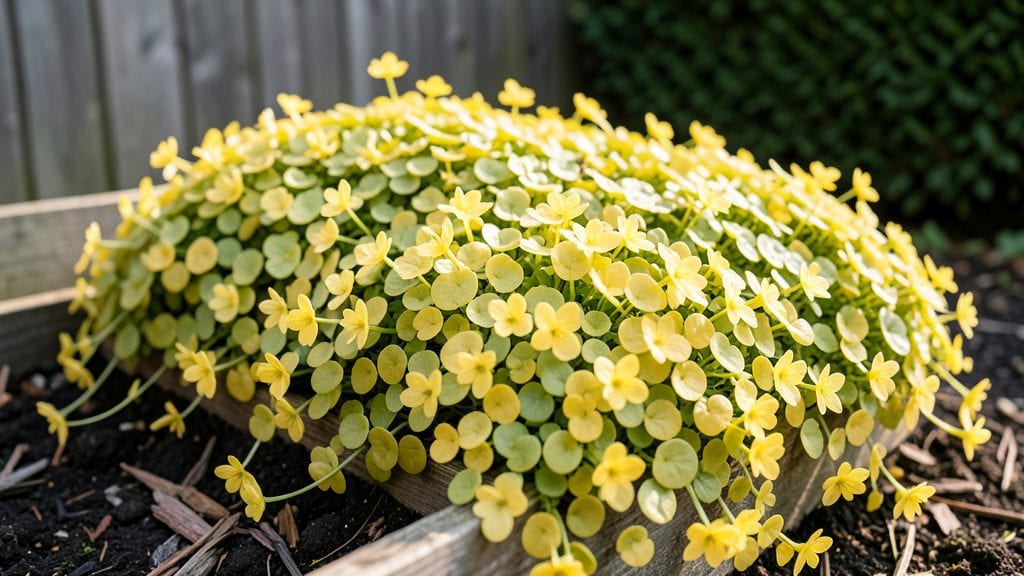
This creeping jenny, a vibrant invasive ground cover with golden-yellow flowers, transforms dull corners into sunlit jewels—but its relentless spread means it’s not for the careless gardener. heart. The key lies in controlling where it grows while letting its golden charm shine.
This sun-loving ground cover thrives in well-drained soil and 6+ hours of sunlight daily, though it tolerates partial shade. Plant it in containers for controlled spread or along borders where its runners can cascade naturally.
The secret to managing its invasiveness? Regular trimming and strategic placement—think of it as a living edge that won’t take over if you set boundaries.
You’ll love how it stays vibrant year-round, even in winter, with its velvety yellow leaves that catch the light like scattered coins. Pair it with ferns for texture or let it trail over walls for a dramatic effect.
Just be prepared to divide and relocate runners if it starts encroaching where you don’t want it.
For gardeners who adore low-maintenance beauty but dread weeding, Creeping Jenny is a foolproof choice—if you’re ready to embrace its bold personality. The trade-off? A garden that looks like it belongs in a storybook, not a catalog. Here’s how to make it work for you.
📚 In This Guide
- What you need
- Instructions
- Tips and common mistakes
- Wrapping up and next steps
What you need
- ● Creeping Jenny plants: 6–12 healthy nursery-grown plants (for a 4’ x 4’ area)
- ● OR 1–2 established plants for propagation (if dividing)
- ● Soil prep: Well-draining loamy soil (amend with compost if clay-heavy)
- ● Garden fork or tiller (for aeration)
- ● Organic mulch (e.g., shredded bark or pine needles, 2–3 inches)
- ● Planting tools: Garden gloves (to protect hands from soil and stems)
- ● Hand trowel (for precision planting)
- ● Measuring tape (to space plants 12–18 inches apart)
- ● Watering supplies: Garden hose with adjustable nozzle (or drip irrigation system)
- ● Slow-release balanced fertilizer (10-10-10, sprinkle lightly at planting)
- ● Edging stones or metal borders (to contain aggressive spread)
- ● Pruning shears (for trimming overgrowth in spring)
- ● Soil test kit (to check pH—Creeping Jenny thrives in 6.0–7.0)
- ● Bird netting (if planting near high-traffic areas to deter foot traffic)
How to plant and control Creeping Jenny for stunning year-round color
This sun-loving ground cover thrives with minimal effort but demands smart placement to prevent takeover.
Select the Perfect Sunlit Location
Creeping Jenny (Lysimachia nummularia) craves full sun to partial shade, but for those signature golden-yellow foliage and flowers, prioritize 6+ hours of direct sunlight daily. I always scout the site first—look for areas where other sun-loving plants like sedum or daylilies already thrive. Avoid low spots where winter water pools, as this plant despises soggy roots.
Test your spot by observing how dry the soil stays after a week without rain. If it remains damp, amend with 2-3 inches of gravel or coarse sand mixed into the top 6 inches of soil. The goal is well-draining soil that stays moist but never waterlogged. Creeping Jenny’s shallow roots will reward you with vibrant growth when conditions are just right.
Prepare the Soil and Divide Established Plants
For new installations, loosen the soil to a depth of 8-10 inches using a garden fork or tiller. Work in a handful of compost or well-rotted manure to boost organic matter—this plant isn’t fussy but responds beautifully to fertile soil. If your soil is heavy clay, blend in 20% perlite or sand to improve drainage.
If starting from an established clump, dig up sections with a sharp spade, ensuring each division has 3-5 stems. I like to separate in early spring when new growth is just emerging—this gives roots time to establish before summer’s heat. Space divisions 12-18 inches apart for a dense carpet or 3-4 feet apart if you want a more contained look.
Plant and Water for Immediate Establishment
Create shallow planting holes just deep enough to accommodate the roots without burying the crown. Press soil gently around each stem to eliminate air pockets, then water deeply until moisture reaches 6 inches down. You’ll know it’s right when water pools on the surface for a few seconds before draining away.
Mulch with 1-2 inches of shredded bark or pine needles to suppress weeds and retain moisture. Avoid thick mulch layers—Creeping Jenny’s shallow roots need quick access to soil. Water every 2-3 days until new growth appears, then taper to weekly waterings once established. The first true leaves should emerge within 2-3 weeks.
Monitor and Control Spread Strategically
Here’s the thing—Creeping Jenny spreads aggressively. To keep it contained, install edging barriers like landscape fabric or metal edging before planting. Press the barrier 4-6 inches deep to prevent roots from creeping underneath. For natural containment, plant in large containers with drainage holes—just be prepared to divide and replant every 2-3 years.
Prune back leggy stems in early spring to encourage bushier growth. If flowers appear (usually in late spring to summer), deadhead spent blooms to redirect energy into foliage. In fall, trim back any overgrown areas but leave some height for winter interest—those golden stems add texture even when dormant.
Overwinter and Prepare for Next Season
Creeping Jenny is hardy in zones 4-9, but in colder climates, mulch heavily with 3-4 inches of straw or leaves after the first frost. This protects shallow roots from freeze-thaw cycles. In spring, remove mulch once new growth appears—usually by mid-April in most regions.
Fertilize lightly in early spring with a balanced 10-10-10 formula or compost tea. Avoid high-nitrogen feeds—this plant thrives on moderate fertility. Watch for signs of stress like yellowing leaves, which often signals overwatering or poor drainage. Adjust your care accordingly, and you’ll have a lush, sun-loving ground cover that spreads effortlessly year after year.
Tips & tricks for perfect Creeping Jenny planting and maintenance
A few strategic moves will help you harness Creeping Jenny's vibrant beauty while keeping its spread in check—here's how to work with its aggressive nature without losing control.
Site Selection Secret: In Step 1, when choosing your sunlit location, pay special attention to microclimates within your yard. The north side of a building might get only 4 hours of sun, while the south side could deliver 8—this plant thrives best with that full sun exposure. I've seen it struggle in partial shade, where the golden foliage fades to pale green. For containers, place them where they'll get morning sun and afternoon shade in hot climates to prevent scorching.
Soil Prep Strategy: The 8-10 inch soil loosening in Step 2 is crucial for those shallow roots, but don't overdo it with amendments. Too much compost can make the soil too rich, leading to leggy growth. Instead, focus on improving drainage—if your soil is heavy clay, mix in that 20% perlite or sand right through the loosened zone. For sandy soils, add a bit of compost to help retain moisture without compacting the soil structure.
Division Timing Tip: When dividing established plants in Step 2, timing matters more than you might think. Early spring is ideal, but if you must divide in summer, do it on a cool, overcast day. The plant's shallow root system can dry out quickly in hot conditions. After dividing, give the new sections a good soaking and shade them with burlap for the first week to reduce transplant shock.
Spread Control Hack: For Step 4's edging barriers, don't just rely on landscape fabric—combine it with a physical barrier like metal edging pressed 4-6 inches deep. I've found that roots can sometimes find their way through fabric alone. Another trick: plant Creeping Jenny in a sunken area surrounded by taller plants like ornamental grasses. The taller plants will cast shade that naturally slows its spread while still allowing enough light for vibrant growth.
Pro Tips for Creeping Jenny Invasive Ground Cover With Yellow Flowers
- A few strategic moves will help you harness Creeping Jenny's vibrant beauty while keeping its spread in check—here's how to work with its aggressive nature without losing control.
- Site Selection Secret: In Step 1, when choosing your sunlit location, pay special attention to microclimates within your yard.
- Soil Prep Strategy: The 8-10 inch soil loosening in Step 2 is crucial for those shallow roots, but don't overdo it with amendments.
Frequently asked questions
Got questions about Lysimachia nummularia (Creeping Jenny)? You’re not alone! Here are answers to the most common concerns—whether you’re dealing with spread, care, or alternatives.
Is Creeping Jenny really invasive, and how do I control its spread?
Yes, Creeping Jenny spreads aggressively via stolons (runners), which can smother other plants. To control it, trim runners regularly or plant it in contained areas like pots or between stepping stones. For stubborn patches, hand-pull or mulch heavily to suppress growth.
When is the best time to plant Creeping Jenny for maximum growth?
The ideal time is early spring or early fall when temperatures are mild. Planting in spring gives it time to establish roots before summer heat, while fall planting allows it to spread before winter dormancy. Avoid planting in extreme heat or cold.
What are some low-maintenance alternatives to Creeping Jenny?
If you want a yellow-flowering, sun-loving ground cover but with less spread, try:
- Golden Creeping Thyme – Drought-tolerant, fragrant, and stays compact.
- Sedum (Stonecrop) – Succulent-like, thrives in sun, and has minimal spread.
- Dichondra ‘Silver Falls’ – Silvery foliage, slower growth, and great for cascading.
Why is my Creeping Jenny turning brown or dying back?
Brown patches usually mean overwatering, poor drainage, or fungal issues. Ensure it’s planted in well-draining soil and water only when the top inch is dry. If fungal disease is suspected, remove affected areas and apply fungicide. Yellowing leaves may also signal nutrient deficiency—try a balanced fertilizer.
Can Creeping Jenny survive in partial shade, or does it need full sun?
While it thrives in full sun, Creeping Jenny tolerates partial shade (4–6 hours of sunlight daily). In shadier spots, its growth may slow, and foliage could lose vibrancy. For best yellow-green color, prioritize 6+ hours of sun, especially in cooler climates.
Wrapping up and next steps
Creeping Jenny is a sun-loving, low-maintenance ground cover that brings vibrant yellow blooms and lush foliage to any garden—even in winter! While its invasive tendencies require careful management, its year-round color and adaptability make it a standout choice for sunny spaces.
Whether you’re adding it to borders, slopes, or containers, this plant thrives with minimal effort once established.
Ready to transform your garden? Start small—plant a section in a contained area, monitor its spread, and enjoy the stunning results! For extra control, pair it with companion plants or use edging to keep it in check. Happy gardening! 🌿✨