
Flowers
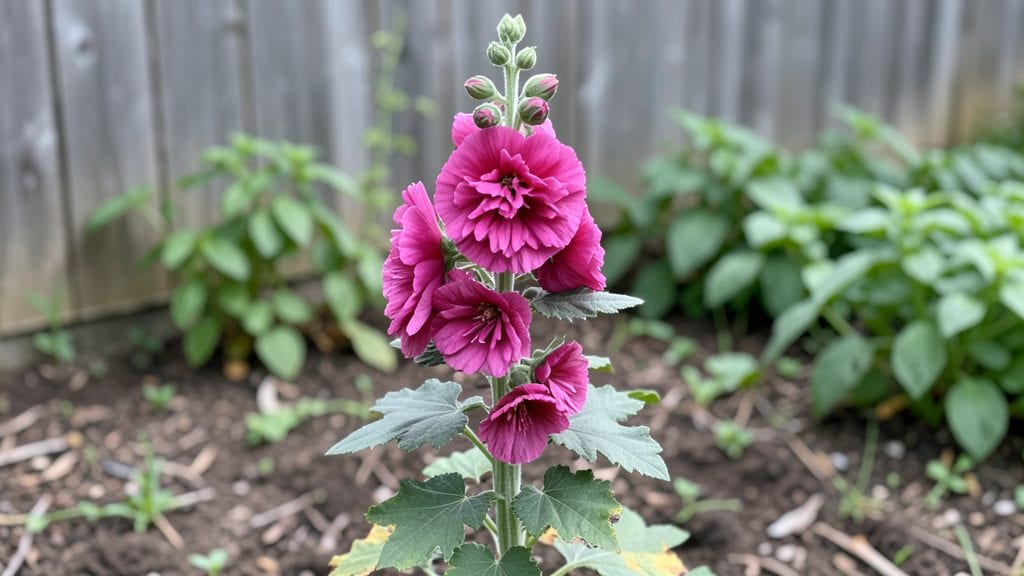
Double hollyhock flowers turn your garden into a vertical watercolor painting. 🌸 Their layered petals create ruffled blooms that single varieties can’t match, and they tower over borders like natural obelisks. The secret to those dramatic flowers? A little extra care during planting and pruning—nothing too complicated, just strategic timing.
These giants thrive in full sun and well-drained soil, but they reward patience with stems reaching 5-7 feet tall. The double blooms attract hummingbirds and bees like magnets, turning your garden into a pollinator hotspot.
My first year growing them, I nearly gave up when they flopped in heavy rain—until I staked them properly and learned their love for consistent moisture.
By summer’s end, you’ll have lush foliage topped with clusters of blooms in every shade from soft pink to deep burgundy. The texture alone makes them worth growing: velvety petals, sturdy stems, and a presence that commands attention. Just remember to deadhead spent blooms to encourage more flowers all season.
Perfect for cottage gardens, mixed borders, or even as dramatic cut flowers. The key is giving them space to shine—these aren’t plants that play second fiddle. Let’s get those seeds in the ground and watch your garden transform into a living masterpiece.
📚 In This Guide
- What you need
- Instructions
- Tips and common mistakes
- Wrapping up and next steps
What you need
- ● Double Hollyhock Seeds: Choose heirloom varieties like ‘Black Prince’ or ‘Peach Blush’ (5–10 seeds per plant).
- ● Well-draining soil: Mix equal parts garden soil, compost, and coarse sand (pH 6.0–7.0).
- ● Sunlight: Full sun (6+ hours daily).
- ● Water: Consistent moisture (1–2 inches per week).
- ● Fertilizer: Balanced 10-10-10 or organic compost tea (apply at planting and monthly).
- ● Garden trowel (for planting).
- ● Watering can or hose (with adjustable nozzle).
- ● Pruning shears (for deadheading and shaping).
- ○ Stakes or trellis (optional, for tall varieties like ‘Giant Stratus’).
- ● Gloves (to protect hands from prickly stems).
- ● Wait until after the last frost (spring) to plant seeds.
- ● Space plants 12–18 inches apart (they’ll grow 4–6 feet tall!).
- ● Patience! Hollyhocks take 90–120 days to bloom.
How to grow stunning double hollyhock flowers
These towering beauties bring drama to any garden—here’s how to coax their lush blooms to life.
🌱 Step 1: Choose the Right Location and Soil
Hollyhocks thrive in full sun—at least 6-8 hours daily—so pick a spot where they’ll get unfiltered light. I always test the soil first by digging down 6 inches to check drainage. Hollyhocks hate soggy roots, so if your soil stays damp for more than a day after rain, amend it with 2-3 inches of compost or plant in raised beds.
Double varieties need extra nutrients to support their heavy blooms, so mix 1 cup of bone meal into the planting hole. This gives them a slow-release phosphorus boost for strong root development. Work the compost and bone meal into the top 12 inches of soil—this ensures the roots have everything they need to anchor those tall stems.
🌿 Step 2: Plant at the Right Time and Depth
Start seeds indoors 8-10 weeks before your last frost or plant bare-root seedlings in early spring once soil temperatures reach 50°F. Hollyhocks are frost-tolerant but grow best when planted after the last frost date. Dig holes twice as wide as the root ball and 1 inch deeper than the container depth.
Space plants 2-3 feet apart—this gives them room to develop strong stems without crowding. If you’re planting multiple varieties, group them by height (tallest in back, shortest in front) for a layered look. Press soil gently around the roots to remove air pockets, then water deeply to settle everything in place.
☀️ Step 3: Water Deeply and Support Tall Stems
Hollyhocks need 1-2 inches of water per week, but deep soakings encourage deeper roots. Water at the base—never overhead—to prevent fungal diseases like rust, which loves damp foliage. You’ll know you’re doing it right when the soil feels dry 2 inches down before the next watering.
These plants grow 5-7 feet tall, so install sturdy stakes or a trellis at planting time. Tie stems loosely with soft garden twine as they grow—tightening too soon restricts their natural movement. I like to weave the twine in a figure-eight pattern to distribute pressure evenly. This prevents snapping in wind or rain.
✂️ Step 4: Deadhead and Fertilize for Continuous Blooms
Pinch off spent blooms just above a set of leaves to encourage more flowers. I do this every 2-3 days during peak bloom—it’s a small effort that keeps the plant producing for 8-10 weeks. Avoid cutting into the stem; always snip above a leaf node where new growth can emerge.
Feed with a balanced 10-10-10 fertilizer every 4-6 weeks starting in early summer. Double hollyhocks respond well to a mid-season boost, but don’t overdo it—too much nitrogen makes them leafy and sparse in blooms. A light application of fish emulsion in late summer gives them a gentle potassium kick for winter hardiness.
🐝 Step 5: Protect and Enjoy the Pollinator Paradise
Hollyhocks attract butterflies, bees, and hummingbirds, so avoid pesticides once flowers appear. If you spot rust (orange spots on leaves), remove infected foliage immediately and treat with neem oil to prevent spread. I check plants weekly after rain—rust thrives in humid conditions.
In fall, cut back stems to 6 inches tall and mulch with 2-3 inches of straw. This protects the crown over winter and gives roots a head start in spring. Double varieties often self-seed, so let a few stems go to seed if you want next year’s crop for free.
Tips & tricks for growing stunning double hollyhocks
These simple strategies will help you grow hollyhocks that reach their full dramatic potential while staying healthy and blooming abundantly.
The Sunlight Secret: Those 6-8 hours of full sun are non-negotiable for double hollyhocks. If your garden gets afternoon shade, plant them where they'll get morning sun instead—it's the most critical part of their day. I've seen hollyhocks in partial shade grow, but they'll be leggy and produce fewer blooms. Trust me, they'll reward you with lush flowers when they get enough light.
Soil Prep Game-Changer: When amending your planting hole with 1 cup of bone meal and 2-3 inches of compost, mix it into the top 12 inches of soil—not just around the roots. This creates a nutrient-rich zone that encourages deep root growth. I like to use a garden fork to loosen the soil first, making it easier for those strong stems to anchor properly.
Planting Depth Matters: That 1-inch deeper planting might seem counterintuitive, but it helps prevent the crown from sitting too high and drying out. For container-grown plants, gently squeeze the root ball to encourage roots to grow downward before planting. This gives you stronger stems that can support those heavy double blooms.
Watering Wisdom: The key to those 1-2 inches of weekly water is consistency. I set a reminder on my phone for every 7 days to check soil moisture 2 inches down. If it's dry, water deeply until it runs out the bottom of the pot or through the soil. Overhead watering is a no-no—it spreads fungal spores that can cause rust, which is every hollyhock grower's worst nightmare.
Pro Tips for Double Hollyhock Flower
- These simple strategies will help you grow hollyhocks that reach their full dramatic potential while staying healthy and blooming abundantly.
- The Sunlight Secret: Those 6-8 hours of full sun are non-negotiable for double hollyhocks.
- Soil Prep Game-Changer: When amending your planting hole with 1 cup of bone meal and 2-3 inches of compost, mix it into the top 12 inches of soil—not just around the roots.
Frequently asked questions
Got questions about double hollyhock flowers? You’re not alone!
Whether you’re a seasoned gardener or a curious beginner, these answers will help you grow the most stunning blooms with ease. Let’s dive in!
What’s the difference between single and double hollyhock flowers?
Double hollyhocks feature layered petals (often 4+ rows) for a lush, rose-like appearance, while single varieties have just one row of petals with prominent stamens. Doubles are prized for their dramatic, fuller blooms and longer vase life—perfect for cut flowers! However, they may produce fewer seeds since energy goes into petal growth.
How long does it take for double hollyhocks to bloom after planting?
Patience is key! From seed, expect blooms in 90–120 days (with consistent care). Transplanted starts may flower in 60–80 days. Deadhead spent blooms to encourage nonstop reblooming through summer and fall. Cool nights (50–60°F) often trigger more flowers—ideal for late-summer gardens!
Are double hollyhocks good for pollinators like bees and butterflies?
Yes, but with a small caveat: While single hollyhocks are pollinator magnets (exposing nectar-rich stamens), doubles can be less accessible. Choose semi-double varieties (2–3 petal rows) or leave a few single blooms nearby to support bees and butterflies. Plant near native perennials like coneflowers for a balanced pollinator garden.
Why aren’t my double hollyhocks blooming—just lots of leaves?
Over-fertilizing (especially with nitrogen) can lead to leafy growth at the expense of flowers. Try this fix:
- Switch to a balanced 10-10-10 or bloom-boosting fertilizer (low nitrogen).
- Prune leggy stems to encourage bushier growth.
- Ensure 6+ hours of sunlight daily—shady spots = fewer blooms.
Can I grow double hollyhocks in containers?
Choose dwarf varieties (like ‘Black Night’ or ‘Lady in Black’) for containers. Use a 5-gallon pot or larger with well-draining soil and stake plants early—they can reach 4–6 feet tall. Place in full sun and water deeply when the top inch of soil dries. Just avoid overcrowding; hollyhocks need 1–2 feet of space per plant.
Wrapping up and next steps
The double hollyhock flower isn’t just a stunning addition to your garden—it’s a pollinator’s paradise and a bold statement piece that brings drama and height to any landscape. 🌸 With the right care, these beauties thrive, rewarding you with lush blooms and vibrant energy.
Whether you’re a seasoned gardener or just starting out, their resilience and striking presence make them a must-have!
Ready to transform your garden? Start by gathering your supplies, then dive into planting and maintenance with confidence. Next up: Share your double hollyhock journey with us—tag us in your garden photos or ask questions in the comments! 🌿✨