
Flowers
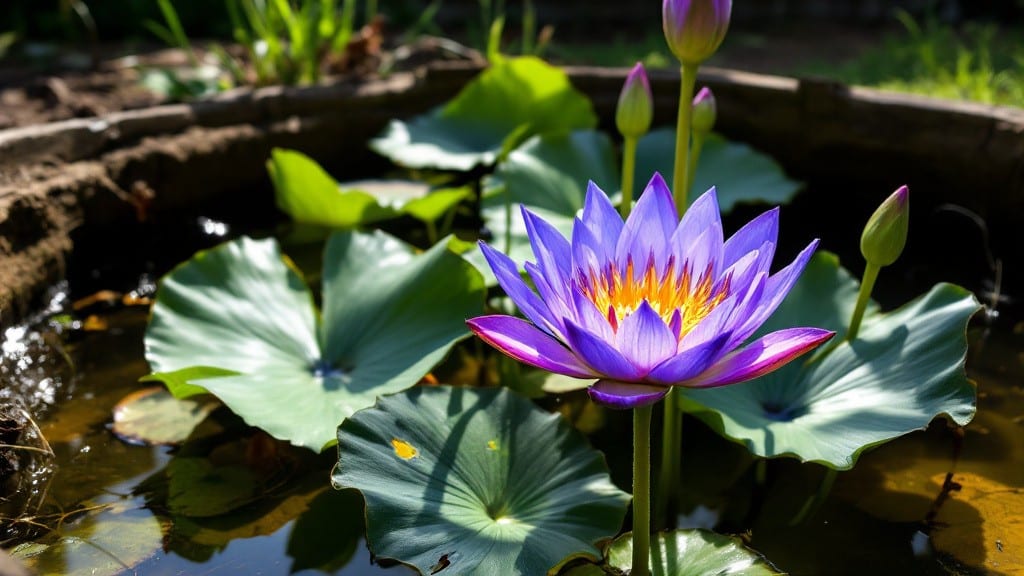
Growing the Egyptian lotus flower in containers unlocks a piece of ancient Egypt’s magic right in your backyard. 🌿 This sacred bloom—Nymphaea caerulea—thrives in still water and bright light, rewarding patient gardeners with stunning blue-purple blooms that open only in daylight.
Unlike its tropical cousins, this lotus can adapt to cooler climates with the right care, making it perfect for container growing in zones 8-11 (and even indoors with grow lights).
The secret to success lies in mimicking its natural habitat: 6+ inches of water depth, nutrient-rich soil layered at the bottom of your container, and full sun for 6+ hours daily.
I’ve found that larger pots (18+ inches wide) with drainage holes prevent root rot while giving roots room to spread. Start with a pre-planted tuber or bare-root specimen—just avoid disturbing the delicate rhizomes when planting. The first year focuses on establishing roots, so don’t expect blooms until the second season.
What makes this lotus special isn’t just its beauty—it’s the ritual of watching it bloom. Flowers emerge in late spring to summer, opening only in daylight and closing at night, a quirk that fascinated ancient Egyptians who associated it with the sun god Ra.
You’ll know you’re on the right track when broad, glossy green leaves float above the water, followed by those iconic blooms that smell faintly of honey. The scent alone makes container growing worthwhile.
For cooler climates, overwinter the container in a garage or basement with minimal water—just enough to keep the rhizome from drying out. In spring, return it to sunlight and resume regular care. The key to long-term success? Patience and consistency.
This isn’t a fast-growing plant, but the payoff—a container full of sacred blooms—is worth every season of preparation. Ready to bring a piece of history to your garden?
📚 In This Guide
- What you need
- Instructions
- Tips and common mistakes
- Wrapping up and next steps
What you need
- ● Container: A wide, shallow pot (12–18 inches in diameter) with drainage holes. Material: Glazed ceramic, fiberglass, or heavy-duty plastic (avoid metal). Quantity: 1 per plant.
- ● Potting Mix: Waterlogged, nutrient-rich mix (60% peat moss or coconut coir, 30% perlite/sand, 10% compost). Spec: pH 6.5–7.5. Quantity: 5–10 gallons per pot.
- ● Egyptian Lotus Tubers: Healthy, firm tubers (size: 2–4 inches in diameter). Quantity: 1–2 per container (depending on pot size).
- ● Water: Dechlorinated (use rainwater or tap water left out for 24 hours). Quantity: 1–2 gallons per watering.
- ● Fertilizer: Slow-release: Balanced 10-10-10 or 5-5-5 (mixed into soil). Quantity: 1 tbsp per 5 gallons of soil.
- ● Liquid: Fish emulsion or seaweed extract (diluted to ½ strength). Frequency: Every 4–6 weeks.
- ● Tools: Trowel or garden knife (for planting).
- ○ Gloves (optional but recommended—lotus tubers can be slippery!).
- ● pH testing kit (to monitor water/soil acidity).
- ● Gravel or Aquatic Stones: Layer 1–2 inches at the bottom of the pot for drainage and root aeration.
- ● Mulch: Fine aquatic mulch (e.g., sphagnum moss) to retain moisture and suppress algae.
- ● Grow Lights: LED or fluorescent (if growing indoors; 12–14 hours/day).
- ● Support Stakes: Bamboo or floating stakes to keep heavy blooms upright.
- ● Algae Preventer: Barley straw or hydrogen peroxide (3%) to keep water clean.
Step-by-step guide to growing Egyptian lotus in containers
Here's how to cultivate this ancient aquatic beauty at home with precision and patience.
🪴 Step 1: Select the Right Container and Prepare the Growing Medium
The Egyptian lotus (Nymphaea caerulea) demands 12-18 inches of water depth and a spacious, shallow container—think 24-36 inches in diameter for each plant. I use fiberglass or heavy-duty plastic tubs because they retain heat and resist cracking under seasonal temperature shifts. Avoid glazed ceramic; the glaze prevents root respiration.
Fill the container with 4-6 inches of aquatic plant substrate—a mix of 60% washed gravel (1/4-1/2 inch) and 40% organic matter (like sphagnum peat moss). This blend prevents compaction while supporting the heavy rhizomes. Place a 1-inch layer of small pebbles at the bottom to improve drainage without suffocating roots.
💧 Step 2: Plant the Rhizomes and Establish Water Levels
Egyptian lotus rhizomes arrive dormant, so soak them in lukewarm water for 12-24 hours before planting to rehydrate. Position each rhizome 1-2 inches below the soil surface with the thicker end facing downward—this ensures proper root development. Space rhizomes 12-18 inches apart to allow mature leaves to spread without crowding.
Fill the container with dechlorinated water (use a water conditioner) until the water level covers the rhizomes by 2-3 inches. Maintain 70-75°F water temperature—this species is tropical and won’t thrive below 65°F. A small aquarium heater (50-100 watts) keeps the water stable if your climate fluctuates.
☀️ Step 3: Position for Maximum Sunlight and Stability
Place your container in a south-facing location where it receives 6-8 hours of direct sunlight daily. Egyptian lotus leaves are thick and waxy, but they still need intense light to develop their iconic blue blooms. If outdoors, shield from strong afternoon winds—they can topple the heavy plants.
Indoors, supplement with a full-spectrum grow light positioned 12-18 inches above the water for 12-14 hours daily. Watch for pale, thin leaves—this signals insufficient light. Rotate the container quarter-turn weekly to prevent leaves from growing lopsided toward the sun.
🌿 Step 4: Maintain Water Quality and Fertility
Change 20-30% of the water weekly to prevent nutrient depletion and algae growth. Use dechlorinated, room-temperature water to avoid shocking the rhizomes. Add a slow-release aquatic fertilizer tablet (like Osmocote) every 6-8 weeks—lotuses are heavy feeders but sensitive to over-fertilization.
Top-dress the soil with a handful of organic compost every 4-6 weeks during the growing season (spring to fall). You’ll see new shoots emerging in 4-6 weeks—this confirms the rhizome is active. If growth stalls, check the water temperature; lotuses won’t bloom below 70°F.
⏰ Step 5: Prune and Overwinter for Next Season
After blooming, trim yellowed or damaged leaves to 2 inches above the waterline to redirect energy to rhizome storage. In fall, when temperatures drop below 60°F, reduce water levels to 1-2 inches above the rhizomes and move the container to a cool, dark location (55-65°F). Stop fertilizing entirely during dormancy.
Resist the urge to prune aggressively—lotuses store energy in their rhizomes for next year’s blooms. In early spring, replace 50% of the water and resume fertilizing. You’ll see new growth within 2-3 weeks if the rhizomes survived dormancy. If no sprouts appear by late March, the rhizome may have rotted—replace it with a fresh one.
Tips & tricks for perfect Egyptian lotus cultivation
Here's what I've learned after years of growing these ancient blooms—tricks that'll help you avoid common pitfalls and coax those iconic blue flowers to life.
Soaking Secret: That 12-24 hour soak for your rhizomes is non-negotiable. I learned this the hard way after my first batch arrived dehydrated and failed to sprout. Use lukewarm water—not cold—and change it every 6 hours to prevent bacterial growth. The goal is to rehydrate without shocking the dormant tissue.
Temperature Matters: Maintaining that 70-75°F range is critical for active growth. I use a small aquarium heater set to 72°F as a safety net—even slight drops below 65°F will stall your plant's development. In cooler climates, consider moving your container indoors during winter months or using an insulated container to retain heat.
Lighting Strategy: For indoor growers, that 12-14 hours of full-spectrum light is essential, but placement matters just as much. Position your grow light so it casts even illumination across the entire water surface. I notice that plants closest to the light source grow faster but develop smaller blooms, while those slightly farther away produce larger, more vibrant flowers.
Pruning Wisdom: When trimming those 2 inches above the waterline after blooming, use clean, sharp scissors to avoid tearing the stems. I've found that removing only the most damaged leaves actually stimulates new growth—don't be tempted to over-prune. The plant needs those leaves for photosynthesis during its recovery phase before winter dormancy.
Pro Tips for Egyptian Lotus Flower
- Here's what I've learned after years of growing these ancient blooms—tricks that'll help you avoid common pitfalls and coax those iconic blue flowers to life.
- Soaking Secret: That 12-24 hour soak for your rhizomes is non-negotiable.
- Temperature Matters: Maintaining that 70-75°F range is critical for active growth.
Frequently asked questions
Got questions about nurturing your Egyptian lotus flower? You’re not alone—this ancient beauty demands care! Here are answers to the most common queries to keep your lotus thriving in containers.
Can Egyptian lotus flowers grow in containers?
With the right setup, they thrive in large, deep containers (at least 12 inches deep) filled with nutrient-rich soil and a stable water source. Just ensure your pot has drainage holes and can support the plant’s heavy roots and blooms. Pro tip: Use a mix of clay and sand for optimal drainage.
How long does it take for an Egyptian lotus to bloom?
Patience is key—lotus flowers typically take 3–5 years to bloom from seed, though established plants may flower sooner. Factors like sunlight (6+ hours daily), water temperature (70–85°F), and soil quality speed up the process. Fun fact: Their blooms open in the morning and close by evening!
Do Egyptian lotus flowers need special water conditions?
Yes! They love clean, still water (like ponds or large containers) with a pH of 6.5–7.5. Avoid stagnant or chlorinated water—use rainwater or dechlorinated tap water. In containers, change the water weekly to prevent algae and bacteria buildup. Warning: Never let the roots dry out!
What’s the best alternative if I can’t grow a true Egyptian lotus?
If space or climate is an issue, try hardy water lilies (like Nymphaea species) or blue lotus (Nymphaea caerulea), a close relative that’s easier to grow. For containers, water hyacinths or water lettuce are low-maintenance alternatives with stunning foliage.
Why are my lotus leaves turning yellow or brown?
Yellowing leaves often signal nutrient deficiency (add a balanced aquatic fertilizer) or root rot from overwatering. Brown edges? It’s likely sunburn—provide partial shade during peak sun. Check for pests (like aphids) and adjust water quality or container size if needed. Quick fix: Trim damaged leaves to encourage new growth.
Wrapping up and next steps
The Egyptian lotus flower isn’t just a symbol of ancient beauty—it’s a living masterpiece you can nurture in your own container garden! 🌸 With the right soil, sunlight, and care, this sacred bloom can thrive, bringing serenity and elegance to your space.
Whether you’re a seasoned gardener or a curious beginner, the key is patience and consistency.
Ready to take the next step? Start by observing your lotus’s progress—adjust care routines as needed—and soon, you’ll be rewarded with stunning, symbolic blooms. Happy gardening! 🌱