
Flowers
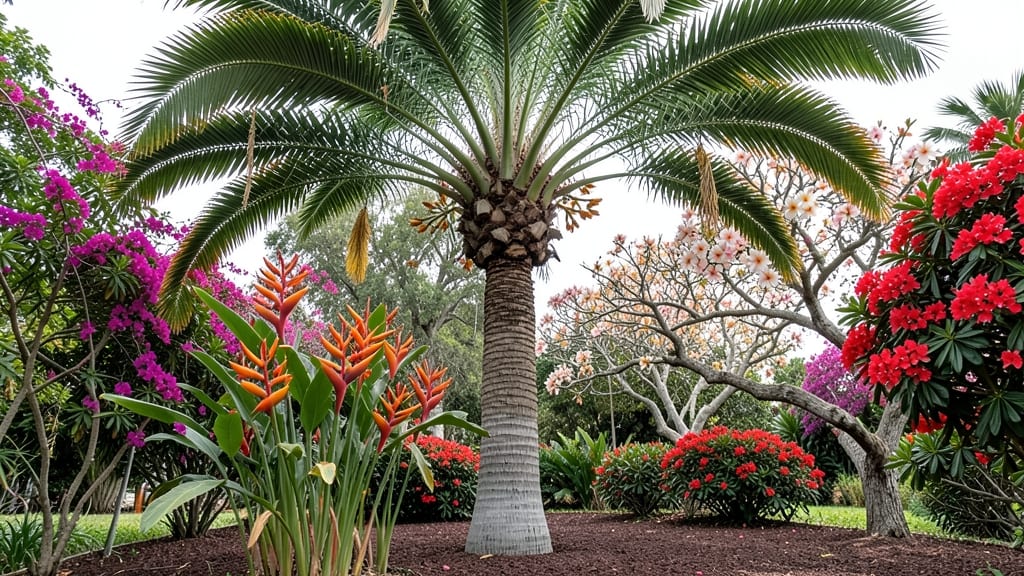
Creating a tropical oasis around your palm tree starts with the right flowers—ones that thrive in its shade while adding vibrant bursts of color year-round. 🌺 I learned this the hard way when my first attempt left me with patchy sunlight and wilted blooms, but now I’ve perfected a foolproof combination that works even in partial shade.
The key is choosing plants that love humidity and occasional shade, like hibiscus for bold blooms, plumbago for cascading blue flowers, and bird-of-paradise for dramatic tropical flair.
These varieties not only survive but thrive, giving you lush greenery and flowers that last from spring through fall—sometimes even winter in warmer climates.
Once planted, the results are stunning: a layered look where tall palms frame clusters of colorful flowers at different heights. You’ll love how the space feels alive, with fragrant blooms and textures that invite you to relax under the shade.
The best part? Most of these plants are low-maintenance, so you spend less time fussing and more time enjoying your oasis.
Whether you’re in a coastal zone or a hot inland area, this design adapts easily—just swap out a few plants for drought-tolerant options like bougainvillea or allamanda if needed. Here’s how to make it work for your space and climate without the guesswork.
📚 In This Guide
- What you need
- Instructions
- Tips and common mistakes
- Wrapping up and next steps
What you need
- ● Palm Tree: 1 mature or young palm (species like Areca, Phoenix, or Washingtonia work beautifully). Choose a height that fits your space—3-10 feet for small gardens, 15+ feet for bold statements.
- ● Tropical Flowers: 6-12 Bromeliads (for vibrant colors and texture)
- ● 4-8 Bird of Paradise plants (dramatic, long-lasting blooms)
- ● 3-6 Plumeria (fragrant, drought-tolerant, and iconic)
- ● 2-4 Hibiscus (for bold, showy flowers)
- ● 10-15 Heliconias (exotic, banana-like blooms)
- ○ Optional: Orchids, Ginger Lily, or Bougainvillea for extra flair.
- ● Soil & Mulch: 50 lbs of well-draining potting mix (or a blend of cactus/succulent mix + compost)
- ● 10-20 lbs of orchid bark or pine fines (for aeration)
- ● 3-5 bags of organic mulch (e.g., pine straw or coconut coir) to retain moisture.
- ● 1 garden trowel (for planting)
- ● 1 pruning shears (for trimming flowers and palm fronds)
- ● 1 wheelbarrow or bucket (for mixing soil)
- ● 1 watering can or hose with a gentle spray nozzle (palm trees and tropical flowers love hydration!)
- ○ Optional: Garden gloves (to protect your hands from thorns or rough bark).
- ● A sunny or partially shaded spot (most tropical flowers thrive in 6+ hours of sunlight daily).
- ● Access to a water source (palm trees need deep, infrequent watering, while flowers prefer consistent moisture).
- ● Patience! Some tropical plants (like Plumeria) take 1-2 years to bloom fully.
How to design a stunning flower bed around your palm tree
Creating a tropical oasis with vibrant blooms and lush greenery is easier than you think—just follow this simple plan.
🌱 Step 1: Assess Your Palm Tree’s Needs and Space
Start by observing your palm tree’s mature size and growth habits. Measure the drip line—the area where branches spread—because this determines how far out your flower bed should extend. A good rule is to create a 3-5 foot radius around the trunk, depending on the palm’s size. This gives roots room to breathe while keeping flowers close enough to complement the tree’s tropical vibe.
Check the soil conditions too. Palm trees thrive in well-draining, slightly acidic soil (pH 5.5-6.5). If your soil is heavy clay or compacted, you’ll need to amend it later. Notice where sunlight hits—palm trees love full sun (6+ hours daily), so choose flowers that match that exposure. If your tree provides partial shade, opt for shade-tolerant blooms like impatiens or ferns.
🪴 Step 2: Choose the Right Flowers for Year-Round Color
For a tropical look, mix fast-growing annuals with perennial stalwarts that bloom in different seasons. Start with 3-4 types of flowers to keep maintenance manageable. My go-to combos include hibiscus (for bold color), plumbago (for trailing blue blooms), and bird of paradise (for dramatic height). Add ground covers like creeping jenny to fill gaps and prevent weeds.
Don’t forget texture! Pair flowers with foliage plants like elephant ears (for lush leaves) or liriope (for grassy contrast). These add depth and keep the design from looking too busy. If your climate has cooler months, include cool-season bloomers like pansies or snapdragons to bridge gaps in summer blooms.
☀️ Step 3: Prepare the Soil and Plant Strategically
Dig out a 6-inch-deep trench around the palm’s drip line, using a shovel to loosen the soil. Mix in 2-3 inches of compost and 1 inch of coarse sand (or perlite) to improve drainage—palm roots hate soggy feet. If your soil is alkaline, add sulfur or peat moss to lower the pH slightly. Work the amendments into the top 12 inches of soil for best results.
Plant flowers in odd-numbered groupings (3, 5, or 7) for a natural, balanced look. Place taller plants (like bird of paradise) behind shorter ones to create layers. Leave 12-18 inches of space between each plant to allow airflow and room to grow. Water deeply right after planting to settle the roots—1 gallon per plant should do it.
💧 Step 4: Mulch and Water for Long-Term Success
Spread 3 inches of mulch (like pine bark or shredded leaves) over the soil, keeping it 6 inches away from the palm trunk to prevent rot. Mulch locks in moisture, regulates soil temperature, and suppresses weeds. Use organic mulch to feed the soil as it breaks down. Replenish it every 6-12 months depending on decomposition.
Water deeply 2-3 times per week for the first month, then taper to once a week once established. Palm trees and flowers hate dry spells, so check the top 2 inches of soil—if it’s dry, it’s time to water. In hot climates, you may need to water every 2-3 days until plants are fully settled. Avoid overhead watering to prevent fungal diseases.
✂️ Step 5: Maintain and Refresh for Year-Round Beauty
Deadhead spent blooms weekly to encourage continuous flowering. Prune leggy stems or overgrown foliage in early spring to keep the bed tidy. Fertilize every 6-8 weeks with a balanced, slow-release fertilizer (like 10-10-10) during the growing season. Palm trees benefit from citrus or palm-specific fertilizer in spring and summer.
Rotate seasonal flowers every 2-3 months to keep color fresh. For example, swap out summer marigolds for fall mums or winter pansies. Monitor for pests like aphids or spider mites—a strong spray of water usually does the trick. With this routine, your tropical oasis will stay vibrant and low-maintenance all year long.
Tips & tricks for perfect flower beds around palm trees
These simple strategies will help you create a thriving tropical garden that complements your palm tree beautifully.
Soil Preparation Secret: Before amending your soil, test it with a simple pH kit to confirm it's in the ideal 5.5-6.5 range. If your soil is too alkaline, mix in 1 cup of sulfur per 100 square feet along with your compost. I've found that adding 1 inch of coarse sand (or perlite) makes a huge difference in drainage—palm roots will thank you by staying healthier and your flowers will thrive. Remember to work these amendments into the top 12 inches of soil for maximum benefit.
Plant Placement Pro Tip: When arranging your flowers in Step 3, think vertically as well as horizontally. Place your tallest plants (like bird of paradise) directly behind your palm tree to create a natural backdrop, while medium-height flowers (hibiscus, plumbago) should go in the middle layer. For the front layer, use trailing plants like creeping jenny or impatiens to spill over the edges. This creates depth and makes your palm tree look like it's part of a lush, intentional landscape rather than an afterthought.
Seasonal Color Rotation: The key to year-round color is planning ahead for seasonal changes. In Step 2, when selecting your initial flowers, include 2-3 cool-season bloomers like pansies or snapdragons that will bridge the gap between summer and fall. I like to create a "seasonal swap" schedule: summer marigolds → fall mums → winter pansies → spring tulips. This way, you always have something blooming while keeping maintenance manageable with just 3-4 types of flowers at any given time.
Watering Wisdom: The top 2 inches of soil test is your best friend for determining water needs. I recommend using a simple soil moisture meter or just sticking your finger in—if it feels dry, it's time to water. For the first month, water deeply 2-3 times per week, then taper to weekly watering once established. Pro tip: Water early in the morning to reduce evaporation and fungal risks. In hot climates, you might need to water every 2-3 days until plants are fully settled, but always check that top 2 inches first!
Pro Tips for Flowers Around Palm Tree
- These simple strategies will help you create a thriving tropical garden that complements your palm tree beautifully.
- Soil Preparation Secret: Before amending your soil, test it with a simple pH kit to confirm it's in the ideal 5.5-6.5 range.
- Plant Placement Pro Tip: When arranging your flowers in Step 3, think vertically as well as horizontally.
Frequently asked questions
Got questions about creating a stunning tropical display with flowers around your palm tree? Here are answers to the most common queries to help you design with confidence!
What are the best low-maintenance flowers to plant near palm trees?
Opt for drought-tolerant, salt-resistant varieties like Bird of Paradise, Plumbago, or Mondo Grass. These thrive in sandy soil and minimal water—perfect for tropical vibes with less upkeep. Avoid water-loving plants like ferns or impatiens, as they’ll struggle under palm trees.
When is the best time of year to plant flowers around a palm tree?
Plant in early spring (March–April) or late summer (August–September) for ideal results. These periods offer warm soil, steady rainfall, and fewer pests. Avoid winter planting—cooler temps can stress young plants. If you’re in a frost-free zone, year-round planting is possible!
Will flowers around palm trees compete for water and nutrients?
Yes, but it’s manageable! Palm trees have deep roots, while most flowers have shallow ones. Mulch heavily (3–4 inches) to retain moisture for flowers and reduce competition. Water deeply twice weekly in dry spells, focusing on the flower beds first. Fertilize palms separately with slow-release palm fertilizer.
How can I add color without overwhelming the palm tree’s natural look?
Stick to a 70-30 rule: 70% native or tropical foliage (like Dracaena or Hibiscus) and 30% bold blooms (e.g., Bougainvillea or Orchids). Use height variation—tall flowers behind shorter ones—to create depth. Avoid planting flowers directly against the trunk; keep a 12-inch buffer for airflow.
What pests should I watch for when planting flowers near palm trees?
Keep an eye out for palm weevils (they target both palms and nearby plants) and aphids on flowers. Neem oil or insecticidal soap works for mild infestations. For weevils, prune and dispose of infested fronds immediately. Healthy soil (rich in compost) and regular inspections prevent most issues!
Wrapping up and next steps
Creating a tropical oasis with flowers around your palm tree isn’t just about beauty—it’s about crafting a vibrant, low-maintenance space that thrives year-round. 🌺 From sun-loving bougainvilleas to delicate orchids, the right plants can transform your yard into a lush paradise with minimal effort.
Whether you’re a seasoned gardener or a beginner, this guide gives you the confidence to start small and grow big!
Ready to take the next step? Pick one or two plants from this list, gather your supplies, and begin planting this weekend. Before you know it, your palm tree will be the centerpiece of a stunning, colorful retreat that brings joy every day.