Propagation
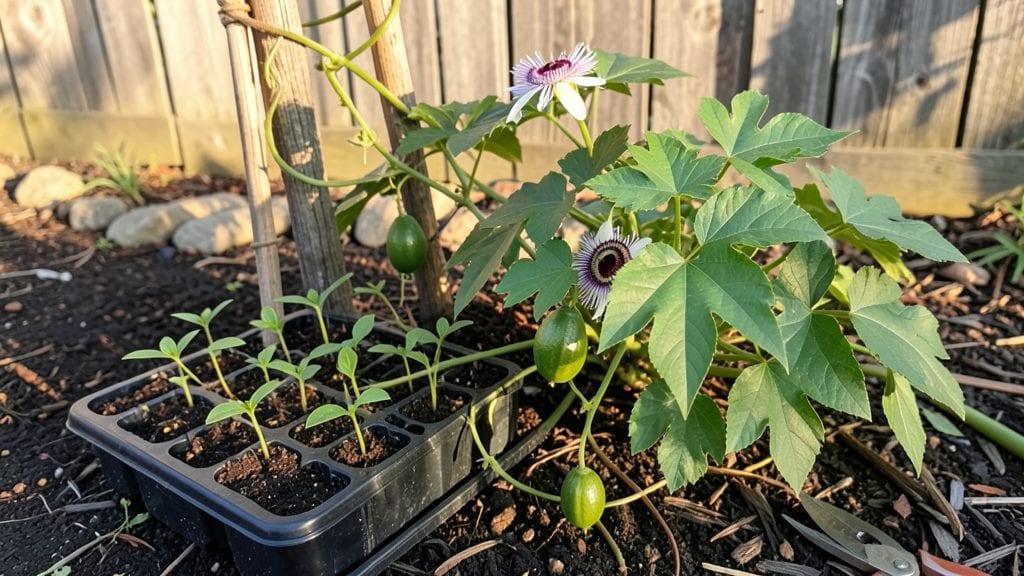
Growing passion flower from seed starts with understanding that fast sprouts depend on breaking dormancy the right way—most seeds need a quick soak in warm water first. I learned this the hard way after waiting two months for seeds that should’ve popped in days.
The key is mimicking the tropical conditions these vines crave: warmth, moisture, and just enough light to trick them into thinking spring has arrived.
You’ll need a shallow container, moist seed-starting mix, and a clear plastic bag to create a mini greenhouse effect. Passionflower seeds are tiny but pack a punch—each one holds the potential for a 30-foot vine if given the right conditions.
The trick is keeping the soil consistently damp (not soggy) while maintaining 75-85°F temperatures—closer to a warm bathroom than a chilly windowsill.
Within 7-14 days, you’ll see those first delicate sprouts pushing through the soil, followed by tiny tendrils reaching for support. These seedlings are fragile but resilient, and with proper care, they’ll grow into lush vines with striking flowers by next summer.
The real reward comes when you watch those intricate blossoms unfurl—proof that patience pays off in passion.
Once the seeds sprout, move them to brighter light but avoid direct sun until they’ve developed their first true leaves. This is where many gardeners stumble—rushing the transition too soon.
Take your time, and you’ll have thriving passionflower vines ready to climb trellises or cover fences by the time summer arrives.
📚 In This Guide
- What you need
- Instructions
- Tips and common mistakes
- Wrapping up and next steps
What you need
- ● Passion flower seeds: Fresh or stored seeds (preferably from a trusted source). Aim for 3-5 seeds if experimenting or 10+ seeds for a fuller garden.
- ● Seed-starting mix: A light, well-draining potting mix (e.g., 50% peat moss or coco coir + 50% perlite or vermiculite). Avoid garden soil—it’s too dense!
- ● Containers: Small pots (3-4 inches deep) or seed trays with drainage holes (for 3-5 seeds).
- ○ Optional: Biodegradable peat pots (if transplanting later).
- ● Watering can or spray bottle: A gentle misting function helps avoid disturbing seeds.
- ● Plastic wrap or clear lid: To create a humidity dome (essential for germination!).
- ● Grow lights or sunny windowsill: Passion flowers love bright, indirect light (6-8 hours/day). A LED grow light works if natural light is limited.
- ○ Heat mat (optional but helpful): Maintains 70-80°F (21-27°C) soil temps for faster germination.
- ● Seed scarification tool: Sandpaper (fine-grit) or a knife to lightly nick seeds if they’re hard-coated.
- ● Fungicide: A natural spray (like neem oil) to prevent mold in humid conditions.
- ● pH test kit: Ideal soil pH for passion flowers is 6.0-7.0.
- ● Support structures: Small stakes or trellises (for future vines—save these for later stages!).
Step-by-Step instructions for growing passion flower from seed
Passion flowers are one of the most rewarding vines to grow from seed—here’s how to break the stubborn germination barrier and get strong, fast starts.
Scarify and Soak Seeds for Optimal Germination
Passion flower seeds have a hard outer shell that resists water absorption, so scarification is critical. Place seeds between two layers of sandpaper or rub them gently with coarse-grit sandpaper until you see a slight roughening on the surface. This process mimics natural weathering and helps water penetrate the seed coat more easily.
After scarifying, soak the seeds in warm water for 12-24 hours. You’ll notice the water turning slightly cloudy as the seeds begin to absorb moisture. This pre-treatment jumpstarts germination, which can otherwise take 3-6 weeks—sometimes even longer. I like to use a small bowl of warm water and let the seeds soak at room temperature, checking occasionally to ensure they stay submerged.
Prepare Containers and Planting Medium
Use a well-draining seed-starting mix in small pots or seed trays—passion flowers hate soggy roots. I recommend 4-inch pots for each seed since they’ll grow quickly and need space. Fill the containers with moistened mix, leaving about ½ inch of space at the top to avoid overfilling when planting.
Gently press each seed ½ inch deep into the soil, spacing them evenly if planting multiple seeds. The key here is firm but not compacted soil—tap the container lightly on the table to settle the mix around the seeds. Overcrowding leads to weak, leggy seedlings, so give each one room to breathe. A humidity dome or plastic wrap helps retain moisture while the seeds germinate.
Provide Warmth and Consistent Moisture
Passion flower seeds germinate best in warmth, ideally between 75-85°F. Place the containers in a warm spot, such as on top of a refrigerator or near a heat mat, to maintain consistent temperatures. A seedling heat mat set to 80°F can speed up germination significantly, cutting weeks off the process.
Keep the soil evenly moist but never waterlogged—soggy conditions invite fungal diseases like damping-off, which can kill seedlings overnight. Water gently from the bottom by placing the tray in ½ inch of warm water for 10-15 minutes, then drain excess. You’ll know the moisture is right when the soil surface looks damp but not glistening. Germination typically occurs within 2-4 weeks under ideal conditions.
Transplant Seedlings and Harden Off
Once seedlings develop 2-3 sets of true leaves (not just the initial cotyledons), they’re ready to transplant. Handle them carefully—passion flower seedlings have delicate roots. Gently remove each seedling from its pot and place it in a slightly larger container or directly into the garden, ensuring the soil line matches the previous depth.
Before moving them outdoors, harden off the seedlings by gradually exposing them to outdoor conditions over 7-10 days. Start with 1-2 hours of shade on the first day, then increase exposure by 1 hour daily. This slow acclimation prevents shock and ensures strong, resilient plants. Passion flowers thrive in full sun, so once hardened off, place them in a location with at least 6-8 hours of direct sunlight daily.
Tips & tricks for growing passion flower from seed
Breaking the stubborn germination barrier with passion flowers takes precision—here are the game-changing details that separate fast sprouts from frustrating delays.
Scarification Technique: For best results, use medium-grit sandpaper (around 120-150 grit) rather than fine paper towels. The goal is to create microscopic cracks—not remove the entire shell. Test your progress by gently pressing a seed between your fingernails; you should feel slight resistance but not complete hardness. This precise scarification mimics natural weathering patterns that trigger germination in the wild.
Soaking Strategy: During the 12-24 hour soaking period in Step 1, change the warm water after 12 hours to prevent bacterial growth. I've found that adding a few drops of hydrogen peroxide (3%) to the soaking water helps maintain cleanliness without harming the seeds. The cloudy water you'll notice is perfectly normal—it's the seed's natural oils being released as they prepare for germination.
Heat Mat Hack: While maintaining 75-85°F is ideal, I recommend using a seedling heat mat set to 80°F during the germination phase in Step 3. This consistent warmth cuts the typical 3-6 week germination window to just 2-4 weeks. Place a small thermometer near the containers to monitor temperatures—fluctuations can delay sprouting by weeks. The key is maintaining that steady warmth without overheating, which can cook the seeds.
Transplant Timing: When checking for 2-3 sets of true leaves in Step 4, focus on the size of the leaves rather than just counting them. True leaves should be at least 1-2 inches long and resemble miniature versions of adult passion flower foliage. Smaller leaves or those that look more like the initial cotyledons mean the seedlings aren't ready yet—waiting an extra week is better than transplanting too soon and shocking the delicate roots.
Pro Tips for Growing Passion Flower From Seed
- Breaking the stubborn germination barrier with passion flowers takes precision—here are the game-changing details that separate fast sprouts from frustrating delays.
- Scarification Technique: For best results, use medium-grit sandpaper (around 120-150 grit) rather than fine paper towels.
- Soaking Strategy: During the 12-24 hour soaking period in Step 1, change the warm water after 12 hours to prevent bacterial growth.
Frequently asked questions
Got questions about growing passion flowers from seed?
You’re not alone! Here are answers to the most common queries to help you succeed with your passion flower propagation journey.
How long does it take for passion flower seeds to germinate?
Germination can take anywhere from 2 to 6 weeks, depending on temperature and moisture. Keep seeds in a warm, humid environment (around 70–80°F) and maintain consistent dampness. Patience is key—some varieties may take longer, but don’t give up!
Do passion flower seeds need light to germinate?
No, seeds do not need light to sprout—they’ll germinate just fine in darkness. Once they’ve sprouted (usually when you see tiny roots or shoots), you can move them to a bright, indirect light spot. Too much light too soon can dry them out!
Why aren’t my passion flower seeds sprouting?
If your seeds aren’t germinating, check these common issues:
- Cold temperatures – Use a seedling heat mat if your home is chilly.
- Dry soil – Keep the growing medium consistently moist (not soggy).
- Old or low-quality seeds – Try fresh seeds or test viability with a water float test.
- Poor aeration – Avoid sealing containers tightly; seeds need airflow.
Can I grow passion flowers from seed indoors?
Start seeds indoors 8–10 weeks before your last frost date for a head start. Use a sunny windowsill or grow lights, and transplant seedlings outdoors after the danger of frost has passed. Just ensure they’re hardened off (acclimated to outdoor conditions) for a week before moving.
How do I know if my passion flower seedling is healthy?
A healthy passion flower seedling should have:
- Vibrant green leaves (no yellowing or browning).
- Strong, upright stems (not leggy or wilted).
- New growth (a sign it’s thriving).
Wrapping up and next steps
Growing passion flowers from seed is a rewarding journey that blends patience with the joy of nurturing life. By following the right germination techniques—like soaking seeds, maintaining warmth, and providing gentle light—you’ll soon watch delicate sprouts emerge and flourish into vibrant vines.
Whether you’re a seasoned gardener or a curious beginner, this process is totally doable with the right care!
Now that you’re armed with these secrets, why not take the next step? Share your progress with fellow plant enthusiasts, experiment with different varieties, or even gift your thriving passion flowers to friends. Happy growing—your garden (and future hummingbirds!) will thank you! 🌱✨