
Flowers
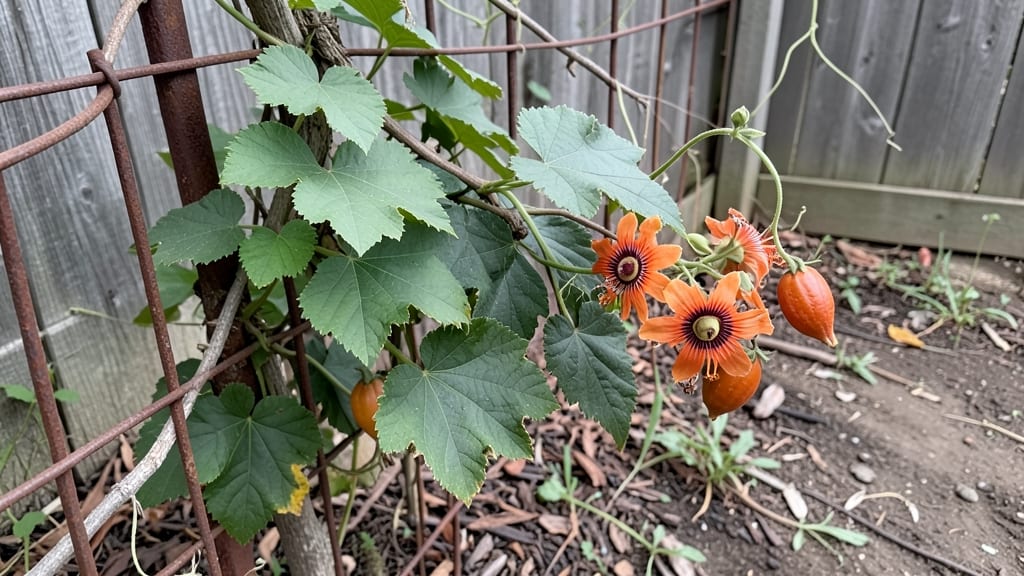
Growing Gulf fritillary passion flower means inviting iridescent butterflies and hummingbirds into your garden—year-round. 🌸 I’ll never forget the first time I watched a Gulf fritillary flutter onto my vine, its wings shimmering like stained glass in the sunlight.
This isn’t just a plant; it’s a living magnet for pollinators that keeps blooming even in winter with the right care.
The secret starts with full sun to partial shade and well-draining soil—think sandy loam with a splash of compost. In warmer climates (zones 7-11), it thrives as a perennial; cooler zones treat it as an annual or overwinter it indoors.
Plant in spring after the last frost, spacing vines 6-10 feet apart for climbing room, and watch as tendrils stretch toward trellises or fences with shocking speed.
You’ll end up with vibrant orange and purple blooms that never stop, even in winter with proper protection. The fragrance is subtle but intoxicating, and the butterflies? They’ll lay eggs on your leaves, gifting you the next generation of these stunning insects.
Prune lightly after blooms fade to keep it tidy, and fertilize monthly with a balanced feed during growing season.
Works in containers too—just give it a sturdy support and bring it inside before frost. Whether you’re a beginner or a seasoned gardener, this passion flower delivers nonstop pollinator action with almost no effort. Let’s get those vines growing!
📚 In This Guide
- What you need
- Instructions
- Tips and common mistakes
- Wrapping up and next steps
What you need
- ● Gulf Fritillary Passion Flower Seeds (10–20 seeds per plant; Passiflora meyeri or Passiflora ostrea varieties recommended for cold-hardiness).
- ● Potting Mix (2–3 gallons of well-draining, organic potting soil—avoid heavy clay).
- ● Containers or Garden Bed: For containers: 5-gallon pots (minimum) with drainage holes (3–5 plants per pot).
- ● For in-ground: Full-sun location (6+ hours/day) with loamy, slightly acidic soil (pH 6.0–7.0).
- ● Fertilizer (Balanced 10-10-10 or low-nitrogen, high-phosphorus for blooms, e.g., 5-10-10).
- ● Mulch (2–3 inches of pine bark or straw to retain moisture).
- ● Watering Can or Hose with a gentle spray nozzle.
- ● Garden Gloves (to protect hands from thorns).
- ● Pruning Shears (for trimming dead growth or shaping vines).
- ● Trellis or Arbor (6–8 ft tall; metal or wooden for durability).
- ○ Seedling Heat Mat (optional, for indoor starts in cool climates).
- ○ Butterfly Nectar Feeder (optional, to attract Gulf Fritillaries during early growth).
- ● Soil pH Test Kit (to ensure optimal growing conditions).
Step-by-step instructions for planting Gulf fritillary passion flower
Here's how to establish this stunning vine with minimal fuss—your hummingbirds will thank you.
🌱 Step 1: Select the Perfect Planting Spot
Gulf fritillary thrives in partial shade to full sun—at least 4-6 hours of morning sunlight is ideal, especially in hotter climates. I always plant mine where they'll get dappled light through the day, like near a deciduous tree's canopy or along a north-facing fence. The key is avoiding harsh afternoon sun, which can scorch the delicate foliage.
This vine grows 8-12 feet tall, so choose a location with sturdy support nearby. I use a 6-foot arbor for mine, but a trellis or pergola works too. The roots spread aggressively, so give it 5-6 feet of clearance from other plants or structures. Here's the thing—if you plant too close to buildings, the roots might crack foundations over time.
☀️ Step 2: Prepare the Soil and Plant
Passion flowers love well-draining, slightly acidic soil (pH 6.0-7.0). Amend heavy clay with 2-3 inches of compost mixed into the top 12 inches of soil. I always test my soil first—if it's alkaline, add sulfur to adjust the pH before planting. The planting hole should be twice as wide as the root ball but only as deep—burying too deep suffocates the roots.
Remove the plant from its container and loosen any circling roots gently with your fingers. Place it in the hole so the top of the root ball sits 1 inch below soil level—this prevents stem rot while keeping roots cool. Backfill with native soil mixed with 1 cup of bone meal for phosphorus, which encourages strong root development. Water deeply until the soil is evenly moist to 12 inches down.
💧 Step 3: Establish Watering and Support System
Keep the soil consistently moist but not soggy for the first 6-8 weeks—this is critical for root establishment. I water mine every 2-3 days until new growth appears, then taper to deep watering twice weekly once established. The secret is watering at the base, not overhead—this prevents fungal diseases that love damp leaves.
Install your support structure immediately after planting. I use 3-inch plastic stakes driven into the ground at 45-degree angles from each corner of the planting area, then attach twine or jute twine in a crisscross pattern. As the vine grows, gently weave the new growth through the twine—never force it. You'll see the first tendrils appear in 4-6 weeks, and that's your cue to start training.
✂️ Step 4: Prune for Blooms and Maintenance
Pruning isn't just about shaping—it's about encouraging more flowers. In early spring, cut back dead or weak stems to 6 inches from the ground. I also remove any suckers growing at the base, as they drain energy from the main plant. The real magic happens in late winter: prune back one-third of the oldest stems to stimulate new growth and more blooms.
Deadhead spent flowers only if you want fewer seeds—I leave mine because the seed pods are fascinating, and they attract even more wildlife. If you notice yellowing leaves, it's usually a sign of overwatering—let the soil dry out between waterings. And here's a pro tip: fertilize lightly in spring with a balanced 10-10-10—too much nitrogen makes the plant focus on leaves instead of flowers.
🪴 Step 5: Overwintering and Year-Round Care
Gulf fritillary is evergreen in mild climates (zones 8-11) but may drop leaves in colder winters. In zones 7 and below, mulch heavily with 4-6 inches of shredded bark around the base to protect roots. I also cover the crown with straw or burlap if frost is forecasted—this prevents freeze damage to the tender growth.
The real reward comes in late summer to fall, when the vibrant orange blooms attract hummingbirds nonstop. To extend the season, prune lightly after the first frost to remove damaged stems, then water less frequently but keep the soil slightly moist. In spring, you'll see new shoots emerge from the base—this is your plant's natural way of rejuvenating. Here's the thing: patience pays off—it takes 2-3 years for established plants to reach peak blooming, but once they do, they're a hummingbird magnet for decades.
Tips & tricks for perfect Gulf fritillary passion flower planting
A few strategic moves will help your Gulf fritillary thrive and become that hummingbird haven you're dreaming of.
Location Intelligence: Pay special attention to that 4-6 hours of morning sunlight requirement. The key isn't just any sun exposure—it's the quality. I've found that planting near a deciduous tree that provides afternoon shade creates the perfect microclimate. The vine gets its needed light while avoiding the harsh afternoon rays that can burn delicate foliage. Trust me on this: the difference in growth between morning-only sun and full-day exposure is dramatic after just one growing season.
Soil Science: That pH 6.0-7.0 range is non-negotiable for Gulf fritillary. If your soil test comes back alkaline, don't just add compost—incorporate 1 pound of elemental sulfur per 100 square feet mixed into the top 12 inches. I've seen plants struggle for years in soil that tested at 7.5, only to flourish after this adjustment. The sulfur works slowly, so apply it 2-3 months before planting if possible. For heavy clay soils, consider building a raised bed with a mix of native soil, compost, and perlite to improve drainage.
Support System Strategy: Installing that support structure immediately after planting might seem like overkill, but it pays off big time. I recommend using 4-inch metal stakes instead of plastic—they last longer and provide more stability for this vigorous vine. When attaching the twine, leave some slack (about 6 inches) at each connection point. This gives your plant room to grow without binding the stems as they thicken. The first tendrils will appear in those 4-6 weeks, and you'll want them to have room to explore without struggling against tight twine.
Pruning Payoff: That late winter pruning of one-third of oldest stems might seem drastic, but it's what transforms a struggling vine into a blooming powerhouse. I time this prune right after the first hard frost when the plant is dormant. The key is to make clean cuts just above a leaf node or bud. This stimulates new growth from the base while maintaining the plant's structure. You'll see new shoots emerge within weeks, and these will produce the most vigorous blooms of the season. Don't be afraid to prune aggressively—Gulf fritillary is remarkably resilient.
Pro Tips for Gulf Fritillary Passion Flower
- A few strategic moves will help your Gulf fritillary thrive and become that hummingbird haven you're dreaming of.
- Location Intelligence: Pay special attention to that 4-6 hours of morning sunlight requirement.
- Soil Science: That pH 6.0-7.0 range is non-negotiable for Gulf fritillary.
Frequently asked questions
about growing Gulf Fritillary Passion Flower (Passiflora meyeri)1. How fast does Gulf Fritillary Passion Flower grow?
This vigorous vine can grow 3–5 feet per year under ideal conditions! With proper sunlight, water, and support (like a trellis or fence), expect rapid growth—especially in warm climates. In cooler areas, growth may slow slightly but remains impressive. Prune in late winter to encourage bushier, more manageable growth.
2. Can Gulf Fritillary Passion Flower survive winter in cold climates?
While it’s tender perennials (USDA Zones 7–11), they can be overwintered in colder zones (6 or above) with protection. Mulch heavily, wrap containers in bubble wrap, or dig up tubers to store indoors. If temps drop below 20°F, the plant may die back—but it often regrows from the roots in spring!
3. Why aren’t my passion flowers blooming?
Blooms thrive with full sun (6+ hours/day) and consistent moisture (but not soggy soil). Over-fertilizing with high nitrogen can delay flowers—switch to a balanced 10-10-10 or bloom-boosting fertilizer (like 5-10-10). Also, ensure good air circulation to prevent fungal issues that stress the plant.
4. Are Gulf Fritillary Passion Flowers toxic to pets or humans?
Generally non-toxic to humans, but some pets (like dogs) may experience mild stomach upset if they ingest large amounts. The passion vine caterpillar (host for Gulf Fritillary butterflies) is harmless—just a fun garden visitor! Always monitor pets around new plants and consult your vet if concerned.
5. What’s the best way to propagate Gulf Fritillary Passion Flower?
Easy! Try these methods:
- Cuttings: Snip 4–6” tips in spring/summer, dip in rooting hormone, and plant in moist soil. Keep humid until roots form (4–6 weeks).
- Division: Separate tubers in early spring when new growth appears. Replant sections 3” deep.
- Seeds: Less reliable but fun! Sow fresh seeds in warm soil (70°F+) and keep moist. Germination can take weeks to months.
Wrapping up and next steps
Growing the gulf fritillary passion flower is a rewarding journey that brings vibrant blooms, attracts pollinators, and adds tropical charm to your garden. 🌸 With the right care—sunlight, well-draining soil, and patience—you’ll enjoy its stunning flowers and host a lively hummingbird gathering year-round.
Whether you’re a beginner or a seasoned gardener, this beauty is well worth the effort!
Ready to dive in? Start by selecting your plants and preparing your space—your garden (and pollinators!) will thank you. Happy planting! 🌱