
Vegetables
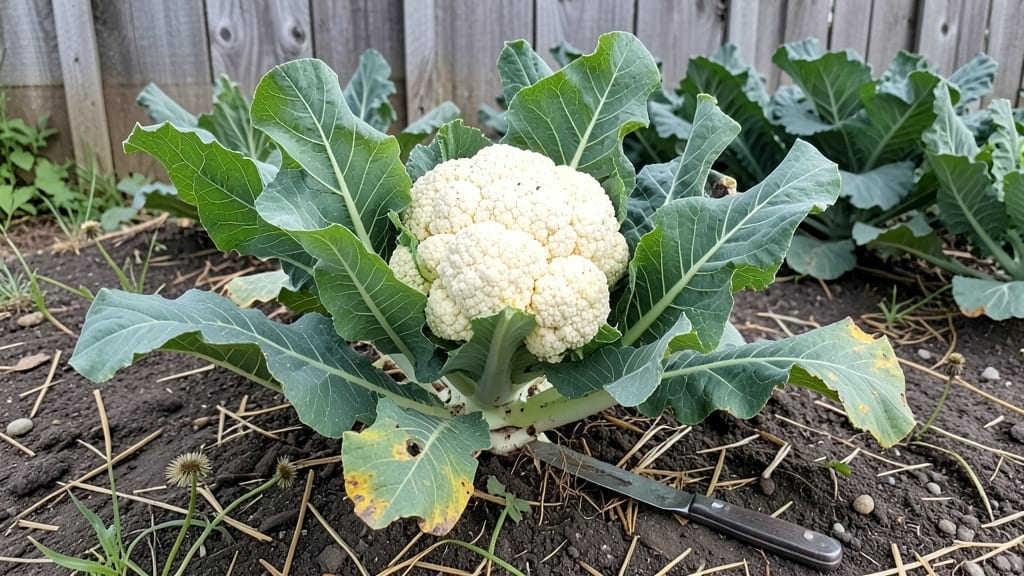
Cutting cauliflower at the perfect moment transforms a dense head into floret perfection—and I’ve learned the hard way that timing and technique make all the difference. 🌱 The key is harvesting when the head reaches 6-8 inches across, with tightly packed buds that haven’t started turning yellow or opening.
Cut too late, and you end up with bitter, woody florets; too early, and the head won’t develop fully. I’ll show you how to do it cleanly, so your plant stays healthy for future harvests.
You’ll need just three simple tools: a sharp chef’s knife or pruning shears, a bowl of cold water, and a cutting board. The knife should be clean and sharp—dull blades crush the florets, making them mushy.
After cutting, submerge the head in cold water for 10-15 minutes to crisp up the florets and remove any dirt or pests. This step alone keeps your cauliflower looking fresh for days, even if you’re not cooking it right away.
Start by slicing off the outer leaves around the base, leaving about an inch of stem attached to the head. Then, cut the head cleanly from the stem at a 45-degree angle—this helps water drain better and keeps the plant from rotting.
For florets, separate them by hand or twist them gently; never cut them with a knife, or you’ll end up with uneven, bruised pieces. The result? Uniform, beautiful florets that steam or roast to golden perfection.
Here’s the secret to preserving your plant: after harvesting, fertilize lightly with a balanced 10-10-10 and water deeply. If your cauliflower variety is self-branching, you might get a second (or even third!) harvest in 4-6 weeks.
For non-branching types, pull the plant when it’s done—no sense leaving it to bolt and go to seed. Now, let’s get those florets prepped like a pro!
📚 In This Guide
- What you need
- Instructions
- Tips and common mistakes
- Wrapping up and next steps
What you need
- ● 1 medium head of cauliflower – Choose a fresh, firm head (about 1–2 lbs) with tightly packed florets.
- ● 1 large cutting board – A stable, non-slip surface (wood or plastic) to protect your knives and keep things safe.
- ● 1 sharp chef’s knife (8–10 inches) – A serrated or gyuto-style knife works best for clean cuts.
- ○ 1 paring knife (optional but helpful) – For trimming stubborn stems or small adjustments.
- ● 1 bowl or container – For storing cut florets (preferably non-reactive, like glass or stainless steel).
- ● Paper towels or a clean kitchen towel – To pat dry and remove moisture for better handling.
- ● Kitchen shears – For quick trimming of stems or larger chunks.
- ● Microplane or grater – If you’re prepping cauliflower rice or fine shreds.
- ● Food processor (pulse function) – For riced cauliflower (if you’re skipping the knife work!).
- ● Cutting board mat – To protect your countertops from scratches.
- ○ Glove (optional) – If you’re sensitive to cauliflower’s texture or smell.
Step-by-Step instructions for cutting cauliflower
Here's how to slice cauliflower into perfect florets every time—no more uneven pieces or wasted stems.
🪴 Step 1: Prep the Whole Head
Start by rinsing the cauliflower under cool water to remove any dirt or debris clinging to the florets. Pat it dry with a clean kitchen towel or paper towels—damp florets slip when cutting. Hold the head firmly with one hand, gripping the base where the stem meets the florets. This keeps it stable while you work.
Use a sharp chef's knife (I like a 6-8 inch blade) for clean cuts. Run your thumb along the knife's edge to test sharpness—it should glide smoothly. A dull knife crushes florets instead of slicing them, which makes them mushy later. If needed, hone the blade with a sharpening stone before starting.
✂️ Step 2: Remove the Core and Outer Leaves
Cut off the tough outer leaves at the base where they meet the florets. These are usually yellowed or wilted, and they don’t cook as nicely. Pull them away gently—no need to cut them all the way through. Next, slice off the core stem about ½ inch up from the base. This exposes the tight cluster of florets underneath.
The core is woody and fibrous, so it’s best trimmed away. If you leave it, the florets will take longer to cook evenly. Use the knife to make a clean, straight cut—this prevents the florets from falling apart when you separate them later.
🌿 Step 3: Cut the Florets Evenly
Hold the cauliflower with the cut side facing up. Look for the natural divisions between florets—they’ll have small gaps or seams where they meet. These are your guides for clean cuts. Start at the outer edge of the floret cluster and slice downward, following the natural shape of the floret.
Each floret should be about 1-1½ inches in diameter for even cooking. If a floret is too large, cut it in half lengthwise. The goal is uniform pieces so they cook at the same rate. Save the smaller florets for salads or roasting—they’ll cook faster than the larger ones.
💧 Step 4: Trim the Stems and Clean Up
Once all the florets are separated, trim the stems at a 45-degree angle to create a larger surface area for seasoning. This also makes the florets look more appealing on the plate. Hold the floret firmly and slice just below the base where the stem meets the floret head.
Discard any remaining core pieces or overly tough stems. If you’re saving the stems for stock or soup, chop them finely and set them aside. Rinse the florets one last time in cold water to remove any stray bits of stem or debris. Drain well on a clean towel or in a colander before cooking.
⏰ Step 5: Store or Cook Immediately
For best results, use the florets within 2-3 days of cutting. Store them in an airtight container lined with a paper towel to absorb moisture. Place the container in the refrigerator’s crisper drawer, where the humidity level is lower. If you won’t use them right away, blanch the florets first—drop them into boiling water for 2 minutes, then plunge into ice water to stop cooking. This preserves their color and texture.
When ready to cook, pat the florets dry again before seasoning. They’ll crisp up better when roasted, sautéed, or steamed. If you notice any florets turning yellow or slimy, use them right away—they’re past their prime for storage.
Tips & tricks for perfect cauliflower prep
Here's what nobody tells you about cutting cauliflower that'll make all the difference in your cooking.
The Knife Factor: That 6-8 inch chef's knife isn't just for show—it's the secret to clean cuts. I learned this the hard way after ruining three batches with a dull blade. A sharp knife glides through the florets instead of crushing them, which prevents that mushy texture we all hate. If your knife feels heavy or drags, take 2 minutes to hone it with a sharpening stone before starting.
Core Removal Strategy: When you trim that ½ inch off the core in Step 2, don't just eyeball it—measure it. The core is the toughest part, and leaving even a tiny bit can make your florets take 20% longer to cook. I use my knife to make a clean, straight cut right at the base where the florets begin. This also prevents your florets from falling apart when you separate them later.
Floret Size Matters: Those 1-1½ inch florets aren't arbitrary—they're perfect for even cooking. Larger florets take forever to get tender, while smaller ones burn before they're done. Here's my trick: when you see a floret that's too big, cut it lengthwise first, then separate into smaller pieces. This gives you consistent cooking times without wasting any cauliflower.
Storage Wisdom: That 2-minute blanch in boiling water before freezing is a game-changer. I've found that blanched florets stay vibrant and crisp for months in the freezer, while unblanched ones turn mushy and lose color. Just remember to shock them in ice water immediately after—this stops the cooking process and locks in that fresh-cut texture.
Pro Tips for How Do You Cut Cauliflower
- Here's what nobody tells you about cutting cauliflower that'll make all the difference in your cooking.
- The Knife Factor: That 6-8 inch chef's knife isn't just for show—it's the secret to clean cuts.
- Core Removal Strategy: When you trim that ½ inch off the core in Step 2, don't just eyeball it—measure it.
Frequently asked questions
Got questions about slicing, dicing, or serving cauliflower? You’re not alone! Here are answers to the most common queries—because even the best chefs need a little help sometimes.
How do you cut cauliflower into florets?
Start by trimming the stem and outer leaves, then slice the head into quarters lengthwise. Twist each quarter to separate it into natural florets. For even pieces, trim the core and cut florets into bite-sized wedges. Pro tip: Use a sharp chef’s knife for cleaner cuts!
How long does it take to cut a whole head of cauliflower?
With practice, you can cut a medium head (about 1.5 lbs) in 5–10 minutes. Beginners may take 15 minutes, especially if you’re aiming for uniform florets. Prep ahead to save time—store cut pieces in an airtight container in the fridge for up to 3 days.
Can you cut cauliflower ahead of time?
Cut cauliflower stays fresh for 3–4 days in the fridge (covered to retain moisture). For longer storage, blanch florets for 3 minutes, then freeze them for up to 3 months. Perfect for meal prep—just thaw and reheat!
What’s the best way to cut cauliflower for roasting vs. stir-fry?
| Roasting | Stir-Fry |
|---|---|
| Cut into 1.5–2-inch florets (whole or halved) for even browning. | Slice into small, uniform pieces (½-inch cubes or thin sticks) for quick cooking. |
| Leave stems on for extra flavor (trim if too fibrous). | Remove all stems and tough cores for tender bites. |
Why does my cauliflower turn mushy when cooked?
Overcooking or cutting pieces too small causes mushiness. Fix it: Roast at 400°F (200°C) for 15–20 mins (until tender-crisp), or stir-fry over high heat for 3–5 minutes max. For rice-like textures, pulse in a food processor—but don’t overdo it!
Wrapping up and next steps
Mastering how to cut cauliflower opens up a world of culinary creativity—whether you're roasting, steaming, or stir-frying! With the right techniques, you’ll save time and transform this versatile veggie into delicious, restaurant-worthy dishes.
Now that you’ve got the know-how, why not try a new recipe? Start with a crispy cauliflower steak or blend it into a creamy soup—your taste buds will thank you! 🌟
Grab that knife and get cooking—your kitchen adventures are just one cut away! 🥬✨