
How To
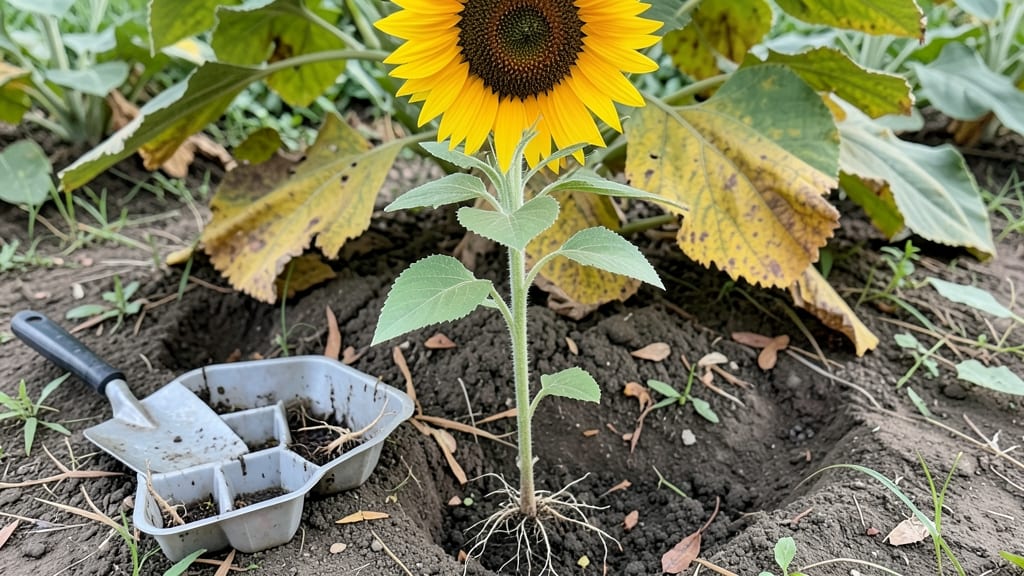
Transplanting sunflowers at the right stage saves you from stunted giants and flopping stems. 🌻 The secret lies in timing—wait until seedlings have 4-6 true leaves and are at least 6 inches tall, but don’t let them get root-bound in their starter pots.
This balance ensures they’ll stand tall without struggling to recover.
Start by preparing the garden bed with loose, well-draining soil enriched with compost. Dig holes twice as wide as the root ball but only as deep as the container—sunflowers resent being buried too deep.
Gently tease the roots apart if they’re circling, then place each seedling in its hole, firming the soil around the base to eliminate air pockets.
📚 In This Guide
- What you need
- Instructions
- Tips and common mistakes
- Wrapping up and next steps
What you need
- ● Sunflower seedlings: 3–6 healthy, sturdy seedlings (depending on desired spacing; see Tips for spacing guidelines).
- ● Garden trowel or transplanting spade: A small, sharp-edged tool (6–8 inches long) for digging holes.
- ● Watering can or hose with a gentle spray nozzle: For hydrating seedlings before and after transplanting.
- ○ Compost or well-aged manure: 1–2 cups per seedling to enrich the soil (optional but recommended).
- ● Garden gloves: To protect your hands from dirt and thorns (sunflowers can be prickly!).
- ○ Staking material (optional but helpful): Bamboo stakes (1–2 feet tall) or sunflower-specific supports (for tall varieties like 'Mammoth' or 'Russian Giant').
- ● Soft plant ties or old fabric strips (to secure stakes without damaging stems).
- ○ Mulch (optional): Straw, shredded leaves, or grass clippings to retain moisture and suppress weeds.
- ● Warm soil: Wait until nighttime temperatures are consistently above 50°F (10°C) to avoid shocking the roots.
- ● Sunny location: Choose a spot with full sun (6+ hours of direct sunlight daily)—sunflowers thrive in open, well-lit areas.
- ● Well-draining soil: Amend heavy or clay soil with compost to improve drainage.
- ● 🌱 Hardening off seedlings: If your seedlings were started indoors, gradually expose them to outdoor conditions for 5–7 days before transplanting.
- ● 🔥 Transplant on a cloudy day: Reduces stress on seedlings by minimizing sun exposure during the process.
- ○ ✨ Fertilizer (optional): A balanced, low-nitrogen fertilizer (5-10-10) can be sprinkled in the planting hole for a boost.
Step-by-Step instructions for transplanting sunflowers
Here's my foolproof method for moving sunflower seedlings without shocking their roots.
🌱 Step 1: Choose the Right Time and Location
Transplant sunflowers after their first true leaves appear but before they reach 6 inches tall. This window gives them enough strength to handle the move without becoming root-bound. For best results, pick a spot with full sun exposure (6+ hours daily) and well-draining soil—sunflowers hate soggy roots.
I dig a test hole first to check drainage. If water pools after 10 minutes, amend the soil with sand or compost to improve aeration. Sunflowers grow best in loose, fertile soil with a pH between 6.0 and 7.5. If your soil is heavy clay, mix in 2-3 inches of compost to the planting area before transplanting.
🪴 Step 2: Prepare the New Planting Site
Dig holes twice as wide as the root ball but only as deep as the container the seedling came in. This prevents burying the stem too deeply, which can cause rot. Space holes 18-24 inches apart for single-stem varieties or 12-18 inches apart for bushier types like 'Moulin Rouge.'
Loosen the soil at the bottom of each hole with a trowel to encourage root spread. I like to add a handful of balanced fertilizer (10-10-10) to the hole—just enough to give the plant a nutrient boost without overdoing it. Mix it into the native soil so it doesn't concentrate in one spot, which can burn tender roots.
💧 Step 3: Gently Remove Seedlings and Transplant
Water the seedlings 1-2 hours before transplanting to reduce root stress. Grasp the base of the stem firmly and tip the container to loosen the root ball. If the seedling resists, run a knife around the edges to separate it from the pot. Never pull by the stem—you'll damage the plant's vascular system.
Place the seedling in its new hole, ensuring the top of the root ball sits just below soil level. Fill the hole with soil, pressing gently around the edges to eliminate air pockets. Water deeply until moisture reaches 6 inches down, which helps settle the soil and encourages roots to spread outward.
☀️ Step 4: Provide Support and Aftercare
Sunflowers need sturdy support as they grow. Install a 6-foot stake or bamboo pole next to each plant immediately after transplanting, tying the main stem loosely with soft cloth or garden twine. This prevents wind damage and gives the plant stability as it matures.
Water deeply every 2-3 days until the soil feels dry 2 inches below the surface. Avoid wetting the foliage to prevent fungal diseases like powdery mildew. After 2 weeks, switch to a low-nitrogen fertilizer (5-10-10) to promote strong stem and flower development. Watch for new leaves—this is your sign the plant is recovering from transplant shock.
⏰ Step 5: Monitor Growth and Adjust Care
Sunflowers grow 2-3 inches per day in ideal conditions, so check them daily for signs of stress. If leaves yellow between the veins, the plant needs more magnesium—sprinkle Epsom salt around the base and water it in. If stems lean toward the light, rotate the plant a quarter turn every few days to encourage even growth.
Remove any side shoots that form below the main stem to direct energy into the primary bloom. Once the flower bud swells to golf-ball size, reduce watering slightly to prevent the stem from splitting under the weight of the bloom. With proper care, your sunflowers will reach their full height in 60-90 days, delivering those iconic towering blooms you planted for.
Tips & tricks for perfect sunflower transplanting
These little details make all the difference when moving sunflowers from container to garden.
The Timing Secret: The 1-2 hour pre-watering in Step 3 is non-negotiable. I learned this the hard way after transplanting dry seedlings that wilted within hours. Watering hydrates the roots and makes them more pliable for handling. For extra insurance, water again immediately after transplanting to help settle the soil around the roots.
Root Ball Handling: When removing seedlings in Step 3, resist the urge to squeeze the pot—they're more delicate than they look. Instead, gently compress the sides while tipping the container. If the root ball breaks apart, don't panic—just replant the pieces close together. Sunflowers are surprisingly resilient when their roots aren't traumatized.
Soil Amendments: That 10-minute drainage test in Step 1 reveals everything. Heavy clay soil? Mix in 2-3 inches of compost before planting—it improves drainage while adding nutrients. For sandy soil, work in a bit of organic matter to help retain moisture. I've seen sunflowers thrive in amended soil that would have been problematic otherwise.
Support System: The 6-foot stakes in Step 4 aren't just decorative—they're essential for wind-prone areas. Install them immediately after transplanting so the plant can lean against them as it grows. For bushier varieties like 'Moulin Rouge,' you can space stakes closer together (12-18 inches apart) to create natural support clusters.
Pro Tips for Transplant A Sunflower
- These little details make all the difference when moving sunflowers from container to garden.
- The Timing Secret: The 1-2 hour pre-watering in Step 3 is non-negotiable.
- Root Ball Handling: When removing seedlings in Step 3, resist the urge to squeeze the pot—they're more delicate than they look.
Frequently asked questions
Got questions about transplanting sunflowers? You’re not alone! Here are some of the most common concerns—and straightforward answers—to help you grow those towering blooms with confidence.
When is the best time to transplant sunflower seedlings?
Transplant sunflower seedlings after the last frost when soil temperatures reach at least 50°F (10°C). Aim for 3–6 weeks after sowing (when they’re 2–4 inches tall). Early morning or evening reduces stress from heat. Avoid transplanting in extreme heat—it shocks tender roots!
Can I transplant sunflowers that are already too tall?
Sunflowers struggle if transplanted past 6 inches tall—their deep taproots get damaged, and recovery is slow. If you must move them, dig carefully, keep soil moist, and stake for support. For mature plants, it’s often better to direct-sow in their final spot instead.
What’s the best way to harden off sunflower seedlings before transplanting?
Hardening off takes 5–7 days: Gradually expose seedlings to outdoor conditions. Start with 1–2 hours of sunlight daily, increasing time each day. Shield from direct wind and avoid hot midday sun. This toughens stems and reduces transplant shock.
Why are my transplanted sunflowers wilting or dying?
Wilting often signals transplant shock (root damage) or underwatering. Keep soil consistently moist (not soggy) for 2 weeks post-transplant. If leaves yellow, check for over-fertilizing or pests. Mulch lightly to retain moisture and reduce stress.
Can I transplant sunflowers into containers instead of the ground?
Yes! Use large containers (12+ inches deep) with drainage holes. Choose fast-draining soil (like 60% potting mix + 40% perlite). Sunflowers need 6–8 hours of sunlight daily—place containers in full sun. Dwarf varieties (like ‘Teddy Bear’) thrive in pots, while giants may outgrow them.
Wrapping up and next steps
Transplanting sunflowers might seem tricky, but with the right timing, tools, and care, you’ll soon be rewarded with towering, vibrant blooms that brighten any garden! Remember to choose the right moment, handle those delicate roots gently, and give your sunflowers plenty of space to shine. 🌻✨
Now that you’re armed with these tips, why not take the next step? Grab your gardening gloves, pick a sunny spot, and start your sunflower journey today—your future garden will thank you!