
Shrubs
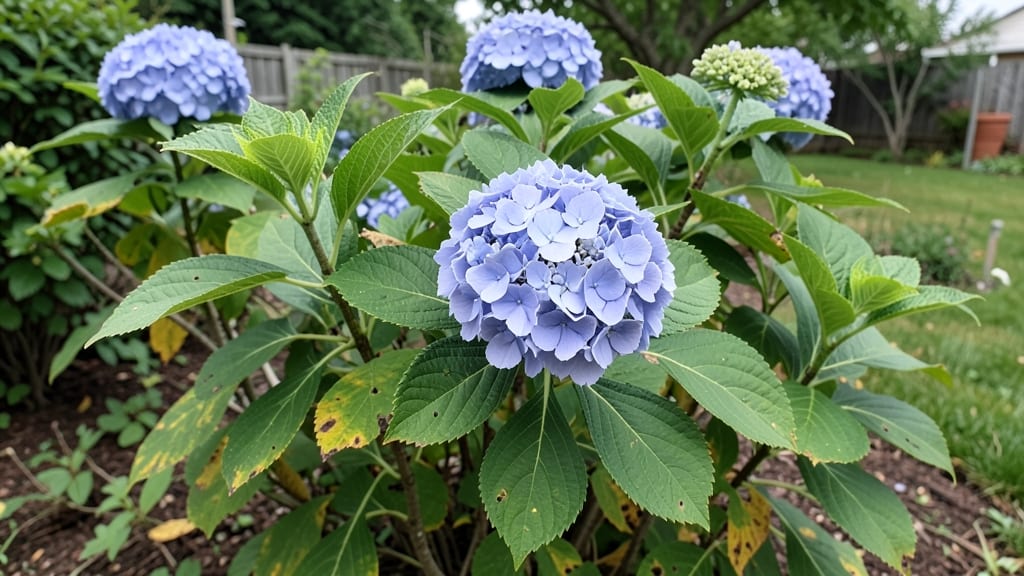
The Pacific Northwest's year-round pollinator showcase transforms any garden into a living tapestry of color and life. 🌸 I've spent years collecting images of flowering shrubs that thrive here—from vibrant hydrangeas in summer to frost-kissed camellias in winter—and they all play a crucial role in supporting bees, butterflies, and hummingbirds.
The key is choosing plants that bloom at different times, ensuring your garden never looks bare or stops buzzing with activity.
These shrubs do more than just look pretty—they create seasonal interest that keeps your garden dynamic. Imagine purple lilacs greeting spring, pink azaleas lighting up early summer, and golden Oregon grape adding texture in late winter.
Each one serves a purpose, whether it's anchoring a border, framing a patio, or drawing the eye to a focal point in the landscape.
You'll discover how to layer these shrubs for continuous blooms, from the first hints of spring to the last golden leaves of fall. The best part? Many of these plants are low-maintenance once established, meaning more time enjoying your garden and less time fussing over it.
Let's explore the perfect combinations for your Pacific Northwest landscape.
We'll also cover companion plants that extend the blooming season and simple pruning tips to keep your shrubs healthy and thriving. Whether you're designing a new garden or refreshing an old one, these images and ideas will inspire a space that's as functional as it is beautiful.
📚 In This Guide
- What you need
- Instructions
- Tips and common mistakes
- Wrapping up and next steps
What you need
- ● DSLR or Mirrorless Camera: A mid-range model (e.g., Canon EOS Rebel T7i, Sony A6400) with interchangeable lenses for flexibility.
- ○ Wide-Angle Lens (16-35mm): Perfect for capturing full shrubs and their surroundings. A macro lens (60mm+) is optional but ideal for close-up flower details.
- ● Tripod: A lightweight, sturdy tripod (e.g., Manfrotto Compact) to stabilize shots in low light or windy conditions.
- ● External Flash or Reflector: A softbox flash (e.g., Godox TT350) or a 5-in-1 reflector to enhance lighting and reduce harsh shadows.
- ● Pruners or Shears: Small, sharp pruners (e.g., Felco F2) to gently trim overgrown branches for better framing.
- ● Gloves: Lightweight gardening gloves to protect hands from thorns or sap.
- ● Water Spray Bottle (4-8 oz): To mist flowers and enhance their freshness and shine.
- ● Portable Battery Pack: A 10,000mAh+ pack (e.g., Anker PowerCore) for extended shooting sessions.
- ● Drone (e.g., DJI Mini 2): For aerial shots of sprawling shrub landscapes—check local regulations first!
- ● Polarizing Filter: Reduces glare and enhances color saturation in outdoor shots.
- ● Notebook & Pencils: To sketch compositions or jot down notes on lighting conditions.
- ● Local Flora Guidebook: Helps identify shrubs (e.g., Pacific Northwest Wildflowers) for accurate descriptions.
How to capture stunning flowering shrub photos in the Pacific Northwest
This region’s ever-blooming shrubs offer endless photo opportunities—here’s how to capture their beauty year-round.
🌿 Step 1: Scout Locations for Seasonal Blooms
Pacific Northwest gardens burst with color in every season, but timing matters. Visit public gardens like the Portland Japanese Garden or Seattle’s Washington Park Arboretum to study how shrubs like Rhododendron and Camellia thrive in layered light. Early spring brings Magnolia blooms, while late summer showcases Hydrangea and Weigela in full glory.
I always scout locations at golden hour—the hour before sunset—when light softens and colors pop. Bring a small notebook to jot down which shrubs bloom longest (like Pieris japonica, which flowers in early spring and again in fall) and which need backlighting (like Azalea with dark foliage).
☀️ Step 2: Master Lighting for Pacific Northwest Conditions
The region’s overcast skies can be a photographer’s best friend—diffused light eliminates harsh shadows, but you’ll still need to manage reflections. Use a reflector or white foam board to bounce light onto shrub foliage when shooting on cloudy days. For bright, sunny mornings, position subjects with blooms facing the light to avoid lens flare.
I avoid midday sun entirely—it washes out vibrant colors like red Camellia or purple Hydrangea. Instead, I wait for morning light, which enhances saturation. If shooting in rain (common here!), use a waterproof lens cover and a fast shutter speed to freeze droplets on petals.
📸 Step 3: Compose Shots for Texture and Depth
Pacific Northwest shrubs often have textured bark, glossy leaves, and delicate blooms—use these elements to create depth. Frame shots with foreground foliage (like Oregon grape holly) leading to mid-ground flowers, then include background greenery (ferns or moss) for context. A wide-angle lens (16-35mm) works best for capturing entire shrubs, while a macro lens (100mm+) highlights individual blossoms.
I love including natural frames—arching branches, tree trunks, or even rain-slicked leaves—to draw the eye into the image. For close-ups, focus on dew-covered petals in the morning or bees pollinating flowers (a signature PNW detail). Always check for symmetry—odd-numbered blooms (3 or 5) create more dynamic compositions.
✂️ Step 4: Edit for Pacific Northwest’s Moody Aesthetic
Post-processing should enhance—not overpower—the natural beauty of these shrubs. Start with Lightroom’s "Color" panel to boost teal and magenta tones, which thrive in PNW lighting. For overcast shots, increase exposure slightly (+0.3 to +0.5) and reduce shadows to brighten foliage without losing detail.
I avoid heavy saturation—Rhododendron’s natural pinks and Camellia’s deep reds should remain true to life. Instead, I use selective sharpening on petals and vibrance adjustments to make greens pop. For black-and-white conversions, I rely on texture—the wrinkled bark of a Viburnum or the fuzzy stamens of a Heather—to create contrast.
🌱 Step 5: Organize and Share Your Gallery
Tag your images with location-specific hashtags like #PNWGardens, #SeattleBlooms, or #PortlandFlora to connect with local plant enthusiasts. I organize my files by season and shrub type—this helps track which varieties (like early-blooming Pieris or late-season Weigela) perform best in your camera’s sensor.
For a cohesive portfolio, I create mood boards grouping similar styles—soft-focus wildflowers, sharp macro shots, or dramatic silhouettes against misty backdrops. Share your best work on platforms like Flickr’s Gardening Groups or Instagram’s #GardenPhotography to get feedback from fellow PNW gardeners.
Tips & tricks for perfect flowering shrub photography in the Pacific Northwest
These pro tips will help you elevate your Pacific Northwest shrub photography from good to breathtaking—no matter the season.
Golden Hour Timing: The one-hour window before sunset is your golden ticket for vibrant colors, especially during the region's frequent overcast days. I always check the sunset time in advance and arrive at least 30 minutes early to scout locations. For Rhododendron and Camellia, this timing captures their natural pinks and reds at their most saturated. Pro tip: Use a sun calculator app to track these windows year-round—they shift dramatically between seasons.
Lighting Hacks for Overcast Days: The PNW's signature diffused light is a gift, but you can enhance it further. I carry a small, portable reflector to bounce light onto dark foliage like Azalea leaves. For Hydrangea clusters, position yourself slightly below the blooms to create a natural rim light effect. If shooting in rain, use a fast shutter speed (1/500s or faster) to freeze water droplets on petals—this adds a magical, ethereal quality that's uniquely Pacific Northwest.
Layering for Depth: The PNW's lush landscapes provide perfect opportunities for depth in your shots. I always look for three distinct layers: foreground with textured foliage (like Oregon grape holly), mid-ground with blooms (such as Pieris japonica clusters), and background with soft greenery (ferns or moss). This technique works particularly well with wide-angle lenses (16-35mm)—just be mindful of distortion at the edges. For close-ups, a macro lens (100mm+) reveals intricate details like dew-covered petals or fuzzy stamens.
Post-Processing Secrets: When editing in Lightroom, I focus on enhancing the PNW's natural moody aesthetic rather than over-saturating colors. Start with the Color panel and boost teal and magenta tones (+10 to +15)—these colors thrive in our diffused lighting. For overcast shots, increase exposure slightly (+0.3 to +0.5) and reduce shadows by -10 to -15 to brighten foliage without losing detail. Remember, the goal is to enhance, not transform—the natural beauty of Magnolia blooms or Weigela flowers should remain recognizable.
Pro Tips for Images Of Flowering Shrubs
- These pro tips will help you elevate your Pacific Northwest shrub photography from good to breathtaking—no matter the season.
- Golden Hour Timing: The one-hour window before sunset is your golden ticket for vibrant colors, especially during the region's frequent overcast days.
- Lighting Hacks for Overcast Days: The PNW's signature diffused light is a gift, but you can enhance it further.
Frequently asked questions
Got questions about showcasing flowering shrubs in the Pacific Northwest? Here are some common ones—and their answers—to help you plan your pollinator-friendly garden with confidence!
What are the best flowering shrubs for attracting pollinators year-round in the PNW?
The Pacific Northwest’s mild, wet climate supports evergreen and deciduous shrubs like Oregon grape (spring blooms), salal (summer/fall), and red-flowering currant (early spring). Native snowberry and vine maple also provide late-season nectar. Pair them with cascade honeysuckle for summer buzz!
When is the best time to plant flowering shrubs in the PNW?
For established roots, plant bare-root shrubs in early spring (March–April) or container-grown plants in fall (September–October). Avoid summer heat stress! If planting in winter, use mulch to protect roots. Pro tip: Water deeply after planting and keep soil moist for the first season.
How do I protect flowering shrubs from heavy PNW rain and wind?
Choose wind-resistant varieties like Pacific dogwood or salmonberry, which have sturdy stems. Stake young shrubs in exposed areas and mulch heavily (3–4 inches) to prevent root erosion. Elevate containers slightly to improve drainage—no soggy roots! Prune in late winter to remove damaged branches.
Can I grow flowering shrubs in containers, or do they need garden beds?
Shrubs like dwarf ninebark or compact rhododendron thrive in 15–20 gallon containers with well-draining soil. Use fabric pots for better aeration and fertilize monthly during growing season. Just ensure containers get 6+ hours of sunlight and winter protection (move to a sheltered spot or wrap in burlap).
Why aren’t my flowering shrubs attracting bees or butterflies?
Check for bloom timing—some shrubs (like winter hazel) flower early when pollinators are scarce. Ensure no pesticides are nearby (even natural sprays can harm insects). Add companion plants like lavender or yarrow to extend the buffet. If blooms are sparse, prune in late winter to encourage new growth.
Pro Tip:
Capture the blooms!
The PNW’s layered light makes flowering shrubs photogenic. Shoot in morning sunlight (before dew dries) and include pollinators in action for dynamic shots. Use a macro lens for close-ups of bee-friendly flowers like salmonberry or western columbine.
Wrapping up and next steps
From vibrant azaleas to hardy rhodies, the Pacific Northwest’s flowering shrubs offer a year-round spectacle that delights both pollinators and gardeners alike. 🌸 These stunning plants aren’t just beautiful—they’re low-maintenance champions that thrive in the region’s unique climate, making them perfect for adding color, texture, and life to any landscape.
Ready to transform your garden? Start small—whether it’s a single camellia for winter blooms or a cluster of spirea for summer cheer. Browse our curated collection of flowering shrub images for inspiration, then pick your favorites and get planting! Your garden (and the bees!) will thank you. 🐝✨