Planting
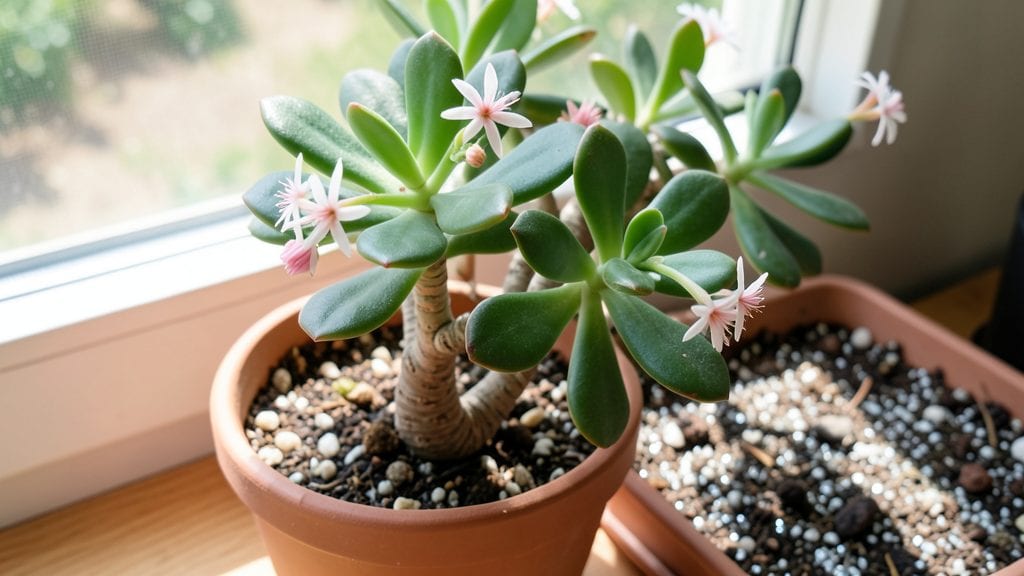
That first blush of pink or white on your jade plant (Crassula ovata) is worth every bit of patience—jade plant care for flowering starts with understanding its stubborn nature and rewarding persistence.
I’ve watched mine go years without blooms until I cracked the code on light exposure and watering rhythms, and now it bursts into delicate flowers every spring.
The secret isn’t complicated: bright, indirect light for 6+ hours daily (south-facing windows or grow lights work best) and water only when the soil is bone-dry—overwatering is the #1 killer of blooms.
My plant thrives in a well-draining cactus mix with just a sprinkle of fertilizer in spring, and I prune leggy stems to encourage bushier growth where flowers form.
When you nail the balance, you’ll see those tiny buds appear in late winter, opening into star-shaped blooms that last for weeks. The fragrance is subtle but sweet, and the contrast of glossy green leaves against the flowers makes it the showstopper of my collection.
The key? Consistency—no skipping steps, no guesswork.
Works for both sunny windowsills and grow-room setups, though desert-dwelling jades need extra humidity in dry climates. Here’s how to turn your plant from a leafy bush into a flowering masterpiece—step by step.
📚 In This Guide
- What you need
- Instructions
- Tips and common mistakes
- Wrapping up and next steps
What you need
- ● Jade Plant (Crassula ovata) – A healthy, mature specimen (3+ years old) with at least 3-4 inches of stem length for best flowering potential.
- ● Well-draining potting mix – A blend of: 60% cactus/succulent soil (e.g., 50% perlite, 50% potting soil)
- ● 20% coarse sand (or pumice for better aeration)
- ● 20% orchid bark or perlite (to prevent root rot)
- ● Pot with drainage holes – Terracotta or ceramic (4-6 inches in diameter for small plants; upsize as the plant grows).
- ● Watering can with a narrow spout – To avoid overwatering and soil displacement.
- ● Pruning shears – Sterilized, sharp pair for trimming leggy stems or dead leaves.
- ○ Grow lights (optional but helpful) – Full-spectrum LED (12-16 hours/day) if natural light is <6 hours/day.
- ● Fertilizer – Balanced liquid fertilizer (e.g., 10-10-10 or succulent-specific) diluted to half-strength.
- ● Thermometer/hygrometer – To monitor ideal temps (60-75°F) and humidity (40-50%).
- ● Peat moss or sphagnum moss – For top-dressing to retain moisture (use sparingly!).
- ● Support stake or trellis – If your jade grows tall and needs structural help.
Step-by-Step guide to encouraging jade plant flowering
Here’s how to coax those rare, stunning blooms from your jade plant—it’s all about patience, precision, and perfect conditions.
☀️ Step 1: Maximize Bright, Direct Light Exposure
Jade plants (Crassula ovata) need full sun to partial sun—at least 6 hours of direct light daily—to trigger flowering. Place yours near a south- or west-facing window where it receives unfiltered sunlight. If indoors, supplement with a grow light positioned 12-18 inches away for 14-16 hours per day during winter months when natural light dims.
Watch for pale, stretched stems—this means it’s reaching for light. Rotate the pot quarter-turn weekly so growth stays even. Insufficient light is the #1 reason jade plants refuse to bloom. If your plant sits in a dim corner, it may never flower, no matter how well you water or fertilize.
💧 Step 2: Mimic Arid Conditions with Strategic Watering
Jade plants store water in their thick leaves, so overwatering suffocates roots and prevents flowering. Water only when the top 2-3 inches of soil feel completely dry—stick your finger in the soil to check. In winter, when growth slows, reduce watering to every 3-4 weeks. Overwatered jade plants develop soft, mushy stems and drop leaves, signaling stress that halts blooming.
Use a terracotta pot (unglazed) to allow excess moisture to evaporate through the walls. If your plant sits in a saucer, empty it within 10 minutes of watering—soggy roots equal no flowers. A well-watered jade plant should feel firm to the touch, not spongy.
⏰ Step 3: Trigger Flowering with Temperature and Light Cycles
Jade plants need cool nights and warm days to set flower buds. During late winter or early spring, place your plant in a spot where daytime temperatures reach 70-75°F and nighttime temps drop to 55-60°F. This temperature swing mimics their natural desert environment and signals the plant to bloom. If your home stays consistently warm year-round, consider moving it outdoors for a few hours daily during cooler months.
Flowering typically occurs in late winter or early spring, but some varieties bloom in fall. Watch for tiny pink or white buds forming in leaf axils—this is your cue that the plant is responding to the right conditions. If buds appear but drop off, it’s often due to sudden temperature shifts or drought stress.
🌿 Step 4: Fertilize Lightly and Only During Growth Phases
Use a balanced, water-soluble fertilizer (10-10-10 or 20-20-20) diluted to half strength and apply only during active growth (spring and summer). Fertilize every 4-6 weeks, but stop completely in fall and winter—overfeeding in dormancy stresses the plant and prevents blooming. Jade plants are light feeders; too much fertilizer leads to leaf burn and weak, leggy growth, neither of which supports flowering.
After fertilizing, water deeply to rinse excess salts from the soil. Yellowing leaves or brown tips are signs of over-fertilization. If your jade plant develops long, thin stems with sparse leaves, it’s a sign it needs less fertilizer and more light. Strong, compact growth is the foundation for healthy blooms.
✂️ Step 5: Prune and Support Healthy Growth Habits
Prune leggy stems in early spring to encourage bushier growth, which increases the likelihood of flowering. Use sterilized scissors to cut just above a leaf node, and allow the cutting to dry for 24 hours before propagating in soil if desired. Avoid heavy pruning in fall or winter, as the plant needs energy to recover before its next growth cycle.
Remove any dead, yellow, or damaged leaves promptly—they drain energy from the plant. If your jade plant develops thick, woody stems, it may be past its prime for flowering. In this case, take stem cuttings to propagate new plants, which are more likely to bloom with proper care.
Tips & tricks for perfect jade plant flowering
These proven strategies will help you transform your jade plant's potential into stunning blooms—without the guesswork.
Light Optimization: In Step 1, those critical 6 hours of direct light are non-negotiable for flowering. If your south-facing window isn't sufficient, supplement with a full-spectrum LED grow light positioned 12-18 inches away during winter's shorter days. I've seen jade plants bloom under artificial light when natural light was insufficient—just maintain that 14-16 hour daily exposure during low-light months. The key is consistency; plants respond to predictable light cycles.
Temperature Precision: The 70-75°F daytime to 55-60°F nighttime swing in Step 3 mimics desert conditions perfectly. If your home stays above 75°F year-round, try this trick: Move your jade plant outdoors for 2-3 hours daily during cooler months (50-65°F range). This temperature fluctuation triggers the hormonal changes needed for bud formation. I've had plants that refused to bloom indoors until I implemented this outdoor exposure routine.
Watering Wisdom: When checking soil moisture in Step 2, press your finger 2-3 inches deep—surface dry soil can be misleading. The "firm to the touch" test is crucial: Gently squeeze a leaf; it should feel resilient, not squishy. I learned this the hard way after overwatering three jade plants in a row. Remember, these plants store water in their leaves, so they're far more drought-tolerant than most houseplants.
Fertilizer Timing: The spring and summer feeding schedule in Step 4 is perfect, but here's the secret: Always fertilize in the morning. This gives the plant time to metabolize nutrients before nightfall, preventing salt buildup in the soil. I also recommend flushing the soil with water every 3-4 feedings to prevent fertilizer salts from accumulating—just run water through the pot until it drains from the bottom.
Pro Tips for Jade Plant Care For Flowering
- These proven strategies will help you transform your jade plant's potential into stunning blooms—without the guesswork.
- Light Optimization: In Step 1, those critical 6 hours of direct light are non-negotiable for flowering.
- Temperature Precision: The 70-75°F daytime to 55-60°F nighttime swing in Step 3 mimics desert conditions perfectly.
Frequently asked questions
Got questions about coaxing those stunning jade plant flowers? You’re not alone! Here are answers to the most common queries—so you can troubleshoot, optimize, and enjoy your blooming beauty with confidence.
How often should I water my jade plant to encourage flowering?
Water your jade plant only when the top 1-2 inches of soil are bone-dry—usually every 2-3 weeks. Overwatering stresses the plant, while underwatering triggers drought-like conditions, which can promote flowering. Use well-draining soil and a pot with drainage holes to avoid soggy roots.
Why isn’t my jade plant flowering after years of care?
Jade plants often need stress signals to bloom. Try these fixes:
- Reduce water for 4-6 weeks to mimic drought.
- Move it to a cooler spot (50–60°F at night) for 2–3 weeks.
- Ensure it gets bright, indirect light (south or west-facing window).
Can I make my jade plant flower indoors without sunlight?
Indoor jades can flower without direct sun, but you’ll need a grow light (12–14 hours/day). Use a full-spectrum LED bulb 6–12 inches above the plant. Combine this with temperature drops (like a cool windowsill at night) to mimic seasonal changes.
My jade plant’s leaves are yellowing—will it still flower?
Yellow leaves usually signal overwatering or root rot. Let the soil dry completely, and repot in fresh, gritty soil if needed. While stressed plants may delay flowering, they can recover! Focus on drainage and less frequent watering to revive it.
What’s the best time of year to encourage jade plant blooms?
Start preparing in late summer/early fall (6–8 weeks before winter). Reduce water, move the plant to a cooler spot, and ensure it gets bright light. Blooms often appear in winter or early spring—just like in their natural desert habitat!
Wrapping up and next steps
Caring for your jade plant to encourage stunning blooms is all about patience, consistency, and a little extra love! 🌸 With the right balance of bright light, well-draining soil, and mindful watering, you’ll soon be rewarded with delicate, star-shaped flowers.
Remember, even the most experienced plant parents face challenges—so don’t hesitate to adjust your approach based on what works best for your unique green friend.
Ready to see those blossoms? Start by monitoring your plant’s progress and tweak its care routine as needed. Before you know it, your jade plant will be a flourishing centerpiece—and you’ll have the confidence to tackle even trickier plant challenges! 🌱✨