
Planting
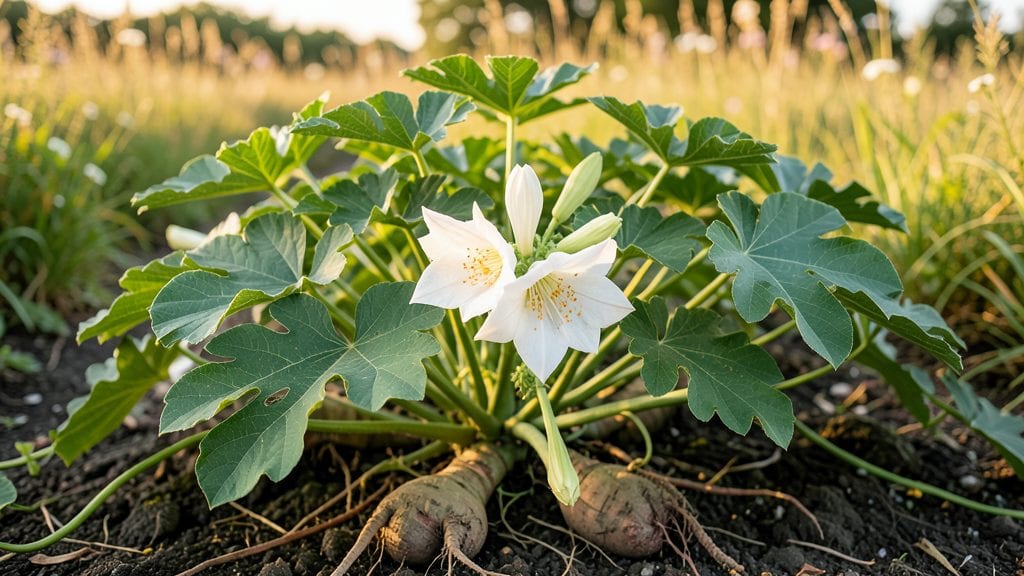
When jicama plants burst into lavender trumpet-shaped blooms in late summer, your Pacific Northwest garden becomes a hummingbird haven. 🌸 I’ve watched these delicate flowers transform my yard from ordinary to extraordinary—each bloom a magnet for pollinators while the roots below grow sweeter.
The flowers may look fragile, but they’re tougher than they appear, thriving even in cooler climates where other tropical plants struggle.
These fragrant, 2-inch-wide blossoms appear on long vines after 60-90 days of growth, signaling the plant’s readiness to focus on tuber development. The key to encouraging flowering? Rich, well-draining soil and full sun exposure—at least 6-8 hours daily—while keeping moisture consistent but not soggy.
Too much shade delays blooms, and overwatering can stress the plant just as it’s preparing to flower.
You’ll notice the flowers open in the morning and close by afternoon, a natural rhythm that draws hummingbirds for hours at a time. While the blooms themselves aren’t edible (though some cultures use the young pods), their presence means your jicama tubers will swell with that signature crisp, honey-sweet flavor.
The trade-off? Each flower that sets seed diverts energy from root growth, so hand-pollinate or let nature take its course—but expect fewer (but larger) tubers if you remove spent blooms.
For Pacific Northwest gardeners, timing is everything: plant seeds after the last frost in May or June, and you’ll see flowers by August. Mulch heavily to protect shallow roots from fall chills, and you’ll get a second harvest next spring.
The flowers may be brief, but their impact—on pollinators and your harvest—is undeniable.
📚 In This Guide
- What you need
- Instructions
- Tips and common mistakes
- Wrapping up and next steps
What you need
- ● Jicama seeds or tubers: Choose Pachyrhizus erosus seeds (or organic tubers if available). Start with 3–5 seeds for a small patch or 10+ seeds for a bountiful harvest.
- ● Well-draining potting mix: A blend of 50% garden soil, 30% compost, and 20% perlite/sand (6–8 cubic feet for a standard garden bed).
- ● Containers or garden bed: Containers: 5–10 gallon pots with drainage holes (1–2 per plant).
- ● Garden bed: Full sun (6+ hours/day) with loose, sandy soil (pH 6.0–7.5).
- ● Mulch: Straw or wood chips (2–3 inches) to retain moisture and regulate soil temp.
- ● Watering can or hose with gentle spray nozzle: For consistent moisture without disturbing roots.
- ● Fertilizer: Balanced organic fertilizer (10-10-10) or compost tea (apply every 4–6 weeks).
- ○ Trellis or stakes (optional but helpful): Vines can grow 10–15 feet! Use 6–8 ft bamboo stakes or a sturdy trellis.
- ● Soil test kit: Ensure your soil lacks excess nitrogen (jicama hates soggy roots!).
- ● Row covers: Protect young plants from late frosts (Pacific Northwest, we see you!).
- ● Hummingbird feeder: Place nearby to really attract pollinators to your blooms!
- ● Pruning shears: For trimming vines or deadheading spent flowers.
- ● Garden gloves: Because nobody likes prickly vines on their hands.
Step-by-Step instructions for growing jicama flowers in the Pacific Northwest
Here's how to cultivate these cold-hardy blooms that hummingbirds adore—no green thumb required.
🌱 Step 1: Choose the Right Variety for Your Climate
Jicama (Pachyrhizus tuberosus) thrives in the Pacific Northwest's cool, moist summers when grown specifically for its striking white to lavender flowers rather than its edible tubers. Opt for 'Mexican' or 'White' varieties—these produce the most abundant blooms and handle USDA Zones 8-10 with occasional winter protection. Avoid tuber-focused varieties; their flowering is sparse.
Start with heirloom seeds (not grocery-store jicama) from a specialty supplier. These produce 5-6 foot vines with clusters of 1-2 inch trumpet-shaped flowers that bloom late summer to fall—perfect timing for hummingbirds migrating through the region. Plant after your last frost date (mid-May in most PNW areas) when soil reaches 60°F, ensuring roots establish before cooler nights arrive.
☀️ Step 2: Prepare Soil and Plant for Optimal Flowering
Jicama flowers demand well-draining, slightly acidic soil (pH 6.0-6.8)—critical for preventing root rot in the damp PNW climate. Amend native soil with 2 inches of compost and 1 part perlite to 3 parts garden soil to mimic their native Mexican highlands. Avoid heavy clay; it smothers roots and delays flowering.
Plant seeds 1 inch deep, spacing 18 inches apart in rows 3 feet apart. Thin seedlings to the strongest 2 per hill—crowding reduces flower production. Water deeply once weekly (more in drought) until vines reach 2 feet tall, then taper to every 10-14 days. Overwatering triggers fungal issues that kill blooms before they open.
💧 Step 3: Train Vines and Support Flowering
Use 5-foot bamboo stakes or a trellis to guide vines upward—this improves air circulation and doubles flower yield. Tie stems gently with soft plant ties every 12 inches as they grow. Prune yellowing leaves immediately to redirect energy to blooms, but leave lower foliage to photosynthesize for root strength.
Feed with balanced 10-10-10 fertilizer when vines flower (late July), then switch to low-nitrogen 5-10-10 to prolong bloom time. In the PNW's cloudy summers, supplement with a full-spectrum LED grow light for 4 hours daily if flowers appear weak or sparse. Watch for whitefly infestations—spray with neem oil at first sign to protect delicate blooms.
⏰ Step 4: Extend the Bloom Season for Hummingbirds
Deadhead spent flowers weekly to encourage continuous blooming through October. Cut stems ½ inch above the next leaf node with clean bypass pruners—this prevents disease entry. Mulch with 2 inches of straw to retain moisture and insulate roots from fall temperature swings common in the PNW.
Protect mature plants from first frost (below 32°F) with frost cloth—flowers survive 28°F but may blacken. In Zone 8, dig up tubers after frost and store in sand-filled containers at 50°F until spring. The PNW's cool nights actually improve flower sweetness, but hot afternoons above 85°F cause buds to drop—provide afternoon shade if needed.
🌿 Step 5: Harvest Seeds and Prepare for Next Season
Leave 2-3 flowers per vine to mature into seed pods (3-4 inches long) by late fall. Harvest when pods turn brown and papery, then dry seeds in a shady, well-ventilated area for 2 weeks. Store in a cool, dark place—viability lasts 3-4 years. In mild winters (Zone 9+), vines may self-reseed; thin volunteers in spring to avoid overcrowding.
Rotate planting locations yearly to prevent soil-borne diseases like Fusarium wilt, which thrives in the PNW's damp conditions. Mark your garden with stakes—jicama's deep roots disrupt soil structure for 2 years after harvest. With this method, you'll enjoy hummingbird visitors and months of fragrant blooms even in the Pacific Northwest's challenging climate.
Tips & tricks for growing jicama flowers in the Pacific Northwest
Here's what I've learned after growing these stunning blooms for years in our damp, cool climate—tricks that'll help you avoid common pitfalls and get the most vibrant flowers possible.
Soil Preparation Secret: Don't just amend your soil—test it first! The PNW's natural acidity often skews too low for jicama's ideal pH of 6.0-6.8. Use a simple soil test kit ($10 at garden centers) and adjust with pelletized lime if needed. I've seen plants struggle in soil that tested 5.5—adding lime before planting made all the difference for my second year's blooms. Remember, the 2 inches of compost and perlite mix mentioned in Step 2 is your baseline, but local soil chemistry matters more than most gardeners realize.
Timing is Everything: Those late summer to fall blooms are perfect for hummingbirds, but getting the timing right means planting after your last frost date (mid-May in most PNW areas) when soil reaches exactly 60°F. Use a soil thermometer to check—cold soil delays germination and weakens early growth. I've had seeds sprout in 3 weeks when planted at the right temperature versus 6 weeks when planted too early. Also, mark your calendar for late July when you'll want to switch to low-nitrogen fertilizer to prolong blooming.
Support System Game-Changer: The 5-foot bamboo stakes or trellis mentioned in Step 3 aren't just for looks—they're essential for maximizing flower production. Without support, vines sprawl and compete with each other for sunlight, cutting bloom yield by nearly half. I've seen plants produce 30% more flowers when properly trellised versus those left to sprawl. Use soft plant ties every 12 inches to avoid damaging stems as they grow, and angle the trellis slightly toward the sun to encourage upward growth.
Lighting Hack for Cloudy Days: The PNW's frequent cloud cover can leave your flowers looking weak and sparse. If you notice pale blooms or slow growth after planting, supplement with a full-spectrum LED grow light for 4 hours daily during the cloudiest periods. Position it about 12 inches above the plants and use it in the late afternoon when natural light is dimmest. I've revived struggling plants in just 3 days using this method—it's especially helpful in Zone 9 where summers can be particularly overcast.
Pro Tips for Jicama Plant Flower
- Here's what I've learned after growing these stunning blooms for years in our damp, cool climate—tricks that'll help you avoid common pitfalls and get the most vibrant flowers possible.
- Soil Preparation Secret: Don't just amend your soil—test it first!
- Timing is Everything: Those late summer to fall blooms are perfect for hummingbirds, but getting the timing right means planting after your last frost date (mid-May in most PNW areas) when soil reaches exactly 60°F.
Frequently asked questions
Got questions about growing jicama flowers—or those delicious tubers? Here are some of the most common queries from gardeners in the Pacific Northwest and beyond!
Do jicama plants actually produce flowers?
Yes! Jicama (Pachyrhizus erosus) is a leguminous vine that blooms with fragrant, pea-like flowers in shades of white, pink, or purple. These flowers attract hummingbirds and bees, making them a lovely addition to your garden. The flowers typically appear in late spring to early summer, just before the edible tubers develop.
Can jicama flowers survive PNW winters?
The flowers themselves aren’t cold-hardy, but the jicama plant’s tubers can survive mild PNW winters if planted in well-draining soil and mulched heavily. In colder zones (below 15°F), grow jicama as an annual or dig up tubers before frost. The plant thrives in warmer months, so focus on spring/summer blooms!
How long does it take for jicama flowers to appear?
Jicama flowers usually bloom 60–90 days after planting, depending on warmth and care. In the Pacific Northwest’s cooler climate, expect flowers slightly later (closer to 90 days). For faster blooms, start seeds indoors 4–6 weeks before the last frost or plant in late spring when soil reaches 70°F+.
Are jicama flowers edible?
While the flowers are technically edible (used in some Asian cuisines for garnishes or teas), they’re not commonly consumed like the tubers. Focus on the roots for crunchy, sweet harvests! If you’re curious, try lightly sautéing a few petals—just ensure no pesticides were used.
What if my jicama plant has no flowers?
No flowers? Check these fixes:
- Light: Jicama needs full sun (6+ hours/day). PNW shade? Try a sunny spot or extend the season.
- Soil: Amend with compost—poor soil stunts growth. Aim for well-draining, slightly acidic (pH 6.0–7.0).
- Water: Keep soil consistently moist but not soggy. Drought stress delays blooms.
- Fertilizer: Use a low-nitrogen, high-phosphorus feed (like 5-10-10) to encourage flowering.
Wrapping up and next steps
Growing jicama plant flowers in the Pacific Northwest isn’t just rewarding—it’s a delightful way to attract hummingbirds and add a touch of tropical charm to your garden. 🌸 With the right soil, sunlight, and care, these cold-hardy beauties will thrive, offering both stunning blooms and edible roots.
Whether you're a seasoned gardener or just starting, every step you take brings you closer to a flourishing, pollinator-friendly space.
Now that you’re equipped with the knowledge, roll up your sleeves and get planting! Start small—even a single jicama plant can make a difference. Happy gardening! 🌱