Pests
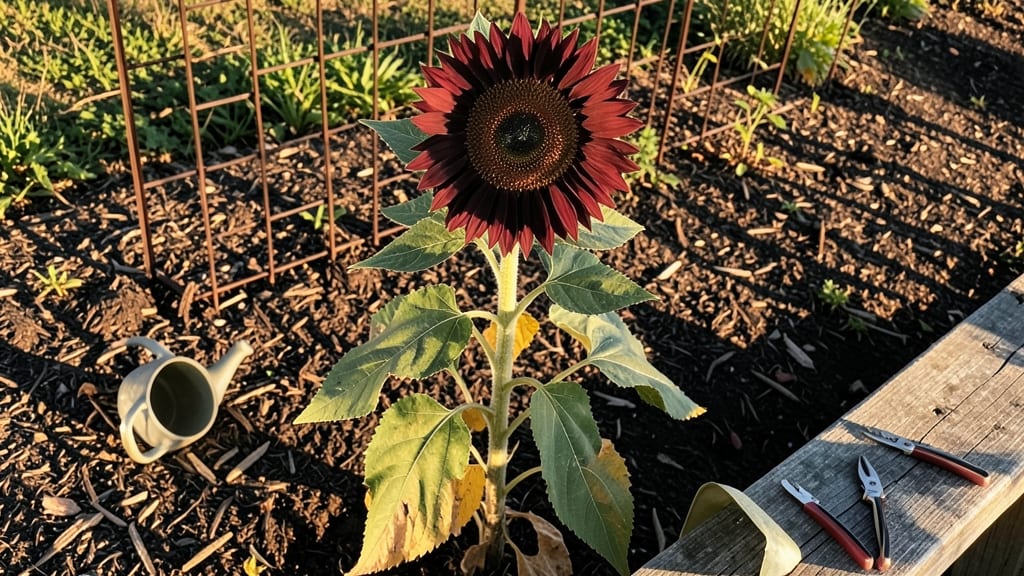
The Midnight Blaze sunflower grows taller and more dramatic than any other variety in my Pacific Northwest garden—its deep burgundy foliage and golden blooms create a showstopping contrast that neighbors stop to admire.
I planted my first batch last spring after struggling with sunflowers that flopped in cool, damp summers, and these thrived where others failed. The secret lies in mimicking their natural habitat: rich soil, consistent moisture, and patience for those towering stems to reach their full potential.
You’ll need just a few simple supplies to grow these stunners: well-draining soil amended with compost, a sunny spot (at least 6 hours of direct sun), and space—these beauties can reach 10 to 12 feet tall if given the right care.
The dark foliage makes them stand out even before the flowers bloom, and their cold-hardiness means they’ll survive our chilly summers better than most varieties. Once established, they’re surprisingly low-maintenance, though I’ve learned a few tricks to keep them reaching for the sky.
By midsummer, you’ll have sunflowers that look like they belong in a botanical garden, not your backyard. The golden blooms against the deep purple leaves create a striking focal point, and the birds will love the seeds once they mature.
The best part? These sunflowers handle our Pacific Northwest weather like champions—no wilting, no drooping, just steady, impressive growth all season long. They even tolerate light frost, making them a reliable choice for our unpredictable climate.
Whether you’re growing them as a dramatic border, a pollinator magnet, or just to wow visitors, these sunflowers deliver. The key is consistent watering (especially during bloom time) and staking for taller varieties—though I’ve found they’re sturdy enough to stand alone if planted in groups.
Ready to add some serious drama to your garden? Let’s get those seeds in the ground!
📚 In This Guide
- What you need
- Instructions
- Tips and common mistakes
- Wrapping up and next steps
What you need
- ● Seeds: Midnight Blaze sunflower seeds (1–2 packets, ~100–200 seeds total). Choose organic or heirloom varieties for best results.
- ● Growing space: Full sun (6+ hours/day) and well-draining soil. Raised beds or in-ground plots work well.
- ● Soil amendments: Compost (5–10 lbs per 10 sq ft) to enrich soil.
- ● Balanced fertilizer (10-10-10 or similar, 1–2 lbs per 10 sq ft) for nutrient boost.
- ● Watering tools: Drip irrigation or soaker hose (to avoid wetting foliage).
- ● Watering can (for seedling stage).
- ○ Support (optional but helpful): Stakes (5–6 ft tall) or tomato cages for tall varieties (6–8 ft).
- ● Seed-starting kit: If sowing indoors (biodegradable pots + grow lights).
- ● Pest deterrents: Neem oil or insecticidal soap (for aphids/spider mites).
- ● Row covers (lightweight fabric to protect seedlings).
- ● Mulch: Straw or wood chips (to retain moisture and suppress weeds).
- ● Garden journal: To track planting dates, watering, and growth progress!
Step-by-Step instructions for growing Midnight Blaze sunflowers
Here's how to grow these striking dark sunflowers—tough enough for the Pacific Northwest's unpredictable climate.
Choose the Right Location and Prepare the Soil
Pick a spot with full sun—at least 6-8 hours daily. Midnight Blaze thrives in well-draining soil with a slightly acidic to neutral pH (6.0-7.0). If your soil is heavy clay, mix in 2-3 inches of compost to improve drainage and fertility. These sunflowers tolerate cooler temperatures better than most varieties, so they're perfect for early spring or late summer plantings.
Loosen the soil to a depth of 12 inches using a garden fork or tiller. This helps roots penetrate easily and prevents waterlogging, which can cause stem rot. If you're planting in raised beds, ensure they're at least 12 inches deep to accommodate the sunflower's long taproot.
Plant Seeds at the Correct Depth and Spacing
Sow seeds ½ inch deep and 6 inches apart in rows spaced 18-24 inches apart. Planting too deep can delay germination, while shallow planting may expose seeds to drying out. For the Pacific Northwest's cooler climate, start seeds indoors 4-6 weeks before the last frost or direct-sow after soil temperatures reach 50°F.
If you're transplanting seedlings, handle them gently to avoid damaging the taproot. Water the soil thoroughly before and after planting to help settle the seeds or seedlings into place. Mulch around the base with 2-3 inches of straw or shredded leaves to retain moisture and suppress weeds.
Water Consistently and Monitor for Pests
Keep the soil evenly moist but not soggy, especially during the first 4-6 weeks of growth. Water deeply 1-2 times per week, depending on rainfall, to encourage strong root development. Avoid overhead watering once the plants are established to prevent fungal diseases like powdery mildew, which can be a problem in the Pacific Northwest's damp climate.
Watch for common pests like sunflower moths, which can bore into stems, and aphids, which may cluster on new growth. If you spot chewed leaves or holes in stems, remove affected foliage immediately. For organic control, spray plants with a mix of 1 tablespoon of dish soap per gallon of water to deter pests without harming beneficial insects.
Provide Support and Maintain Healthy Growth
As the plants grow taller, they may need support, especially in windy Pacific Northwest conditions. Install stakes or cages 6-8 feet tall near the base of each plant to prevent them from toppling over. Alternatively, you can plant sunflowers in clusters of 3-4 plants to provide mutual support.
Fertilize lightly with a balanced 10-10-10 fertilizer at planting and again when the plants reach 12 inches tall. Over-fertilizing can lead to weak stems and fewer blooms. Deadhead spent blooms by snipping off the flower heads just above the first set of healthy leaves to encourage more flowering and prolong the season.
Harvest and Enjoy Your Midnight Blaze Sunflowers
Cut stems when the flower heads are fully open but before the petals begin to brown. Use clean, sharp pruners to make a diagonal cut just above a leaf node. This encourages the plant to produce more blooms. Bundle stems with rubber bands and hang them upside down in a dry, dark place for 1-2 weeks to dry completely.
Once dry, remove the petals and save the seeds for next year's planting or use them in bird feeders. The striking dark blooms make excellent cut flowers and add drama to any garden. With proper care, Midnight Blaze sunflowers can reach heights of 8-10 feet, making them a stunning focal point in your Pacific Northwest garden.
Tips & tricks for perfect Midnight Blaze sunflower growth
Here's what I've learned after growing Midnight Blaze sunflowers in the Pacific Northwest—these tricks make all the difference for dramatic, healthy blooms.
Soil Prep Secret: In Step 1, when you're loosening that 12-inch deep soil, consider adding a handful of wood ash to raise pH slightly if your soil tests below 6.0. These sunflowers love that neutral range, and wood ash is a natural, budget-friendly way to adjust without harsh chemicals. I've found this especially helpful in our region's naturally acidic soils.
Timing is Everything: For Step 2, don't rush those 4-6 weeks before last frost for indoor starts. If you're in a cooler microclimate, push to the longer end of that range—cooler indoor temps slow germination. I've had better success with 6 weeks in my unheated garage than 4 weeks in a warm kitchen. Also, use a seedling heat mat if your indoor space stays below 65°F.
Pacific Northwest Pest Watch: In Step 3, when monitoring for pests, keep an extra eye out for slugs—they love young sunflower leaves. I've found that spreading 2-3 inches of coarse sand around seedlings creates a natural barrier they won't cross. And for that dish soap spray, I mix it in a spray bottle first to avoid getting soapy water on leaves, which can burn them in our damp climate.
Support System: For Step 4, when installing those 6-8 foot stakes, drive them in at a 45-degree angle about 6 inches deep—this gives much better stability in windy conditions. I've seen sunflowers topple even with stakes when they're planted too shallow. Also consider using bamboo stakes—they're cheaper and just as effective as metal ones.
Pro Tips for Midnight Blaze Sunflower
- Here's what I've learned after growing Midnight Blaze sunflowers in the Pacific Northwest—these tricks make all the difference for dramatic, healthy blooms.
- Soil Prep Secret: In Step 1, when you're loosening that 12-inch deep soil, consider adding a handful of wood ash to raise pH slightly if your soil tests below 6.0.
- Timing is Everything: For Step 2, don't rush those 4-6 weeks before last frost for indoor starts.
Frequently asked questions
Got questions about growing Midnight Blaze sunflowers in the Pacific Northwest? You’re not alone!
Here are answers to the most common concerns—from planting to pest troubleshooting—so you can grow this stunning cold-hardy variety with confidence.
How cold can Midnight Blaze sunflowers tolerate?
Midnight Blaze sunflowers are exceptionally cold-hardy, surviving temperatures as low as 15°F (-9°C). They thrive in the Pacific Northwest’s chilly springs and late summers, making them ideal for early planting (as soon as soil is workable). Start seeds indoors 4–6 weeks before the last frost or direct-sow outdoors—just ensure well-draining soil to prevent rot in damp conditions.
When is the best time to harvest Midnight Blaze seeds?
Harvest seeds when the back of the flower head turns brown and the petals fall off naturally (usually 8–10 weeks after planting). Wait until morning dew dries to avoid moisture, then cut the head and hang it upside down in a dry, dark place for 2–3 weeks to fully dry. Rub seeds from the head once completely dry—store in a cool, dark spot for up to 2 years.
What pests should I watch for with Midnight Blaze sunflowers?
The biggest threats are sunflower moths, aphids, and bird damage. Use row covers early in the season to deter moths, and spray aphids with neem oil or insecticidal soap. For birds, try netting over young plants or reflective tape. Midnight Blaze’s dark petals can also attract spider mites in dry heat—keep soil moist and prune lower leaves for airflow.
Can I grow Midnight Blaze in containers?
Yes! These sunflowers adapt well to large containers (15+ gallons) with 12–18 inches of depth. Use a fast-draining mix (like 60% potting soil, 30% perlite, 10% compost) and place pots in full sun. Stake or cage tall varieties early to prevent tipping. Just ensure containers stay consistently moist—container-grown plants dry out faster than in-ground ones.
What are good companion plants for Midnight Blaze?
Pair Midnight Blaze with basil, marigolds, or borage to repel pests naturally. Avoid planting near potatoes or tomatoes, as they compete for nutrients. For a Pacific Northwest-friendly garden, try dwarf beans, lettuce, or nasturtiums—they thrive in similar conditions and add color/texture. Plus, sunflowers act as living trellises for climbing plants like peas!
Wrapping up and next steps
The Midnight Blaze sunflower isn’t just a stunning addition to your Pacific Northwest garden—it’s a resilient, low-maintenance superstar that thrives in cooler climates and repels pests like a champ! 🌻 With the right prep (well-draining soil, full sun, and a little pest vigilance), you’ll be rewarded with months of bold, velvety blooms that turn heads—and deter critters.
Whether you’re a seasoned gardener or a curious beginner, this sunflower proves that beauty and functionality grow together.
Ready to plant your own drama? Grab those seeds, mark your calendar for late spring, and watch your garden transform into a Midnight Blaze masterpiece. Start sketching your sunflower layout today! 🌱✨