
Shrubs
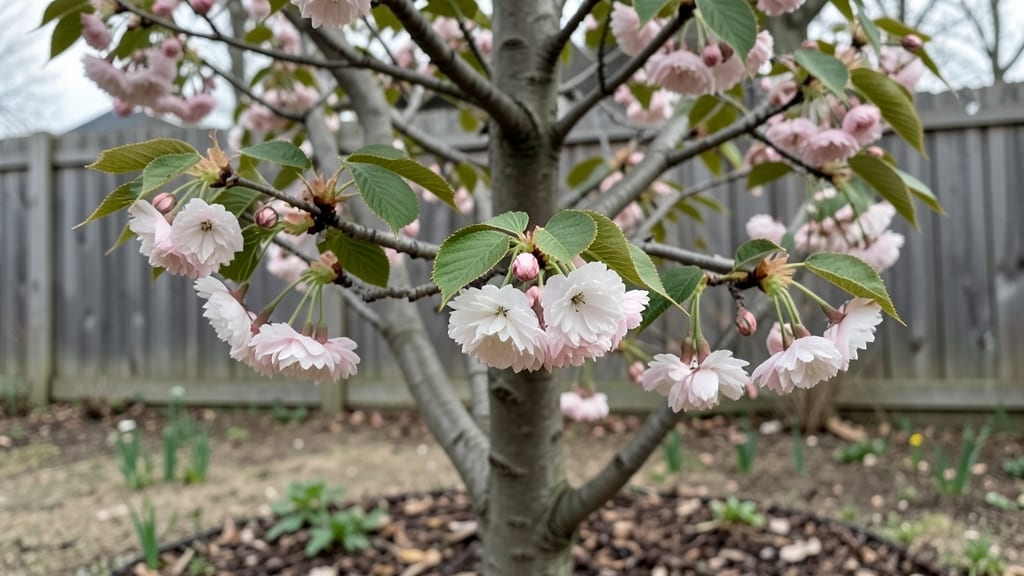
The Okame flowering cherry delivers stunning spring blooms even in the Pacific Northwest’s frost-prone climate. ✨ I’ve watched mine burst into pink clouds every March, proving that this compact tree thrives where others falter.
The secret lies in its frost-resistant branches—they handle freeze-thaw cycles better than most cherries, and with the right pruning, you’ll get healthier blooms year after year.
This tree loves well-draining soil and full sun, but it’s forgiving about both. My first mistake? Over-pruning after blooming—now I wait until late summer to shape it, letting the flowers set for next spring.
The compact size (15–25 feet) makes it perfect for small yards or container growing, and its early blooms feed pollinators when little else is in flower.
You’ll end up with a tree that outperforms most flowering cherries in cold climates. The blooms last weeks, the foliage turns golden in fall, and the branches stay sturdy through winter storms.
The key is light pruning—just enough to open the center and remove dead wood. No drastic cuts needed.
Works beautifully in zones 5–8, whether planted in the ground or a large container. Once established, it’s low-maintenance but high-reward—exactly the kind of tree that makes neighbors stop and stare. Let’s get yours thriving!
📚 In This Guide
- What you need
- Instructions
- Tips and common mistakes
- Wrapping up and next steps
What you need
- ● Pruning shears: Bypass pruners (sharp, clean, and not dull—think of them as your cherry tree’s tiny scalpels!). Quantity: 1 pair (or 2 if you’re pruning multiple trees).
- ● Loppers: For thicker branches (½"–1½" diameter). Quantity: 1 pair.
- ● Hand saw: For branches too thick for loppers (1½"–4"). Quantity: 1 (with a fine-tooth blade).
- ● Disinfectant: 70% isopropyl alcohol or a blank">pruning sealant (to prevent disease spread). Quantity: Small bottle or spray.
- ● Garden gloves: Cut-resistant and snug (no loose gloves—safety first!). Quantity: 1 pair.
- ○ Pruning saw: Optional but handy for stubborn branches (like a chefs’ knife for your tree’s stubborn bits).
- ● Weather: A dry day (no rain in the forecast—wet wood splinters and invites pests).
- ● Time: Early spring (before buds swell) or late winter (when the tree is dormant).
- ● Safety gear: Safety glasses (to shield against debris) and a sturdy ladder (if your tree is tall).
- ● Cleanup supplies: A bucket or bag for clippings (compost them later—no waste!).
- ● 🔥 Sharpen your tools: Dull blades crush branches, causing damage. A quick blank">honing session goes a long way!
- ● 🌡️ Work when it’s cool: Prune in the morning or evening to avoid stressing the tree (or yourself) in the PNW’s unpredictable weather.
- ● ✨ Label your tools: Use a tool roller or labeled bag to keep shears, loppers, and saws organized (and avoid the "oops, wrong tool" moment).
Step-by-Step guide to pruning Okame flowering cherry trees
This is how I keep my Okame cherries thriving in the PNW's unpredictable climate.
✂️ Step 1: Time Your Pruning for Optimal Growth
Prune your Okame flowering cherry immediately after blooming in late spring, around May or early June. This timing ensures you don’t remove next year’s flower buds, which form on last year’s growth. I always wait until after the last frost—pruning too early risks exposing tender new growth to cold snaps.
If you missed the window, you can do light maintenance pruning in late summer (August) to shape the tree, but avoid heavy cuts. The key is to never prune in fall or winter—this tree’s frost resistance depends on dormant buds staying intact.
🌿 Step 2: Remove Dead, Diseased, or Weak Wood First
Start by inspecting the tree for dead, crossing, or diseased branches. Use clean, sharp pruning shears to make 45-degree cuts just outside the branch collar—the swollen area where the branch meets the trunk. I always disinfect my tools with rubbing alcohol between cuts to prevent spreading disease.
Look for thin, leggy branches growing inward—they compete with stronger limbs and reduce air circulation. Remove these first, as they’re the easiest to spot. You’ll know you’re on the right track when the tree’s center opens up, allowing sunlight to reach the core.
✂️ Step 3: Thin Out for Better Airflow and Light
Selectively remove 20-30% of the tree’s branches to improve airflow and light penetration. Focus on overlapping branches and those growing toward the center. I like to step back every few cuts to visualize the tree’s shape—this helps me avoid over-pruning.
For larger branches over ½ inch thick, use pruning saws and make cuts just outside the branch collar. For smaller branches, clean cuts with shears are fine. The goal is to open the canopy without sacrificing the tree’s natural form—Okame cherries reward patience with stunning spring blooms.
🌱 Step 4: Shape the Tree for Balance and Bloom
Now’s the time to refine the tree’s shape. Okame cherries respond well to open-center pruning, so avoid creating a dense, umbrella-like top. I focus on maintaining a slightly rounded silhouette while keeping the lower branches intact for winter interest.
If the tree is too tall or leggy, you can head back (shorten) the main branches by cutting just above a outward-facing bud. This encourages bushier growth. Just avoid heavy topping—it can reduce next year’s flowers. A well-pruned Okame cherry should look balanced and airy, not hacked.
💧 Step 5: Post-Pruning Care for Strong Recovery
After pruning, water deeply to help the tree recover. I apply a 2-3 inch layer of mulch around the base (but not touching the trunk) to retain moisture and regulate soil temperature. This is especially important in the PNW’s wet winters—mulch prevents root rot while keeping roots warm.
Monitor the tree for new growth in the following weeks. If you see vigorous shoots, that’s a good sign—it means the tree is responding well. Avoid fertilizing immediately after pruning; wait until late summer to feed if the tree looks stressed. A lightly pruned Okame cherry will reward you with abundant blooms next spring.
Tips & tricks for perfect Okame flowering cherry pruning
A few key insights will help you master pruning this resilient PNW tree without sacrificing next year's spectacular blooms.
Timing is Everything: The late spring window (after blooming but before May's end) is non-negotiable for Okame cherries. I've learned this the hard way—pruning too early risks removing next year's flower buds, which form on last year's wood. If you miss this window, the August maintenance pruning is your only option, but keep cuts minimal to avoid stressing the tree. The PNW's unpredictable frost dates make this timing even more critical.
Tool Preparation Matters: Never skip disinfecting your pruning tools between cuts—especially when dealing with potential disease in Step 2. I use rubbing alcohol on a cloth between each branch, and I've seen how quickly fungal issues can spread when tools aren't properly sanitized. For larger branches over ½ inch thick (mentioned in Step 3), invest in a quality pruning saw—cheap tools can tear the bark, inviting pests and disease.
Visual Cues for Proper Cuts: When making those critical 45-degree cuts just outside the branch collar (Step 2), look for the slight swelling where the branch meets the trunk. This collar is your guide—cutting too close can damage the tree's healing ability. For shaping in Step 4, I step back every few cuts to visualize the tree's silhouette. This helps me maintain that open-center form while keeping the lower branches for winter interest.
PNW-Specific Care Tips: The 2-3 inch mulch layer (Step 5) is your best defense against the PNW's wet winters. I've seen how quickly roots can suffer in our soggy climate without proper insulation. After pruning, I always water deeply to help the tree recover—this is especially important if you've done any significant shaping. The tree's frost resistance depends on keeping those dormant buds healthy through winter.
Pro Tips for Okame Flowering Cherry
- A few key insights will help you master pruning this resilient PNW tree without sacrificing next year's spectacular blooms.
- Timing is Everything: The late spring window (after blooming but before May's end) is non-negotiable for Okame cherries.
- Tool Preparation Matters: Never skip disinfecting your pruning tools between cuts—especially when dealing with potential disease in Step 2.
Frequently asked questions
Got questions about the okame flowering cherry? You’re not alone! Here are answers to some of the most common ones—whether you're a first-time grower or a seasoned gardener looking to refine your care routine.
How cold-hardy is the okame flowering cherry?
The okame flowering cherry (Prunus incisa) is one of the toughest cherry varieties, thriving in USDA Zones 5-8. It can handle temperatures as low as -20°F (-29°C), making it perfect for the Pacific Northwest’s frosty winters. Just ensure it’s planted in well-draining soil to avoid root rot in waterlogged conditions.
When is the best time to prune okame flowering cherry?
Prune your okame cherry right after flowering (late spring) or in early winter (dormant season). Avoid pruning in fall, as new growth may not harden off before frost. Focus on removing dead, crossing, or overcrowded branches to encourage vibrant blooms and airflow.
Can I grow an okame flowering cherry in a container?
Yes! Okame cherries adapt well to containers if given at least 15-gallon pots and well-draining soil. Use a mix of 50% potting soil, 30% compost, and 20% perlite. Keep it in a sunny spot and water regularly, but avoid soggy roots. Repot every 2-3 years to refresh nutrients.
What pests or diseases should I watch for?
Okame cherries are generally low-maintenance, but keep an eye out for aphids, spider mites, or scale insects. Treat infestations early with neem oil or insecticidal soap. Bacterial canker is another risk—prune infected branches immediately and sterilize tools with 70% isopropyl alcohol to prevent spread.
How fast does an okame flowering cherry grow?
Expect slow to moderate growth, averaging 12-24 inches per year. With proper care, it can reach 15-25 feet tall and 10-15 feet wide over 10-15 years. Patience pays off—its stunning spring blooms are worth the wait! For faster results, fertilize lightly in early spring with a balanced 10-10-10 formula.