
Size
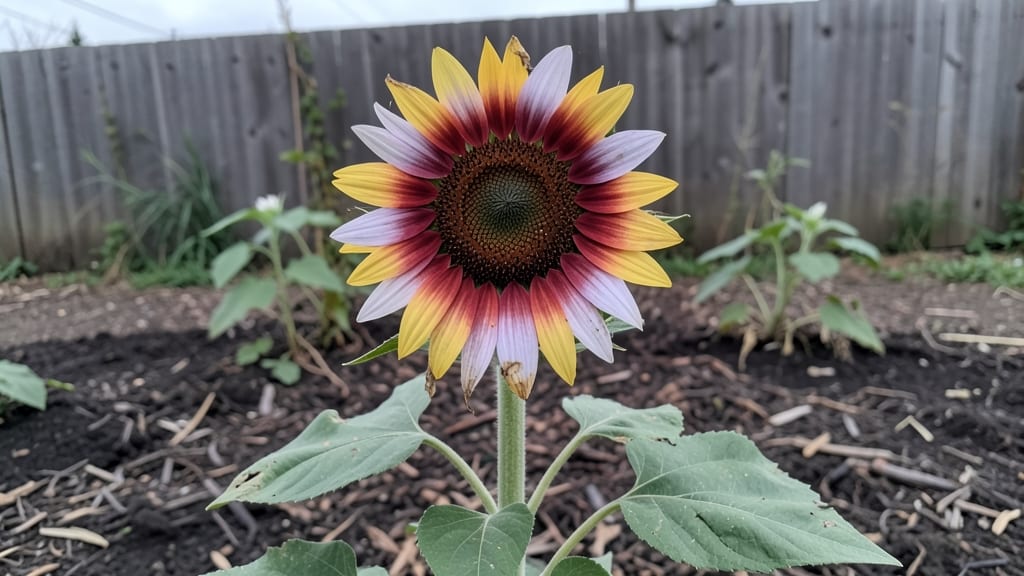
Growing rainbow sunflowers from seed is like painting with nature—each bloom becomes a burst of color that brightens every corner of your garden. 🌻 The secret starts with choosing the right seeds: 'Autumn Booster', 'Moulin Rouge', or 'Teddy Bear' varieties offer vibrant streaks of red, orange, and yellow that will make your neighbors stop and stare.
These aren't just flowers; they're conversation starters and pollinator magnets that turn a simple patch of soil into a summer spectacle.
You'll need full sun—at least 6-8 hours daily—and well-draining soil mixed with compost to give those roots the rich start they crave. Plant seeds 1 inch deep in early spring after the last frost, spacing them 6-12 inches apart depending on the variety.
The key? Patience. Germination takes 7-14 days, and while you wait, keep the soil consistently moist but never soggy—think damp sponge, not swamp.
Within 8-10 weeks, you'll see those towering stems emerge, each one a promise of 4-6 foot tall bursts of color. Stake taller varieties early to prevent flopping, and watch as bees, butterflies, and birds flock to your garden.
The blooms last 2-3 weeks, but the stems remain decorative—perfect for drying or turning into rustic centerpieces. Every season, this simple patch becomes the heart of your outdoor space.
Even better? Sunflowers are pest-resistant and thrive with companion plants like beans, corn, or marigolds. They cleanse the soil, suppress weeds, and attract beneficial insects. Whether you're a first-time gardener or a seasoned pro, these sunflowers deliver bold, foolproof beauty with minimal fuss. Let's get those seeds in the ground!
📚 In This Guide
- What you need
- Instructions
- Tips and common mistakes
- Wrapping up and next steps
What you need
- ● Rainbow sunflower seeds – Choose a mix of heirloom varieties (e.g., Autumn Booster, Italian White, or Teddy Bear) for bold colors. Buy 1–2 seed packets (about 50–100 seeds) per variety.
- ● Well-draining potting mix or garden soil – 5+ gallons of organic, nutrient-rich soil (or compost-amended garden beds).
- ● Containers or garden space – 5–6 inch deep pots (if container-growing) or a sunny, open garden bed (at least 3–4 feet wide for full-grown plants).
- ○ Organic fertilizer – A balanced 10-10-10 or compost to boost growth (optional but recommended).
- ● Gloves & knee pads – For comfortable planting.
- ● Watering can or hose with a gentle spray nozzle – Sunflowers need 1–2 inches of water weekly.
- ● Plant markers or labels – To track seed varieties (especially if mixing colors!).
- ○ Stakes or trellis (optional) – For tall varieties like Russian Giant (6+ feet).
- ○ Mulch (optional) – Straw or shredded leaves to retain moisture.
Step-by-step instructions for growing rainbow sunflowers from seed
Sunflowers bring instant joy to any garden—here's how to grow vibrant, sturdy plants from seed.
🌱 Step 1: Prepare the Soil and Plant Seeds at the Right Depth
Sunflower seeds need loose, well-draining soil to establish strong roots. Work in 2-3 inches of compost into the top 6 inches of soil to improve fertility and drainage. Sunflowers thrive in full sun (at least 6-8 hours daily), so choose a location with no afternoon shade. Use a trowel to create planting holes 1 inch deep—any deeper delays germination.
Drop 2-3 seeds per hole (they germinate quickly), then cover lightly with soil. Space holes 12-18 inches apart for single-stem varieties or 24 inches apart for larger types like 'Russian Giant'. Water gently but thoroughly after planting to settle the soil around the seeds. I like to use a fine-mesh spray nozzle to avoid displacing seeds.
☀️ Step 2: Provide Consistent Moisture and Monitor for Germination
Keep the soil evenly moist (not soggy) until germination, which typically occurs in 7-14 days depending on temperature. Sunflowers dislike dry spells early on, so check soil moisture daily by pressing your finger 1 inch deep. If it feels dry, water deeply—1 gallon per plant—until water runs out the drainage holes.
Once seedlings emerge, thin to the strongest plant per hole. Use clean scissors to snip weak stems at soil level—this prevents disease spread from damaged roots. Leave 6-8 inches of space between remaining plants to allow airflow and reduce fungal risks. You'll see first true leaves (not the initial seed leaves) appear within 10-14 days after germination.
💧 Step 3: Fertilize and Support for Strong Stems and Blooms
When plants reach 12 inches tall, apply a balanced fertilizer (10-10-10) at half strength to encourage bushy growth. Sunflowers are heavy feeders, so repeat this every 4-6 weeks during the growing season. I also mix in 1 tablespoon of bone meal per plant at planting time for extra phosphorus—this boosts root and flower development.
Tall varieties (over 5 feet) need staking to prevent toppling. Install 3-foot bamboo stakes or metal plant supports at planting and tie stems loosely with soft plant ties as they grow. Avoid tight binding—sunflowers need room to sway in the wind, which strengthens their stems. Watch for pollen sacs forming at the center of buds; this signals blooms will open in 7-10 days.
✂️ Step 4: Deadhead and Maintain for Continuous Blooms
To extend the flowering season, deadhead spent blooms by snipping off the entire flower head (including the stem below the bud). This redirects energy to lower buds, encouraging secondary blooms on the same stem. Harvest seeds from the first flowers by waiting until the back of the bloom turns yellow and the seed head feels dry—then twist gently to remove.
Sunflowers are drought-tolerant once established, but water deeply once weekly during dry spells. Mulch with 2 inches of straw around the base to retain moisture and suppress weeds. If leaves yellow between veins, it's a sign of magnesium deficiency—apply Epsom salt (1 tablespoon per gallon of water) as a foliar spray to correct it.
⏰ Step 5: Prepare for Winter and Save Seeds for Next Year
After the first frost blackens the foliage, cut stems down to 6 inches above ground level. Leave the seed heads on the plants over winter—they provide food for birds and add winter interest. In early spring, collect any remaining seeds by shaking them from dry heads into a paper bag. Store seeds in a cool, dry place for up to 2 years.
Sunflowers self-seed readily, so you'll likely find volunteers popping up the following spring. Thin these naturally occurring plants to 12-18 inches apart for optimal growth. The key to stunning rainbow sunflowers? Patience and consistent care—these bold beauties reward attention with towering color all season long.
Tips & tricks for growing rainbow sunflowers from seed
These pro tips will help you avoid common pitfalls and grow sunflowers that'll make your garden the talk of the neighborhood.
Soil Preparation Secret: Before adding compost, till the soil to break up any compacted layers—sunflower roots need to penetrate easily. I like to work in a shovel full of sand or perlite if my soil is particularly heavy, which improves drainage and prevents root rot. The goal is loose, crumbly soil that feels like a sponge when squeezed.
Germination Timing: The 7-14 day germination window depends heavily on soil temperature—warmer soil (70-80°F) speeds it up, while cooler soil (below 60°F) slows it down. If germination takes longer than 14 days, gently scratch the soil surface to aerate it without disturbing the seeds. You can also place a clear plastic dome or row cover over the bed to create a mini greenhouse effect and encourage faster sprouting.
Thinning Strategy: Don't rush to thin seedlings! Wait until they're at least 2 inches tall with their first true leaves (the second set after the initial seed leaves). This gives you a better chance to identify the strongest plants. I use a small trowel to carefully lift weaker seedlings rather than pulling—they'll transplant beautifully to another spot in your garden.
Fertilizer Timing: The half-strength 10-10-10 application at 12 inches tall is crucial, but don't overdo it. Too much nitrogen early on will produce lush foliage at the expense of flowers. I also recommend a second application when you see pollen sacs forming—this gives the plant a final boost right before blooming. For organic gardeners, fish emulsion works well as a nitrogen source at half strength.
Pro Tips for Rainbow Sunflower Seed Grow A Garden
- These pro tips will help you avoid common pitfalls and grow sunflowers that'll make your garden the talk of the neighborhood.
- Soil Preparation Secret: Before adding compost, till the soil to break up any compacted layers—sunflower roots need to penetrate easily.
- Germination Timing: The 7-14 day germination window depends heavily on soil temperature—warmer soil (70-80°F) speeds it up, while cooler soil (below 60°F) slows it down.
Frequently asked questions
about growing rainbow sunflowers—because every gardener deserves a little extra sunshine!When is the best time to plant rainbow sunflower seeds?
Plant seeds after the last frost when soil temperatures reach at least 50°F (10°C). For most U.S. zones, this means late spring (April–June). In warmer climates, you can even plant in early spring or fall for a second bloom! Direct-sow seeds ½–1 inch deep, 6–12 inches apart.
How long does it take for rainbow sunflowers to grow from seed to bloom?
Most varieties bloom in 8–10 weeks from seed, depending on sunlight and soil quality. Dwarf types may take slightly longer (10–12 weeks), while giant varieties can bloom in 60–90 days. Patience pays off—those vibrant petals are worth the wait!
Can I grow rainbow sunflowers in containers or small spaces?
Dwarf varieties (like ‘Moulin Rouge’ or ‘Teddy Bear’) thrive in 5–10 gallon containers with drainage. Use well-draining potting mix and place in full sun (6+ hours/day). Just ensure containers are at least 12 inches deep for larger roots.
Why aren’t my rainbow sunflower seeds germinating?
Check these common issues:
- Cold soil: Wait until soil is warm (50°F+). Use a heat mat if needed.
- Too deep: Plant seeds no deeper than 1 inch.
- Poor moisture: Keep soil consistently moist (not soggy) until sprouts appear.
- Old seeds: Use seeds from the current year for best results.
How do I keep my sunflowers from leaning or falling over?
Use stakes or cages (6–8 feet tall) for tall varieties. Plant in full sun (6+ hours/day) and water at the base (not leaves) to avoid weak stems. For windy areas, add trellis support or group plants closely to brace each other.
Wrapping up and next steps
Growing rainbow sunflowers is a vibrant, rewarding journey that brings both beauty and joy to your garden! 🌈 From selecting the right seeds to nurturing them into towering, colorful blooms, every step is an opportunity to connect with nature.
Whether you're a beginner or a seasoned gardener, these bold flowers will add a splash of color and life to your outdoor space.
Now that you’re armed with tips and answers, it’s time to take action. Grab your seeds, find a sunny spot, and let your garden bloom with creativity and color! Happy planting—your future sunflowers are waiting! 🌱