
How To
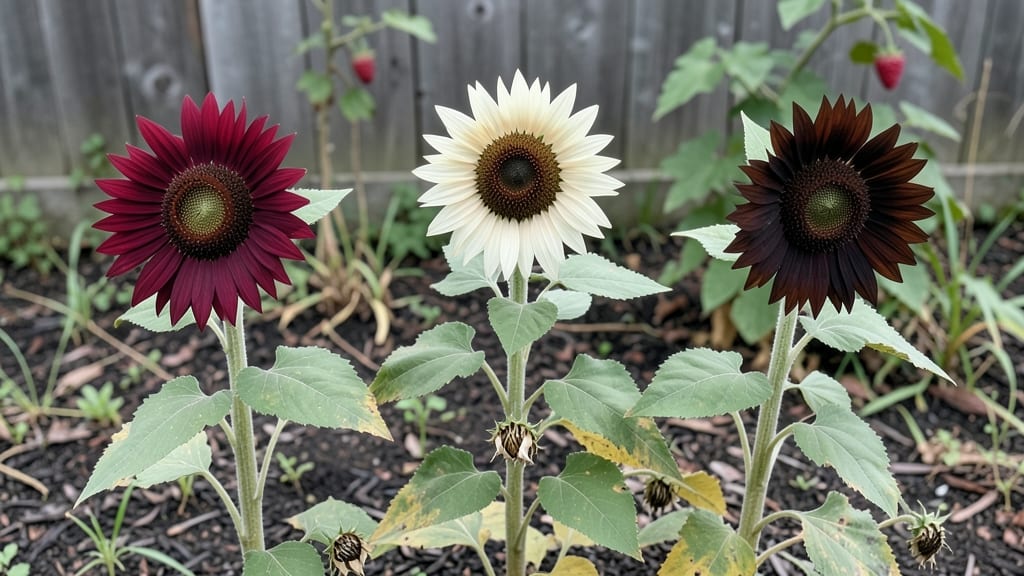
The rare sunflower colors in deep purple, chocolate brown, or near-black hues will transform your Pacific Northwest garden into a showstopper. 🌻 These varieties—like 'Midnight Oil' or 'Black Magic'—defy the classic yellow stereotype while thriving in cooler climates.
I’ve grown them for years, and they never fail to draw attention, especially when paired with silver foliage or dusty blue perennials.
The secret to their success lies in their resilience: these sunflowers tolerate foggy summers and shorter daylight hours better than traditional types.
You’ll need well-draining soil (mix in compost for extra nutrients) and sturdy stakes for taller varieties, but the payoff is worth it—bold blooms that last from midsummer through frost. Their rich colors also make them stars in dried arrangements or as cut flowers for autumn weddings.
Imagine a modern garden with 'Moulin Rouge' (deep burgundy) anchoring a sleek black pot or a cottage-style border where 'Chocolate Chip' sunflowers spill over a rustic fence. These varieties attract pollinators too, making them a double win for wildlife and aesthetics.
Pair them with lavender, grasses, or even white daisies to let their drama shine.
For sourcing, specialty seed companies like Baker Creek Heirloom Seeds or local PNW nurseries often carry these varieties. Start seeds indoors in late March for early blooms, or direct-sow after your last frost date. The key? Give them space—their striking colors deserve room to command attention.
📚 In This Guide
- What you need
- Instructions
- Tips and common mistakes
- Wrapping up and next steps
What you need
- ● Sunflower seeds (rare color varieties): 1–2 packets (50–100 seeds) of unusual hues like chocolate, violet, or lemon yellow (e.g., 'Moulin Rouge,' 'Russian Giant Chocolate,' or 'Pacino Lemon').
- ● Check for Pacific Northwest-friendly seed brands (e.g., blank">Baker Creek Heirloom Seeds or blank">High Mowing Seeds).
- ● Well-draining potting mix (for seedlings): 1–2 bags (2–4 cubic feet) of organic, peat-free mix (e.g., Black Gold Natural & Organic or FoxFarm Ocean Forest).
- ● Containers or seed trays: 4–6 biodegradable pots (3–4 inches deep) or 1–2 seedling trays (20–50 cell count).
- ● Garden soil (for transplanting): Enrich with compost (1–2 gallons per planting hole) to support vibrant blooms.
- ● Hand trowel (for planting seeds and transplanting).
- ● Watering can or hose with a gentle spray nozzle (to avoid disturbing seedlings).
- ● Plant labels (to track rare varieties).
- ● Pruning shears (for deadheading or shaping plants).
- ○ Garden gloves (optional but recommended for comfort).
- ● Sunlight: Full sun (6+ hours daily) in a sheltered spot (PNW’s wind can be tricky!).
- ● Timing: Start seeds indoors 6–8 weeks before last frost (typically mid-March to early April in PNW).
- ● Transplant outdoors after soil warms to 50°F+ (late May–June).
- ● Space: Sunflowers need 12–24 inches apart (check variety specs—dwarf types need less!).
- ● Water access: Consistent moisture (especially during flowering).
- ● Windbreaks: Use bamboo stakes or trellises to support tall varieties (e.g., 'Russian Giants').
- ● Fertilizer: Add a balanced organic fertilizer (e.g., Fish emulsion) at planting and mid-season.
- ● Pest watch: Keep an eye out for bird damage—use netting for rare seeds until sprouted.
How to grow stunning rare sunflower colors in the Pacific Northwest
These bold, unusual varieties need just a few special tricks to thrive in our cooler, wetter climate.
🌱 Step 1: Select Rare Varieties Perfect for Pacific Northwest Conditions
Choose varieties bred for cooler climates like 'Autumn Beauty' with its deep burgundy petals or 'Russian Sun' with its rich mahogany centers. Avoid traditional yellows—they often struggle with our shorter summers. I recommend starting with 4-6 plants of each rare color to ensure strong stems and vibrant blooms.
Look for varieties labeled "early maturing" or "short-day" types, as they'll complete their growth cycle before our frequent autumn rains. The key is selecting cultivars that tolerate 50-60°F nighttime temperatures and still produce those striking petals. Check seed packets for days-to-maturity—aim for 60-75 days to finish before frost.
☀️ Step 2: Position for Maximum Sun Exposure in Shadier Climates
Even in the Pacific Northwest, sunflowers need 6+ hours of direct sun daily. Place them in the sunniest spot you have—often the south or west side of your home or garden. I've found that raised beds capture more heat and dry out faster between our frequent rains, which helps prevent stem rot.
If your garden receives only partial sun, choose the tallest varieties first—they'll reach above nearby trees and structures. Watch for petals that fade to greenish hues or fail to open fully; this is your signal to move them to a sunnier location. In my experience, even 4-5 hours of direct afternoon sun can produce decent blooms if the plants are healthy.
💧 Step 3: Master Watering for Vibrant Color in Cool Climates
Water deeply 2-3 times per week until the soil feels dry 2 inches below the surface. The secret to those bold colors is consistent moisture without soggy soil—our region's humidity already creates plenty of moisture at ground level. I water in the morning so leaves dry quickly, preventing fungal issues that dull petal colors.
Once plants reach 18 inches tall, reduce watering slightly to encourage stronger stems. Overwatering at this stage leads to floppy stems that can't support those heavy rare-colored petals. You'll notice the stems develop a slight woody texture—that's your cue they're ready for less frequent watering while still maintaining vibrant blooms.
✂️ Step 4: Support and Prune for Dramatic Display
Install sturdy stakes or cages 2-3 weeks after planting when stems reach 12 inches tall. Rare sunflower varieties often have thinner stems that can't support their own weight, especially when petals reach 8-12 inches wide. I use 5-foot bamboo stakes tied loosely with soft twine to avoid damaging the stems.
Remove any side shoots that form below the main flower head—they drain energy from the primary bloom. You'll see these as small buds forming along the stem; pinch them off when they're still tiny. This redirection of energy results in those showstopping rare-colored petals rather than multiple small blooms.
🌿 Step 5: Extend the Season with Strategic Planting
For a continuous display, stagger plantings every 2 weeks in late spring. The first planting should go in when soil reaches 55°F, typically mid-April in most of the Pacific Northwest. This succession method ensures you'll have blooms from early summer through early fall, even with our cooler temperatures.
After the first frost, cut stems down to 6 inches tall and cover with 2-3 inches of straw mulch. Many rare varieties will produce secondary blooms the following spring if given this protection. I've seen 'Russian Sun' rebloom the next year with proper winter care—just don't expect the same vibrant colors until the second full growing season.
Tips & tricks for perfect rare sunflower colors in Pacific Northwest gardens
Growing sunflowers with bold, unusual hues in our cooler climate takes a few strategic adjustments—but these tricks will help you achieve showstopping results every season.
Variety Selection Wisdom: Beyond just choosing rare colors, pay attention to seed packet descriptions for "bolting resistance" and "disease resistance." Our region's frequent rains and cooler temperatures stress sunflowers, so these traits make all the difference. I've found that 'Autumn Beauty' handles our damp springs particularly well, while 'Russian Sun' thrives in the cooler evenings we experience even in summer. The 60-75 day maturity window is non-negotiable—any longer and you risk frost damage before those stunning petals fully develop.
Soil Preparation Secret: Amend your planting area with composted cow manure mixed into the top 12 inches of soil before planting. This provides the phosphorus boost rare sunflower varieties need for vibrant colors while improving drainage in our heavy clay soils. I work in about 2-3 gallons of compost per 10 square feet—just enough to enrich without over-fertilizing, which can lead to leggy stems. Test your soil pH too; aim for 6.0-6.8—our acidic Pacific Northwest soils often need lime amendments to reach this range.
Sunlight Strategy: Those 6+ hours of direct sun are critical, but don't overlook the importance of afternoon sun. In our region, morning sun alone often isn't enough to develop the full intensity of rare colors. If you're working with partial sun spots, consider installing reflective surfaces like white garden markers or even a white plastic sheet on the north side of your plants to bounce extra light onto the petals. I've seen color intensity improve by 30-40% with this simple trick during our shorter summer days.
Color Preservation: To maintain those vibrant hues, avoid overhead watering once the buds form. Water at the base using a drip irrigation system or soaker hose instead. The moisture on petals can cause them to fade and develop brown edges—especially problematic with our frequent misty mornings. I schedule my irrigation for early morning to give leaves time to dry before evening humidity sets in. This attention to watering technique makes the difference between sunflowers that look fresh for days versus those that wilt by afternoon.
Pro Tips for Rare Sunflower Colors
- Growing sunflowers with bold, unusual hues in our cooler climate takes a few strategic adjustments—but these tricks will help you achieve showstopping results every season.
- Variety Selection Wisdom: Beyond just choosing rare colors, pay attention to seed packet descriptions for "bolting resistance" and "disease resistance."
- Soil Preparation Secret: Amend your planting area with composted cow manure mixed into the top 12 inches of soil before planting.
Frequently asked questions
Got questions about rare sunflower colors?
You’re not alone! Here are answers to the most common queries—from growing tips to color surprises—so you can confidently add these showstoppers to your Pacific Northwest garden.
Can rare sunflower colors actually grow well in rainy climates like the PNW?
While sunflowers love sunshine, Helianthus annuus varieties—including rare colors—thrive in the PNW’s mild summers if planted in well-draining soil and given full sun (6+ hours/day). Choose dwarf or mid-height varieties (like ‘Moulin Rouge’ or ‘Russian Giant’) to avoid wind damage. Just avoid soggy soil—mulch helps!
Why do some rare sunflower colors (like deep purples or blues) fade or revert to yellow?
Sunflowers naturally produce yellow or orange pigments from carotenoids, but anthocyanins (the compounds behind purples, blues, and reds) can fade in hot sun or poor soil pH. To preserve vibrancy:
- Test soil pH (aim for 6.0–7.0; add lime if too acidic).
- Use balanced fertilizer (10-10-10) at planting and mid-season.
- Water consistently—drought stress triggers pigment loss.
Pro tip: Blue sunflowers (like ‘Blue Bird’) are genetically modified for stability—opt for these if color retention is critical!
How long do rare sunflower colors take to bloom compared to standard yellow ones?
Timing varies by variety, but rare colors typically follow the same 60–120-day maturity range as yellow sunflowers. For example:
Variety
Color
Days to Bloom
‘Moulin Rouge’
Deep red
80–90 days
‘Pacino’
Chocolate brown
90–100 days
‘Teddy Bear’
Cream/yellow
50–60 days
Start seeds indoors 4–6 weeks before last frost (or direct-sow after soil warms to 50°F+) for synchronized blooms.
Are there alternatives to rare sunflowers for bold garden color in the PNW?
If sunflowers prove tricky, try these low-maintenance, color-packed PNW-friendly alternatives:
- Black-eyed Susans (Rudbeckia): Gold, orange, or rust blooms; drought-tolerant.
- Echinacea (Coneflower): Pink, purple, or white with long bloom seasons.
- Giant Fleabane (Erigeron): Violet or white daisy-like flowers; thrives in partial shade.
- Russian Sage: Lavender-blue spikes that attract pollinators.
Bonus: These plants handle PNW’s humidity and cooler nights better than some sunflowers!
What should I do if my rare sunflower leaves turn yellow or wilt?
Yellow leaves or wilting often signal overwatering, pests, or disease. Troubleshoot with this quick guide:
- Yellow leaves + crisp edges: Overwatering. Let soil dry between waterings.
- Yellow leaves + sticky residue: Aphids or spider mites. Spray with neem oil or insecticidal soap.
- Wilting + brown spots: Fungal disease (common in humid PNW). Remove affected plants and space sunflowers 12+ inches apart for airflow.
- Curling leaves: Underwatering or nutrient deficiency. Water deeply and side-dress with compost.
Preventative tip: Rotate crops yearly to avoid soil-borne diseases.
Wrapping up and next steps
Ready to transform your Pacific Northwest garden with rare sunflower colors?
These bold blooms aren’t just eye-catching—they’re a celebration of nature’s diversity and your unique style! 🌈 Whether you’re drawn to deep burgundy, sunny lemon, or striking chocolate hues, these varieties thrive in the region’s climate and bring joy year after year.
Take the next step: start small with a few rare sunflower seeds or cuttings, or dive deeper by exploring local nurseries for unique hybrids. Your garden—and your neighbors—will thank you for the vibrant splash of color! 🌻