Container Gardens
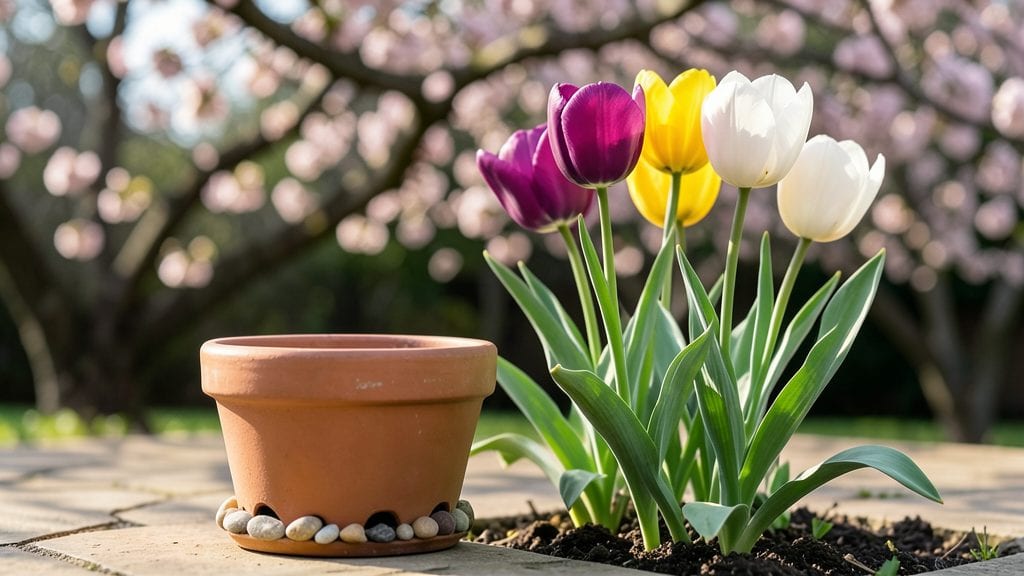
Spring flower pots burst into color the moment frost retreats—pansies, primroses, and tulips turn even the dullest porch into a showstopper. I’ve filled my own pots with these frost-tough varieties for years, and they keep blooming until summer’s heat arrives.
The secret isn’t complicated: choose cold-hardy plants, protect them from late frosts, and give them the right mix of sun and water.
You’ll need 5-7 gallon containers with drainage holes, a lightweight potting mix, and a handful of blooms that thrive in cool weather. My go-to combo is pansies for color, primroses for texture, and tulips for height—they complement each other perfectly.
A slow-release fertilizer at planting time ensures steady growth, and a morning watering routine keeps roots happy without drowning them.
By late spring, your pots will be overflowing with vibrant blooms that attract bees and butterflies. The best part? With the right care, these same pots can transition into summer with heat-loving annuals like geraniums or petunias. No dead zones here—just a seamless shift from frost to full sun.
Works for balconies, patios, or even windowsills with enough light. The key is starting early, so you’re not scrambling when the weather warms. Let’s get those pots planted—your spring color awaits!
📚 In This Guide
- What you need
- Instructions
- Tips and common mistakes
- Wrapping up and next steps
What you need
- ● Flower pots: 3–5 containers (12–16 inches in diameter) with drainage holes. Choose frost-resistant materials like terra cotta, ceramic, or fiberglass.
- ● Potting soil: 1–2 bags (1–2 cubic feet) of high-quality moisture-retentive, well-draining mix (e.g., Miracle-Gro or Black Gold).
- ● Frost-resistant flowers: 3–5 plants per pot (e.g., pansies, violas, snapdragons, or dusty miller). Check local hardiness zones!
- ● Drainage material: Small pebbles, gravel, or broken pottery (1–2 cups per pot).
- ● Slow-release fertilizer: 1–2 tablets or granules (e.g., Osmocote) for nutrient boost.
- ● Garden trowel or spoon for planting.
- ● Watering can with a fine rose nozzle.
- ○ Pruning shears (optional, for trimming dead foliage).
- ○ Decorative elements: Gravel, mulch, or garden stones (optional, for aesthetics).
- ○ Plant labels (optional, to track varieties).
How to create year-round spring flower pots with frost-resistant varieties
Here's my foolproof method for vibrant, frost-tolerant pots that bloom from early spring through winter's end.
Select Containers and Prepare the Base Layer
Choose containers with 5+ gallon capacity and drainage holes—larger pots hold moisture better and support deeper root systems. I prefer terracotta because it breathes and prevents root rot in cold snaps. Line the bottom with 1-2 inches of gravel or broken pottery to ensure proper drainage while retaining moisture for frost-resistant roots.
This base layer prevents waterlogging, which is critical when temperatures dip below 32°F. If your pots lack drainage, drill holes at the bottom and add a layer of landscape fabric over the gravel to keep soil from washing out. The goal is to mimic natural soil conditions while protecting against freeze-thaw cycles.
Layer Frost-Resistant Soil and Amendments
Fill containers with a mix of 50% premium potting soil and 50% perlite or coarse sand to improve aeration and drainage. Frost-resistant plants like pansies, violas, and dusty miller thrive in well-draining soil that doesn't compact when wet. I add a slow-release fertilizer (10-10-10) mixed into the bottom third of the soil to provide steady nutrients without scorching tender roots.
Don't skip the perlite—it prevents soil from becoming waterlogged during cold, rainy spells. Press the mix down gently to remove air pockets, but avoid compacting it too tightly. The soil should feel like a damp sponge when squeezed; if it crumbles, add a bit more water.
Plant Frost-Tolerant Flowers in Strategic Layers
Start with tall, late-blooming varieties like snapdragons or ornamental kale at the back, followed by medium-height plants such as pansies or primrose in the middle. Fill the front with low-growing, cold-hardy annuals like sweet alyssum or dusty miller. Space plants 6-8 inches apart to allow airflow and prevent fungal diseases that thrive in damp conditions.
Here's the thing—frost-resistant flowers need good airflow to dry quickly after rain. Overcrowding leads to mildew, especially in cooler months. Water gently after planting to settle the soil, but avoid soaking the foliage. If you notice leaves wilting, it's a sign the soil is too dry, not too wet.
Position for Sun and Wind Protection
Place pots in locations with 6+ hours of morning sun and afternoon shade to prevent heat stress during warmer days. Frost-resistant varieties like violas and primrose can handle partial shade, but avoid deep shade, which weakens plants and reduces blooms. Group pots together to create a microclimate that retains warmth and protects against late frosts.
If your garden experiences strong winds, move pots to a sheltered spot or use coconut fiber pots wrapped in burlap for extra protection. Wind desiccates leaves, making plants more vulnerable to frost damage. A simple trick: Place pots on saucers filled with pebbles to elevate them slightly and improve airflow at the base.
Maintain Through Seasonal Shifts
Water pots deeply every 3-4 days in spring and fall, adjusting for rainfall—frost-resistant plants need consistent moisture but hate soggy roots. In winter, reduce watering to once a week unless temperatures drop below 20°F, then let the soil dry slightly between waterings. Always water at the base to avoid wetting leaves, which can freeze and damage foliage.
Deadhead spent blooms regularly to encourage continuous flowering, but leave some seed heads for winter interest. In late fall, apply a 2-inch layer of mulch around the base of plants to insulate roots. I use shredded bark or straw, which breaks down slowly and adds organic matter to the soil as it decomposes.
Tips & tricks for perfect year-round spring flower pots
Creating vibrant, frost-resistant flower pots that thrive through all seasons takes a few strategic moves—here's how to keep your blooms looking their best from spring to winter.
Container Material Matters: Terracotta pots are my top recommendation because their porous nature helps regulate soil moisture and temperature fluctuations. However, if you're in a region with frequent freezing, consider using insulated plastic or ceramic pots instead—they retain heat better and protect roots when temperatures drop below 32°F. For extra protection, wrap the bottoms with bubble wrap during extreme cold snaps, which creates an insulating barrier against freeze-thaw cycles.
Soil Mix Secrets: The 50-50 blend of premium potting soil and perlite is non-negotiable for frost resistance, but here's what nobody tells you—add a handful of worm castings to the mix. They improve soil structure and provide beneficial microbes that help plants recover from cold stress. When pressing down the soil in Step 2, use your fingers to create small air pockets around plant roots—this mimics natural soil aeration and prevents compaction that can suffocate roots during winter.
Strategic Plant Placement: When arranging your plants in Step 3, think vertically as well as horizontally. Tuck taller varieties like snapdragons in the center of the pot and let them spill slightly over the edges—this creates a natural windbreak for more delicate front-row plants. For extra winter protection, intersperse evergreen foliage like heuchera or ornamental grasses among your flowers. Their broad leaves act as a living blanket, shielding tender blooms from harsh winds and frost.
Winter Care Essentials: That 2-inch layer of mulch in Step 5 is your secret weapon against winter dieback. For maximum insulation, use straw or shredded leaves instead of wood chips—they break down more slowly and provide better protection. In regions where temperatures drop below 20°F, consider adding a layer of frost cloth or even a lightweight blanket over the pots at night. Remove it during the day to allow sunlight to reach the plants, which prevents them from becoming etiolated (that's gardening-speak for leggy and weak).
Pro Tips for Spring Flower Pots
- Creating vibrant, frost-resistant flower pots that thrive through all seasons takes a few strategic moves—here's how to keep your blooms looking their best from spring to winter.
- Container Material Matters: Terracotta pots are my top recommendation because their porous nature helps regulate soil moisture and temperature fluctuations.
- Soil Mix Secrets: The 50-50 blend of premium potting soil and perlite is non-negotiable for frost resistance, but here's what nobody tells you—add a handful of worm castings to the mix.
Frequently asked questions
Got questions about spring flower pots?
You’re not alone! Here are some common concerns—and quick answers—to help you get started with confidence.
What are the best frost-resistant flowers for spring pots?
Opt for hardy varieties like pansies, primroses, or snapdragons—these thrive in cooler temps (down to 20°F!). For extra resilience, try heuchera (coral bells) or lamium (dead nettle). Always check your USDA zone for local suitability!
Can I leave flower pots outside all winter?
Most frost-resistant pots handle winter if they’re well-draining and protected from harsh winds. Group pots together, add mulch, and use frost cloth for extra defense. Empty pots or store them in a garage if temps drop below 10°F.
How often should I water spring flower pots?
Water when the top inch of soil feels dry—usually 1–2 times per week, depending on rain. Pots dry out faster than garden beds! In hot weather, check daily and water deeply in the morning to reduce evaporation.
What can I do if my flowers look leggy or sparse?
Leggy stems? Your pots likely need more light. Move them to a sunnier spot (6+ hours of light daily). For sparse blooms, fertilize with a balanced, water-soluble formula every 2–3 weeks. Deadhead spent blooms to encourage new growth!
Can I reuse last year’s soil in my flower pots?
Not ideal! Old soil loses nutrients and may harbor pests. Refresh with a mix of potting soil, compost, and perlite (for drainage). Sterilize containers by scrubbing with soapy water if reused. Pro tip: Add a slow-release fertilizer for a nutrient boost!
Wrapping up and next steps
Transforming your space with spring flower pots is easier than you think—and the rewards are endless! 🌸 From frost-resistant favorites like pansies and violas to vibrant tulips and daffodils, these blooms bring color, joy, and life to any season.
Whether you’re a beginner or a seasoned gardener, the key is choosing the right plants, containers, and care routine.
Now that you’re armed with tips and answers, take the next step! Grab your pots, pick your flowers, and start planting—your outdoor oasis is waiting. Happy gardening! 🌱