
Pests
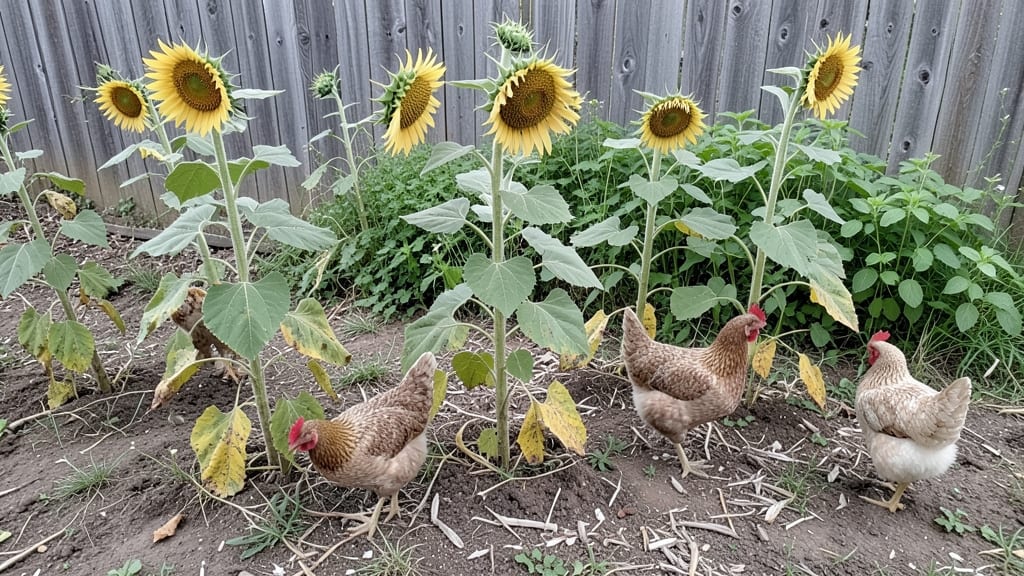
Sunflower fields and chickens might sound like an odd pairing, but I’ve seen this combo transform garden borders into thriving ecosystems. 🌻 The towering stems deter pests like squash bugs, while chickens scratch through the fallen petals, munching up weeds and insects.
It’s a two-for-one solution that’s both practical and visually stunning.
Start with a 5-foot-wide strip of sunflowers along garden edges, spaced 12 inches apart for dense growth. Plant varieties like ‘Autumn Beauty’ or ‘Moulin Rouge’—they’re tall enough to shade pests but not so aggressive they crowd out other plants.
Chickens will naturally gravitate to the area, pecking at grubs and aphids that try to hide in the foliage.
By midsummer, you’ll have a golden border that blooms all season while keeping pests at bay. The chickens stay cooler in the shade, and you’ll harvest fewer bugs in your veggies. Plus, the seed heads provide winter forage, so the benefits keep coming long after the blooms fade.
Works in small backyards or larger homesteads—just adjust the scale. The key is balance: enough sunflowers to create a barrier, but enough space for chickens to roam without trampling everything. It’s gardening with a side of farmyard charm.
📚 In This Guide
- What you need
- Instructions
- Tips and common mistakes
- Wrapping up and next steps
What you need
- ● 6–12 backyard chickens (mix of breeds like Orpingtons, Rhode Island Reds, or Easter Eggers for foraging efficiency).
- ● Secure, predator-proof coop (minimum 4 sq ft per bird inside, plus outdoor run space).
- ● Hardware cloth or wire mesh (1/2"–3/4" gauge) for fencing around sunflower fields (at least 4 ft tall).
- ● Automatic or manual waterer (1 gallon capacity per 3–4 chickens).
- ● Layer feed or organic scratch grains (16–18% protein for layers; 50 lbs per month for 12 chickens).
- ● Sunflower seeds (non-GMO, bird-friendly varieties like Mammoth Russian or Autumn Beauty; 1–2 lbs per 100 sq ft).
- ● Compost or organic fertilizer (to enrich soil before planting; 5 lbs per 100 sq ft).
- ○ Drip irrigation system or soaker hoses (for consistent moisture; optional but recommended).
- ● Straw or mulch (to retain moisture and deter weeds; 1 bale per 50 sq ft).
- ● Garden gloves (heavy-duty for handling chickens/soil).
- ● Hand trowel & pruners (for planting/maintenance).
- ○ Tractor or broadfork (optional, for large-scale soil prep).
- ● First-aid kit (for minor chicken injuries; include styptic powder and antibiotic ointment).
- ● Camera or journal (to track pest reduction and sunflower growth!).
How to create a sunflower border for chickens to forage naturally
Here’s how to turn sunflowers into a living fence that keeps pests away and feeds your flock.
🌱 Step 1: Choose the Right Sunflower Varieties for Chickens
Pick short, bushy sunflowers like ‘Moulin Rouge’ or ‘Teddy Bear’—they grow 3-5 feet tall and won’t tower over your chickens. Avoid tall varieties like ‘Mammoth’; they’re too hard for birds to reach. Plant 4-6 seeds per foot in a 2-3 foot wide border along garden edges. This gives chickens easy access while still blocking pests like rabbits and deer.
Sunflowers love full sun (6+ hours daily) and well-draining soil. If your soil is heavy clay, mix in 2 inches of compost to improve drainage. Chickens will scratch and peck at the soil as they forage, so avoid planting directly where you’ll put other crops—keep sunflowers in a dedicated border.
☀️ Step 2: Plant Sunflowers in Early Spring or Late Summer
Start seeds indoors 4-6 weeks before your last frost date or sow directly in the ground after soil warms to 60°F. Plant seeds ½ inch deep and 6 inches apart in rows spaced 12-18 inches apart. Water gently but thoroughly after planting—1 inch of water per week is ideal until germination.
Chickens can start foraging once sunflowers reach 12 inches tall, but wait until they’re 18-24 inches for best results. This gives roots time to establish before the birds dig around. If you plant in late summer, choose fast-maturing varieties that bloom before frost—chickens will appreciate the seeds even if the flowers don’t fully open.
🪴 Step 3: Let Chickens Free-Range in the Border as Flowers Mature
Once sunflowers are 4-5 feet tall, introduce chickens to the border in small groups. They’ll peck at fallen petals, eat insects attracted to the flowers, and scratch at the soil for grubs. Supervise the first few days to ensure they don’t uproot seedlings—adult chickens are gentle, but chicks might be too rough.
Sunflowers produce edible seeds, leaves, and stems that chickens love. The birds will also control pests like aphids, beetles, and slugs that might otherwise damage your garden. If you notice chickens over-foraging, rotate them to a new section of the border every 2-3 days to let sunflowers recover.
✂️ Step 4: Maintain the Border Through the Growing Season
Water sunflowers deeply 2-3 times per week during dry spells—chickens will drink from puddles, but they won’t hydrate the plants for you. If flowers droop or wilt, give them 1 inch of water immediately. Deadhead spent blooms to encourage more flowers and seeds for your flock.
Watch for powdery mildew on leaves, especially in humid climates. If you see white spots, spray leaves with a 1:1 water-vinegar mix (don’t spray when chickens are nearby). Sunflowers are tough, so even if a few plants struggle, the border will still thrive. By late summer, you’ll have a self-sustaining system where chickens help pollinate and clean up while enjoying a snack.
Tips & tricks for perfect sunflower fields chickens
Here's what I've learned after testing this system with my own flock—these tricks make all the difference between a functional border and a thriving ecosystem.
Sunflower Selection Tip: While 'Moulin Rouge' and 'Teddy Bear' are fantastic choices, don't overlook 'Autumn Beauty' sunflowers—they produce extra-large seeds that chickens go crazy for. These varieties also have multiple blooms per stem, giving your flock more foraging opportunities throughout the season.
Planting Strategy: The 2-3 foot wide border mentioned in Step 1 is perfect for most chicken breeds, but if you have larger breeds like Orpingtons, consider widening to 3-4 feet. This gives them more space to scratch without disturbing the plants. Also, plant in a slight arc rather than straight lines—chickens naturally follow curves when foraging, which helps distribute their activity more evenly.
Foraging Timeline: Waiting until sunflowers reach 18-24 inches before introducing chickens is crucial, but don't rush the process. The roots need this time to establish deep in the soil—shallow roots mean plants will uproot more easily when chickens scratch. I've found that adding a layer of straw mulch around the base helps protect young plants while still allowing chickens access to fallen petals and insects.
Pest Control Bonus: The sunflower border doesn't just keep rabbits and deer out—it also attracts beneficial insects like ladybugs and lacewings that prey on garden pests. Plant a few extra sunflowers in different areas of your garden to create "insect traps" that draw these helpful predators away from your vegetables. This creates a natural pest control cascade that works year after year.
Pro Tips for Sunflower Fields Chickens
- Here's what I've learned after testing this system with my own flock—these tricks make all the difference between a functional border and a thriving ecosystem.
- Sunflower Selection Tip: While 'Moulin Rouge' and 'Teddy Bear' are fantastic choices, don't overlook 'Autumn Beauty' sunflowers—they produce extra-large seeds that chickens go crazy for.
- Planting Strategy: The 2-3 foot wide border mentioned in Step 1 is perfect for most chicken breeds, but if you have larger breeds like Orpingtons, consider widening to 3-4 feet.
Frequently asked questions
Got questions about using sunflower fields (or even just a few sunflowers) to manage chicken pests in your garden? Here are some common ones—and their answers!
Why do sunflowers help with chicken-related pests in the garden?
Sunflowers attract beneficial insects like ladybugs, lacewings, and parasitic wasps that prey on common garden pests (e.g., aphids, caterpillars). Their tall stalks also provide shade for chickens, reducing stress and encouraging them to scratch less in your veggie beds. Plus, sunflowers act as a natural barrier, keeping chickens out of delicate plants!
Can chickens eat sunflower seeds, or will they ruin the flowers?
Chickens love sunflower seeds—scatter them around as treats! However, if you’re growing sunflowers for pest control, plant them in a dedicated patch away from your chicken run. Use tall varieties (like ‘Mammoth’) to create a physical barrier, or plant in wire cages. For extra protection, try deer-resistant sunflower varieties if local wildlife is a concern.
How long does it take for sunflowers to start controlling pests?
Sunflowers grow fast—some varieties bloom in 60–90 days! However, pest control benefits ramp up once they’re fully mature (about 3–4 months). For immediate results, plant sunflowers early in the season and intersperse them with fast-growing pest magnets like nasturtiums or marigolds. Patience pays off: once established, they’ll keep pests in check year after year!
What if my chickens peck at sunflower leaves or stems?
Chickens may nibble on young sunflower leaves, but mature plants are usually too tough for them. To prevent damage:
- Plant sunflowers in raised beds or use chicken wire.
- Apply chicken-safe repellents like hot pepper spray (mix cayenne + water) on lower stems.
- Offer alternative greens (like kale or lettuce) to distract them.
Are there alternatives to sunflowers for chicken-friendly pest control?
Try these chicken-compatible options:
- Marigolds: Repel nematodes and aphids; chickens usually ignore them.
- Dill or Fennel: Attract predatory wasps and provide shade.
- Clover patches: Chickens love it, and it crowds out weeds.
- Herb spirals (basil, thyme): Deter pests and add flavor to your garden.
Wrapping up and next steps
Integrating sunflower fields with chickens isn’t just a charming garden idea—it’s a powerful, natural pest-control strategy that benefits both your plants and your flock. By harnessing the symbiotic relationship between these two, you’ll reduce chemical reliance, boost soil health, and even enjoy a low-maintenance, high-reward ecosystem. 🌻🐔
Ready to take the next step? Start small—plant a few sunflowers along your garden borders and introduce a handful of chickens to observe their dynamic. Before you know it, you’ll have a thriving, self-sustaining garden that’s both beautiful and resilient!