
Flowers
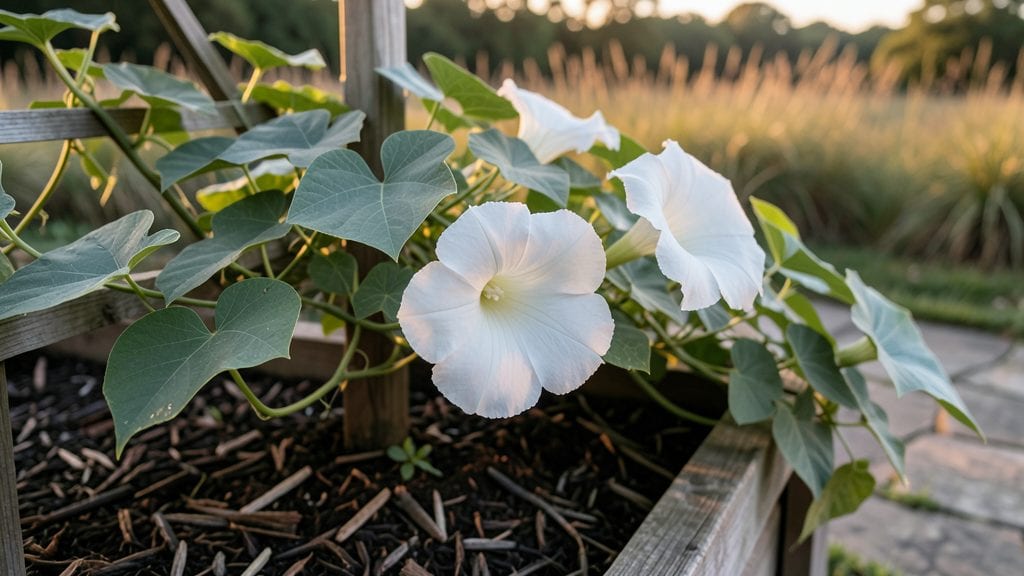
Curious what does a moon flower look like? Its pale white, saucer-shaped blooms unfurl at dusk, revealing delicate pink centers that glow under moonlight—like nature’s own nightlight, while heart-shaped leaves climb 10-15 feet on wiry vines, creating a fragrant, lush canopy. 🌙 jasmine after dark.
Unlike morning glories, which close by noon, moon flowers stay open until dawn, their fragrance drawing in moths and making your garden feel like a secret garden party.
Each flower spans 3-5 inches wide, with five slightly ruffled petals that catch the breeze like sailboats. The vines grow aggressively in warm climates (zones 9-11) but die back to the ground in cooler areas, resprouting from roots each spring.
This makes them perfect for trellises, arbors, or sprawling over fences—just give them something sturdy to climb.
What sets them apart is their nocturnal show: they open only after sunset, their scent strongest between 9 PM and midnight. Daytime visitors might miss them entirely, but night owls (or early risers) are rewarded with velvety petals and a heady perfume.
Compare them to morning glories—similar vines, but moon flowers are larger, whiter, and smell like vanilla.
In gardens, they’re prized for their dramatic contrast against dark foliage or as a fragrant border. Just plant seeds directly in warm soil after frost, and let them scramble—no fuss required. The trade-off? Their fleeting blooms last just one night, but the memory lingers longer than any daytime flower.
📚 In This Guide
- What you need
- Instructions
- Tips and common mistakes
- Wrapping up and next steps
What you need
- ● Moonflower seeds: 5–10 seeds (organic, non-GMO preferred for best results).
- ● Well-draining potting mix: 1–2 bags (look for a blend labeled "lightweight" or "for vining plants").
- ● Containers or garden bed: For containers: 5–10 gallon pots with drainage holes (1 pot per plant).
- ● For gardens: A sunny spot with loose, fertile soil (or amend clay soil with compost).
- ● Support structure: Trellis, fence, or tall stakes (6+ feet tall for climbing varieties).
- ● Watering can or hose: With a gentle spray nozzle for seedlings.
- ● Gloves: A pair to protect hands while handling soil or seeds.
- ● Trowel: For transplanting seedlings into the ground.
- ● Mulch: Organic mulch (e.g., straw or shredded leaves) to retain moisture.
- ● Fertilizer: Balanced liquid fertilizer (10-10-10): 1 bottle (dilute to half-strength).
- ○ Compost tea: Optional for a natural nutrient boost.
- ● Pruning shears: For trimming dead leaves or controlling growth.
- ○ Moonflower companion plants (optional): Marigolds (to deter pests).
- ● Basil (to enhance fragrance).
- ● Sunlight: Full sun (6+ hours daily) for outdoor planting.
- ● Temperature: Warmth (ideal germination: 70–85°F; plants tolerate heat well).
- ● Patience: Seeds take 7–14 days to sprout; blooms appear in 60–90 days.
- ● Nighttime viewing: Moon flowers open at dusk and close by morning—plan your garden tours accordingly! 🌙
Identifying moon flowers: key visual and sensory traits
Here's how to spot this twilight beauty—no gardening experience needed.
🌿 Step 1: Recognize the Classic Leaf Shape
The moon flower (Ipomoea alba) starts with heart-shaped leaves that grow on long, slender vines. These leaves are 3-5 inches wide, with a pointed tip and smooth edges. Young leaves emerge a deep green, but mature foliage often develops a slightly waxy sheen when exposed to afternoon sun.
Run your fingers along the leaf's underside—you'll notice soft, velvety hairs along the veins. This fuzzy texture helps distinguish it from morning glories, which have smoother leaves. The leaves grow alternately along the vine, never in pairs, and their size increases as they climb higher.
☀️ Step 2: Observe the Distinctive Buds
Moon flower buds appear before blooms and are 1-2 inches long, shaped like elongated teardrops. They're covered in a silvery-white down, giving them a fuzzy appearance that sets them apart from other vines. These buds grow at the vine's tips and in leaf axils, often in clusters of 2-3.
Here's the thing—these buds only open at dusk, around 8:00 PM, and close by sunrise. If you see tightly closed buds during daylight, that's your confirmation. The buds' position on the vine is another clue: they face upward, unlike some morning glories that grow more randomly.
🌙 Step 3: Identify the Signature Blooms
When moon flowers open, they reveal large, trumpet-shaped blossoms with 6 white petals that spread to 3-5 inches wide. The petals have a slightly ruffled edge and a delicate pink or lavender tint at their base. The center of the flower is yellow-green, with a prominent throat that's darker in color.
The most striking feature? Their intense, sweet fragrance that fills the night air. If you're near the plant after dark and smell a honey-like scent, that's your moon flower. During the day, the flowers appear wilted and closed, often with drooping petals that curl inward—this is normal and not a sign of poor health.
🌱 Step 4: Examine the Vine and Growth Habit
Moon flowers grow as twining vines that can reach 10-15 feet in a single season. The stems are hairy and purplish-green, with a slightly woody texture as they mature. Look for air roots that develop along the vine—these help the plant cling to trellises or other supports.
The vine's growth pattern is another clue: it follows a clockwise spiral as it climbs. This distinctive twining habit helps distinguish it from morning glories, which often grow more randomly. If you see a vine with this spiral pattern and large white night-blooming flowers, you've found your moon flower.
⏰ Step 5: Note the Blooming Timeline
Moon flowers bloom only at night, typically opening around 8:00 PM and closing by sunrise. This nocturnal habit is their defining characteristic. During the day, you'll see closed buds and wilted-looking flowers that have already bloomed the night before.
Here's what to watch for: the flowers will reopen each night for 3-5 consecutive nights before wilting permanently. This daily cycle is different from morning glories, which often bloom for just one day. If you notice flowers that stay closed during the day but reopen nightly, that's your moon flower's signature behavior.
Tips & tricks for identifying moon flowers
These simple tricks will help you confidently spot moon flowers in your garden or on your travels.
Leaf Texture Clues: The velvety hairs on the underside of moon flower leaves are your best friend for identification. Run your fingers gently along the veins—if they feel fuzzy, you're on the right track. This texture is different from morning glories, which have smooth leaves. The waxy sheen that develops on mature leaves in afternoon sun is another telltale sign.
Bud Observation: Pay close attention to the buds in Step 2—they're covered in silvery-white down and grow in clusters of 2-3. Remember, these buds only open at dusk around 8:00 PM, so if you see tightly closed buds during daylight, that's your confirmation. The upward-facing position is another key detail that sets them apart from other vines.
Nighttime Fragrance: The intense honey-like scent that fills the night air is unmistakable. If you're near a vine after dark and smell this sweet fragrance, you've found your moon flower. This nocturnal scent is their signature trait and something you won't find with other flowering vines.
Vine Growth Pattern: Look for the distinctive clockwise spiral as the vine climbs. This twining habit is different from morning glories, which often grow more randomly. The air roots that develop along the vine are another clue—they help the plant cling to trellises or other supports, giving it that characteristic woody texture as it matures.
Pro Tips for What Does A Moon Flower Look Like
- These simple tricks will help you confidently spot moon flowers in your garden or on your travels.
- Leaf Texture Clues: The velvety hairs on the underside of moon flower leaves are your best friend for identification.
- Bud Observation: Pay close attention to the buds in Step 2—they're covered in silvery-white down and grow in clusters of 2-3.
Frequently asked questions
about moon flowers—because curiosity blooms at night too!What does a moon flower look like during the day?
A moon flower (Ipomoea alba) typically stays closed during daylight hours, resembling a tightly furled bud. Its pale white or greenish petals only unfurl fully in the evening, revealing a delicate, trumpet-like shape. Think of it as a nocturnal surprise!
When is the best time to see moon flowers blooming?
Moon flowers bloom primarily at dusk and night, opening fully around sunset and lasting until early morning. For optimal viewing, check them out between 8 PM and midnight—just when their fragrance peaks! →
Can I grow moon flowers in pots or only in gardens?
Yes! Moon flowers thrive in containers as long as the pot is at least 12 inches deep with drainage. Use well-draining soil and place them in a spot with 6+ hours of sunlight daily. Just ensure they have support (like a trellis) for their vines to climb.
Why aren’t my moon flowers opening at night?
Several factors can prevent blooming: lack of sunlight (they need full sun), overcrowding, or temperature stress (below 50°F/10°C). Try moving them to a sunnier spot, pruning nearby plants, or protecting them from cold drafts. Patience helps—some varieties take weeks to adjust!
Are there alternatives to moon flowers for night-blooming beauty?
Try these fragrant nighttime stars:
- Night-blooming jasmine (Cestrum nocturnum) – Sweetly scented, white blooms.
- Evening primrose (Oenothera) – Yellow flowers that open at dusk.
- Angel’s trumpet (Brugmansia) – Dramatic, trumpet-shaped blooms with intoxicating perfume.
Wrapping up and next steps
The moon flower is a true nighttime marvel—delicate, silvery, and fragrant, with its pale lavender or white petals unfolding only under the moon’s glow. Its large, velvety blooms and sweet vanilla-like scent make it a dreamy addition to any garden, perfect for attracting pollinators after dark. 🌙✨
Now that you know what to look for, why not bring this enchanting beauty into your own space? Whether you’re a seasoned gardener or just starting out, planting a moon flower is a rewarding way to create a magical evening atmosphere. Check out our planting guide to get started!