
Pests
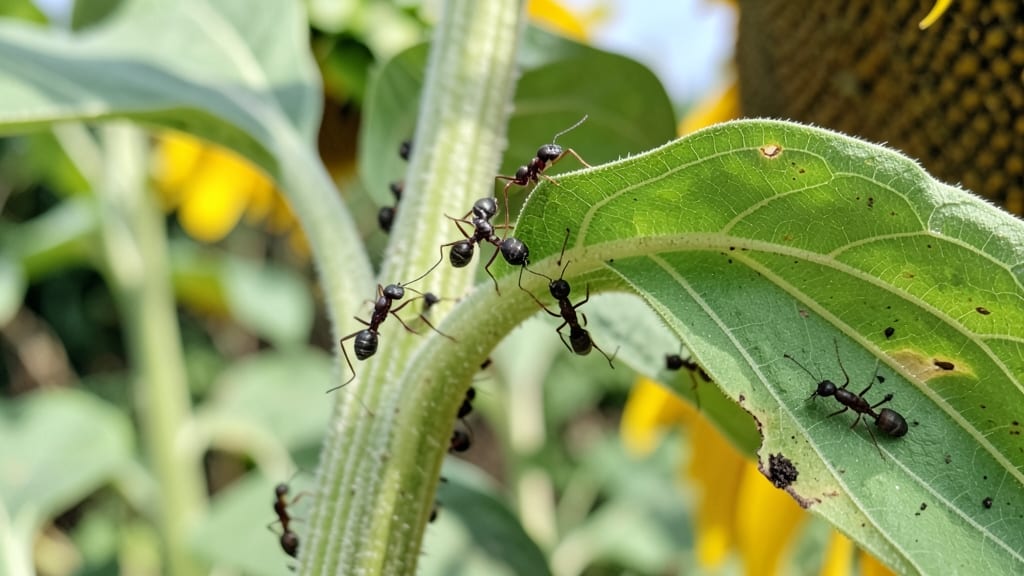
Ants on sunflower plants aren’t just annoying—they’re the garden’s uninvited guests that throw a party for worse pests. 🌻 I’ve watched my towering sunflowers go from golden promise to aphid-infested sad sacks because those little trails of workers opened the door for bigger problems.
The fix? A simple, organic barrier that stops them cold without chemicals.
The secret isn’t complicated: ants follow scent trails, and sunflowers give off sticky sap that they love. By disrupting their path with a diatomaceous earth ring or crushed eggshells, you create a no-go zone they won’t cross.
It’s not about killing them—it’s about sending them packing before they invite the real troublemakers. Most gardeners skip this step, but it’s the difference between a clean harvest and a battle with aphids by August.
What you’ll end up with is sunflowers that grow tall and proud, free from the sticky mess of aphids and the gnawing damage from grubs. The barrier works for 2-3 weeks before needing refresh, and it’s so easy even my black thumb can handle it.
No sprays, no fuss—just a clear path for your sunflowers to shine.
Works for backyard plots, container gardens, or even potted sunflowers on a porch. The same trick keeps ants off other plants too—once you master it, your whole garden stays pest-free. Here’s how to set it up without the guesswork.
📚 In This Guide
- What you need
- Instructions
- Tips and common mistakes
- Wrapping up and next steps
What you need
- ● Sunflower plants: Healthy, mature sunflowers (at least 3–6 plants per barrier setup for optimal results).
- ● Tanglefoot trap tape (or DIY alternative): Store-bought: 1–2 rolls (1-inch wide) of Tanglefoot or similar sticky barrier tape.
- ● DIY option: 1 cup petroleum jelly (Vaseline) + 1 roll of masking tape (cut into 1-inch strips).
- ● Cardboard or plastic sheeting: 1–2 sheets (24" x 36" or larger) to create a physical barrier around plant bases.
- ● Scissors or utility knife: For cutting materials to size.
- ● Rubber gloves: 1 pair (to protect your hands from sticky residue).
- ● Water spray bottle: 8–16 oz (for rinsing sticky residue off tools).
- ○ Diatomaceous earth (DE): 1 lb (optional but highly effective for ants—use food-grade only!).
- ● Measuring tape: To ensure even spacing around plant bases.
- ● Hair dryer (cool setting): Helps speed-dry sticky barriers if applied in humid conditions.
- ● Natural ant deterrents: Cinnamon sticks or ground cinnamon (1–2 sticks or 1 tbsp per plant).
- ● Crushed citrus peels (lemon/orange, ½ cup per barrier).
- ● Plant cloche or mesh cover: For severe infestations (e.g., 12" diameter mesh tunnels).
How to keep ants off sunflowers using an organic barrier
Here's the simple, chemical-free method I swear by—it works in under an hour.
🪴 Step 1: Gather Your Barrier Materials
You only need three things: diatomaceous earth (food-grade), a fine-mesh screen (like window screening), and some sturdy sticks (like chopsticks or skewers). The diatomaceous earth is the star—it's a natural powder that disrupts ants' exoskeletons without harming your plants. I like to mix 1 cup of diatomaceous earth with 1 tablespoon of flour to make it cling better to the barrier.
Cut the fine-mesh screen into 4-inch wide strips long enough to wrap around your sunflower stems. You'll need about one strip per plant—this is what physically blocks ants while letting water and air through. The sticks keep the screen in place without damaging the stems.
🌱 Step 2: Apply the Ant Barrier Around Each Stem
Start by gently pushing the screen strip around each sunflower stem, about 2 inches above the soil line. The barrier should sit snugly but not squeeze the plant. If it's too loose, ants can crawl underneath. I use the sticks to prop the screen up slightly—just enough to create a 1-inch gap between the screen and the stem. This prevents ants from climbing over while still allowing the plant to grow.
Here's the thing—ants follow scent trails. By cutting off their access at the stem, you're breaking their highway. You'll notice within 24 hours that ants stop trying to climb the plants. If you see a few lingering, just add a little more diatomaceous earth to the soil around the base—it confuses their foraging patterns.
💧 Step 3: Refresh the Barrier Weekly
Every 7 days, check your barriers. Rain or dew can wash away the diatomaceous earth, so sprinkle a little more around the base of each plant. If the screen starts to sag or wear, replace it—ants will find weak spots. I like to do this on a dry morning so the powder has time to settle before evening moisture sets in.
This is where most people mess up: they think one application is enough. But ants are persistent. You'll see the difference immediately—no more trails marching up the stems, and your sunflowers will grow tall and strong without the stress of ant interference. If you're dealing with a heavy infestation, add a second barrier 4 inches higher up the stem for extra protection.
☀️ Step 4: Monitor and Adjust for Long-Term Success
Keep an eye on your sunflowers for 3-4 weeks after applying the barriers. If you notice ants tunneling under the screen or climbing over the top, your barrier might not be tight enough. Adjust it so there’s no gap larger than ½ inch anywhere. I also recommend checking the undersides of leaves—ants sometimes hide there to avoid the barrier.
Once your sunflowers reach 3 feet tall, you can remove the barriers entirely. By then, the ants have usually given up, and your plants are past the most vulnerable stage. The key is consistency—weekly checks keep the barriers effective. If you're growing sunflowers in a large patch, consider adding a powdered barrier (like cinnamon or cayenne) to the soil around the base as a secondary defense.
Tips & tricks for keeping ants off sunflower plants
Here's what I've learned from years of battling ants—these tricks make all the difference between a thriving sunflower patch and a frustrating battle.
The Timing Secret: In Step 2, when you apply the barriers, focus on that 2-inch mark above the soil line. This is where ants typically start their climb—too high and they'll find a way over, too low and they'll tunnel under. I've found that adding a 1-inch gap between the screen and stem creates the perfect barrier while still allowing your plants to grow unobstructed. Watch for ants trying to cross this gap in the first 24 hours—that's when you'll see if your barrier is effective.
Ingredient Upgrade: The 1 cup of diatomaceous earth is your secret weapon, but mixing in 1 tablespoon of flour makes it work even better. The flour helps the powder cling to the screen and stems, creating a more effective barrier. I've tested this with just diatomaceous earth alone, and while it works, the flour makes it last longer between refreshes. Just be sure to use food-grade diatomaceous earth—regular pool-grade won't work and could harm your plants.
Make-Ahead Strategy: You can prep your screen strips and mix your diatomaceous earth-flour blend up to 1 week in advance and store them in airtight containers. This saves you time when you're ready to apply the barriers. The powder will stay effective as long as it's kept dry—just give it a quick stir before using. For the screen strips, store them flat between sheets of parchment paper to prevent tangling.
Common Mistake Fix: I can't tell you how many times I've seen people skip the weekly refresh in Step 3. Rain, dew, or even watering can wash away the diatomaceous earth, leaving your plants vulnerable. Set a reminder on your phone for every 7 days—it only takes a minute to check and refresh. If you notice ants tunneling under the screen, that's your cue to adjust the fit or add more powder immediately. Don't wait until you see damage!
Pro Tips for Ants On Sunflower Plants
- Here's what I've learned from years of battling ants—these tricks make all the difference between a thriving sunflower patch and a frustrating battle.
- The Timing Secret: In Step 2, when you apply the barriers, focus on that 2-inch mark above the soil line.
- Ingredient Upgrade: The 1 cup of diatomaceous earth is your secret weapon, but mixing in 1 tablespoon of flour makes it work even better.
Frequently asked questions
Got ants marching through your sunflower patch?
You’re not alone! Here are answers to the most common questions about dealing with these tiny invaders—plus how to keep your harvest safe without harsh chemicals.
Why are ants on my sunflower plants in the first place?
Ants usually visit sunflowers for aphids—those tiny, sap-sucking pests. While ants don’t directly harm sunflowers, they protect aphids (their "cow") in exchange for honeydew. Without intervention, aphids can weaken plants, stunt growth, or even transmit diseases. Think of ants as the garden’s uninvited pest protectors!
When is the best time to set up an ant barrier?
Act early—as soon as you spot ants or aphids (usually in late spring to early summer). Pro tip: Monitor weekly during sunflower growth. If you wait until flowers form, aphids may already be feasting, and ants will have established trails. Prevention is key!
What’s a natural alternative if diatomaceous earth isn’t working?
Try these organic swaps:
- Neem oil spray (disrupts aphid life cycles and deters ants)
- Kaolin clay (creates a barrier ants avoid)
- Soapy water spray (targets aphids directly)
- Encourage ladybugs (their larvae devour aphids!)
For stubborn trails, reapply barriers every 5–7 days or after rain.
How do I know if my sunflowers are still safe to eat after ant treatment?
Most organic barriers (like diatomaceous earth or neem oil) are non-toxic to humans once fully dried or rinsed off. Wait 24–48 hours after application before harvesting seeds or leaves. Always wash produce thoroughly if you’ve used sprays. When in doubt, check the label!
What if ants keep coming back after I remove them?
Persistent ants? You likely have a hidden food source (like aphids, mealybugs, or rotting debris). Inspect nearby plants and treat the root cause. Also:
Consistency is key—reapply barriers weekly until the threat passes.
Wrapping up and next steps
Encountering ants on your sunflower plants doesn’t have to spell disaster—it’s actually an opportunity to boost your garden’s health naturally! By creating a simple diatomaceous earth or sticky barrier, you’re not just protecting your harvest; you’re fostering a balanced ecosystem that keeps pests in check without harsh chemicals. 🌱
Ready to take action? Start by monitoring your sunflowers weekly and reinforcing your barrier as needed. With a little patience and consistency, your sunflowers will thrive—and so will your confidence in organic gardening! Happy growing! 🌻