
Vegetables
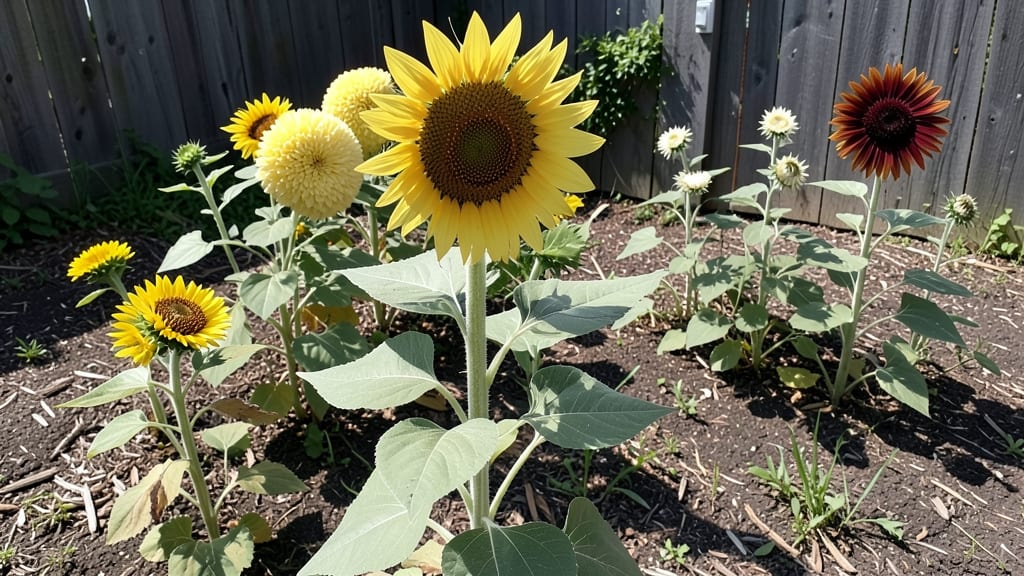
Sunflowers aren’t just one towering yellow face in a field—there are over 70 varieties, each with its own personality, size, and purpose. 🌻 From tiny wildflowers to 12-foot giants, the diversity is staggering, and choosing the right type can transform your garden into a pollinator paradise or a cut-flower powerhouse.
The most common type, Helianthus annuus, includes everything from classic dinnerplate varieties like ‘Mammoth’ to petite ‘Teddy Bear’ sunflowers perfect for containers. Then there are perennials like Helianthus debilis, which return year after year with delicate, drought-tolerant blooms.
Some varieties lean ornamental, while others—like ‘Russian Giant’—are bred for seed production or bird feeding.
You’ll find sunflowers in every color except true blue, with petals ranging from deep rust to near-white. Some varieties top out at 2 feet, while others stretch toward your roof.
Whether you want a pollinator magnet, a late-summer bouquet, or a snack for squirrels, there’s a sunflower that fits your garden’s style and space.
Climate plays a role too—some varieties thrive in short growing seasons, while others need long, hot summers. The key is matching the plant’s needs to your zone and sunlight. Ready to pick your perfect type?
📚 In This Guide
- What you need
- Instructions
- Tips and common mistakes
- Wrapping up and next steps
What you need
- ○ Seed catalogs or reference books: At least 3-5 specialized sunflower guides (e.g., Sunflower Varieties for North America or Heirloom Sunflower Collection). Optional: Digital access to databases like the USDA Germplasm Resources Information Network (GRIN).
- ○ Growing supplies (for hands-on exploration): High-quality sunflower seeds (mix of 7-10 varieties for comparison). Well-draining potting soil (5-10 lbs, organic blend preferred). Garden pots or seed trays (3-6 units, 4-6" diameter). Watering can with a fine rose nozzle (for gentle watering). Optional: Grow lights (LED full-spectrum, 12-16 hrs/day) for indoor starts.
- ● Measurement & documentation tools: Ruler or measuring tape (12-inch minimum for plant height tracking). Camera or smartphone (for flower color/shape documentation). Notebook or digital spreadsheet (to log variety traits, growth stages, and blooming dates).
- ● Safety gear (for outdoor gardening): Garden gloves (nitrile-coated for durability). Sun hat and sunscreen (SPF 30+ for prolonged exposure).
- ○ Botanical basics: Familiarity with sunflower taxonomy (e.g., Helianthus annuus vs. Helianthus debilis). Climate awareness: Know your USDA Hardiness Zone (e.g., Zones 2-10 for most varieties). Growing conditions: Full sun (6+ hours/day) and well-drained soil (pH 6.0-7.5). Optional but helpful: Basic knowledge of pollination (for hybrid varieties). Access to a local nursery with sunflower seed stock.
How to identify the 70+ sunflower varieties by type
Let’s explore the botanist-approved way to categorize sunflowers—where each group reveals unique traits for gardeners.
🌻 Step 1: Master the 4 Core Botanical Categories
Sunflowers (Helianthus annuus) fall into four primary types, each with distinct growth habits and uses. Annuals dominate home gardens, but perennials (like Helianthus maximiliani) return yearly. Dwarf varieties (under 3 feet) thrive in containers, while giants (like 'Russian Giant') reach 12+ feet and need staking. Multi-headed types (such as 'Teddy Bear') produce clusters of smaller blooms, perfect for cut arrangements.
I always start with plant height—this tells me whether to allocate space or use vertical supports. For example, 'Autumn Beauty' (annual) grows 5-6 feet, while 'Moulin Rouge' (perennial) stays under 4 feet. Note the leaf shape too: lanceolate leaves signal annuals, while broader, toothed leaves often indicate perennials.
🌱 Step 2: Differentiate by Flower Structure and Seed Type
Sunflower blooms vary wildly in disc diameter (the center) and ray floret (petal) count. Single-headed types (e.g., 'ProCut') have one large bloom, while double-headed varieties (like 'Double Dandy') resemble pom-poms. Seed size matters too: oil-type sunflowers (e.g., 'NuSun') have small, black seeds, while confectionery types (like 'Russian Mammoth') produce large, striped seeds for snacking.
Here’s my trick: Hold the bloom to the light. Oil-type sunflowers have tightly packed disc florets, while confectionery types show looser centers with visible seed heads. This distinction helps gardeners choose between culinary and ornamental varieties—don’t plant 'Mammoth' if you want edible seeds!
☀️ Step 3: Group by Sun and Soil Preferences
Sunflowers thrive in full sun (6+ hours daily), but drought-tolerant types (like 'Durable' or 'Little Becka') handle 4-6 hours better. Soil pH also varies: alkaline-loving varieties (e.g., 'Serenity') grow best in pH 7.0-8.0, while most prefer 6.0-7.0. I test soil before planting—skipping this step leads to stunted growth or yellowing leaves.
Watch for leaf color: Deep green signals healthy growth, but purplish stems (common in 'Moulin Rouge') are normal. If leaves turn yellow, check for overwatering—sunflowers hate soggy roots. For containers, choose dwarf varieties like 'Pocket Sun' (under 2 feet), as they tolerate drier soil better than giants.
✂️ Step 4: Plan for Seasonal and Climate Adaptations
Early-season types (e.g., 'Autumn Beauty') bloom in 60-70 days, while late-season varieties (like 'Russian Giant') take 90-120 days. In cooler climates, I opt for short-day varieties (e.g., 'Teddy Bear'), which flower regardless of daylight length. Heat-tolerant types (like 'Bright Lights') handle 90°F+ without wilting.
For winter interest, perennial types (e.g., Helianthus debilis) retain dried seed heads that birds adore. I leave these standing until spring—removing them too early deprives wildlife of food. In frost-prone areas, annuals die back, but perennials return stronger if cut back to 6 inches in fall.
📝 Step 5: Use Seed Packet Clues to Narrow Choices
Seed packets list height, days to maturity, and bloom size—critical for spacing. For example, 'ProCut' (a single-head) needs 18 inches apart, while 'Teddy Bear' (a cluster type) thrives in 12-inch spacing. I cross-reference this with my garden layout: tall varieties go at the back, dwarfs in front.
Pro tip: Hybrid labels (e.g., 'F1') indicate crossbred plants with larger blooms but non-viable seeds. Save seeds only from open-pollinated types like 'Russian Mammoth'. If you want uniformity, stick to hybrids; for seed-saving, choose heirlooms.
Tips & tricks for identifying sunflower varieties like a botanist
Mastering sunflower identification starts with understanding the subtle details that separate varieties—and here's how to spot them without a microscope.
Leaf Shape is Your First Clue: In Step 1, you learned about annuals versus perennials, but here's the secret: annual sunflowers almost always have lanceolate (lance-shaped) leaves with smooth edges, while perennials often show broader, toothed leaves like 'Moulin Rouge'. I always check this first—it's like the sunflower's fingerprint. For container varieties under 2 feet, look for smaller, more rounded leaves like 'Pocket Sun'.
Seed Head Structure Reveals the Type: When you examine blooms in Step 2, pay attention to the disc floret density. Hold the bloom to a light source—oil-type sunflowers like 'NuSun' have tightly packed centers with almost no visible seeds, while confectionery types like 'Russian Mammoth' show loose centers with visible striped seeds. This simple trick helps you instantly tell if a variety is for culinary or ornamental use.
Soil pH Testing Saves You Time: In Step 3, soil pH is mentioned as important, but here's what nobody tells you: alkaline-loving varieties like 'Serenity' (pH 7.0-8.0) often show purplish stems when happy—this is normal! Most sunflowers prefer 6.0-7.0, but if you notice yellowing leaves despite proper watering, grab a soil test kit. I've seen stunted growth in gardens where the pH was off by just 0.5 points.
Climate Adaptations Determine Your Success: For Step 4's seasonal varieties, here's my pro move: heat-tolerant types like 'Bright Lights' (handling 90°F+) often have thicker, waxy leaves to conserve moisture. In cooler climates, short-day varieties like 'Teddy Bear' bloom regardless of daylight—look for smaller, more compact growth compared to long-day types. This helps you pick the right variety for your microclimate without trial and error.
Pro Tips for How Many Types Of Sunflowers Are There
- Mastering sunflower identification starts with understanding the subtle details that separate varieties—and here's how to spot them without a microscope.
- I always check this first—it's like the sunflower's fingerprint.
- Seed Head Structure Reveals the Type: When you examine blooms in Step 2, pay attention to the disc floret density.
Frequently asked questions
Got questions about sunflower varieties? You’re not alone! Here are some of the most common queries—plus quick, expert-backed answers to help you pick the perfect type for your garden, bouquet, or snack stash.
How many types of sunflowers are there really?
While there are over 70+ recognized varieties, they’re typically grouped into three main categories: oilseed, confectionery (edible seeds), and ornamental (decorative). Some hybrids blur the lines—like ‘Moulin Rouge’, which is stunning and edible!
When is the best time to plant sunflowers?
Sunflowers thrive in warm soil, so wait until after the last frost (usually late spring). For a longer bloom season, stagger plantings every 2–3 weeks. Pro tip: Cold-hardy varieties like ‘Autumn Beauty’ can handle light frosts—check your zone!
Are all sunflower seeds edible?
Nope! Only confectionery sunflowers (like ‘Russian Mammoth’) have the sweet, nutty seeds we snack on. Oilseed types (e.g., ‘Pervenets’) are bred for pressing oil, not eating raw. Always confirm the variety before harvesting!
Can sunflowers grow in pots? What’s the best container size?
Dwarf varieties (under 4 feet) thrive in 5-gallon pots or larger. For giants like ‘Russian Giant’, use a 15+ gallon container with drainage holes. Place in full sun (6+ hours/day) and fertilize lightly—sunflowers are heavy feeders!
Why aren’t my sunflowers blooming? Troubleshooting tips.
No flowers? Check these fixes:
- Not enough sun: Sunflowers need 6–10 hours of direct light daily.
- Overcrowding: Space plants 12–24 inches apart (depending on variety).
- Nutrient deficiency: Add phosphate-rich fertilizer (like 5-10-10) at planting.
- Pests: Watch for sunflower moths or aphids—spray with neem oil if needed.
Still stumped? Try a dwarf variety like ‘Teddy Bear’—they’re forgiving and bloom faster!
Wrapping up and next steps
From towering giants to delicate dwarf varieties, sunflowers offer a stunning diversity of over 70+ types—each with its own charm and purpose! Whether you're a gardener, artist, or eco-conscious enthusiast, there’s a sunflower variety that’ll spark joy. 🌻
Now that you’re armed with this botanist-approved guide, why not take the next step? Start by picking a variety that fits your space and goals—whether it’s for pollinators, art, or even culinary adventures. Happy planting! 🌱