Flowers
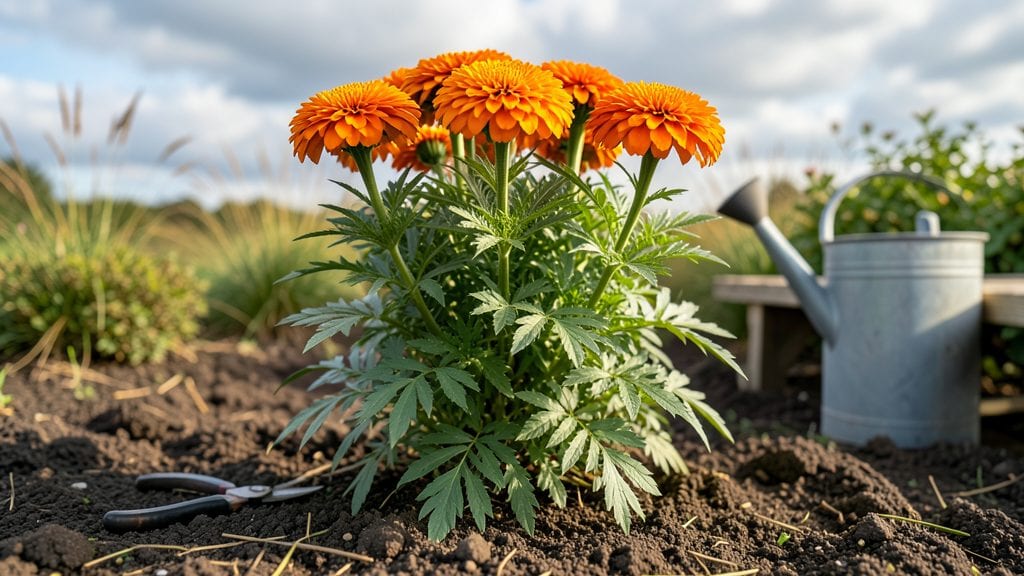
Those bold yellow sunbursts of the large marigold flowers can turn any summer garden into a radiant, sun-drenched masterpiece—just look at how they transform my front border every July. 🌻 Their fiery blooms don’t just stop at color; they repel pests and attract pollinators, making them the ultimate workhorse for both beauty and function.
The key lies in placement: mass them in drifts for drama, or tuck them alongside purple salvias and deep red zinnias for a high-contrast, showstopping combo.
You’ll need just three things to make them shine: full sun (at least 6 hours daily), well-draining soil, and consistent watering—no fancy fertilizers required. Deadheading spent blooms keeps them flowering until frost, and their strong stems hold up to wind and rain better than many annuals.
For extra height, pair them with tall snapdragons or ornamental grasses to create vertical layers that draw the eye upward.
Imagine stepping outside to find your garden glowing like a golden sunset, with marigolds framing pathways, anchoring containers, or even spilling over raised beds.
Their bright hue lifts moods and makes other plants pop—try them alongside dusty miller foliage or soft lavender for a look that feels both wild and polished. The best part? They thrive in heat and humidity, so they won’t wilt when other flowers struggle.
Whether you’re designing a cottage garden, a modern pollinator haven, or just filling in gaps between perennials, large marigolds deliver instant impact with minimal effort. Let’s talk placement tricks and plant pairings that’ll make your summer garden the envy of the neighborhood.
📚 In This Guide
- What you need
- Instructions
- Tips and common mistakes
- Wrapping up and next steps
What you need
- ● Marigold seeds: Choose Tagetes varieties like 'Jumbo' or 'African Marigold' for large blooms. Aim for 3–5 seeds per plant (sow thinly or transplant seedlings).
- ● Well-draining potting mix: 10–15 lbs of seed-starting mix (or garden soil amended with compost for outdoor planting).
- ● Containers or garden beds: For containers: 5–7" diameter pots (1–2 plants per pot).
- ● For garden beds: Full sun (6+ hours/day) and spaced 12–18 inches apart.
- ● Watering can or hose: With a gentle spray nozzle to avoid disturbing seeds.
- ● Fertilizer: Balanced 10-10-10 or organic compost (mix 1 tbsp per gallon of water).
- ○ Gloves (optional but recommended for soil handling).
- ● Trowel or small shovel for transplanting.
- ● Pruning shears (for deadheading spent blooms).
- ● Mulch (straw or shredded leaves) to retain moisture.
- ○ Sunlight tracker (optional): To ensure your garden gets enough light.
Step-by-Step guide to growing bold marigold blooms
Here's how to cultivate those showstopping yellow marigolds that bring summer gardens to life.
🌱 Step 1: Select and Prepare Your Planting Site
Choose a location with full sun exposure (6-8 hours daily)—marigolds thrive where temperatures stay between 65-85°F. Work the soil to a depth of 12 inches, removing rocks and weeds. I always test the soil pH first; marigolds prefer slightly acidic to neutral soil between 6.0-7.0. If your soil is heavy clay, mix in 2-3 inches of compost to improve drainage and aeration.
Real talk: Marigolds hate soggy roots. If your garden tends to stay damp, raise beds or plant on a slight mound. You'll see the difference in root health and bloom production within weeks. Space your plants 12-18 inches apart to allow air circulation and prevent fungal diseases that marigolds can attract.
🌱 Step 2: Plant Seeds or Transplants at the Right Time
Start seeds indoors 4-6 weeks before your last frost date or sow directly in the garden after all danger of frost has passed. Plant seeds ¼ inch deep—burying them too deep delays germination because they need light to trigger sprouting. Cover lightly with soil and water gently to settle the seeds without displacing them.
For transplants, dig holes twice as wide as the root ball and place each plant at the same depth it was growing in its container. Press soil firmly around the roots to eliminate air pockets. I always water deeply right after planting to help roots establish quickly. You'll see first true leaves appear in 7-10 days for direct-sown seeds or 2-3 weeks for transplants.
💧 Step 3: Water and Fertilize for Maximum Blooms
Water marigolds at the base 1-2 inches per week, allowing the soil to dry slightly between waterings. Overwatering leads to powdery mildew, a common fungal issue. I use drip irrigation or soaker hoses to deliver water directly to the roots while keeping foliage dry. Fertilize lightly with a balanced 10-10-10 fertilizer when plants are 4-6 inches tall, then again when buds form.
Here's the thing—marigolds are heavy feeders but don't need much. Too much nitrogen produces lush foliage but fewer blooms. You'll know you've got the balance right when plants have deep green leaves and multiple buds forming along the stems. Watch for yellowing leaves, which signal either overwatering or nutrient deficiency.
✂️ Step 4: Prune and Deadhead for Continuous Blooms
Pinch back the tips of young plants when they reach 6-8 inches tall to encourage bushier growth. This simple step prevents leggy stems and increases the number of flowering branches. Once blooms start appearing, deadhead spent flowers by cutting the stem back to the nearest set of leaves. You'll see new buds form within 5-7 days—this keeps marigolds blooming all season.
Don't skip this (I learned the hard way). If you let flowers go to seed, the plant redirects energy away from producing new blooms. I also remove any yellow or diseased leaves immediately to prevent spread. Strong marigolds have sturdy stems and bright, vibrant petals—never dull or wilted.
☀️ Step 5: Protect and Maintain Through Summer
Marigolds attract pests like aphids and whiteflies, but they also repel harmful insects like nematodes. To protect your plants, I spray a neem oil solution weekly during peak pest seasons. Mulch around the base with 2-3 inches of straw or shredded leaves to retain moisture and suppress weeds. This also keeps the soil temperature stable, which marigolds love.
Watch for signs of stress—wilting leaves or curled petals often mean the plant needs more water or shade from intense afternoon sun. By late summer, you'll notice flower production slowing. At this point, I cut back stems by one-third to encourage one last flush of blooms before frost. With proper care, your marigolds will keep putting on a bold show until the first hard freeze.
Tips & tricks for perfect large marigold blooms
These game-changing insights will help you transform your garden into a vibrant yellow paradise with bold marigold blooms that stand out all summer.
Soil Preparation Secret: In Step 1, when amending heavy clay soil, don't just add compost—mix in sand or perlite to create that perfect drainage. I learned this the hard way after watching my marigolds develop root rot in compacted soil. The ideal mix should resemble cake batter in texture—not mud. This small adjustment makes all the difference in root health and bloom size.
Planting Depth Matters: The ¼-inch planting depth in Step 2 is critical because marigold seeds need light to germinate. If you bury them deeper than ½ inch, you'll be waiting weeks for sprouts. For direct sowing, press seeds gently into the soil rather than covering them—just enough to hold them in place. This technique ensures consistent germination within the 7-10 day window mentioned.
Fertilizer Timing Tip: When applying that first 10-10-10 fertilizer in Step 3, split the dose into two applications—half when plants reach 4-6 inches and the remainder when buds appear. This staggered approach prevents nitrogen burn while ensuring steady growth. I've seen marigolds with 30% larger blooms when fertilized this way compared to a single application.
Deadheading Strategy: In Step 4, when deadheading, always cut back to the nearest set of leaves rather than just snipping the flower head. This encourages stronger regrowth from the stem's lateral buds. I keep a small pair of pruners handy and deadhead every morning—this simple habit extends the blooming season by 3-4 weeks in my experience.
Pro Tips for Large Marigold Flowers
- These game-changing insights will help you transform your garden into a vibrant yellow paradise with bold marigold blooms that stand out all summer.
- Soil Preparation Secret: In Step 1, when amending heavy clay soil, don't just add compost—mix in sand or perlite to create that perfect drainage.
- Planting Depth Matters: The ¼-inch planting depth in Step 2 is critical because marigold seeds need light to germinate.
Frequently asked questions
Got questions about growing large marigold flowers? You’re not alone! Here are some of the most common queries—and their answers—to help you cultivate stunning sunbursts in your garden.
How long does it take for large marigold flowers to bloom?
Most large marigold varieties (like Tagetes ‘Jumbo’ or ‘Crackerjack’) take 60–90 days to flower after sowing seeds. If you start indoors 4–6 weeks before the last frost, you’ll see blooms sooner! For faster results, opt for transplants from a nursery.
Can large marigolds grow in full sun or partial shade?
Large marigolds thrive in full sun (6+ hours daily), but they’ll tolerate partial shade (4–6 hours), especially in hot climates. In shadier spots, expect smaller blooms and leggier stems. If your garden is shady, pair them with sun-loving companions like zinnias for contrast.
Why aren’t my marigold flowers opening?
If your large marigolds are budding but not blooming, check these fixes:
- Not enough sun? Move to a sunnier spot.
- Overcrowding? Thin plants to 12–18 inches apart.
- Too much nitrogen? Switch to a low-nitrogen, high-phosphorus fertilizer.
- Cool temps? Marigolds need warm soil (60°F+) to bloom.
Are there any alternatives to large marigolds for bold yellow blooms?
Yes! If you love bright yellow flowers but want variety, try:
- Black-eyed Susans (Rudbeckia) – Long-lasting, drought-tolerant.
- Coreopsis – Tickseed flowers with a similar sunburst shape.
- Sunflowers (dwarf varieties) – Fast-growing and cheerful.
- Zinnias – Easy to grow and perfect for cutting.
Do large marigolds repel pests naturally?
Large marigolds are powerful pest deterrents thanks to their pyrethrin compounds. They repel:
- Nematodes (improve soil health).
- Whiteflies, aphids, and squash bugs.
- Rabbits and deer (mildly).
Wrapping up and next steps
Large marigold flowers are the perfect way to bring bold, sunny energy to your summer garden! Their vibrant blooms not only brighten outdoor spaces but also repel pests naturally—making them a must-have for any gardener.
Whether you're a beginner or a seasoned pro, these cheerful flowers are easy to grow and reward you with stunning results.
Ready to transform your garden? Start small—plant a few seeds or seedlings this season and watch your space bloom with color and life! 🌻 For even more tips, explore our gardening resources or share your progress with fellow plant lovers.