
Flowers
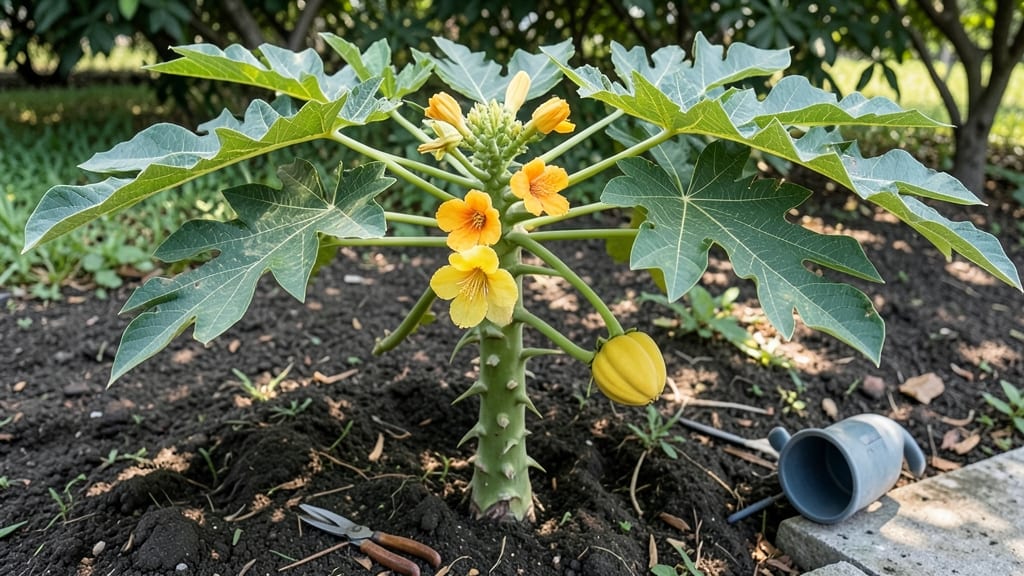
Papaya tree flowers are your golden ticket to tropical fruit—if you know how to coax them into blooming. 🌺 I’ve watched my own plants go from stubborn leafy bushes to heavy-fruiting trees just by making a few key adjustments, and the difference is night and day.
The secret starts with sunlight—papayas demand 6+ hours of direct light daily, whether outdoors in warm climates or under grow lights indoors. Prune strategically to open the canopy and improve air circulation, then feed with a balanced fertilizer (like 10-10-10) when buds form.
Male flowers appear first, but it’s the female flowers—with their tiny papaya-shaped ovary at the base—that lead to fruit.
Once flowers bloom, hand-pollination is the game-changer: use a paintbrush or cotton swab to transfer pollen from male to female blooms. With the right care, you’ll see fruit set within weeks, and those edible flowers?
They’re delicious in salads or teas too. Here’s how to keep the process simple and productive.
Common pitfalls include overwatering (which causes bud drop) and nutrient imbalances (like too much nitrogen). But with these adjustments, even indoor growers can enjoy homegrown papayas. Let’s get those flowers turning into fruit!
📚 In This Guide
- What you need
- Instructions
- Tips and common mistakes
- Wrapping up and next steps
What you need
- ● Papaya seeds or young sapling: Fresh seeds from a ripe papaya (or a nursery-bought seedling for faster results). Pro tip: 💡 Choose heirloom or hybrid varieties like 'Solo' or 'SunUp' for better flowering!
- ● Well-draining potting mix: 50% coconut coir, 30% perlite, and 20% compost (or a pre-made tropical mix). 🌡️ Avoid heavy clay soil—papayas hate soggy roots!
- ● Containers: 3–5 gallon pots with drainage holes (or a raised bed in warm climates). ✨ Use black pots to absorb more heat if growing in cooler areas.
- ● Fertilizer: Balanced liquid fertilizer (10-10-10): Diluted to half-strength, applied every 2–4 weeks during growing season.
- ● High-phosphorus fertilizer (e.g., 5-10-10): Boosts flowering—use when buds form.
- ● Organic options: Composted manure or worm castings (1 cup per plant monthly).
- ● Pruning tools: Sharp, sterilized shears or a small knife for trimming dead leaves/branches.
- ○ Support stakes or trellis: Optional but helpful—papaya vines can grow 10–20 ft tall! Use bamboo stakes or a lightweight frame.
- ● Warmth: Papayas thrive in USDA Zones 10–12 (or indoors with grow lights in cooler zones). 🔥 Ideal temps: 75–90°F (24–32°C).
- ● Sunlight: Full sun (6+ hours daily). Use a sunny windowsill or grow lights (12–14 hours/day) for indoor setups.
- ● Humidity: 60–80% humidity. Mist leaves or use a humidifier if indoors.
- ● Watering: Keep soil consistently moist but not waterlogged. Reduce watering slightly when buds form to encourage flowering.
- ● Pollination aid: A soft paintbrush or cotton swab to hand-pollinate flowers (if indoor or no bees).
- ● Mulch: Straw or wood chips to retain moisture and regulate soil temp.
- ● Grow lights: LED full-spectrum bulbs (15W–20W) for indoor setups.
- ● Soil pH test kit: Aim for pH 6.0–7.0 (adjust with lime or sulfur if needed).
How to grow and care for papaya tree flowers
Watch your papaya tree burst into vibrant blooms—here's how to coax those edible flowers and fruit into existence.
🌱 Step 1: Select and Plant a Healthy Papaya Tree
Start with a 4-6 month old papaya tree purchased from a reputable nursery. Look for plants with deep green, glossy leaves and no signs of yellowing or pest damage. Papayas thrive in USDA zones 10-11 but can be grown in containers and overwintered indoors in cooler climates.
Plant in well-draining soil with a pH between 6.0 and 7.0. The root system is sensitive to waterlogging, so amend heavy soils with 20% perlite or coarse sand. Choose a location with full sun exposure (6+ hours daily)—partial shade reduces flowering. I always plant mine in a raised bed to prevent root rot, especially in humid climates.
☀️ Step 2: Provide Ideal Growing Conditions for Flowering
Papaya trees need warmth to initiate flowering. Maintain soil temperatures above 75°F—cold soil delays or prevents blooms entirely. In containers, use a heat mat during cooler months if growing indoors. The tree also requires high humidity (50-70%), so mist leaves daily or use a pebble tray with water underneath the pot.
Fertilize monthly with a balanced 10-10-10 NPK fertilizer during the growing season, then switch to a low-nitrogen, high-phosphorus (5-10-10) formula when buds form. Over-fertilizing with nitrogen produces lush foliage but stunts flowering. Watch for small yellow-green buds forming in leaf axils—these are your first sign of impending blooms.
💧 Step 3: Water Strategically to Encourage Blooms
Water deeply 2-3 times per week during active growth, allowing the top 2 inches of soil to dry between waterings. Overwatering causes root stress and bud drop, while underwatering leads to small, deformed flowers. I use a moisture meter to check soil levels—40-60% moisture is ideal for flowering.
Reduce watering slightly when buds appear—1-2 times per week—to prevent shock to developing flowers. Avoid wetting the blooms themselves, as moisture promotes fungal diseases like powdery mildew. Water at the base of the plant in the early morning to allow foliage to dry completely before evening.
✂️ Step 4: Prune and Support Flowering Branches
Prune leggy or overcrowded branches to improve air circulation and light penetration. Remove any dead, diseased, or crossing branches using clean, sharp pruners. I cut just above a leaf node at a 45-degree angle to encourage healthy regrowth. Avoid heavy pruning during flowering—limit cuts to 10% of the plant's foliage at a time.
Support flowering branches with soft plant ties if they grow heavy with fruit. Papaya flowers are self-pollinating but benefit from gentle shaking to release pollen. On cloudy days, I lightly shake the branches to encourage cross-pollination, which increases fruit set. Watch for small white or yellow flowers that appear in clusters—these are your tree's way of signaling readiness for fruiting.
🌿 Step 5: Protect and Harvest Flowers for Edible Use
Harvest flowers when fully open but still tight—before petals begin to wilt. Use clean scissors to cut the stem just above the flower head. I prefer to harvest in the morning when petals are most vibrant. Flowers can be eaten raw, fried, or used in tropical salads. Store harvested blooms in the fridge for up to 3 days in a sealed container with a damp paper towel.
After flowering, monitor for fruit development. Papaya fruits take 3-6 months to mature, depending on variety. Remove any aborted fruit (small, misshapen, or discolored) to redirect the tree's energy to healthy growth. If your tree produces mostly male flowers (which are sterile), consider planting a second tree nearby to ensure pollination and fruiting.
Tips & tricks for growing papaya tree flowers
Transforming your papaya tree into a flowering powerhouse takes more than just sunlight—it's about understanding the subtle cues your plant gives you.
Soil Temperature Secret: That 75°F minimum soil temperature in Step 2 isn't just a guideline—it's non-negotiable for flowering. I've seen papayas refuse to bloom when soil temps dip below this threshold, even with perfect light conditions. In cooler climates, use a soil thermometer to monitor temperatures, especially in containers where soil heats up more slowly. A heat mat during winter months can make all the difference for indoor growers.
Bud Identification: Those tiny yellow-green buds in Step 2 are your early warning system. I learned the hard way that waiting until flowers appear means you've missed the optimal time for intervention. Start monitoring leaf axils when your tree reaches maturity—look for the slight swelling that signals bud formation. This gives you time to adjust care before the flowers even open.
Pruning Precision: When pruning in Step 4, think of it as sculpting rather than cutting. I now make my cuts at a 45-degree angle just above a leaf node, which encourages new growth from that exact spot. The key is to never remove more than 10% of the foliage at once—this maintains the tree's energy balance while still improving air circulation. Over-pruning during flowering can actually reduce your harvest.
Harvest Timing: The morning harvest in Step 5 is crucial for preserving those delicate petals. Flowers picked at this time have maximum moisture and vibrancy. I've found that harvesting just as the first light hits them prevents wilting—those petals should still feel slightly damp to the touch. Store them immediately in the fridge with a damp paper towel to maintain freshness for up to 3 days.
Pro Tips for Papaya Tree Flowers
- Transforming your papaya tree into a flowering powerhouse takes more than just sunlight—it's about understanding the subtle cues your plant gives you.
- Soil Temperature Secret: That 75°F minimum soil temperature in Step 2 isn't just a guideline—it's non-negotiable for flowering.
- Bud Identification: Those tiny yellow-green buds in Step 2 are your early warning system.
Frequently asked questions
Got questions about papaya tree flowers?
Here are some of the most common ones—plus quick answers to help you grow like a pro!
Can you eat papaya tree flowers?
Yes! Papaya flowers are edible and prized in many tropical cuisines. Both male and female blooms can be used—male flowers are often stir-fried, while female flowers (with tiny fruits) are great in salads or soups. Pro tip: Harvest them early in the morning for the best flavor!
How long does it take for papaya tree flowers to appear?
Papaya flowers typically bloom 6–12 months after planting, depending on climate and care. In warm, tropical conditions, you might see them as early as 4–6 months. Patience is key—consistent watering and sunlight speed up the process!
What do I do if my papaya tree isn’t flowering?
If your papaya tree skips flowering, check these factors:
- Light: Needs full sun (6+ hours daily).
- Temperature: Thrives in 70–90°F. Cold drafts can stall blooms.
- Soil/Nutrients: Poor soil or lack of phosphorus/potassium (use a balanced fertilizer).
- Age: Young trees (<1 year) may not bloom yet.
Can I grow papaya flowers indoors?
Papaya trees can grow indoors but are tricky—flowers are rare without ideal conditions. If you try:
- Use a large pot (15+ gallons) with drainage.
- Place near a south-facing window or under grow lights.
- Mimic humidity with a pebble tray or misting.
How do I tell male vs. female papaya flowers apart?
It’s simple:
Male Flowers
Female Flowers
Long, thin stamen (pollen-producing parts).
Small fruit bump at the base (future papaya!).
Grow in clusters on long stems.
Solitary or in small groups.
Wrapping up and next steps
Growing papaya tree flowers is a rewarding journey that blends beauty, edibility, and the promise of tropical fruit! Whether you’re drawn to their delicate blooms or eager for juicy papayas, these vibrant plants offer something for every gardener.
With the right care—sunlight, soil, and patience—you’ll unlock a harvest of both stunning flowers and delicious fruit.
Ready to take the next step? 🌱 Start by planting your seeds or seedlings in a warm, sunny spot, and soon you’ll be enjoying the sweet rewards of your efforts. Happy growing!