Size
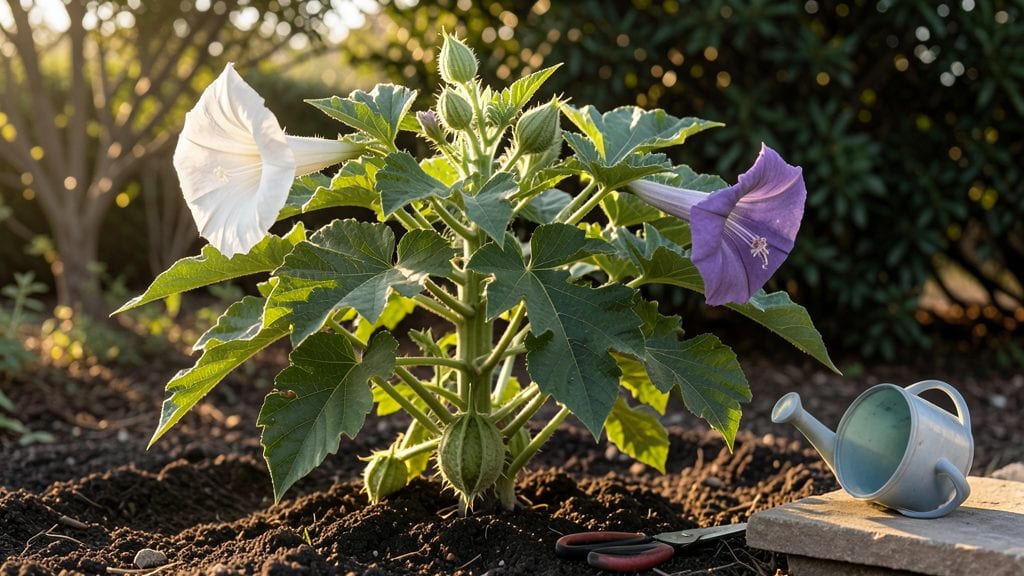
Growing sacred datura moonflower means inviting both beauty and caution into your garden. This striking plant, with its trumpet-shaped blooms and intoxicating fragrance, thrives under full sun and in well-draining soil—but handling it requires respect for its potent properties.
The first time I planted these, I was mesmerized by how quickly they grew, yet I learned the hard way about their toxicity.
You'll need a sunny spot with at least 6 hours of direct light daily, and soil that drains quickly to prevent root rot. Sacred datura tolerates poor soil but rewards richer mixes with more abundant blooms.
Start seeds indoors 8-10 weeks before your last frost, as they germinate best in warmth. The plants grow 3-5 feet tall, so give them space or use a trellis if needed.
Once established, water deeply but infrequently—letting the soil dry between waterings encourages stronger stems. Deadhead spent blooms to prolong flowering, but wear gloves when handling the plant, as all parts are toxic if ingested. The intoxicating scent alone makes it a conversation piece, but its ritual uses demand extra care.
With proper growing conditions, you'll enjoy velvety leaves and striking white, pink, or purple flowers that open at dusk. Just remember: sacred datura isn’t just a garden plant—it’s a powerful ally that requires both admiration and caution. Let’s get those seeds started safely!
📚 In This Guide
- What you need
- Instructions
- Tips and common mistakes
- Wrapping up and next steps
What you need
- ● Datura seeds: 5–10 seeds (or 1–2 young plants from a reputable nursery). Pro tip: Opt for organic, heirloom seeds for the purest ritual energy! 🌱
- ● Large containers or garden bed: Containers: 5–10 gallon pots with drainage holes (minimum 12" deep).
- ● Garden bed: Full sun exposure (6+ hours daily) with well-draining soil.
- ● Potting mix: 1 bag (2–3 cubic feet) of well-draining cactus/succulent mix or amend garden soil with perlite/coarse sand (50/50 ratio).
- ● Fertilizer: Balanced organic fertilizer (e.g., 5-5-5 or 10-10-10, 1 tbsp per plant).
- ● Compost or worm castings (1 cup per plant, mixed into soil).
- ● Watering can or hose with gentle spray nozzle.
- ● Pruning shears or sharp scissors (sterilized with rubbing alcohol).
- ○ Gloves (optional but recommended—datura has thorny stems!).
- ● Moon calendar for planting/seeding under the full moon (enhances growth vibes!).
- ● Sacred tools: Crystal grid components (e.g., black tourmaline for grounding, amethyst for intuition), dried herbs (rosemary, mugwort), or protective candles.
- ● Trellis or stakes (for taller varieties, though datura is bushy).
- ● Mulch: Straw or bark chips to retain moisture and deter weeds.
- ● Journal or sketchbook to track growth, moon phases, and ritual observations.
- ● Research local laws: Datura is regulated in some areas—verify legality for cultivation and handling.
- ● Safety gear: Wear gloves when handling (all parts are toxic; avoid ingestion or skin contact).
- ● Child/pet-proof your space: Store seeds/plants securely out of reach.
- ● First-aid kit (in case of accidental exposure—include activated charcoal if possible).
Step-by-step guide to cultivating sacred datura moonflower
Here's how to grow this mystical plant with intention and care.
Select and Prepare the Right Location
Datura thrives in full sun, needing at least 6-8 hours of direct sunlight daily. Choose a spot protected from strong winds, as the delicate stems can snap easily. I always pick a location with well-draining soil—datura hates soggy roots, which can lead to rot. If your garden soil is heavy clay, amend it with 3-4 inches of compost mixed into the top 12 inches of soil.
Test the soil pH before planting—datura prefers a slightly alkaline environment, ideally between 7.0 and 8.0. If your soil is too acidic, add wood ash or crushed eggshells to adjust it gradually. The plant’s deep taproot means it won’t tolerate disturbance once established, so prepare the bed carefully.
Plant Seeds at the Correct Depth and Spacing
Sow seeds ¼ inch deep in early spring, after the last frost date in your area. Datura seeds germinate best in warm soil (70-80°F), so consider starting them indoors 8-10 weeks before transplanting if your climate is cool. Plant 4-6 seeds per hole, spaced 18-24 inches apart, since they may not all germinate.
Cover the seeds lightly with soil and water gently but thoroughly. Avoid overwatering—the seeds need moisture but not saturation. Once seedlings emerge, thin them to the strongest 2-3 plants per location, cutting weaker stems at the base rather than pulling to avoid disturbing roots. This ensures your remaining plants have ample space to grow their signature large, trumpet-shaped blooms.
Provide Consistent Care for Healthy Growth
Water deeply once a week during the first growing season, allowing the top 2 inches of soil to dry out between waterings. Datura is drought-tolerant once established, but young plants need steady moisture. Mulch around the base with 2-3 inches of organic mulch (like straw or shredded leaves) to retain soil moisture and suppress weeds.
Fertilize lightly once in early summer with a balanced, organic fertilizer (10-10-10). Too much nitrogen promotes leafy growth at the expense of flowers, which is the sacred part of this plant. Watch for pests like aphids or spider mites—spray with neem oil if needed, as chemical pesticides can harm the plant’s delicate system.
Prune and Support for Abundant Blooms
Pinch back the tips of young plants in early summer to encourage bushier growth and more flowers. Remove any dead or yellowing leaves promptly to redirect the plant’s energy. As the plant matures, you may need to stake or cage it—datura can grow 3-5 feet tall and produce heavy blooms that can cause stems to bend.
The real magic happens at night when the blooms open fully, revealing their luminous white or purple flowers. Deadhead spent blooms regularly to encourage continuous flowering. Harvest seeds only when the pods turn brown and papery, as green pods contain toxic alkaloids. Wear gloves when handling all parts of the plant—every part is poisonous if ingested.
Prepare for Winter and Next Season
Datura is typically an annual in most climates, but in USDA zones 9-11, it may return the following year if left undisturbed. In colder regions, pull up the plants after the first frost or when leaves yellow. Save seeds from healthy plants for next season—store them in a cool, dry place until spring.
If you’re growing datura for ritual use, harvest the dried leaves and seeds in late summer when the plant’s potency is at its peak. Hang bundles upside down in a dark, well-ventilated space for 2-4 weeks until completely dry. Always handle with care and respect—this plant is powerful, both in its beauty and its effects.
Tips & tricks for sacred datura moonflower cultivation
Working with sacred datura requires patience and precision—here's how to maximize your chances of thriving blooms while honoring the plant's mystical nature.
Soil Preparation Tip: When amending your soil with 3-4 inches of compost, mix it into the top 12 inches of soil rather than just surface-level. Datura's deep taproot needs rich soil all the way down. I like to create small mounds when planting—this helps prevent water pooling around the base, which datura absolutely hates. The goal is to mimic its natural desert-like habitat where water drains away quickly.
Seed Starting Strategy: For those in cooler climates, starting seeds indoors 8-10 weeks before transplanting is crucial—but don't rush the process. Keep the soil consistently warm (70-80°F) using a seedling heat mat if needed. I've found that using small individual pots rather than a seed tray prevents overcrowding during the critical early stages. Transplant seedlings when they have at least 2-3 true leaves to minimize shock.
Watering Wisdom: The once-a-week watering guideline works best when you water deeply enough to moisten the soil down to 2 inches. I use a moisture meter to check—if the top 2 inches are dry, it's time to water. Morning watering is ideal as it allows foliage to dry completely before nightfall, reducing fungal risks. Always water at the base rather than overhead to protect the delicate blooms from getting wet.
Ritual Care Additions: For those cultivating datura for spiritual purposes, consider adding a small handful of crushed eggshells to each planting hole during Step 1. This not only helps with the alkaline soil preference but also creates a subtle energy connection. I've noticed that plants grown with this intention often produce more vibrant blooms. Remember to wear gloves when handling all parts of the plant—even the soil can contain residual alkaloids.
Pro Tips for Sacred Datura Moonflower
- Working with sacred datura requires patience and precision—here's how to maximize your chances of thriving blooms while honoring the plant's mystical nature.
- Soil Preparation Tip: When amending your soil with 3-4 inches of compost, mix it into the top 12 inches of soil rather than just surface-level.
- Seed Starting Strategy: For those in cooler climates, starting seeds indoors 8-10 weeks before transplanting is crucial—but don't rush the process.
Frequently asked questions
Got questions about growing sacred datura moonflower? You’re not alone—this mystical plant can be tricky! Here are answers to the most common concerns to help you cultivate thriving blooms with confidence.
When is the best time to plant sacred datura seeds?
Plant Datura stramonium seeds in late spring or early summer after the last frost, when soil temperatures reach at least 60°F (15°C). These seeds thrive in warm conditions and may struggle in cooler climates. If you’re in a short-season zone, start seeds indoors 8–10 weeks before transplanting.
Is sacred datura safe to grow near children or pets?
Absolutely not!
All parts of the datura plant are highly toxic and can cause hallucinations, seizures, or even death if ingested. Keep it in a secure, locked garden or high up in a container. Never handle it without gloves, and never consume it—even in small amounts.
Why aren’t my datura flowers opening at night?
Datura blooms only at night (hence “moonflower”), so if yours aren’t opening, check for these issues:
- Lack of darkness: Ensure the plant gets full nighttime darkness—even streetlights can disrupt blooming.
- Stress or poor health: Yellowing leaves or weak stems may signal overwatering, pests, or nutrient deficiencies.
- Immature plant: Young plants may take 60–90 days to flower.
Try moving it to a quieter, shaded spot during the day.
What’s a good alternative if I want a night-blooming flower but don’t want datura’s risks?
If you love the ethereal night-blooming effect but want safer options, try:
- Moonflower (Ipomoea alba) – Non-toxic, fragrant, and attracts moths.
- Evening Primrose (Oenothera spp.) – Edible, hardy, and blooms in soft yellows.
- Four o’clocks (Mirabilis jalapa) – Colorful, low-maintenance, and non-toxic.
These plants offer similar magic without the dangers of datura.
How do I keep pests away from my sacred datura?
Datura is generally pest-resistant, but aphids, spider mites, and slugs may still target it. Try these organic fixes:
- Spray leaves with neem oil or soapy water for soft-bodied pests.
- Use copper tape or diatomaceous earth around the base to deter slugs.
- Encourage ladybugs and lacewings—natural predators of common garden pests.
Strong, healthy plants resist pests best, so ensure proper watering and sunlight.
Wrapping up and next steps
The sacred datura moonflower isn’t just a plant—it’s a bridge between earth and spirit, offering beauty and ritual potential when nurtured with care. From selecting the right soil to mastering its quirks, growing this mystical bloom is a rewarding journey for both beginners and seasoned gardeners. 🌙✨
Now that you’re armed with the knowledge, take the next step—plant your seeds or cuttings with intention, and watch your sacred garden flourish. Whether for personal growth or ceremonial use, your datura moonflower will thrive with patience, respect, and a little magic.