
Flowers
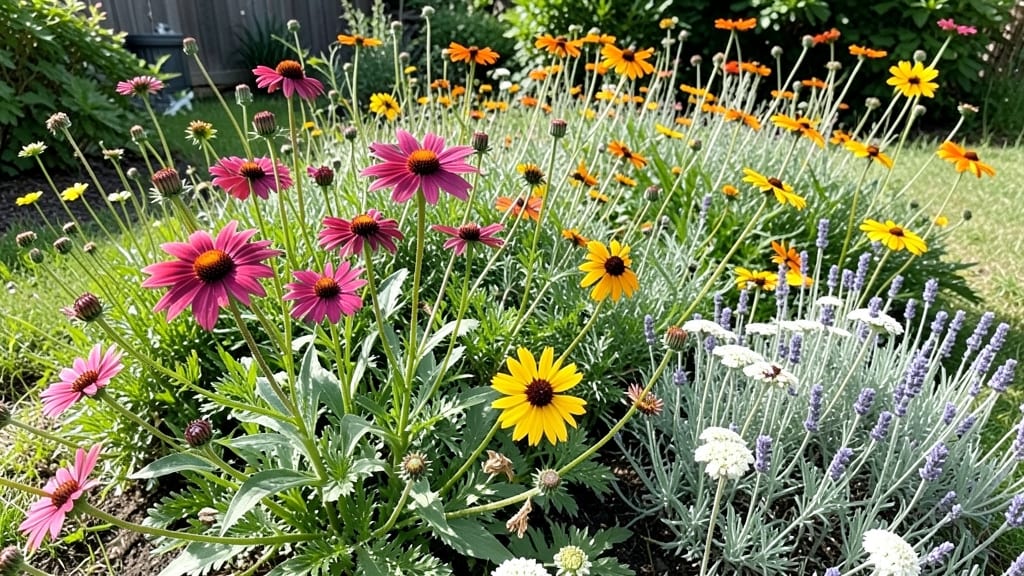
A wildflower flower bed in the Pacific Northwest isn’t just pretty—it’s a year-round hummingbird magnet that keeps your garden buzzing with life. I’ve designed mine to bloom from early spring through late fall, with native species that thrive in our damp, mild climate while attracting hummingbirds, bees, and butterflies.
The key is mixing perennials, annuals, and shrubs that overlap in bloom time, creating a nonstop show without any gaps.
Start with a sunny spot—at least 6 hours of sunlight daily—and clear any grass or weeds first.
Layer plants by height: tall grasses and shrubs like Oregon grape or red-flowering currant at the back, mid-height perennials like beardtongue or lupine in the middle, and low-growing annuals like California poppies or blue-eyed grass up front.
Group plants by color families for a cohesive look, and leave some bare soil or rocks for texture.
By midsummer, your bed will be a riot of color—deep purples, sunny yellows, and soft pinks—with hummingbirds darting between blooms. The best part? Once established, these plants need almost no maintenance beyond an occasional trim to keep things tidy.
Native species also support local ecosystems, so you’re doing double duty for wildlife and beauty.
This design works for small urban gardens or large backyard meadows—just scale the plant quantities. The Pacific Northwest’s mild winters mean many perennials return year after year, while annuals self-seed for easy renewal. Ready to create your own hummingbird hotspot? Let’s get planting!
📚 In This Guide
- What you need
- Instructions
- Tips and common mistakes
- Wrapping up and next steps
What you need
- ● Native wildflower seeds: Choose a mix of Pacific Northwest favorites like Penstemon, Lupine, Yarrow, Columbia Larkspur, and Bee Balm. Aim for 1-2 lbs per 100 sq. ft. (e.g., 2 lbs for a 200 sq. ft. bed).
- ○ Native wildflower plugs or seedlings: 20-30 plants per 100 sq. ft. (optional but faster for immediate results).
- ● Well-draining soil: Amend heavy clay soil with compost (2-3 inches) or sand (1 part sand to 3 parts soil) to improve drainage.
- ● Mulch: 2-3 inches of wood chips or straw to retain moisture and suppress weeds.
- ● Drip irrigation system or soaker hose: 10-15 ft. of tubing (adjust based on bed size) for consistent watering.
- ● Garden shovel or spade (for digging and soil prep).
- ● Rake (to level the soil).
- ● Garden hose with adjustable nozzle (for watering).
- ● Garden gloves (to protect your hands).
- ● Measuring tape or string (to mark out your flower bed).
- ○ Optional: Stakes and twine (to outline the bed before planting).
- ○ Optional: Bird feeder or hummingbird feeder (to supplement nectar sources).
- ● Sunlight: Choose a sunny spot (at least 6 hours of direct sunlight daily).
- ● Water source: Ensure easy access to water for irrigation.
- ● Knowledge of native plants: Research Pacific Northwest-specific wildflowers to ensure they thrive in your microclimate.
- ● Patience: Wildflower beds take 1-2 years to fully establish and reach their pollinator-attracting peak!
How to design a Pacific Northwest wildflower bed for hummingbirds
Creating a thriving wildflower haven for hummingbirds requires strategic plant selection and thoughtful design.
Select Native Wildflowers That Attract Hummingbirds
Focus on Pacific Northwest natives like beardtongue (Penstemon spp.), columbine (Aquilegia formosa), and sword fern (Polystichum munitum) for year-round interest. These species thrive in the region’s mild, wet winters and provide nectar-rich blooms from early spring through fall. Hummingbirds favor tubular flowers—look for species with red, pink, or purple blooms like red columbine or Pacific giant hyacinth. Avoid non-native invasives; they often lack the ecological benefits and may spread aggressively.
I always start with three layers of plants: tall perennials (like lupine) for the back, mid-height shrubs (such as salal or Oregon grape), and low ground covers (like creeping thyme). This creates a layered effect that mimics natural ecosystems and provides shelter for pollinators. Group plants in odd-numbered clusters of 3, 5, or 7—this encourages hummingbirds to linger and forage efficiently.
Prepare the Soil for Moisture Retention and Drainage
The Pacific Northwest’s damp climate means your wildflower bed needs well-draining soil to prevent root rot. Amend native soil with 3-4 inches of compost and a 50/50 mix of peat moss and perlite to improve aeration. Test your soil’s pH—most wildflowers prefer a slightly acidic to neutral range (6.0-7.0). If your soil is heavy clay, incorporate coarse sand to break up compaction and encourage root penetration.
Dig the area to a depth of 12 inches, loosening the soil without disturbing the underlying structure. This prevents waterlogging while retaining moisture for drought-tolerant species. I like to add a thin layer of wood chips (about 1 inch) on top to suppress weeds and regulate temperature. Avoid synthetic mulches—they can disrupt the natural decomposition process that benefits native plants.
Plant in Phased Blooms for Continuous Nectar
Stagger planting so flowers bloom sequentially from early spring to late fall. Start with early bloomers like Pacific dogwood (Cornus nuttallii) in February-March, followed by sage (Salvia spp.) in May-June, and asters (Symphyotrichum spp.) in August-September. This ensures hummingbirds have a consistent food source throughout their migration and breeding seasons.
Plant in clusters of 5-7 plants per species to create visual impact and attract more pollinators. Space taller perennials (3-4 feet apart) and shorter ground covers (12-18 inches apart). Water deeply after planting to settle roots, then reduce to once weekly during dry spells. Hummingbirds are drawn to vibrant, clustered blooms, so avoid sparse or scattered plantings—they won’t provide enough nectar to sustain them.
Install Water Sources and Perches for Hummingbirds
Hummingbirds need fresh water daily, so add a shallow birdbath with pebbles for safe landing. Place it near—but not directly under—plants to provide shade. I use a solar-powered fountain to keep water moving, which attracts more birds. Add a small perch (like a thin branch) near the flowers so hummingbirds can rest while feeding.
Position feeders 10-15 feet away from dense foliage to give hummingbirds a clear flight path. Use red feeders (their favorite color) filled with a 1:4 sugar-water solution (never honey or artificial sweeteners). Clean feeders every 3-4 days to prevent mold, which can harm hummingbirds. Place feeders at eye level or slightly above—this mimics natural nectar sources and makes birds feel secure.
Maintain with Minimal Intervention
Once established, wildflowers require little maintenance. Remove spent blooms in late fall to encourage new growth, but leave seed heads for winter interest and food for birds. Fertilize lightly (if at all) with compost tea in early spring—most natives thrive in lean soil. Monitor for invasive species like English ivy or blackberry and remove them immediately to protect native plants.
Mulch annually with 2-3 inches of leaf litter or wood chips to retain moisture and suppress weeds. In the Pacific Northwest, winter rains often provide enough water, but during dry spells, deep watering (1-2 inches per week) keeps roots healthy. Hummingbirds will return year after year if they find reliable nectar, water, and shelter—so prioritize these elements over frequent pruning or fertilizing.
Tips & tricks for perfect wildflower beds in the Pacific Northwest
Creating a hummingbird haven isn't just about planting flowers—it's about crafting an ecosystem that thrives year-round. These insights will help you design a bed that attracts and sustains these delicate birds while minimizing common pitfalls.
Layering for Pollinator Success: The three-layer approach (tall perennials, mid-height shrubs, and ground covers) isn't just aesthetic—it's ecological. The tall lupine provides vertical structure for hummingbirds to perch between feedings, while the creeping thyme creates a safe ground layer that protects emerging seedlings. I've noticed that hummingbirds actually prefer beds with this vertical complexity because it mimics their natural foraging patterns in dense forests.
Soil Science Matters: That 50/50 mix of peat moss and perlite isn't arbitrary—it creates the perfect balance of moisture retention and drainage that Pacific Northwest natives crave. For clay-heavy soils, I recommend adding coarse sand gradually while digging, mixing it thoroughly to prevent pockets that could cause root rot. The 12-inch digging depth might seem excessive, but it's crucial for breaking through compacted layers that prevent proper root penetration.
Phased Blooming Strategy: The sequential planting schedule creates a "nectar calendar" that hummingbirds rely on during migration. What I've learned is that the transition between Pacific dogwood (February-March) and sage (May-June) is particularly critical—this gap can be deadly for migrating birds if not properly planned. Consider adding a late-winter bloomer like Pacific bleeding heart (Dicentra formosa) to bridge this gap if your climate has late frosts.
Water Feature Design: The placement of your birdbath and feeder isn't just about aesthetics—it's about safety. Hummingbirds need to feel secure while feeding, which is why I recommend positioning feeders at eye level or slightly above. This mimics natural nectar sources where birds can easily spot predators from above. The solar-powered fountain adds an extra layer of attraction by creating movement that mimics natural water sources.
Pro Tips for Wild Flower Flower Bed
- Creating a hummingbird haven isn't just about planting flowers—it's about crafting an ecosystem that thrives year-round.
- Layering for Pollinator Success: The three-layer approach (tall perennials, mid-height shrubs, and ground covers) isn't just aesthetic—it's ecological.
- Soil Science Matters: That 50/50 mix of peat moss and perlite isn't arbitrary—it creates the perfect balance of moisture retention and drainage that Pacific Northwest natives crave.
Frequently asked questions
Got questions about creating a wildflower flower bed to attract hummingbirds in the Pacific Northwest? Here are some common ones—and their answers!
What’s the best time of year to plant wildflower seeds in the PNW?
The ideal window is late summer to early fall (August–October). This timing lets seeds establish roots before winter, giving them a head start in spring. If planting in spring, pre-soak seeds for 24 hours to break dormancy—especially for native species like Penstemon or Lupinus.
Which wildflowers are hummingbirds most drawn to in the PNW?
Prioritize tubular, nectar-rich blooms like red columbine, scarlet gilia, beardtongue, and salal. Avoid double-flowered varieties—their tight petals block nectar! Native Sidalcea (checkerbloom) is a hummingbird favorite and thrives in PNW climates.
How do I keep my wildflower bed moist enough without overwatering?
Mulch with 3–4 inches of straw or wood chips to retain moisture and suppress weeds. Water deeply 2–3 times per week for the first month, then taper to once a week (or when soil feels dry 1" below the surface). Drip irrigation or soaker hoses work best—they deliver water directly to roots and reduce evaporation.
Can I mix wildflowers with other plants, or should it be all wildflowers?
Pair wildflowers with native grasses (like Fescue or Bluegrass) or shrubs such as Oregon grape for structure. This creates layers that attract pollinators year-round. Just avoid non-native invasives like English ivy—stick to PNW-approved companions!
What do I do if my wildflower bed gets overrun by weeds?
Hand-pull weeds when the soil is moist (they’re easier to remove!). For stubborn invaders like blackberry or dandelions, apply corn gluten meal (a natural pre-emergent) in early spring. Let wildflowers compete—once established, they’ll outpace weeds. Pro tip: Plant densely to crowd out unwanted plants!
Will wildflowers survive PNW’s rainy winters?
Yes! Many PNW natives, like sword fern or salmonberry, thrive in wet conditions. Choose perennials over annuals for year-round interest. If your bed stays soggy, amend soil with compost to improve drainage. Bonus: Rainwater feeds hummingbirds too—just ensure your flowers aren’t waterlogged!
Wrapping up and next steps
Creating a wildflower flower bed in the Pacific Northwest isn’t just about adding beauty to your space—it’s about crafting a thriving, year-round hummingbird haven that supports local ecosystems.
With the right native plants, thoughtful design, and minimal upkeep, you’ll transform your garden into a buzzing, colorful sanctuary that delights both you and these tiny, energetic visitors. 🌸
Ready to take the next step? Start small—plant a few native wildflowers this season and observe the difference! Over time, expand your garden, experiment with new species, and share your success with fellow gardeners. Every patch of wildflowers makes a difference for pollinators and the planet.