
Companion Plants
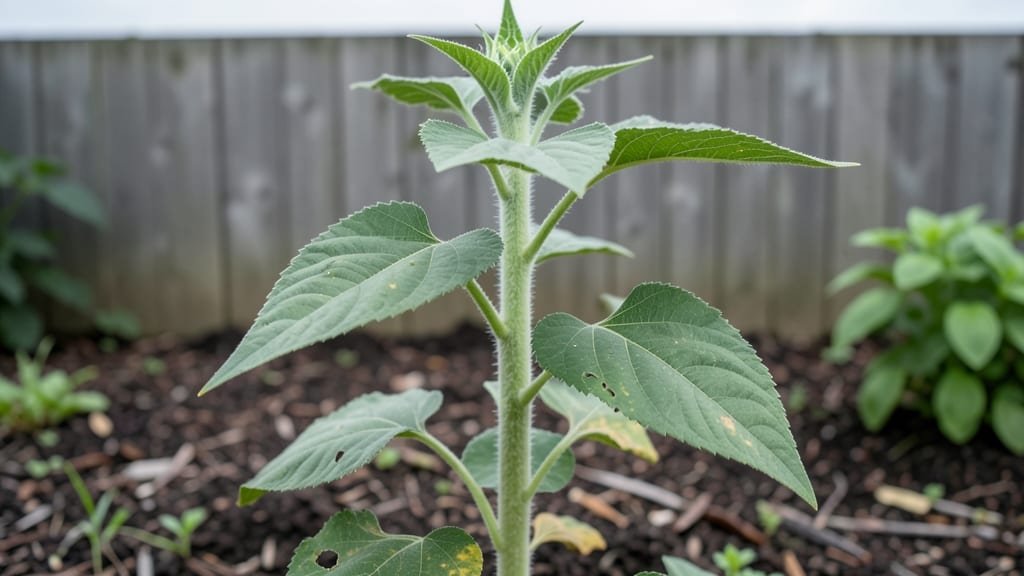
Sunflower plants before flowering are all about those velvety green leaves and surprisingly sturdy stems—nothing like the giant blooms you picture later. 🌱 The early stages look more like overgrown dandelions than sunflowers, with broad, rough-edged leaves that grow larger as the plant climbs toward the sky.
You’ll spot fuzzy, hairy stems (a dead giveaway) and maybe a few small buds forming near the top, though they won’t open for weeks.
Here’s the trick to spotting them early: sunflower seedlings start as tiny, jagged leaves that quickly grow into foot-long, lance-shaped foliage by the time they’re knee-high.
The stems stay thick and woody even before flowering, and the leaves have a slightly waxy texture that sets them apart from thistles or wildflowers. Confusion happens when buds form—mistake them for blooms, but they’re just green, bumpy knobs.
By the time you see yellow-green buds (about 6–8 weeks after planting), the plant is usually 4–6 feet tall, with leaves arranged in a spiral up the stem.
The real magic happens when those buds start splitting open—suddenly, the "leafy stem" you’ve been admiring transforms into the sunflower you planted for. Keep an eye on the leaf arrangement and stem thickness to avoid mix-ups with similar plants.
Pro tip: Sunflowers grow fast, so check for hairy stems and rough-edged leaves early. If you’re still unsure, wait for the buds to form—they’ll give away the game before the flowers even appear. Now you’ll spot them before your neighbors do!
📚 In This Guide
- What you need
- Instructions
- Tips and common mistakes
- Wrapping up and next steps
What you need
- ● Sunflower seeds: 10–20 seeds (for a small observation garden or container)
- ● 50+ seeds (for a larger garden bed)
- ● Pro tip: Choose heirloom or non-GMO seeds for the best natural growth patterns!
- ● Growing containers or garden bed: 5–6 inch deep pots (for seedlings, 1–2 seeds per pot)
- ● Well-draining soil mix (sterile potting soil or a blend of garden soil + compost)
- ● Garden bed with loose, fertile soil (if planting directly outdoors)
- ● Basic gardening tools: Small hand trowel or transplanting tool
- ● Watering can or spray bottle (for gentle watering)
- ● Measuring tape or ruler (to track growth stages)
- ● Growth chart or notebook to document leaf stages and stem height
- ● Plant labels (to track varieties if testing multiple types)
- ● Organic fertilizer (balanced 10-10-10 or compost tea for a boost)
- ● Garden gloves (to protect hands during transplanting)
- ● Camera or smartphone for capturing early growth stages
How to identify sunflower growth stages before blooming
Sunflowers start as humble seedlings and transform into towering giants—here’s how to recognize each leafy stage before the iconic bloom.
🌱 Step 1: Spot the First True Leaves
The very first leaves you’ll see are the cotyledons—those tiny, rounded leaves that appear within 7-10 days of germination. They’re smooth-edged and look like tiny shields. These aren’t the "real" leaves yet, but they’re your first sign that the seedling is thriving.
Watch for the first true leaves to emerge next—these will be lance-shaped, jagged-edged, and arranged alternately along the stem. They’re a clear signal the plant is establishing its full structure. At this stage, the stem is still soft and hairy, and the leaves feel slightly fuzzy to the touch.
🌿 Step 2: Recognize the Whorled Leaf Pattern
As the sunflower grows, its leaves will arrange themselves in a spiral pattern around the stem, a classic trait of the Asteraceae family. Each new set of leaves will appear in a whorl, with 3-5 leaves emerging at the same node (the point where a leaf attaches to the stem).
You’ll notice the lower leaves getting larger and more mature while the upper leaves remain smaller and softer. This gradual size progression is normal—it’s how the plant allocates energy upward. By the time the plant reaches 12-18 inches tall, the lower leaves will be 6-8 inches long, while the upper ones will still be no bigger than 2-3 inches.
☀️ Step 3: Watch for the Bud Formation
The real transformation begins when the central stem starts to thicken and the leaves near the top become smaller and more tightly packed. This is the plant preparing for its reproductive phase. The bud will appear as a green, fuzzy bump at the very top of the stem, often hidden among the uppermost leaves.
Here’s the trick: Gently brush your fingers along the top of the plant. If you feel a slightly raised, rounded bump (about the size of a marble), that’s your bud starting to form. The surrounding leaves will also begin to yellow slightly at the edges, signaling the plant is redirecting nutrients toward the flower.
⏰ Step 4: Time the Growth Spurt
Sunflowers grow fastest during their vegetative stage, which lasts until the bud is fully formed. In ideal conditions (full sun, 60-75°F temperatures, and consistent moisture), the plant can add 2-4 inches per day. You’ll see the stem straighten dramatically, and the leaves will develop a darker green hue as they mature.
If your sunflower is growing too slowly, check for pale, yellowing leaves—this usually means it’s not getting enough direct sunlight or nutrients. Conversely, if the leaves are dark green but small, the plant might be overcrowded or underwatered. Adjust care based on these visual cues.
🌻 Step 5: Prepare for the Bud to Open
The final pre-flowering stage is when the bud swells to the size of a softball and the outer bracts (the leaf-like structures surrounding it) start to split open. The center of the bud will turn a dull yellow-green, and you’ll see tiny flower petals peeking through the gaps.
This is your last chance to support the plant before blooming. Ensure it has sturdy support (like a stake) if it’s tall, as the weight of the flower can cause it to topple. Within 3-5 days, the petals will fully unfurl, revealing the iconic sunflower face—but the real magic happens in the leafy stages before that.
Tips & tricks for identifying sunflower growth stages
A few key observations will help you spot each stage with confidence—especially when the plant's transformation happens faster than you expect.
Leaf Texture Clues: The fuzzy texture of young sunflower leaves in Step 1 is your secret weapon for distinguishing them from weeds. Run your fingers along the stem—healthy sunflower seedlings have a fine, downy coating, while weeds typically feel smoother. This fuzziness disappears as the plant matures, so don't wait too long to identify your seedlings!
Growth Rate Insight: When you notice the 2-4 inch daily growth spurt in Step 4, it's time to monitor sunlight exposure more closely. The darker green hue mentioned is actually a sign the plant is photosynthesizing efficiently at the 60-75°F range. If your sunflower slows down, check for afternoon shade—even partial shade can reduce growth by 30% during hot afternoons.
Bud Detection Technique: For the subtle bud formation in Step 3, try this pro trick: Gently twist a leaf near the top stem. If you feel resistance where the leaf meets the stem (rather than a clean break), that's often where the bud is forming just below. This works because the bud's developing structure reinforces that connection point.
Height Measurement Hack: When measuring the 12-18 inch range in Step 2, use your own height as a reference. Most adults are about 6 feet tall—so a sunflower reaching your waist (about 3 feet) is already halfway to full height. This visual cue helps track progress without a ruler, especially when working with multiple plants.
Pro Tips for What Do Sunflower Plants Look Like Before They Flower
- A few key observations will help you spot each stage with confidence—especially when the plant's transformation happens faster than you expect.
- Leaf Texture Clues: The fuzzy texture of young sunflower leaves in Step 1 is your secret weapon for distinguishing them from weeds.
- Growth Rate Insight: When you notice the 2-4 inch daily growth spurt in Step 4, it's time to monitor sunlight exposure more closely.
Frequently asked questions
Got questions about sunflower seedlings and early growth?
Here are answers to the most common ones—so you can spot your sunflowers before they bloom like a pro!
How do sunflower seedlings look when they first sprout?
Sunflower seedlings start as tiny, hairy leaves (called cotyledons) that look like two fuzzy, oval-shaped leaves. Within a week, the first true leaves emerge—long, narrow, and slightly toothed along the edges. They’re often blue-green and grow in a spiral pattern. Think of them as baby sunflowers with a wild, scraggly haircut!
How long does it take for sunflowers to go from seedlings to flowering?
Most sunflower varieties take 80–120 days to flower after sprouting, depending on the type and growing conditions. Early stages (seedling to 6-inch stems) take about 2–4 weeks. Keep an eye out for the bud forming at the top—it’ll look like a fuzzy, green golf ball before blooming into that iconic flower!
Why do my sunflower seedlings look leggy or stretched out?
Leggy seedlings happen when plants don’t get enough light. If your sunflowers are tall and thin with small leaves, move them to a sunnier spot (6+ hours of direct sunlight daily) or use a grow light. Overcrowding or cool temps can also cause this—thin seedlings to 12–18 inches apart for better airflow.
Can I tell what color the flower will be before it blooms?
Sunflower flower color is usually predictable based on the variety, but the bud itself won’t show the final hue until it’s nearly open. The center (disk) often stays dark brown or yellow, while the petals (ray florets) reveal color last. For example, ‘Moulin Rouge’ stays true to its red-pink promise, but some heirlooms might surprise you!
What if my sunflower leaves turn yellow or wilt before flowering?
Yellow leaves often signal overwatering, nutrient deficiency (like nitrogen), or fungal issues (e.g., powdery mildew). Check soil moisture—sunflowers hate soggy roots! If leaves curl or droop, it could be underwatering or heat stress. Trim damaged leaves and ensure well-draining soil to revive your plant.
Are there dwarf sunflower varieties that look different before flowering?
Yes! Dwarf varieties (like ‘Teddy Bear’ or ‘Moulin Rouge’) have shorter stems (1–3 feet tall) and broader leaves compared to giant varieties. Their early growth is stockier, and buds form closer to the ground. Perfect for containers or small gardens—just give them the same care as tall sunflowers!
Wrapping up and next steps
From tiny sprouts to towering greenery, sunflowers undergo a fascinating transformation before their iconic blooms appear! 🌱 Whether you're growing them for beauty, companion planting, or even birdseed, recognizing these early stages helps you nurture them with confidence.
Now that you know what to expect, why not plant a few sunflower seeds this season? Watching them grow—and eventually burst into vibrant yellow—is one of nature’s simplest joys! 🌻