
Pruning
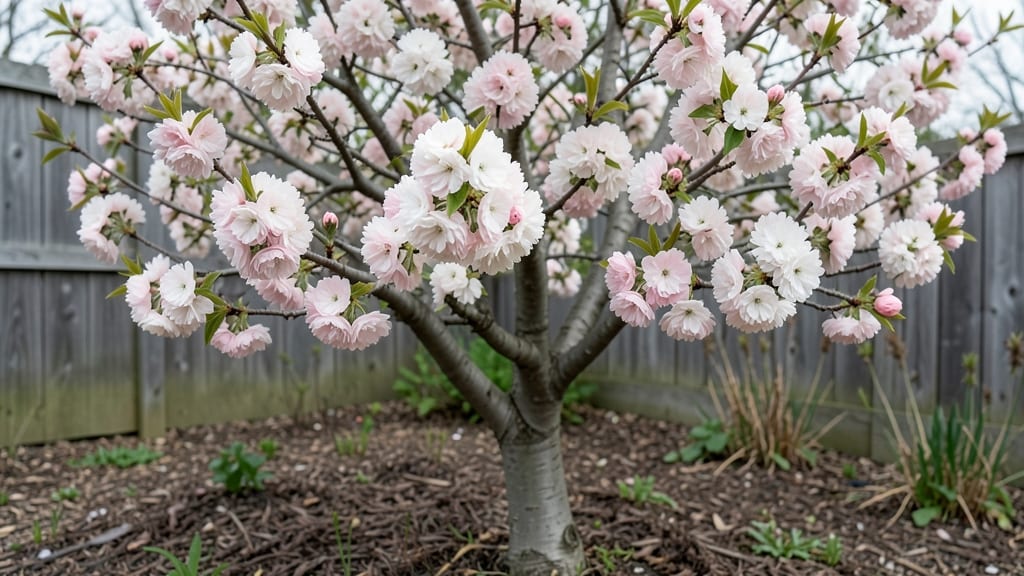
The Corinthian flowering peach tree (Prunus persica 'Corinthian') brings stunning spring blooms to Pacific Northwest gardens without the fuss of fruit-bearing varieties. I planted mine last year, and its delicate pink blossoms now outshine any fruit tree in my yard—no peaches required.
This ornamental showstopper thrives where traditional peaches struggle, making it perfect for cooler climates like ours.
Unlike fruiting peaches, this variety focuses all its energy on abundant, fragrant flowers that last for weeks. It’s low-maintenance once established, needing only well-draining soil, 6+ hours of sunlight daily, and occasional pruning to shape its graceful branches.
The key to its success? A simple three-cut pruning method that keeps it healthy and blooming year after year.
You’ll love how it transforms your landscape with vibrant spring color and lush foliage that stays attractive all season. Unlike fruit trees, it won’t drop messy debris, and its disease resistance means fewer headaches. Best of all, it attracts pollinators while keeping your garden looking effortlessly elegant.
Whether you’re a beginner or seasoned gardener, this tree delivers reliable beauty with minimal effort. Let’s get yours growing strong—your neighbors will be asking for cuttings before summer arrives!
📚 In This Guide
- What you need
- Instructions
- Tips and common mistakes
- Wrapping up and next steps
What you need
- ● Pruning shears: Bypass pruners (sharp, clean, and disinfected with rubbing alcohol or bleach solution). Specs: 6–8" blades for precision cuts.
- ● Loppers: For thicker branches (½"–1½" diameter). Specs: Long handles (24–36") for reach.
- ● Pruning saw: For branches >1½" thick. Specs: Curved blade for clean cuts.
- ● Gloves: Heavy-duty, cut-resistant (e.g., Fellex or Tough Outdoors).
- ● Disposable pruning bags: 3–5 gallon size to collect debris.
- ● Rubbing alcohol (70%+) or bleach solution: 1 part bleach to 9 parts water for sterilizing tools.
- ○ Tree wound pruning sealant (optional but recommended): Tanglefoot Tree Wound Pruning Seal or Ortho brand.
- ● Ladder or step stool: Sturdy, non-slip (extendable for taller trees). Height: Reach at least 10–12' safely.
- ● Measuring tape: 25' flexible tape for branch diameter checks.
- ● Notebook & pencil: To sketch your pruning plan (trust us, it helps!).
- ● Safety glasses: Protect your eyes from debris.
- ● Ear protection: If using a chainsaw (for very thick branches).
- ● Tree paint: Pruners’ Seal or Tree Seal for large cuts >2" diameter.
- ● Garden hose: For rinsing tools post-pruning.
- ● Camera: Snap before/after pics to track progress!
Step-by-step revival of a Corinthian flowering peach tree
This three-cut technique breathes new life into neglected Pacific Northwest specimens—here’s how to restore your tree’s vigor.
Assess and Prepare for the First Cut
Begin by examining the tree’s structure in late winter, when it’s fully dormant. Look for dead, crossing, or diseased branches—these are your first targets. I always start with the thinnest, weakest limbs because removing them opens the canopy to better air circulation and sunlight penetration. Use sharp, clean pruning shears to make cuts just outside the branch collar, the swollen area where the branch meets the trunk.
This first cut should remove no more than 25% of the tree’s foliage—over-pruning stresses the tree and invites pests. Watch for suckers (shoots growing from the base) and remove them immediately. They compete for nutrients and weaken the tree’s recovery. After cutting, wipe your shears with rubbing alcohol to prevent spreading disease between branches.
Shape the Canopy with the Second Cut
Now focus on opening the center of the tree to improve airflow and sunlight access. Pacific Northwest climates often lead to dense growth, which traps moisture and encourages fungal diseases. Aim to create an open vase shape—this means thinning out branches that grow inward or downward. Cut back these limbs to a healthy lateral branch or bud facing outward.
Here’s the thing—never leave stubs. A proper cut should leave a smooth surface just beyond the branch collar. If you’re unsure where to cut, look for the small bump where the branch meets the trunk; that’s your guide. After shaping, step back and visualize the tree’s new structure. You should see a balanced silhouette with sunlight able to reach the center.
Refine and Seal with the Final Cut
The third cut is about finishing touches—removing any remaining deadwood, water sprouts (fast-growing vertical shoots), and branches that rub against each other. These final adjustments ensure the tree’s energy isn’t wasted on weak or competing growth. Use your shears for smaller branches and a pruning saw for anything thicker than ½ inch in diameter.
Once pruning is complete, apply a wound dressing only if the cuts are larger than ¾ inch in diameter. For smaller cuts, let the tree seal naturally—modern research shows wound dressings often do more harm than good. Water the base of the tree deeply to help it recover from the stress of pruning, especially if the soil feels dry to the touch.
Post-Pruning Care for Pacific Northwest Conditions
After the cuts, monitor the tree closely for signs of stress, like yellowing leaves or oozing sap at the pruning sites. These are normal reactions, but if they persist beyond 2-3 weeks, the tree may need additional support, such as a balanced fertilizer applied in early spring. Pacific Northwest soil is often rich but can lack phosphorus and potassium, which are critical for recovery.
Mulch the base of the tree with 2-3 inches of organic mulch, like wood chips, to retain moisture and regulate soil temperature. Keep the mulch 6 inches away from the trunk to prevent rot. Over the next few growing seasons, you’ll notice new growth emerging from the pruned areas—this is your tree’s way of thanking you for the revival.
Tips & tricks for reviving a Corinthian flowering peach tree
Here's what I wish I knew before tackling my first peach tree revival—these insights will help you avoid common pitfalls and achieve that perfect open vase shape.
Pruning Shears Selection: Invest in high-quality bypass pruners for clean cuts that won't tear the bark. I learned this the hard way after using dull shears that crushed branches, creating larger wounds that took months to heal. For branches thicker than ½ inch, a pruning saw with a fine-tooth blade will give you the precision needed without causing unnecessary damage. Remember to sterilize your tools between cuts with rubbing alcohol to prevent disease transmission between branches.
Visualizing the Final Shape: Before making any cuts, spend 10 minutes sketching your ideal tree shape on paper. This mental exercise helps you visualize the open vase structure mentioned in Step 2. Look for branches that grow inward or downward—these are your primary targets for removal. The goal is to create a balanced silhouette where sunlight can penetrate to the center of the tree, which is especially important for Pacific Northwest climates where dense growth can trap moisture.
Branch Collar Identification: The branch collar is your most important guide for making proper cuts. Practice identifying this swollen area where branches meet the trunk on smaller branches first. Here's a pro tip: run your fingers along the branch where it meets the trunk—you'll feel a slight ridge or bump. This is your target cutting point. Making cuts too close to the trunk or leaving stubs can damage the tree's natural healing process and create entry points for pests and diseases.
Seasonal Timing for Pacific Northwest: While late winter is ideal for pruning, I've found that timing your cuts just before bud break—when you can see slight swelling on the buds—gives you the best results. This timing allows the tree to heal before the growing season begins. In the Pacific Northwest, this typically falls between late February and early March, but always check local weather patterns as sudden warm spells can trigger premature bud break.
Pro Tips for Corinthian Flowering Peach Tree
- Here's what I wish I knew before tackling my first peach tree revival—these insights will help you avoid common pitfalls and achieve that perfect open vase shape.
- Pruning Shears Selection: Invest in high-quality bypass pruners for clean cuts that won't tear the bark.
- Visualizing the Final Shape: Before making any cuts, spend 10 minutes sketching your ideal tree shape on paper.
Frequently asked questions
Got questions about growing and pruning your Corinthian flowering peach tree? You’re not alone! Here are answers to the most common queries from Pacific Northwest gardeners.
When is the best time to prune a Corinthian flowering peach tree?
The ideal time is late winter or early spring (before buds swell) or summer after flowering. Avoid pruning in fall—it can stimulate new growth that won’t harden off before winter. For the three-cut revival method, focus on shaping in late winter when the tree is dormant but before pests wake up.
How cold-hardy is this tree, and can it survive PNW winters?
The Corinthian flowering peach is USDA Zone 6-9 hardy, meaning it can handle most of the Pacific Northwest’s winters—including Seattle and Portland—with proper winter care. Mulch heavily (4-6 inches) around the base, wrap the trunk with burlap, and avoid overhead watering. Young trees may need extra protection in exposed areas.
Will this tree produce edible peaches, or is it purely ornamental?
While it’s primarily ornamental (known for stunning spring blooms), some varieties yield small, tart peaches—not ideal for fresh eating but great for jams or preserves! If you want both beauty and fruit, consider grafting a peach variety onto the Corinthian rootstock.
What if my tree’s branches are dying after pruning?
Dying branches often signal over-pruning, disease, or winter burn. Check for:
- Blackened tips = Winter damage (prune back to healthy wood).
- Oozing sap = Bacterial canker (sterilize tools, remove infected branches).
- No new growth = Possible root issues (test soil moisture and aeration).
Are there alternatives to Corinthian peach trees for PNW gardens?
Yes! If you love low-maintenance, cold-hardy flowering trees, try:
- Japanese Flowering Cherry (Prunus serrulata)
- Oso Easy® Hybrid Peach (Prunus persica)
- Redbud (Cercis canadensis)
- Serviceberry (Amelanchier)
Wrapping up and next steps
The Corinthian flowering peach tree is a stunning addition to Pacific Northwest gardens, offering beauty and resilience with the right care—especially when it comes to pruning. With just three strategic cuts, you can revive its health, encourage vibrant blooms, and keep it thriving for years.
Whether you're a seasoned gardener or just starting, this method makes maintenance simple and rewarding.
Now that you’re equipped with the knowledge, roll up your sleeves and give your tree the TLC it deserves! 🌿 Start by marking your calendar for late winter or early spring—the perfect time to prune—and watch your Corinthian flowering peach tree flourish into a showstopper in your garden.
Happy pruning!